EV Charger Installation in Gibsonville, NC
Charge at Home Without the Guesswork
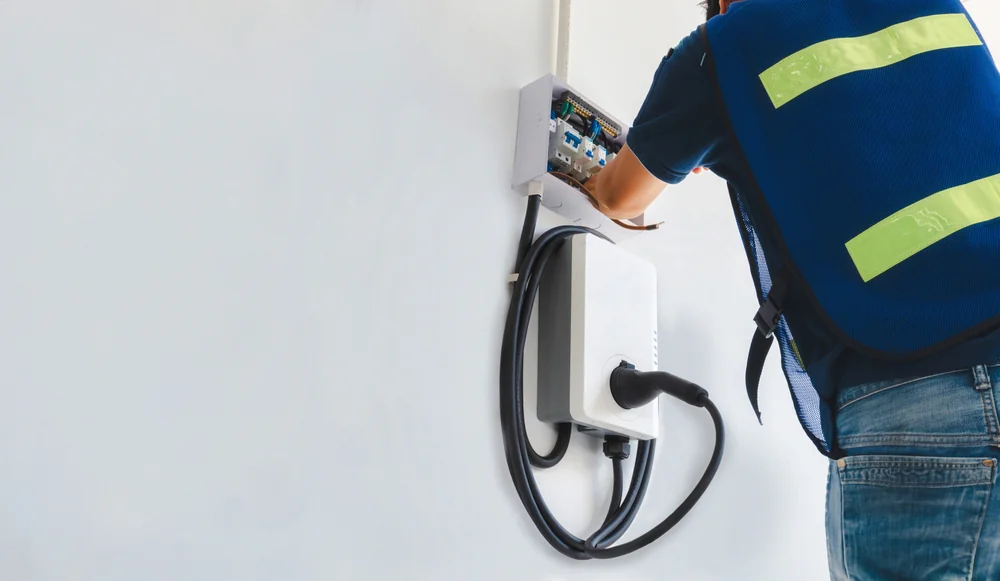
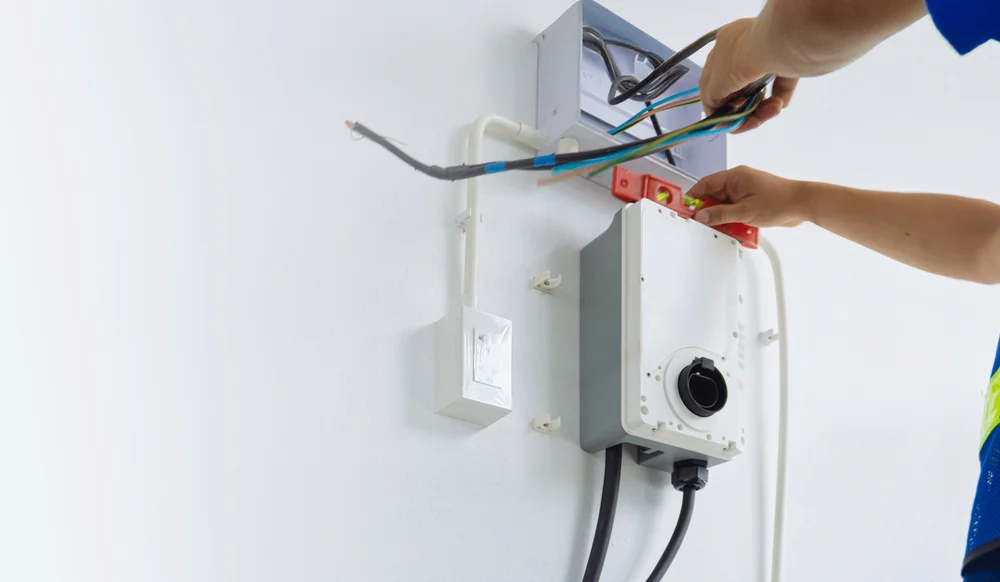
Home EV Charging Station Setup
You bought an electric vehicle to simplify your life, not to plan your week around where you can plug in. Public charging stations mean waiting, paying premium rates, and hoping the spot’s available when you need it.
A Level 2 home charging station changes that. You plug in when you get home, and your car’s ready the next morning. No apps to download, no wondering if someone’s using the charger you drove across town to reach.
The difference is speed and control. Level 2 chargers run on 240-volt power—the same as your dryer—and charge 3 to 7 times faster than a standard outlet. That means a full charge in a few hours instead of waiting all night. You’re not adjusting your schedule around your car anymore.
Licensed EV Charger Electrician Gibsonville
We’ve been serving Gibsonville, Burlington, Graham, and Alamance County for over 15 years. We’re licensed, insured, and we know the local codes and permit requirements that apply to your property.
North Carolina just passed 100,000 registered EVs, and nearly half were purchased in the last two years. That means more homeowners in Gibsonville are asking the same questions you are—and we’ve been answering them with safe, code-compliant installations that pass inspection the first time.
We don’t leave until your system works and you understand how to use it. That’s not a tagline. It’s how we’ve built our reputation in this area.
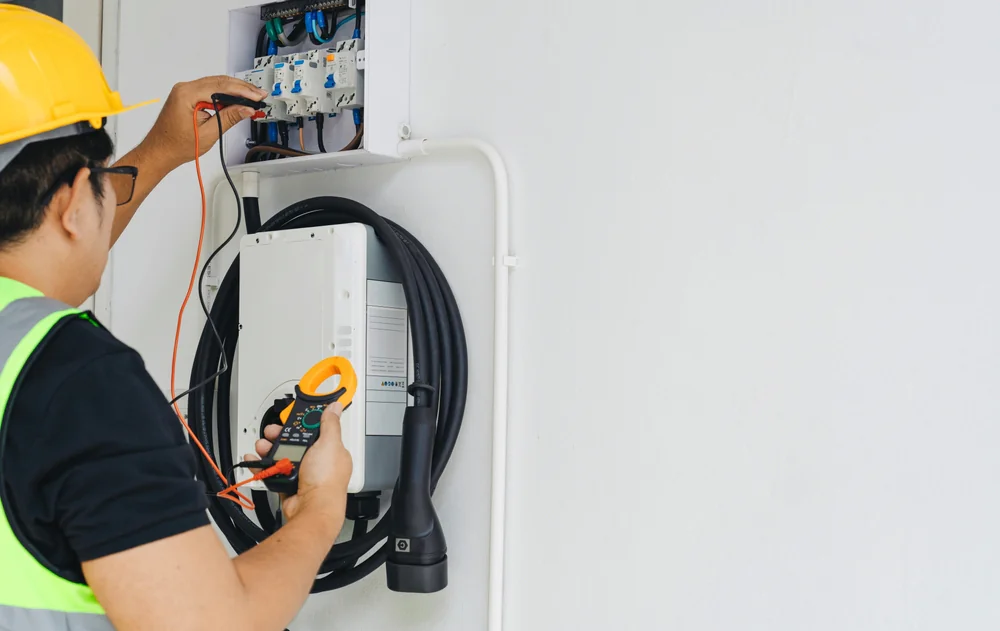
EV Charger Installation Process Gibsonville
First, we assess your electrical panel. Most homes in Gibsonville weren’t built expecting a 40- or 50-amp EV charger, so we check if your system can handle the load or if you need an upgrade. We’re upfront about what’s required before any work starts.
Next, we handle the permits. Alamance County has specific requirements for EV charger installations, and we pull the permits, schedule inspections, and make sure everything meets local and national electrical codes. You don’t have to call the county or figure out what forms to file.
Then we install the charger where you want it—garage, carport, driveway—and run the wiring safely through your walls or conduit. We mount the unit, connect it to a dedicated circuit, and test the system to make sure it’s charging correctly.
Finally, we walk you through how it works and help you apply for the Duke Energy rebate if you qualify. That rebate covers up to $1,177 in installation costs, and we’ll show you exactly how to submit for it.
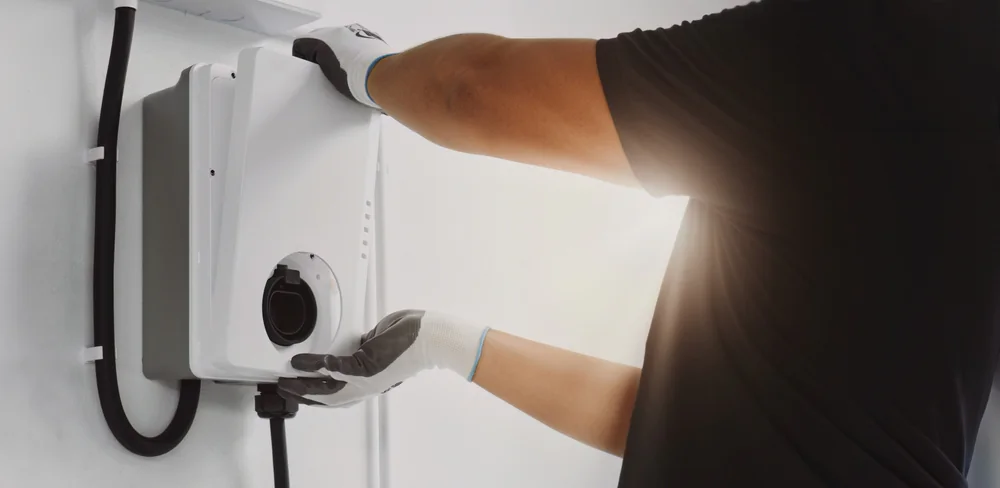
Residential Electric Vehicle Charger Installation
Every installation starts with a full electrical assessment. We measure your panel capacity, check your existing circuits, and determine whether you need a service upgrade. If your panel can’t support the additional load, we’ll upgrade it so your home’s electrical system stays safe and code-compliant.
We install Level 2 charging stations—the type that runs on 240 volts and charges your vehicle in a few hours instead of overnight. These are compatible with Tesla, Rivian, Ford, Chevy, Nissan, and every other EV on the market. You pick the charger model, or we can recommend one based on your vehicle and budget.
The installation includes running dedicated wiring from your panel to the charger location, mounting the unit, and setting up a NEMA 14-50 outlet or hardwiring the charger directly, depending on your preference. We also handle all permit applications and inspections required by Alamance County.
Duke Energy offers rebates up to $1,177 for North Carolina homeowners installing EV chargers, covering outlet installation, panel upgrades, and wiring costs. We’ll provide the documentation you need to apply and walk you through the rebate process so you’re not figuring it out alone.
Can my home's electrical system handle an EV charger installation?
Most homes in Gibsonville were built before EVs became common, so it’s a fair question. The answer depends on your electrical panel’s capacity and how much power you’re already using.
A Level 2 EV charger typically requires a 40- or 50-amp dedicated circuit. If your panel is already near capacity—meaning most breaker slots are full and you’re running multiple high-draw appliances—you may need a panel upgrade. We measure the load during our assessment and tell you exactly what’s required.
If your panel has room and capacity, installation is straightforward. If it doesn’t, we upgrade the panel first to ensure your home can safely handle the additional demand. Skipping this step can lead to tripped breakers, overheating, or worse. We don’t cut corners on electrical safety, and neither should anyone working on your property.
How long does it take to install an EV charging station?
If your electrical panel has capacity and the charger location is close to the panel, most installations take four to eight hours. That includes mounting the charger, running the wiring, connecting everything to a dedicated circuit, and testing the system.
If you need a panel upgrade or the charger is being installed far from your electrical panel—like a detached garage—the job takes longer. Panel upgrades can add a day, and longer wire runs require more labor and materials. We’ll give you a timeline after the initial assessment so you know what to expect.
Permitting and inspections add time but don’t require you to be present. We handle the permit application with Alamance County, schedule the inspection, and make sure everything passes. Once the inspection clears, your system is live and ready to use.
Do I need a permit to install an EV charger in Gibsonville?
Yes. Any electrical work that adds a new circuit or upgrades your panel requires a permit in Alamance County. That includes EV charger installations.
The permit process ensures your installation meets the National Electrical Code and local safety standards. It also protects you if you ever sell your home—buyers and inspectors will ask if electrical work was permitted, and unpermitted work can delay or kill a sale.
We pull the permit, coordinate the inspection, and make sure the work passes the first time. You don’t need to visit the county office or figure out what paperwork to file. The permit cost is included in our estimate, so there are no surprise fees later. Skipping the permit might save money upfront, but it creates liability and headaches down the road that aren’t worth it.
What's the difference between Level 1 and Level 2 EV chargers?
Level 1 chargers plug into a standard 120-volt outlet—the same outlet you use for lamps and phone chargers. They’re slow, adding about 3 to 5 miles of range per hour of charging. If you drive 40 miles a day, you’re looking at 10 to 12 hours to recharge, which means plugging in overnight and hoping it’s enough.
Level 2 chargers run on 240 volts—the same power your dryer or oven uses—and charge 3 to 7 times faster. You’ll add 20 to 60 miles of range per hour depending on your vehicle and charger model. That means a full charge in a few hours instead of all night.
Most EV owners in Gibsonville install Level 2 chargers because they’re faster, more reliable, and better for daily use. If you’re driving regularly or have a longer commute, Level 1 won’t keep up. Level 2 gives you flexibility and ensures your car is ready when you need it.
How much does it cost to install an EV charger at home?
Installation costs depend on your electrical system and where you want the charger installed. If your panel has capacity and the charger goes in your garage near the panel, expect to pay between $800 and $1,500 for labor and materials.
If you need a panel upgrade, that adds $1,500 to $3,000 depending on the size of the upgrade and your home’s existing setup. Longer wire runs—like installing a charger in a detached garage or far side of your driveway—also increase costs because of additional materials and labor.
Duke Energy offers rebates up to $1,177 for North Carolina homeowners, which can cover a significant portion of your installation costs. We provide the documentation you need to apply, and the rebate helps offset the upfront expense. We give you a detailed estimate after assessing your property so you know exactly what you’re paying before any work begins.
Will installing an EV charger increase my home's value?
It can, especially as EV adoption grows in North Carolina. Nearly 50,000 EVs were added to the state in just 23 months, and buyers looking at homes in Gibsonville and Alamance County are starting to expect charging infrastructure.
A properly installed Level 2 charger signals that your home is ready for modern vehicles. It’s a feature that saves the next owner time and money, and it makes your property more attractive to EV drivers who don’t want to deal with installation after they move in.
The bigger value isn’t just resale—it’s convenience and cost savings while you live there. You’re not paying premium rates at public charging stations, and you’re not planning trips around where you can plug in. That’s worth more than most upgrades you’ll make to your home, and it pays off from day one.
Other Services we provide in Gibsonville
About Us

Electrical Service Providers (ESP) has been in business since 2002. ESP started out performing wiring services to new construction, remodeling projects and residential homes. Our company’s president identified a market for electrical services to be performed in homes and businesses independent of new construction. Read More about Electrical Service Providers>>
All Rights Reserved.Organic Marketing LLC
Business Listings


Product Brands Used
Allied, Broan, Cutler Hammer, General Electric, Ideal, Juno, Kohler, Leviton, Lutron, Siemens, Square D
Contact
- Office Address: 3254 S Anthony Ct.
Burlington, NC 27215 - Mailing Address: PO Box 25
Alamance, NC 27201 - Phone: 336-228-3300
- E-mail: [email protected], [email protected]
Service Areas
Chapel Hill, Burlington, Carrboro, Durham, Gibsonville, Hillsborough, Graham, Pittsboro, Morrisville, Cary
About Us
Electrical Service Providers (ESP) has been in business since 2002. ESP started out performing wiring services to new construction, remodeling projects and residential homes. Our company’s president identified a market for electrical services to be performed in homes and businesses independent of new construction. Read More about Electrical Service Providers>>
All Rights Reserved.Organic Marketing LLC