EV Charger Installation in Gorman, NC
Charge at Home Without the Guesswork
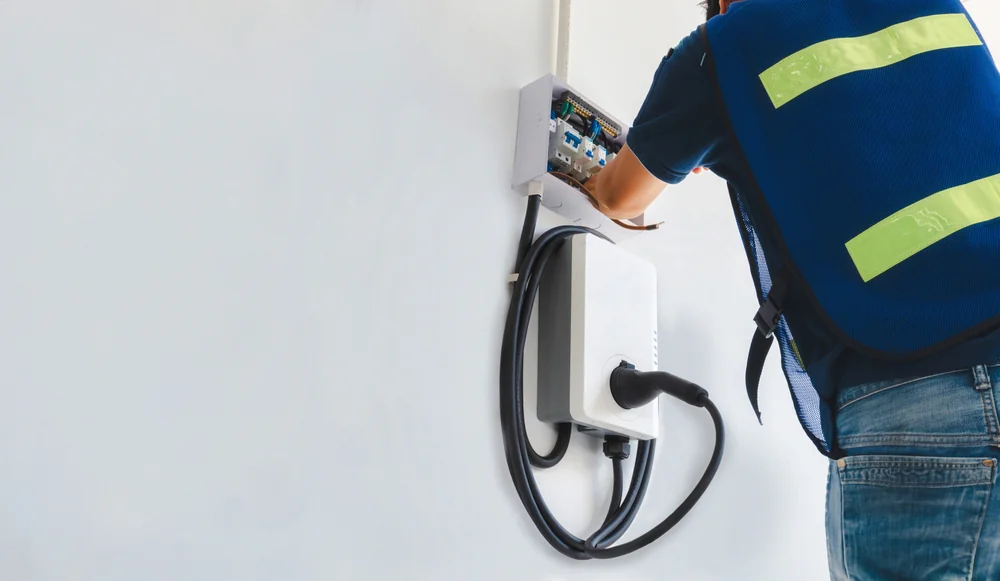
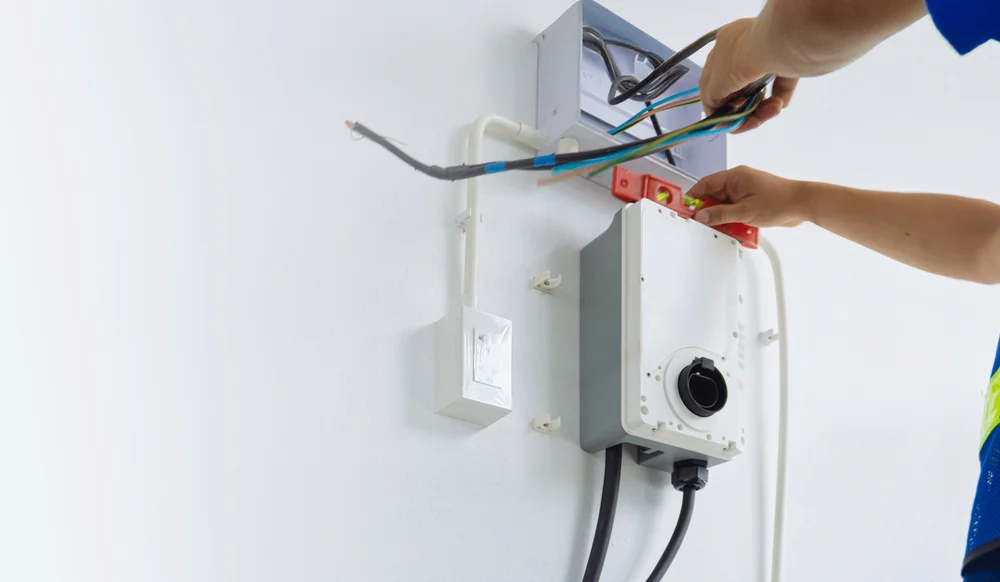
Electric Vehicle Charger Setup Gorman
You’re done paying $0.34 per kilowatt-hour at public charging stations. Home charging in North Carolina runs about $0.15 per kWh, which means you’ll cut your fuel costs in half while charging overnight in your own driveway.
A Level 2 charger adds 25 to 40 miles of range per hour. That’s a full charge by morning for most EVs, and you never have to plan your day around finding an available station. You leave when you’re ready.
Your home’s value goes up too. Buyers in Durham County are actively looking for properties with EV charging already installed, especially as North Carolina just passed 100,000 registered electric vehicles in 2024. You’re not just installing a charger—you’re future-proofing your property in one of the fastest-growing EV markets in the Southeast.
Licensed Electricians Serving Gorman NC
ESP Electrical Service Providers is locally owned and operated by Andy Helton, a Master Electrician with over 35 years of experience. Our Operations Manager has held his electrical contractor license since 1989. We’re not new to this, and we’re not learning on your dime.
We’ve been serving Gorman, Durham County, and the surrounding Triangle area for more than two decades. That means we know the local code requirements, the permit process, and how Duke Energy’s rebate programs actually work. We also know what your electrical panel can handle before we even open it.
You’ll get flat-rate pricing before we start any work. No surprises, no hourly billing, no upsells once we’re halfway through the job. Our trucks are stocked, our team shows up in uniform, and we clean up when we’re done. You’re inviting us into your home—we take that seriously.
How EV Charger Installation Works
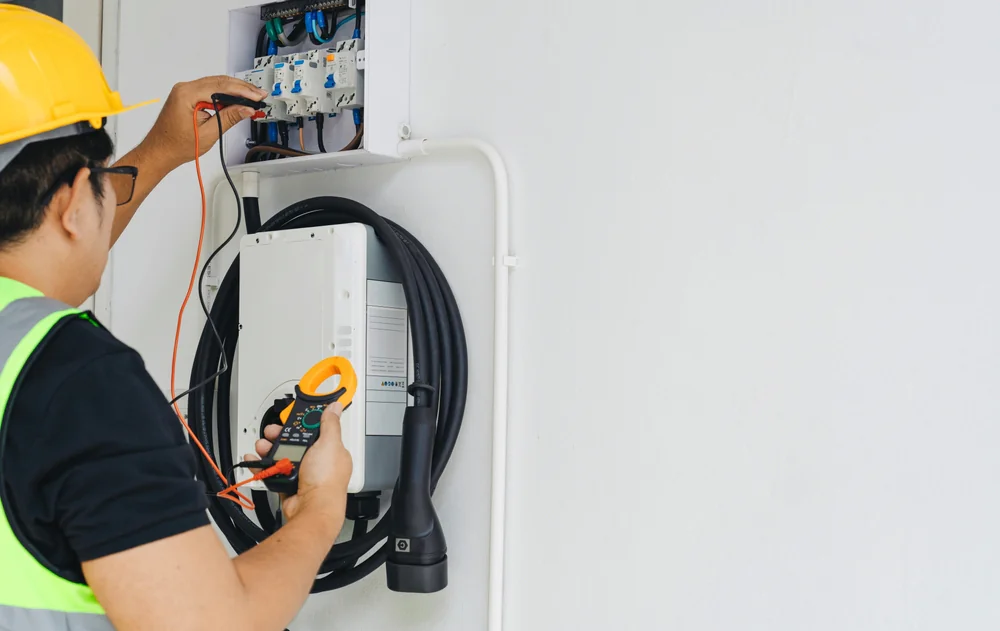
First, we come out and evaluate your electrical panel. Most Level 2 chargers need a 240-volt, 40-amp circuit, and not every panel has the capacity to add that load. We run a complete load calculation to see what you’re working with. If your panel needs an upgrade, we’ll tell you upfront—and we’ll also tell you about the Duke Energy rebate that can cover up to $1,133 of that cost.
Next, we handle the permit. In Durham County, you need one before any EV charger installation, and the work has to be done by a licensed electrician. We pull the permit, do the installation to code, and schedule the inspection. You don’t have to call the county or wait on hold.
Once the charger is installed and inspected, we walk you through how it works. You’ll know how to adjust the settings, what to expect on your electric bill, and how to troubleshoot basic issues. Then you’re done. Plug in, charge up, and stop planning your week around public charging stations.
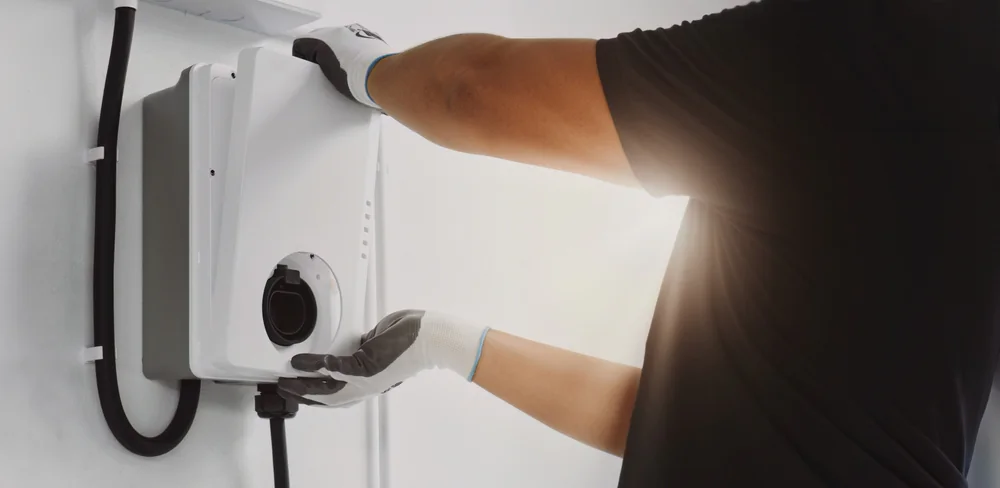
EV Charging Station Installation Gorman
You get a full electrical load analysis before we touch anything. That tells us whether your current panel can support a Level 2 charger or if you need an upgrade. We don’t skip this step, because undersized circuits are how chargers overheat, breakers trip, and electrical fires start.
We install the dedicated 240-volt circuit, mount the charging station where you want it (garage wall, exterior, near your driveway), and run all the wiring to code. If your panel needs an upgrade or you need a subpanel installed, we handle that too. Everything gets permitted and inspected by local authorities in Durham County, which protects you and keeps your homeowner’s insurance valid.
We also help you apply for available rebates. If you’re a Duke Energy customer, you can get a $1,133 credit toward your installation costs. There’s also a federal tax credit that covers 30% of your equipment and installation costs, up to $1,000, for chargers installed through mid-2026. We’ll walk you through what you qualify for and what paperwork you need.
North Carolina’s EV adoption is growing fast—over 56% in the last year. That means more people in Gorman and Durham County are making the switch, and home charging is quickly becoming a standard feature buyers expect. You’re not early to this. You’re right on time.
How much does it cost to install an EV charger at home in Gorman?
Most homeowners spend between $800 and $1,500 out of pocket after rebates and tax credits. The total cost depends on your electrical panel’s current capacity and how far the charger is from your panel.
If your panel can handle the load, installation is straightforward—usually between $500 and $1,200. If you need a panel upgrade, that adds another $1,500 to $3,500, but Duke Energy offers a $1,133 rebate for customers in North Carolina, which brings that cost way down. There’s also a federal tax credit covering 30% of your installation costs, up to $1,000, for equipment installed before mid-2026.
We give you flat-rate pricing after we assess your setup. You’ll know the cost before we start, and we’ll tell you exactly what rebates and credits you qualify for so you’re not guessing.
Do I need a permit to install an EV charger in Durham County?
Yes. Durham County requires a permit for any EV charging station installation, and the work has to be done by a licensed electrician. The installation also has to pass inspection before you can legally use the charger.
Skipping the permit isn’t just illegal—it’s risky. If something goes wrong (a fire, an electrical failure, or an insurance claim), your homeowner’s insurance can deny coverage if the work wasn’t permitted. Plus, unpermitted electrical work can hurt your home’s resale value and create liability issues down the road.
We handle the permit process from start to finish. We pull it, do the work to code, and schedule the inspection with local authorities. You don’t have to make any calls or wait in line at the county office.
How long does EV charger installation take?
If your electrical panel has capacity and the charger location is close to the panel, most installations take four to six hours. That includes mounting the unit, running the wiring, connecting everything, and testing it.
If your panel needs an upgrade or we’re installing a subpanel, add another day or two depending on the scope of work. Permit approval and inspection scheduling can add a few more days, but we coordinate all of that so you’re not waiting around.
From the day you call us to the day you’re charging your car, most customers are up and running within one to two weeks. If there are delays (like waiting on a utility company or a backorder on equipment), we’ll keep you updated so you know exactly where things stand.
Can I install an EV charger myself to save money?
Technically, you could install a Level 1 charger yourself since it plugs into a standard 120-volt outlet. But Level 1 charging is slow—about 4 miles of range per hour—so it’s not practical for most EV owners.
Level 2 chargers require a 240-volt circuit, which means working inside your electrical panel, running new wiring, and installing a dedicated breaker. That’s not a DIY project unless you’re a licensed electrician. If you wire it wrong, you risk overloading your panel, tripping breakers, overheating wires, or starting a fire.
Even if you know what you’re doing, Durham County requires a licensed electrician to pull the permit and pass inspection. DIY installations won’t pass, which means you can’t legally use the charger. You also won’t qualify for Duke Energy rebates or federal tax credits without a licensed professional doing the work. Saving a few hundred dollars upfront isn’t worth the safety risk or the lost rebates.
Will installing an EV charger increase my electric bill?
Yes, but it’s still cheaper than paying for gas or using public charging stations. Charging at home in North Carolina costs about $0.15 per kilowatt-hour. Public fast chargers can cost $0.34 per kWh or more, so you’re cutting your fuel costs in half.
For most EV owners, a full charge costs between $8 and $12 depending on your vehicle’s battery size and your utility rates. If you drive 1,000 miles a month, expect your electric bill to go up by $40 to $60. Compare that to spending $150+ per month on gas, and the savings add up fast.
Duke Energy also offers time-of-use rates for EV owners, which means you pay less if you charge overnight when demand is lower. We can walk you through how to enroll in those programs and set your charger to take advantage of off-peak pricing.
What's the difference between Level 1 and Level 2 EV chargers?
Level 1 chargers plug into a standard 120-volt outlet and add about 4 miles of range per hour. They’re fine if you drive less than 40 miles a day and can leave your car plugged in overnight, but most EV owners find them too slow.
Level 2 chargers use a 240-volt circuit (the same kind your dryer uses) and add 25 to 40 miles of range per hour. That means most EVs are fully charged in 4 to 8 hours, which works for overnight charging. Level 2 is what most people install at home because it’s fast enough to be practical without requiring expensive infrastructure.
There’s also Level 3 (DC fast charging), but that’s commercial-grade equipment. It’s what you see at highway rest stops, and it’s not designed for home use. The equipment costs tens of thousands of dollars, requires massive electrical capacity, and isn’t necessary unless you’re running a fleet or a public charging station. For residential EV charging in Gorman, Level 2 is the standard.
Other Services we provide in Gorman
About Us

Electrical Service Providers (ESP) has been in business since 2002. ESP started out performing wiring services to new construction, remodeling projects and residential homes. Our company’s president identified a market for electrical services to be performed in homes and businesses independent of new construction. Read More about Electrical Service Providers>>
All Rights Reserved.Organic Marketing LLC
Business Listings


Product Brands Used
Allied, Broan, Cutler Hammer, General Electric, Ideal, Juno, Kohler, Leviton, Lutron, Siemens, Square D
Contact
- Office Address: 3254 S Anthony Ct.
Burlington, NC 27215 - Mailing Address: PO Box 25
Alamance, NC 27201 - Phone: 336-228-3300
- E-mail: [email protected], [email protected]
Service Areas
Chapel Hill, Burlington, Carrboro, Durham, Gibsonville, Hillsborough, Graham, Pittsboro, Morrisville, Cary
About Us
Electrical Service Providers (ESP) has been in business since 2002. ESP started out performing wiring services to new construction, remodeling projects and residential homes. Our company’s president identified a market for electrical services to be performed in homes and businesses independent of new construction. Read More about Electrical Service Providers>>
All Rights Reserved.Organic Marketing LLC