EV Charger Installation in Graham, NC
Charge at Home Without the Guesswork
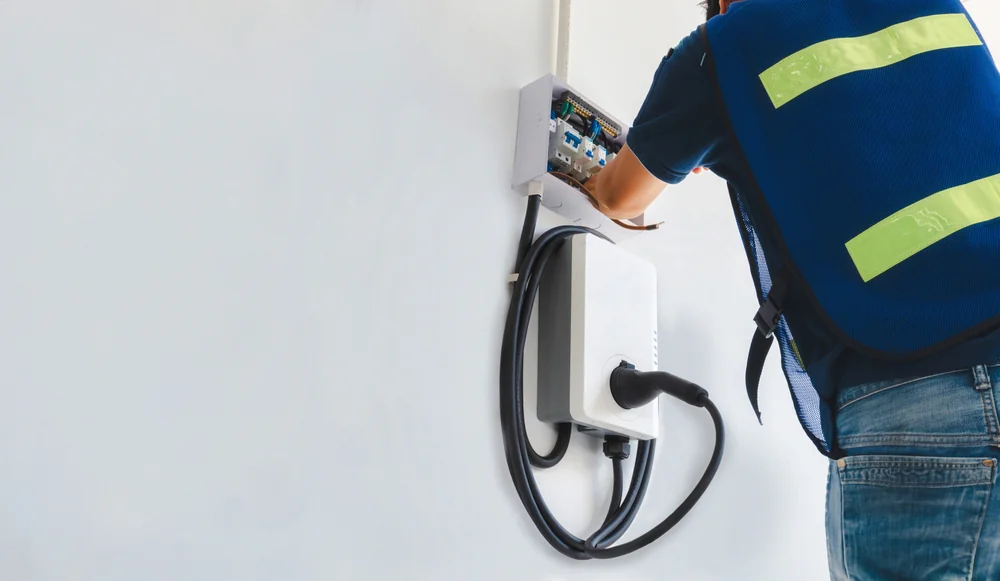
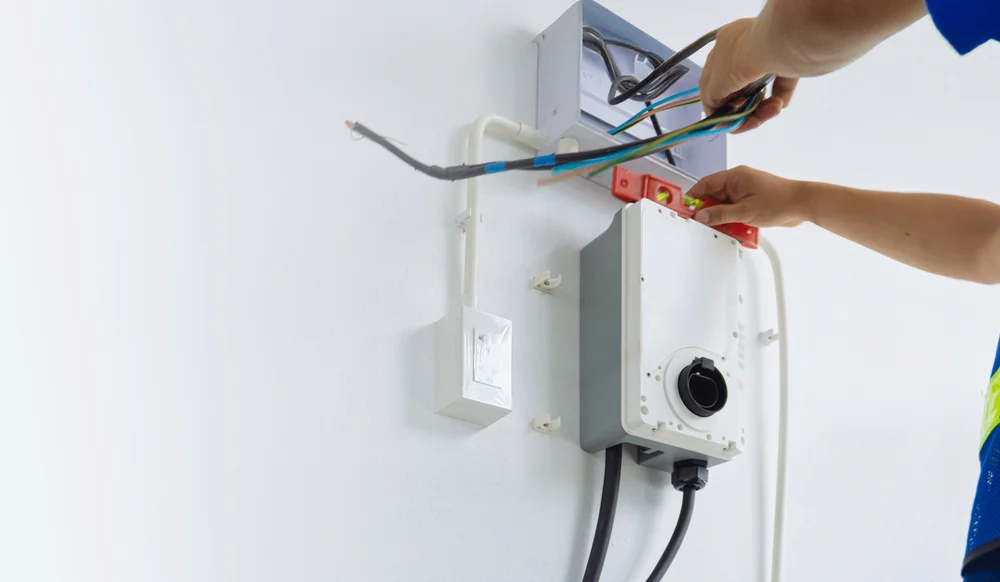
Electric Vehicle Charging Station Setup Graham
You bought an EV to simplify your life, not to add another layer of logistics. Driving around Graham, Burlington, or anywhere in Alamance County shouldn’t require a mental map of where the next charging station is or whether it’s occupied when you get there.
Home charging changes that. You park in your driveway or garage, plug in, and walk inside. By morning, you’re at 100%. No apps. No waiting. No hoping the station works.
The difference isn’t just convenience. It’s cost. Charging at home during off-peak hours costs a fraction of what you’d pay at a public station. Over a year, that adds up to hundreds of dollars back in your pocket. And if your electrical system is set up correctly, the whole process is as simple as charging your phone.
That’s what a proper EV charger installation does. It removes the friction and puts you back in control.
Licensed Electricians Serving Graham Since 2002
ESP Electrical Service Providers has been handling electrical work in Alamance County since 2002. We’re not new to this area, and we’re not new to residential electrical systems that need upgrades or careful load management.
Graham homes weren’t built with EV charging in mind. Many have older panels, aluminum wiring, or circuits that are already near capacity. We know how to assess what you’re working with and install a Level 2 charger safely without overloading your system.
We’re licensed, insured, and we handle the permit process with the local building department. You don’t have to figure out code requirements or schedule inspections. We do that. And if there’s a Duke Energy rebate available, we’ll walk you through the paperwork so you actually get the credit.
How EV Charger Installation Works in Graham
First, we come out and look at your electrical panel. We check the available capacity, the location where you want the charger, and the distance from the panel to your parking spot. This tells us whether your current system can handle a 40-amp or 60-amp circuit, or if we need to make adjustments.
Next, we pull the permit and order the charger if you haven’t already. We coordinate the inspection timing so there’s no delay once the install is done. Most installations take a few hours, depending on the run length and whether we’re mounting indoors or outdoors.
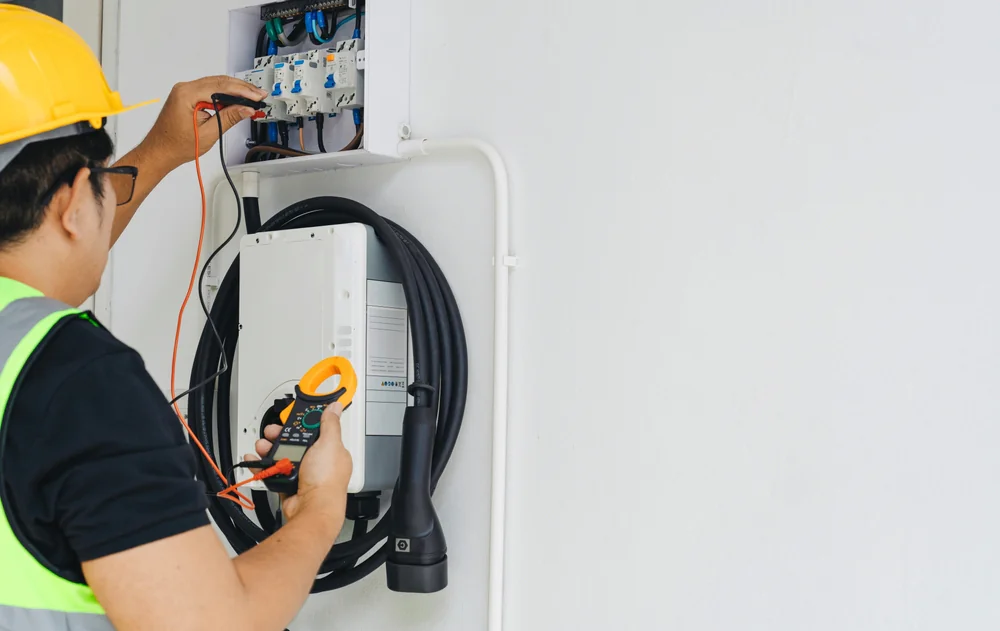
Once it’s wired and mounted, we test the circuit, confirm the charger communicates with your vehicle, and walk you through how it works. Then we schedule the final inspection, and you’re done. If you’re applying for the Duke Energy rebate, we provide all the documentation you need to submit.
The whole process usually wraps up in a few days, start to finish.
What's Included in EV Charger Setup
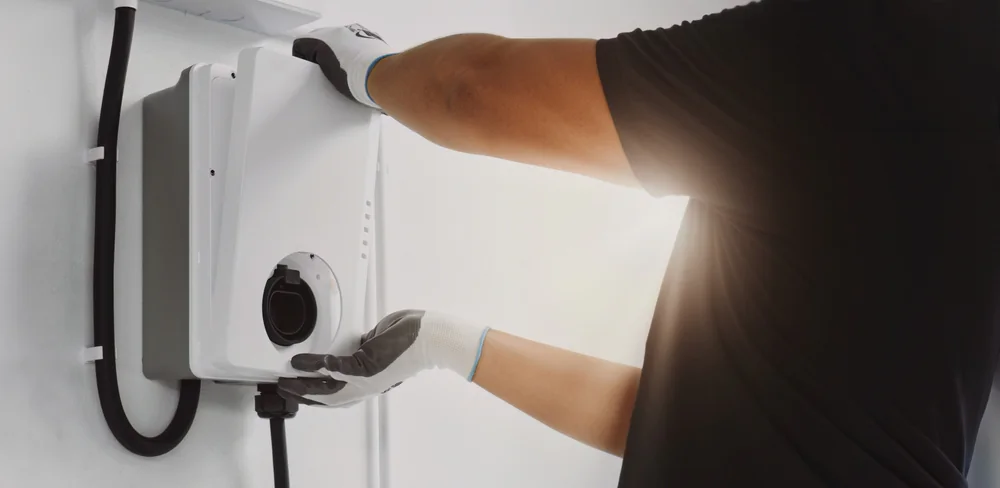
A full EV charger installation includes more than just mounting a box on the wall. We run a dedicated circuit from your electrical panel to the charger location, using the correct gauge wire and breaker size for your vehicle’s charging requirements. That circuit is protected and installed to current National Electrical Code standards.
We handle the permit application with Graham’s building department and coordinate the inspection after installation. If your panel doesn’t have enough capacity, we’ll talk through your options, whether that’s load management technology or a panel upgrade. Most homes in Alamance County can avoid a full upgrade if the system is planned correctly.
For Tesla owners, we install the Wall Connector and ensure it’s communicating properly with your vehicle. For other EVs, we work with ChargePoint, JuiceBox, Grizzl-E, and other Level 2 chargers. We also provide the documentation needed for Duke Energy’s rebate program, which offers up to $1,117 back to Graham residents who install a qualifying Level 2 charger.
North Carolina is seeing fast EV adoption. Over 100,000 EVs are registered statewide, and nearly half were purchased in the last two years. That means more homes need charging infrastructure, and the electrical systems in older neighborhoods weren’t designed for it. We’ve done enough of these installations to know what works and what causes problems down the line.
How much does it cost to install an EV charger in Graham, NC?
Most Level 2 EV charger installations in Graham run between $800 and $2,500, depending on the distance from your electrical panel to the install location and whether your panel has available capacity. If the charger is going in a garage that shares a wall with your panel, you’re on the lower end. If we’re running wire 50 feet to a detached carport, the price goes up.
Panel upgrades add cost, but they’re not always necessary. A lot of homes can support a 40-amp circuit without any changes, especially if you’re not running other high-draw appliances at the same time. We assess that during the site visit.
Duke Energy offers a rebate of up to $1,117 for qualifying installations, which can offset a big chunk of the cost. We provide all the paperwork you need to apply. You’ll also want to check if you’re eligible for the federal 30C tax credit, which can be worth up to $1,000 for residential installs.
Do I need to upgrade my electrical panel to install an EV charger?
Not always. It depends on your current panel’s capacity and what else is drawing power in your home. Most EV chargers need a 40-amp or 50-amp dedicated circuit. If your panel has space and available amperage, we can add the circuit without any upgrades.
If your panel is maxed out, you have a few options. One is installing a load management system that limits the charger’s draw when other appliances are running. Another is upgrading to a larger panel, which costs more but future-proofs your home for other electrical needs.
We check all of this during the initial visit. A lot of homes in Graham and Burlington were built in the ’80s and ’90s with 200-amp panels, which usually have enough headroom. Older homes with 100-amp panels are more likely to need an upgrade, but we’ll give you a clear answer before any work starts.
Can I just plug my EV into a regular outlet?
You can, but it’s slow and not ideal for daily use. A standard 120-volt outlet provides Level 1 charging, which adds about 3 to 5 miles of range per hour. If you drive 40 miles a day, you’re looking at 10+ hours to recharge. That works if you barely use the car, but most people find it frustrating.
Level 2 chargers run on 240 volts and add 25 to 30 miles of range per hour. That means a full charge overnight, even if you’ve drained the battery. It’s faster, more reliable, and doesn’t tie up your outlet for an entire day.
There’s also a safety issue. Some people try using a dryer outlet, but those often have aluminum wiring that’s not rated for continuous high-amperage loads. That can cause overheating, melted connections, or even a fire. A dedicated circuit installed by a licensed electrician eliminates that risk and keeps your homeowner’s insurance valid if something goes wrong.
How long does EV charger installation take in Graham?
The actual installation usually takes 3 to 5 hours, depending on the wire run and whether we’re mounting indoors or outside. If your panel is in the garage and the charger is going on the same wall, it’s a shorter job. If we’re running conduit across the exterior of your house or through an attic, it takes longer.
Permitting adds a few days. Graham requires a permit for EV charger installations, and we handle that filing for you. Once the work is done, we schedule the inspection, which usually happens within a few days. You can start using the charger as soon as the inspection clears.
From your first call to a fully operational charger, most projects wrap up within a week. If there’s a panel upgrade involved, add a few more days for that work. We’ll give you a timeline during the estimate so you know what to expect.
Will installing an EV charger increase my home's value?
Yes, especially as EV adoption grows in North Carolina. Buyers shopping for homes in Graham and Alamance County are increasingly looking for properties with EV charging already installed. It’s one less thing they have to coordinate, and it signals that the home’s electrical system has been updated.
The added value isn’t huge, but it’s measurable. Homes with Level 2 chargers tend to appeal to a wider buyer pool, particularly as more people switch to electric vehicles. North Carolina saw 56% EV sales growth last year, the highest in the Southeast. That trend isn’t slowing down.
Beyond resale value, there’s the practical benefit. You’re not spending money at public charging stations, and you’re not wasting time sitting in your car waiting for a charge. The convenience alone makes it worth the install cost for most EV owners.
What's the difference between Level 1 and Level 2 EV chargers?
Level 1 chargers plug into a standard 120-volt outlet and add about 3 to 5 miles of range per hour. They’re fine for plug-in hybrids or people who drive very little, but they’re too slow for most full EV owners. If you’re commuting daily or taking longer trips, Level 1 won’t keep up.
Level 2 chargers run on 240 volts, the same as your dryer or oven. They add 25 to 30 miles of range per hour, which means a full overnight charge even if you’ve used most of your battery. That’s the standard for home EV charging, and it’s what most people install.
Level 2 chargers require a dedicated circuit and professional installation. You can’t just plug them into an existing outlet. But once they’re in, they’re faster, safer, and much more practical for everyday use. If you’re serious about driving an EV as your primary vehicle, Level 2 is the way to go.
Other Services we provide in Graham
About Us

Electrical Service Providers (ESP) has been in business since 2002. ESP started out performing wiring services to new construction, remodeling projects and residential homes. Our company’s president identified a market for electrical services to be performed in homes and businesses independent of new construction. Read More about Electrical Service Providers>>
All Rights Reserved.Organic Marketing LLC
Business Listings


Product Brands Used
Allied, Broan, Cutler Hammer, General Electric, Ideal, Juno, Kohler, Leviton, Lutron, Siemens, Square D
Contact
- Office Address: 3254 S Anthony Ct.
Burlington, NC 27215 - Mailing Address: PO Box 25
Alamance, NC 27201 - Phone: 336-228-3300
- E-mail: [email protected], [email protected]
Service Areas
Chapel Hill, Burlington, Carrboro, Durham, Gibsonville, Hillsborough, Graham, Pittsboro, Morrisville, Cary
About Us
Electrical Service Providers (ESP) has been in business since 2002. ESP started out performing wiring services to new construction, remodeling projects and residential homes. Our company’s president identified a market for electrical services to be performed in homes and businesses independent of new construction. Read More about Electrical Service Providers>>
All Rights Reserved.Organic Marketing LLC