EV Charger Installation in Greensboro, NC
Charge at Home Without the Wait or Worry
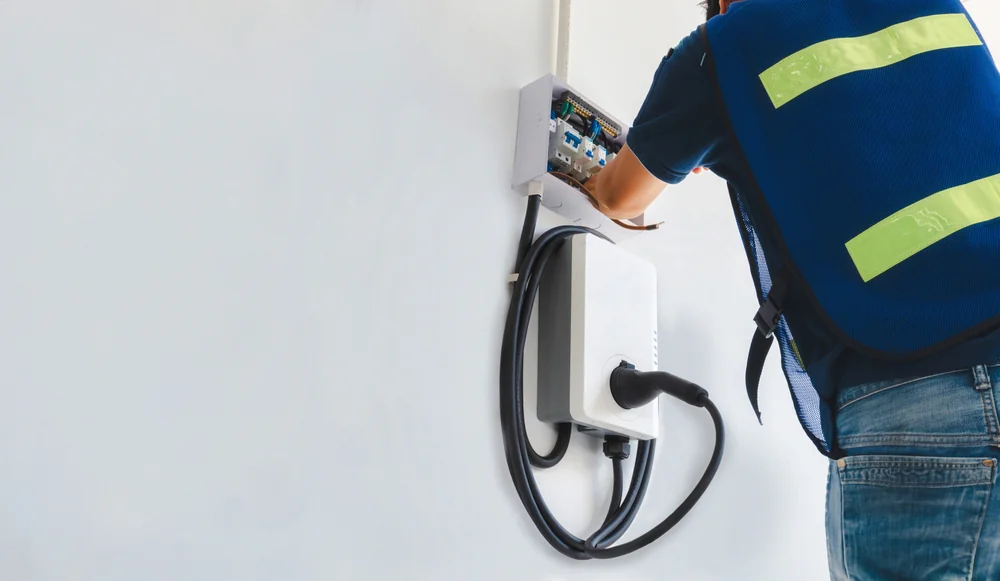
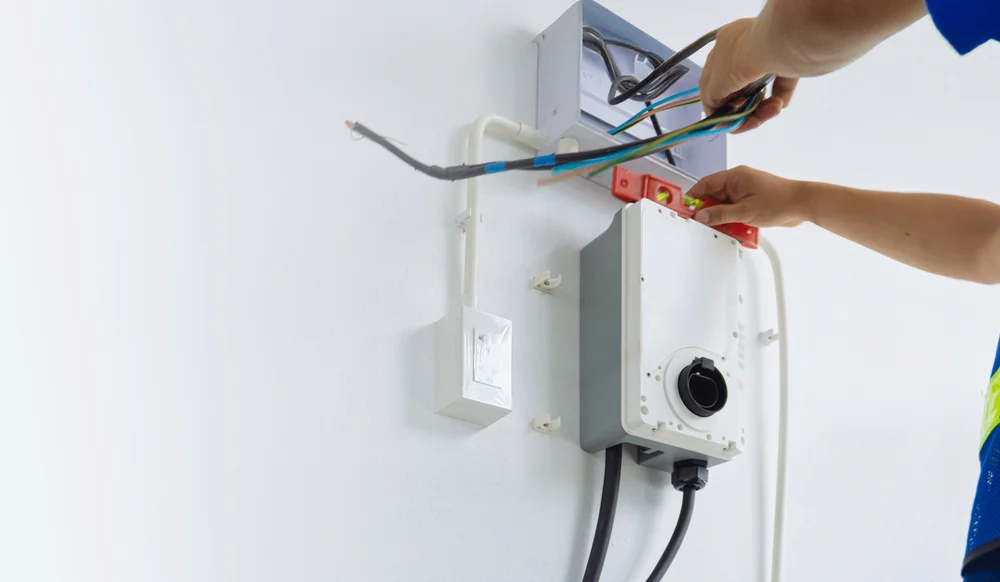
Professional Electric Vehicle Charger Installation Services
You’re done sitting in parking lots waiting for a charge. Done worrying if you’ll have enough range for tomorrow’s commute. Done paying $0.25 to $0.50 per kWh at public fast chargers when your home rate is around $0.13.
A Level 2 home EV charging station adds 14 to 35 miles of range per hour. That means a full charge overnight, every night, without leaving your driveway.
Your car is ready when you are. No apps to check. No stations to hunt down. No wondering if someone’s already using the charger you drove across town to reach. Just plug in before bed and go about your morning like you’ve been doing it for years.
Home charging isn’t just convenient—it’s cheaper, faster than a standard outlet, and eliminates the single biggest headache EV owners face in Greensboro: depending on infrastructure that wasn’t built for the demand we’re seeing now.
Licensed EV Charger Electricians in Greensboro
ESP Electrical Service Providers is owned by Andy Helton, a Master Electrician with over 35 years of experience. We’ve been serving the Triad since 2002—Greensboro, High Point, Burlington, Chapel Hill, Durham, and surrounding areas in Alamance, Chatham, Orange, and Guilford Counties.
We’re not new to this. We’ve seen the 40% surge in residential EV charger installation requests across Greensboro firsthand. We know which homes need panel upgrades before a Level 2 charger goes in, and which ones are ready to go.
You’re not getting a salesperson or a subcontractor. You’re getting licensed electricians who show up in uniform, with fully stocked trucks, and who clean up before we leave. We use flat-rate pricing, so you know the cost before we start. And if something’s not right, you can call Andy directly—no runaround.
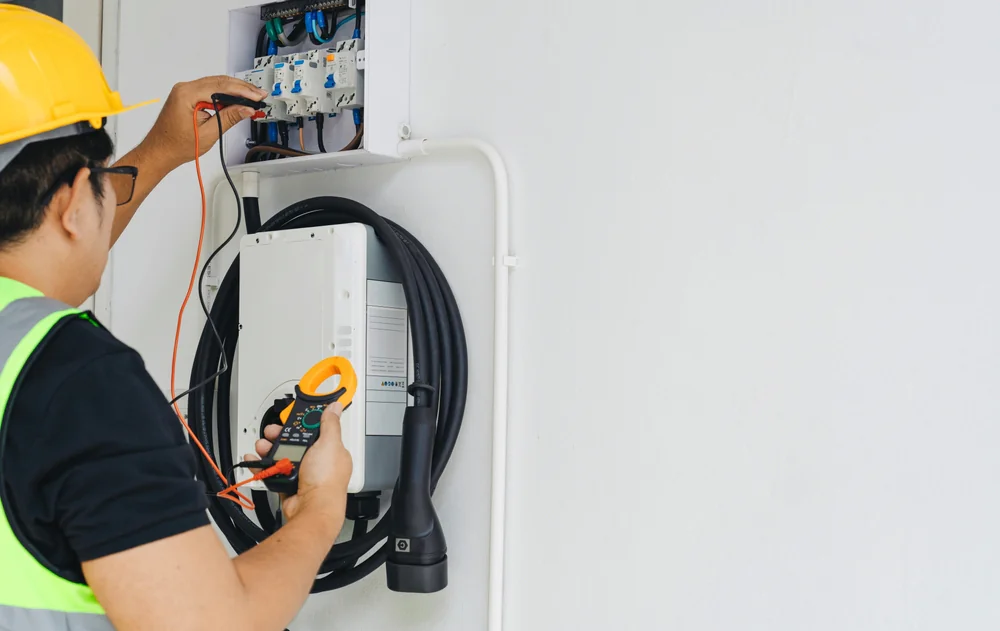
How Our EV Charger Setup Process Works
First, we assess your electrical system. Older homes in Greensboro weren’t built with 240-volt circuits for EV chargers, and many panels are already running at capacity. We check your load, your panel, and your wiring to make sure everything can handle the demand.
If your panel needs an upgrade, we’ll tell you upfront. No surprises. If it’s good to go, we move forward with the install.
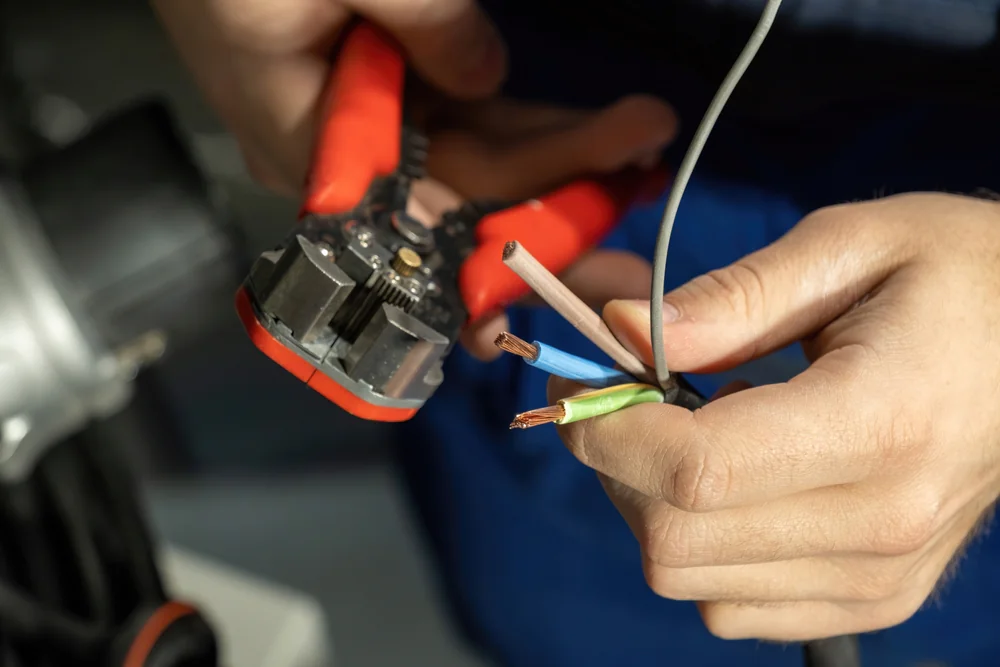
Next, we run the wiring and install your Level 2 charging station exactly where you want it—garage, carport, driveway. We mount it securely, connect it to a dedicated 240-volt circuit, and make sure it’s grounded and code-compliant. Every install gets a permit through Guilford County Code Enforcement, and we coordinate the inspection.
Once it’s done, we test it. We walk you through how it works. And we don’t leave until you’re confident it’s doing exactly what you need it to do. The whole process typically takes a few hours for a straightforward install, longer if panel work is involved.
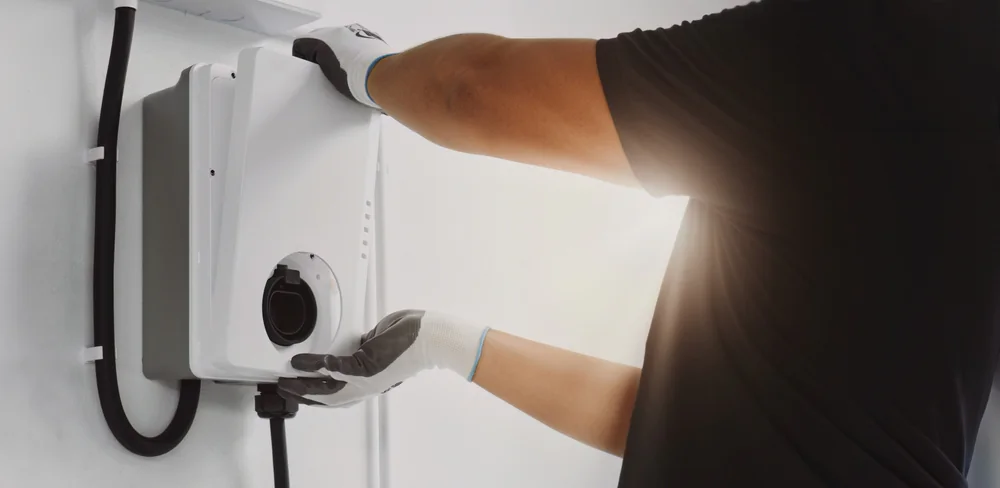
What's Included in Our EV Charging Installation
This isn’t just mounting a charger to your wall. It’s a full electrical installation that has to meet National Electrical Code standards and local Greensboro regulations.
We handle the load calculation to verify your system can support both your household demand and vehicle charging. We install a dedicated 240-volt circuit with proper breaker protection. We mount your Level 2 charger where it makes sense for your parking setup. And we pull the permit and schedule the inspection with Guilford County.
If you’re eligible for Duke Energy’s EV Charger Prep Credit—up to $1,117 per household—we’ll help you understand what’s required to qualify. North Carolina added nearly 240,000 electric and plug-in hybrid vehicles between 2020 and 2024, and Duke Energy has been expanding rebate programs to keep up. We stay current on what’s available so you don’t leave money on the table.
You also get transparent pricing. We quote the job upfront using flat-rate pricing, so there’s no hourly guessing game. And if something comes up during the install, we talk to you before we move forward.
How much does it cost to install an EV charger at home in Greensboro?
Most residential Level 2 EV charger installations in Greensboro range between $800 and $2,500, depending on your electrical setup and how far the charger is from your panel. If your home needs a panel upgrade or significant wiring work, costs go up from there.
We use flat-rate pricing, so you’ll know your exact cost before we start. No hourly rates. No surprise charges. We assess your electrical system first, tell you what’s needed, and give you a clear number.
Duke Energy offers an EV Charger Prep Credit that can cover up to $1,117 of installation costs for qualifying customers. We’ll walk you through what’s required if you want to apply. Between the rebate and the long-term savings on charging costs—home charging averages $0.13 per kWh compared to $0.25 to $0.50 at public stations—the payback period is shorter than most people expect.
Do I need to upgrade my electrical panel to install an EV charger?
It depends on your current panel capacity and household electrical load. Many older homes in Greensboro were built with 100-amp or 150-amp panels, and if you’re already running HVAC, water heater, dryer, and other major appliances, there may not be enough capacity left for a Level 2 charger.
A Level 2 charger typically requires a dedicated 40 or 50-amp circuit. We run a load calculation during the assessment to see if your panel can handle it. If it can’t, we’ll recommend an upgrade to a 200-amp panel before installing the charger.
Panel upgrades add to the upfront cost, but they’re not optional if your system can’t support the load. Skipping this step creates a safety risk and code violations. We don’t cut corners. If an upgrade is needed, we’ll explain why, quote it clearly, and handle the permit and inspection through Guilford County.
How long does it take to charge an EV with a Level 2 home charger?
A Level 2 charger adds between 14 and 35 miles of range per hour, depending on your vehicle and charger output. Most EVs with a fully drained battery will reach a full charge overnight—typically six to eight hours.
Compare that to a standard 120-volt wall outlet, which only adds three to five miles per hour. If you’re trying to charge a drained battery on a regular outlet, you’re looking at multiple days. That’s why most EV owners in Greensboro who rely on home charging install a Level 2 system.
If you drive 30 to 40 miles a day, you’re looking at two to three hours of charging to replace what you used. Plug in after work, and your car is ready before dinner. It’s faster, more reliable, and eliminates the need to plan your schedule around public charging stations that may or may not be available when you need them.
Can you install a charger for any electric vehicle brand?
Yes. We install Level 2 chargers for Tesla, Ford, Chevy, Nissan, Rivian, Hyundai, Kia—any EV or plug-in hybrid on the market. Most electric vehicles in the U.S. use the same J1772 connector standard for Level 2 charging, and Teslas come with an adapter.
The charger itself is typically provided by you, the homeowner, though we can recommend models if you’re not sure what to buy. Popular options include ChargePoint, JuiceBox, Grizzl-E, and Tesla Wall Connectors. We’ve installed all of them.
What matters most isn’t the brand of charger—it’s the electrical work behind it. The wiring, the breaker, the load calculation, the grounding, and the permit. That’s where experience and code compliance make the difference. We’ve been doing this since 2002, and we’ve seen what happens when installations are done wrong. We make sure yours is done right the first time.
Do I need a permit to install an EV charger in Greensboro?
Yes. Any Level 2 EV charger installation in Greensboro requires a permit through Guilford County Code Enforcement. This isn’t optional, and it’s not something you want to skip.
The permit ensures the work is inspected and meets National Electrical Code standards and local regulations. It protects you as the homeowner. If you ever sell your home, unpermitted electrical work can become a problem during the sale process—and it’s a safety risk in the meantime.
We pull the permit, coordinate the inspection, and make sure everything passes. It’s part of the service. You don’t have to deal with the county or figure out the paperwork. We handle it, and we don’t consider the job done until the inspection clears and you’re charging your vehicle safely and legally.
Will installing an EV charger increase my home's value?
It can, especially as EV adoption continues to grow in Greensboro and across North Carolina. The state added 50,000 EVs in just 23 months, and nearly 20% of all EVs in North Carolina were purchased in 2024 alone. Buyers are starting to look for homes with EV chargers already installed.
A properly installed Level 2 charger signals that your home is ready for the future. It’s a selling point for buyers who already own an EV or are planning to buy one. It also shows that your electrical system has been updated and can handle modern demands.
That said, the bigger value is in what it does for you while you live there. You’re saving money on charging costs, eliminating trips to public stations, and adding convenience to your daily routine. The resale benefit is secondary, but it’s real—and it’s only going to become more relevant as EV ownership becomes the norm in the Triad.
Other Services we provide in Greensboro
About Us

Electrical Service Providers (ESP) has been in business since 2002. ESP started out performing wiring services to new construction, remodeling projects and residential homes. Our company’s president identified a market for electrical services to be performed in homes and businesses independent of new construction. Read More about Electrical Service Providers>>
All Rights Reserved.Organic Marketing LLC
Business Listings


Product Brands Used
Allied, Broan, Cutler Hammer, General Electric, Ideal, Juno, Kohler, Leviton, Lutron, Siemens, Square D
Contact
- Office Address: 3254 S Anthony Ct.
Burlington, NC 27215 - Mailing Address: PO Box 25
Alamance, NC 27201 - Phone: 336-228-3300
- E-mail: [email protected], [email protected]
Service Areas
Chapel Hill, Burlington, Carrboro, Durham, Gibsonville, Hillsborough, Graham, Pittsboro, Morrisville, Cary
About Us
Electrical Service Providers (ESP) has been in business since 2002. ESP started out performing wiring services to new construction, remodeling projects and residential homes. Our company’s president identified a market for electrical services to be performed in homes and businesses independent of new construction. Read More about Electrical Service Providers>>
All Rights Reserved.Organic Marketing LLC