EV Charger Installation in Groometown, NC
Charge at Home Without the Electrical Headaches
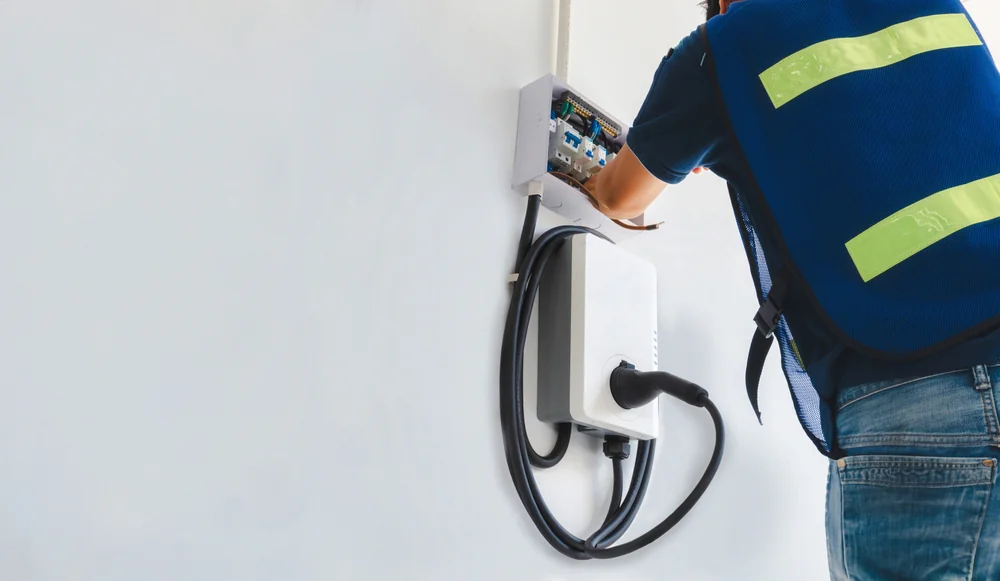
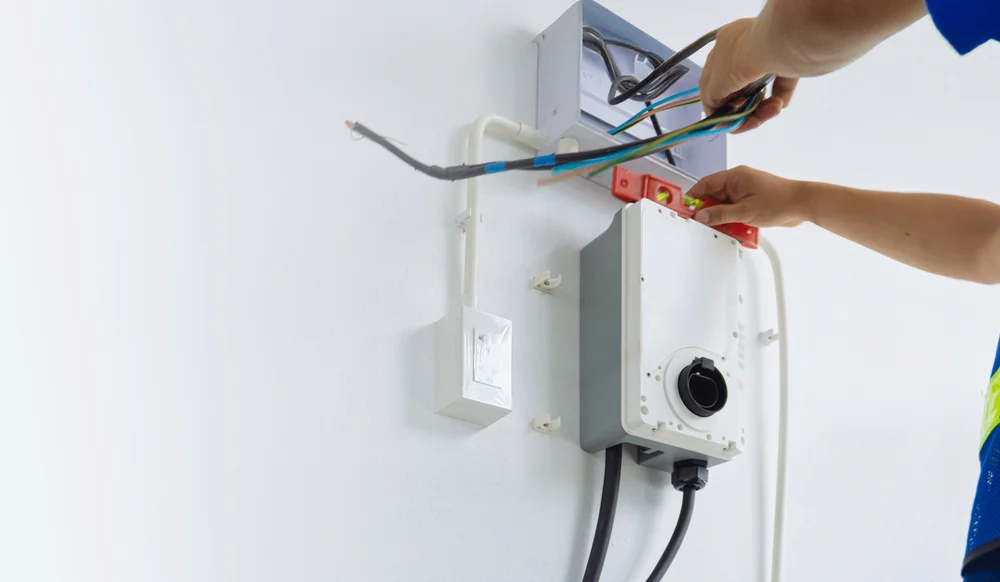
Electric Vehicle Charger Setup Groometown
You bought an EV to simplify your life, not to plan your week around charging stations. A Level 2 home charger changes everything. Plug in when you get home, and your car’s ready by morning.
No more detours to public chargers. No more waiting in line or hoping a station’s available. You’re charging on your schedule, in your driveway, while you sleep.
Most Groometown homes sit on an acre or more, which means your charger can go exactly where it makes sense for your property. Attached garage. Detached shop. Carport. We’ll figure out what works for your electrical service and your daily routine, then install it right the first time.
The upfront cost pays itself back. You’re spending less per mile than gas, and if you’ve got solar, even better. Plus, when it’s time to sell, that charger’s a selling point. Buyers in Guilford County are looking for homes that are ready for EVs, and yours will be.
Licensed Electricians Serving Groometown Residents
ESP Electrical Service Providers is locally owned and run by Andy Helton, a master electrician with over 35 years in the trade. We’re not a franchise. We’re not flipping through a manual to figure out your electrical panel.
We’ve been serving Groometown, Greensboro, and the surrounding counties since 2002. That’s two decades of service calls, panel upgrades, and problem-solving in homes just like yours. We know the housing stock here—the older builds from the ’70s and ’80s, the newer construction, the quirks that come with rural properties on large lots.
When we show up, you’re getting a licensed electrician in a fully stocked truck, not a subcontractor learning on the job. We price everything flat-rate before we start, so there’s no surprise bill at the end. And we don’t leave until the job’s done right and you’re satisfied with it.
How EV Charging Station Installation Works
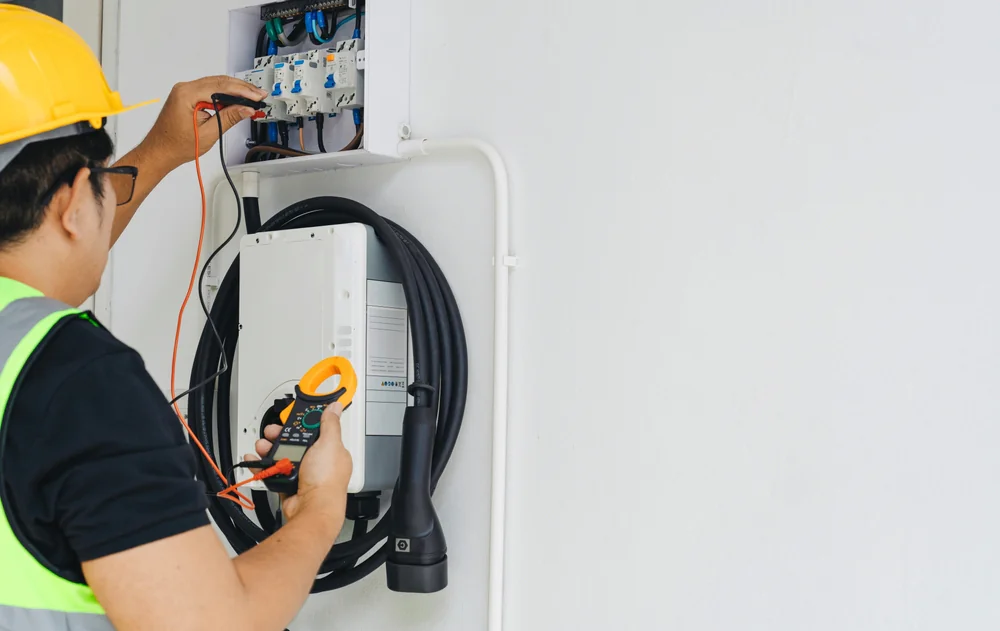
First, we come out and look at your electrical panel. Most homes in Groometown weren’t built with EV charging in mind, so we need to confirm your panel can handle the load. A typical Level 2 charger pulls 40 amps at 240 volts. If your panel’s maxed out or outdated, we’ll talk through what an upgrade looks like and what it’ll cost. No surprises.
Next, we map out the install. Where’s your car parking? Where’s the panel? What’s the distance, and what’s in the way? We’ll run conduit if it’s exterior, fish wire if it’s interior, and make sure everything’s weather-sealed and code-compliant. Groometown sits right off I-85 and I-73, so a lot of folks here are commuting into Greensboro or beyond. We’ll position your charger so it makes sense for how you actually use your driveway.
Then we handle the permits. Guilford County requires them for this kind of work, and the application has to be submitted correctly or it gets kicked back. We take care of that. We also coordinate the inspection so you’re not waiting around or dealing with the county yourself.
Once everything’s approved and installed, we test the system, show you how the charger works, and walk you through any smart features or app controls. Then we clean up and you’re done. You’ve got a safe, legal, fully functional home charging station.
What's Included in EV Charger Installation
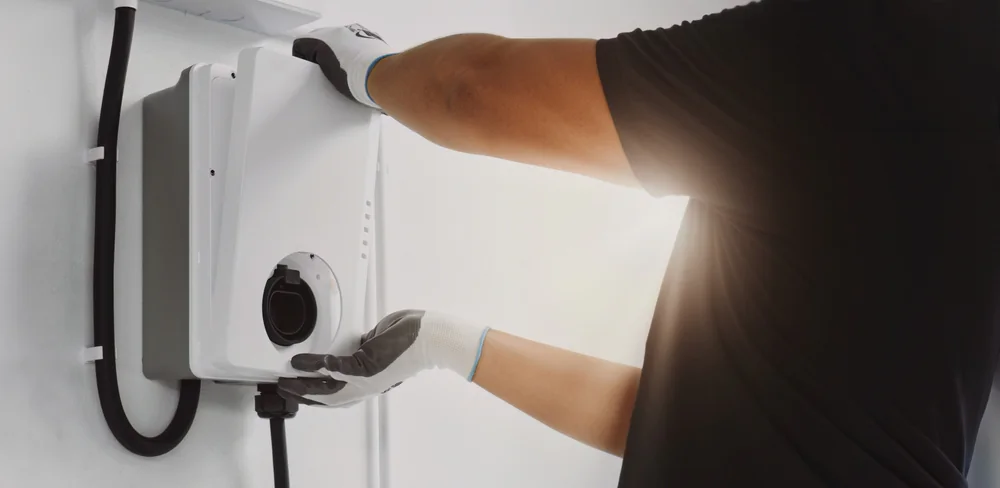
Every EV charger installation starts with a full electrical assessment. We’re checking your panel capacity, your breaker availability, and your grounding. If your home needs an upgrade to handle the new load, we’ll tell you upfront and give you a flat-rate price before any work starts.
We also help you navigate the Duke Energy rebate program. North Carolina homeowners can get up to $1,133 back on installation costs, but the paperwork has to be done right. We’ll walk you through what qualifies and how to submit it so you’re not leaving money on the table.
The installation itself includes all materials—wiring, conduit, breakers, mounting hardware, everything. We’re pulling permits, scheduling inspections, and making sure the work meets National Electrical Code standards. You’re not coordinating three different contractors or chasing down paperwork. It’s one call, one company, one point of contact.
And because Groometown properties tend to have more space and longer driveways than typical suburban lots, we’re used to running longer wire runs and planning installations that account for distance, weather exposure, and future access. If you’re thinking about adding a second EV down the road, we can set you up for that now. North Carolina’s EV market is growing fast—registrations jumped 20% in 2024 alone—and your home should be ready for it.
Will my electrical panel need an upgrade for an EV charger?
It depends on your current panel and how much capacity you have left. A Level 2 EV charger typically requires a dedicated 40-amp, 240-volt circuit. If your panel is already running close to its limit—common in older Groometown homes built in the ’70s and ’80s—you’ll need an upgrade.
We check this during the initial assessment. We’re looking at your panel’s total amperage, how many circuits are in use, and whether there’s physical space for a new breaker. If your main service is 100 amps and you’re running central air, a water heater, and a dryer, you’re probably tapped out.
Upgrading to a 200-amp panel isn’t just about the charger. It future-proofs your home for other electrical needs and keeps everything running safely. We price the upgrade flat-rate, so you’ll know the cost before we touch anything. Most panel upgrades in this area run a predictable range, and we’ll walk you through what’s involved.
How long does an EV charger installation take?
If your panel’s ready and the charger location is straightforward, most installs take four to six hours. That includes mounting the charger, running the wiring, connecting everything to the panel, and testing the system.
If you need a panel upgrade, add another day for that work. Permits and inspections add time to the overall timeline, but not to the actual work. Guilford County inspections usually happen within a few days of submission, depending on their schedule.
For Groometown properties with longer distances between the panel and the charger location—say, a detached garage or a carport on the far side of the house—the install might take a bit longer. We’re running conduit, trenching if needed, and making sure everything’s protected from the weather. We’ll give you a realistic timeline during the estimate so you can plan around it.
Can I use a regular outlet to charge my EV?
You can, but you shouldn’t rely on it. A standard 120-volt outlet will charge your EV, but it’s slow—usually three to five miles of range per hour. If you’re driving 40 miles a day, that’s an overnight charge at minimum, and you’re running that outlet at full capacity for hours on end.
That’s where the safety issue comes in. Standard outlets aren’t designed for continuous heavy loads. You’re heating up the wiring, stressing the circuit, and increasing the risk of a tripped breaker or worse. We’ve seen this cause problems in homes around Raleigh and Greensboro, and it can void your homeowner’s insurance if something goes wrong.
A Level 2 charger on a dedicated 240-volt circuit gives you 25 to 30 miles of range per hour. It’s faster, safer, and designed for the load. If you’re serious about driving an EV daily, especially with the commutes a lot of Groometown residents are making into Greensboro or Durham, a proper charging setup makes sense.
What rebates or incentives are available for EV charger installation?
Duke Energy offers a rebate of up to $1,133 for North Carolina homeowners installing a Level 2 charger. The program covers a portion of the installation costs, including the electrical work and equipment. You have to submit the right documentation, and the charger has to meet their requirements, but it’s real money back.
There’s also a federal tax credit through the Alternative Fuel Vehicle Refueling Property Credit. That covers 30% of your installation costs, up to $1,000, for qualifying home charging equipment installed before June 30, 2026. You’ll claim it when you file your taxes.
We help customers navigate the Duke Energy rebate process because the paperwork has to be done correctly. Applications that don’t meet the criteria get rejected, and you don’t want to leave over a thousand dollars on the table because of a missed form or an incorrect file type. We’ll walk you through what’s required and make sure you’ve got what you need to submit.
What type of EV charger should I install at home?
For most homeowners, a Level 2 charger is the right call. It runs on 240 volts, the same as your dryer or oven, and it charges your EV in a few hours instead of overnight. You’ll get 25 to 30 miles of range per hour, which is more than enough for daily driving.
Within Level 2 chargers, you’ve got options. Some are hardwired directly into your electrical system. Others plug into a 240-volt outlet, which gives you flexibility if you move or upgrade later. Hardwired units tend to be cleaner-looking and more permanent. Plug-in units are easier to relocate.
You’ll also see smart chargers with app controls, scheduling features, and energy monitoring. If you’re on a time-of-use rate with Duke Energy, you can set the charger to run during off-peak hours and save on your electric bill. We’ll talk through what features matter for your situation and what’s worth paying extra for. Some people want the tech. Others just want the car charged. Both are fine.
Do I need a permit for EV charger installation in Groometown?
Yes. Guilford County requires an electrical permit for EV charger installations because you’re adding a new 240-volt circuit and making changes to your panel. The permit process ensures the work meets code and gets inspected for safety.
We handle the permit application for you. The county’s pretty specific about how applications need to be submitted—only PDFs, no ZIP files, one file per document. If it’s not formatted right, it gets rejected and you’re starting over. We’ve done enough of these to know what they’re looking for.
After the install, a county inspector comes out to verify everything’s up to code. We schedule that and make sure we’re available when they show up. Once it passes inspection, you’re good to go. Skipping the permit might seem like a shortcut, but it creates problems down the road—especially if you sell the house or file an insurance claim. It’s not worth the risk.
Other Services we provide in Groometown
About Us

Electrical Service Providers (ESP) has been in business since 2002. ESP started out performing wiring services to new construction, remodeling projects and residential homes. Our company’s president identified a market for electrical services to be performed in homes and businesses independent of new construction. Read More about Electrical Service Providers>>
All Rights Reserved.Organic Marketing LLC
Business Listings


Product Brands Used
Allied, Broan, Cutler Hammer, General Electric, Ideal, Juno, Kohler, Leviton, Lutron, Siemens, Square D
Contact
- Office Address: 3254 S Anthony Ct.
Burlington, NC 27215 - Mailing Address: PO Box 25
Alamance, NC 27201 - Phone: 336-228-3300
- E-mail: [email protected], [email protected]
Service Areas
Chapel Hill, Burlington, Carrboro, Durham, Gibsonville, Hillsborough, Graham, Pittsboro, Morrisville, Cary
About Us
Electrical Service Providers (ESP) has been in business since 2002. ESP started out performing wiring services to new construction, remodeling projects and residential homes. Our company’s president identified a market for electrical services to be performed in homes and businesses independent of new construction. Read More about Electrical Service Providers>>
All Rights Reserved.Organic Marketing LLC