EV Charger Installation in Haw River, NC
Charge at Home Without the Installation Headaches
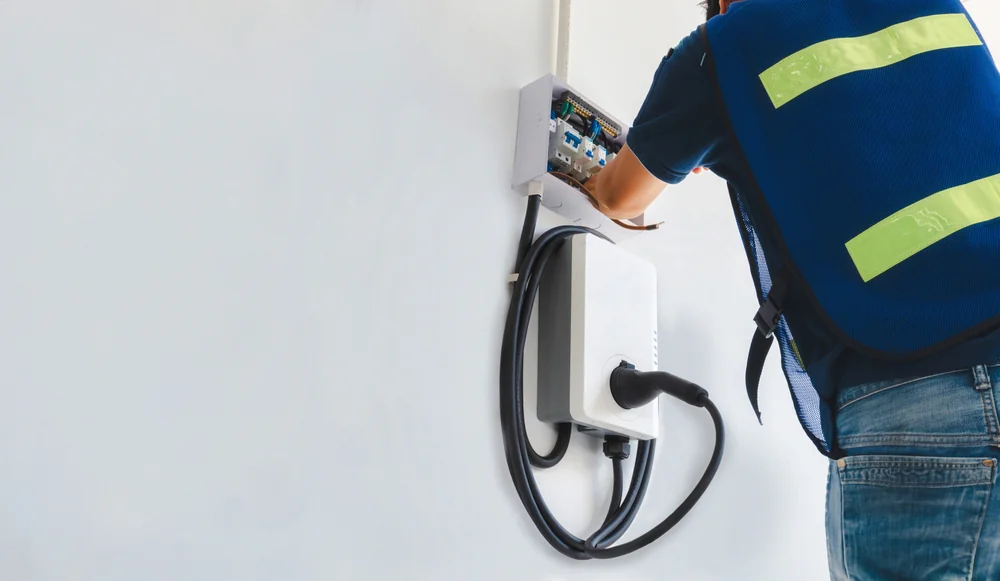
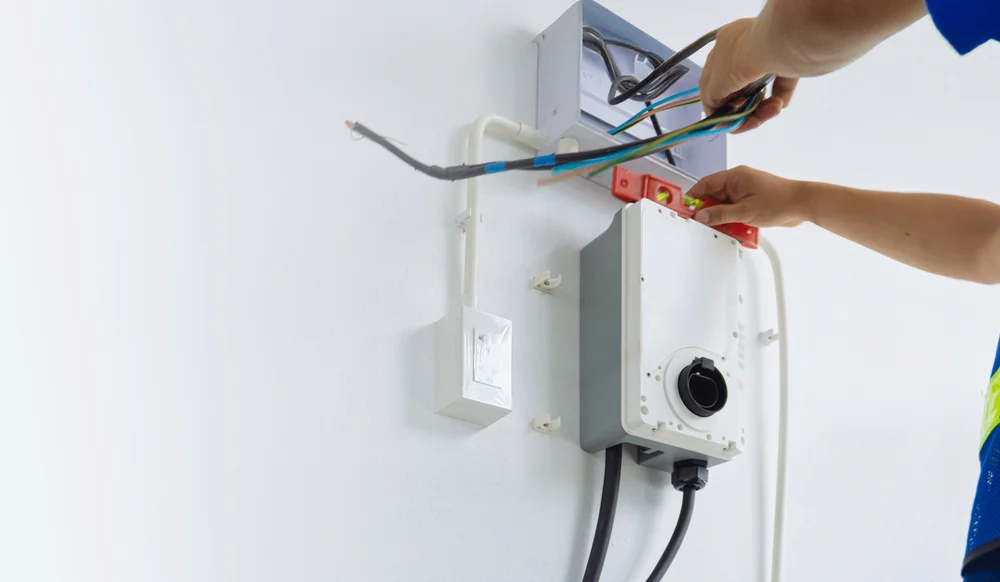
Professional Electric Vehicle Charger Setup
You bought an EV to save money and skip gas stations. But public charging eats into those savings fast, and hunting for available stations turns every trip into a planning session.
A Level 2 home charger changes that. You plug in when you get home, and your car’s ready by morning. No apps to check. No detours. No wondering if the station will be occupied or broken.
Charging at home costs less per kilowatt-hour than public stations, and you’re not paying convenience fees or membership subscriptions. Over a year, that adds up to real money back in your pocket. You also skip the time cost—the 20 minutes here, 30 minutes there that disappear when you’re stuck waiting at a charging station.
Your car becomes as easy to fuel as your phone. That’s what a proper home EV charging station gives you.
Licensed Electricians Serving Haw River
We’ve been handling electrical work in Alamance County and surrounding areas for over 22 years. Andy Helton, a Master Electrician with 35+ years of experience, runs our company. Our Operations Manager has held an electrical contractor license since 1989.
We’re not new to this, and we’re not learning on your property. Haw River sits in a part of North Carolina where EV adoption is climbing fast—Orange and Alamance counties are seeing more electric vehicles every quarter. That means more homeowners need electricians who know how to install EV chargers correctly the first time.
We handle the permit, the inspection, the panel evaluation, and the installation. You get a charger that works safely and meets code. That’s what local experience gets you.
How EV Charger Installation Works
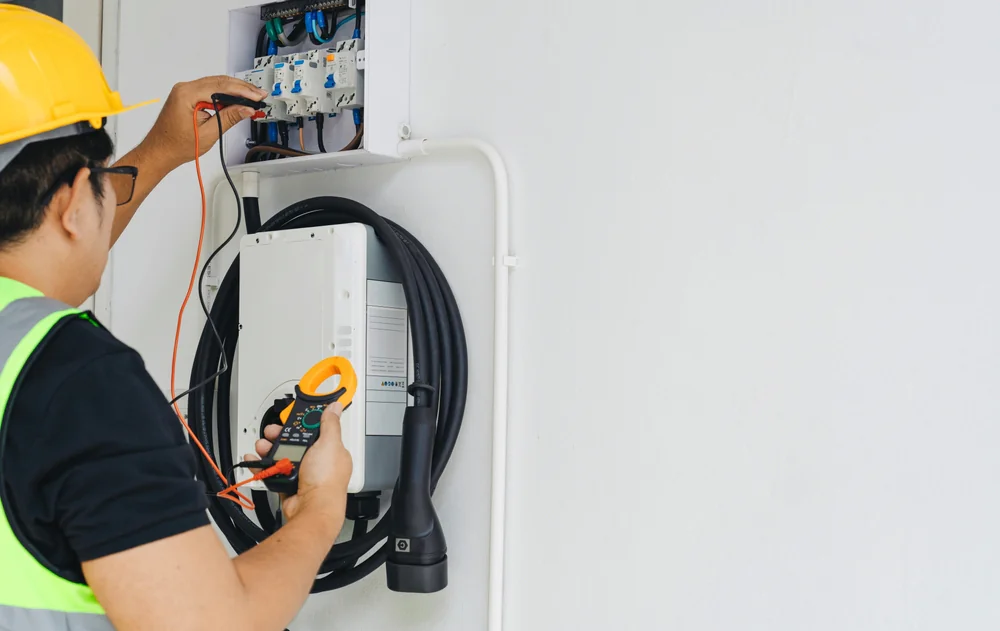
First, we assess your electrical panel. Most EV chargers need a dedicated 240-volt circuit, and older panels—especially 100-amp systems—often can’t handle the load without an upgrade. We’ll tell you up front if your panel needs work before we can safely install a charger.
Next, we pull the permit. Haw River and surrounding municipalities require permits for EV charger installations, and we handle that paperwork. No surprises, no delays because something wasn’t filed right.
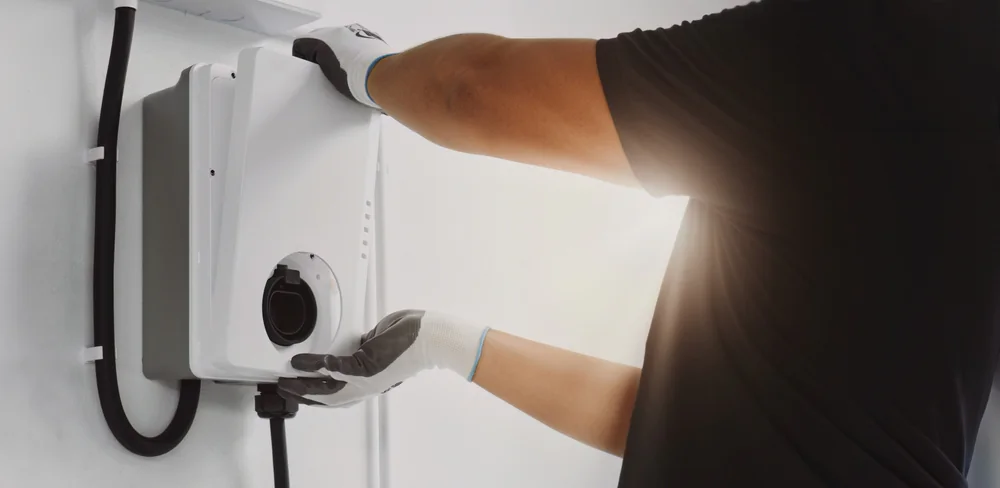
Then we install the charger. That includes running the wiring, mounting the unit where you want it (usually in your garage or near your parking spot), and connecting everything to a new dedicated circuit. Most installations take two to four hours if your panel’s ready. If you need an upgrade, we’ll schedule that first.
Finally, we schedule the inspection and make sure everything passes. Once it’s signed off, you’re done. We also walk you through how to use the charger and answer any questions before we leave. You’ll know your cost before we start—we use flat-rate pricing, so there’s no hourly surprise at the end.
What's Included in Your Installation
If your panel can’t support a Level 2 charger, we’ll upgrade it. That’s not an upsell—it’s a safety requirement. Overloading an undersized panel can trip breakers, overheat wiring, or start a fire. We size the upgrade correctly so your home can handle the charger and anything else you’re running.
We also help you navigate Duke Energy’s rebate program. North Carolina households can get up to $1,133 back on installation costs through Duke’s EV Charger Installation Support Program. We’ll walk you through the paperwork so you’re not leaving money on the table.
Every installation includes permit acquisition and inspection scheduling. Haw River falls under local codes that require both, and we make sure everything’s compliant. You don’t have to call the county or wait on hold—we handle it.
You’ll also get a walkthrough once the job’s done. We’ll show you how the charger works, explain the breaker setup, and answer any questions. If something doesn’t feel right or you’re not satisfied, we’re not finished. That’s the standard.
North Carolina’s EV market is growing fast—over 100,000 registered EVs statewide as of 2024, and Haw River’s part of that growth. More EVs mean more demand for qualified electricians who can do this work safely. We’ve been here since 2002, and we’re not going anywhere.
How much does EV charger installation cost in Haw River?
Most Level 2 EV charger installations run between $800 and $3,000, depending on your electrical panel, how far we need to run wiring, and whether you need a panel upgrade. That price includes the charger hardware, labor, permits, and inspection fees.
If your panel’s already set up to handle the load and your garage has easy access to the breaker box, you’ll land on the lower end. If we need to upgrade your panel from 100 amps to 200 amps or run a long conduit to reach your parking area, the cost goes up. We’ll give you a flat-rate price before we start so you know exactly what you’re paying.
Duke Energy offers rebates up to $1,133 for North Carolina homeowners, which can cover a significant chunk of the installation cost. We’ll help you apply so you’re not figuring that out on your own. The rebate doesn’t reduce our invoice, but it puts money back in your pocket after the work’s done.
Do I need to upgrade my electrical panel for an EV charger?
It depends on your current panel’s capacity and what else is running in your home. Level 2 chargers typically pull 30 to 50 amps, and they need a dedicated 240-volt circuit. If your panel is rated at 100 amps and you’re already running central air, a water heater, and other major appliances, there’s probably not enough capacity left over.
We’ll evaluate your panel during the estimate. If it’s undersized, we’ll recommend an upgrade to 200 amps. That’s not just for the charger—it also future-proofs your home for other electrical needs. Skipping the upgrade and overloading your panel can trip breakers constantly, overheat wiring, or create a fire hazard.
Panel upgrades add to the upfront cost, but they’re a one-time investment that makes your entire electrical system safer and more capable. Most homes built before 2000 in the Haw River area have 100- or 150-amp panels, so upgrades are common when adding EV chargers.
How long does it take to install a home EV charger?
If your panel’s ready and the charger location is straightforward, most installations take two to four hours. That includes mounting the charger, running the wiring, connecting it to a new breaker, and testing everything to make sure it works.
If you need a panel upgrade first, that’s a separate job that usually takes four to six hours depending on the complexity. We’ll schedule the upgrade, get it inspected, and then come back to install the charger once everything’s approved.
Permit approval and inspection scheduling can add a few days to the timeline, but we handle that process so you’re not waiting on the county or trying to figure out what forms to file. Most customers are charging their EV at home within a week of their first call, assuming no major electrical work is needed. We keep our trucks fully stocked so we’re not making multiple trips for parts.
Can I install an EV charger myself to save money?
Technically, you could—but it’s not a good idea. EV chargers require a dedicated 240-volt circuit, which means working inside your breaker panel and running new wiring. If you overload the circuit, use the wrong gauge wire, or make a mistake with the breaker, you risk electrical fires, code violations, and voided warranties.
Most EV charger manufacturers will void the warranty if the unit isn’t installed by a licensed electrician. Your homeowner’s insurance might also deny a claim if a fire starts because of unpermitted or improper electrical work. Haw River and surrounding areas require permits for EV charger installations, and inspectors will check the work. If it doesn’t pass, you’ll have to pay someone to fix it anyway.
Hiring a licensed electrician costs more upfront, but it’s cheaper than redoing the job, dealing with insurance headaches, or replacing a charger that failed because it wasn’t installed right. We’ve fixed plenty of DIY installations that didn’t go as planned. It’s always more expensive the second time around.
What's the difference between Level 1 and Level 2 EV chargers?
Level 1 chargers plug into a standard 120-volt outlet—the same kind you use for lamps and phone chargers. They’re slow. You’ll get about 3 to 5 miles of range per hour of charging, which means it can take 24 hours or more to fully charge most EVs. That works if you barely drive and can leave your car plugged in overnight, but it’s not practical for most people.
Level 2 chargers run on 240 volts, the same as your dryer or oven. They charge 3 to 7 times faster than Level 1, giving you 20 to 60 miles of range per hour depending on your car and the charger’s amperage. That means a full charge overnight, even if you drive a lot during the day.
If you’re serious about driving an EV as your primary vehicle, Level 2 is the only real option. Level 1 might work as a backup, but it won’t keep up with daily use. Most EV owners in Haw River and the surrounding area install Level 2 chargers because they actually need their car ready in the morning.
Do you handle the permit and inspection for EV charger installation?
Yes. We pull the permit, schedule the inspection, and make sure everything passes. You don’t have to call the county, figure out what forms to file, or wait on hold. That’s part of the service.
Haw River falls under local building codes that require permits for EV charger installations. The inspection makes sure the wiring, breaker, and charger meet safety standards. If something’s not right, the inspector will flag it, and we’ll fix it before you ever know there was an issue.
Some electricians skip permits to save time or avoid inspection fees. That’s a problem if you ever sell your home—unpermitted work can kill a sale or force you to bring everything up to code at closing. It’s also a problem if your insurance company finds out after a fire. We do it right the first time so you don’t have to worry about it later.
Other Services we provide in Haw River
About Us

Electrical Service Providers (ESP) has been in business since 2002. ESP started out performing wiring services to new construction, remodeling projects and residential homes. Our company’s president identified a market for electrical services to be performed in homes and businesses independent of new construction. Read More about Electrical Service Providers>>
All Rights Reserved.Organic Marketing LLC
Business Listings


Product Brands Used
Allied, Broan, Cutler Hammer, General Electric, Ideal, Juno, Kohler, Leviton, Lutron, Siemens, Square D
Contact
- Office Address: 3254 S Anthony Ct.
Burlington, NC 27215 - Mailing Address: PO Box 25
Alamance, NC 27201 - Phone: 336-228-3300
- E-mail: [email protected], [email protected]
Service Areas
Chapel Hill, Burlington, Carrboro, Durham, Gibsonville, Hillsborough, Graham, Pittsboro, Morrisville, Cary
About Us
Electrical Service Providers (ESP) has been in business since 2002. ESP started out performing wiring services to new construction, remodeling projects and residential homes. Our company’s president identified a market for electrical services to be performed in homes and businesses independent of new construction. Read More about Electrical Service Providers>>
All Rights Reserved.Organic Marketing LLC