EV Charger Installation in High Point, NC
Charge at Home Without the Guesswork or Risk
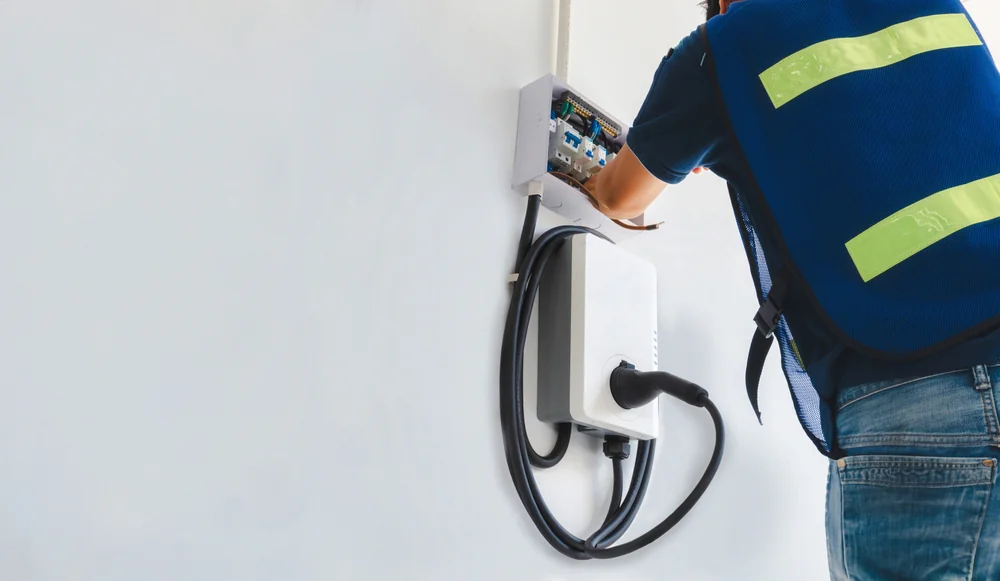
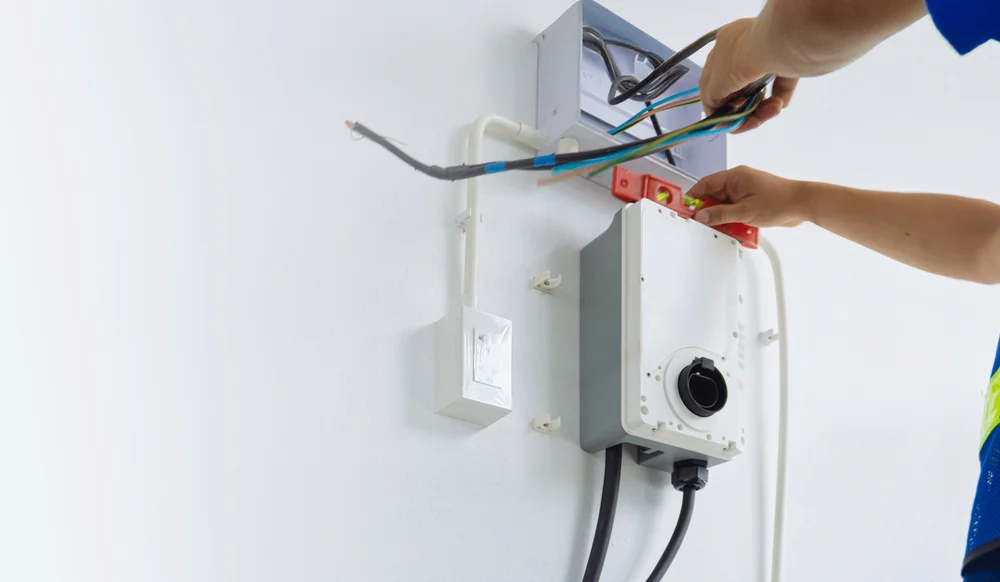
Electric Vehicle Charger Setup in High Point
You bought an electric vehicle to simplify your life. Now you need a charging solution that actually delivers on that promise.
A Level 2 home charging station means your car charges while you sleep. No more planning trips around charging stops. No more sitting in parking lots waiting for a public charger to open up. You plug in when you get home, and by morning, you’re ready for whatever the day brings.
Most Level 2 chargers fully charge your EV in 4-8 hours, compared to the 20+ hours a standard outlet requires. That’s the difference between convenience and frustration. Your electrical panel needs to handle the load safely, your installation needs to meet code, and your charger needs to work reliably. When those three things line up correctly, home charging becomes the easiest part of EV ownership.
Licensed EV Charger Installers in High Point
We’ve served the High Point area and surrounding Piedmont Triad region since 2002. Our Operations Manager has held an electrical contractor license since 1989, bringing over three decades of hands-on experience to every job.
We’re not a new construction company dabbling in service work. We built this business specifically around responding to homeowner needs—electrical panel upgrades, dedicated circuits, code compliance, and now EV charging installations. High Point homeowners deal with a mix of older homes needing panel upgrades and newer builds ready for charging stations. We handle both.
When you call, you talk to someone who knows the work. Not an answering service, not a sales team. Someone who can actually answer your questions about your electrical system and what it takes to charge an EV safely at home.
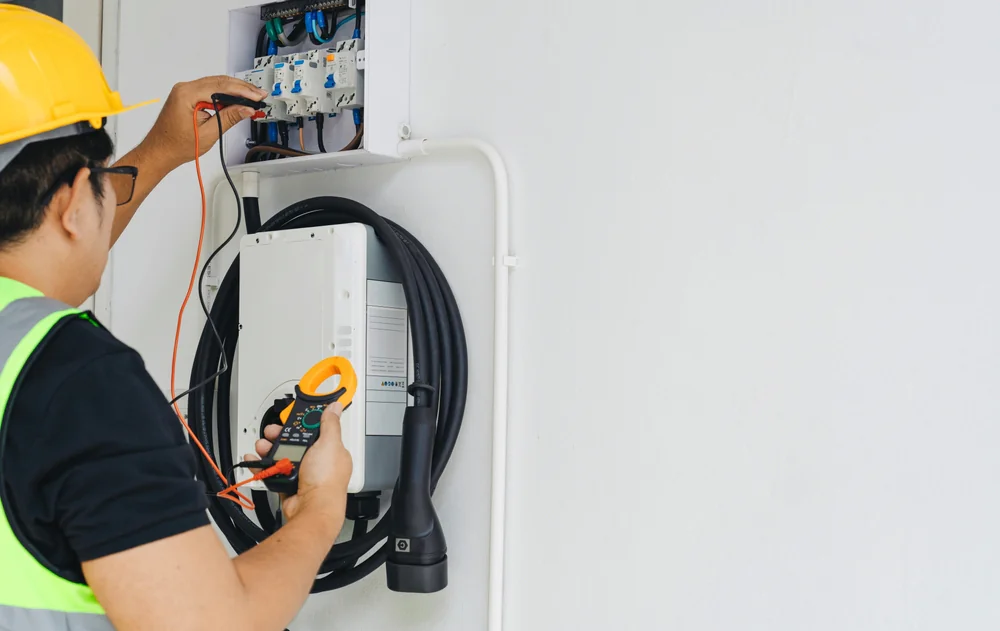
How EV Charging Station Installation Works
First, we assess your current electrical system. Most modern homes have 200-amp service, which typically handles a Level 2 EV charger without issue. Older homes with 100-amp panels might need an upgrade or a dedicated subpanel. We’ll tell you exactly what your home needs before any work begins.
Next, we determine the best charger location. Garage installations are most common, but we can also install chargers on exterior walls or carports. The closer your charger is to your electrical panel, the simpler the installation. Distance means more conduit, more wire, and more labor.
Then we handle permits and installation. High Point requires electrical permits for EV charger installations, and all work must pass inspection. We pull the permits, install your dedicated 240-volt circuit, mount your charging station, and schedule the required inspection. You don’t coordinate anything.
After inspection approval, you’re ready to charge. We’ll walk you through your charger’s features, show you how to monitor charging sessions if your unit has smart capabilities, and make sure you’re comfortable with the system before we leave.
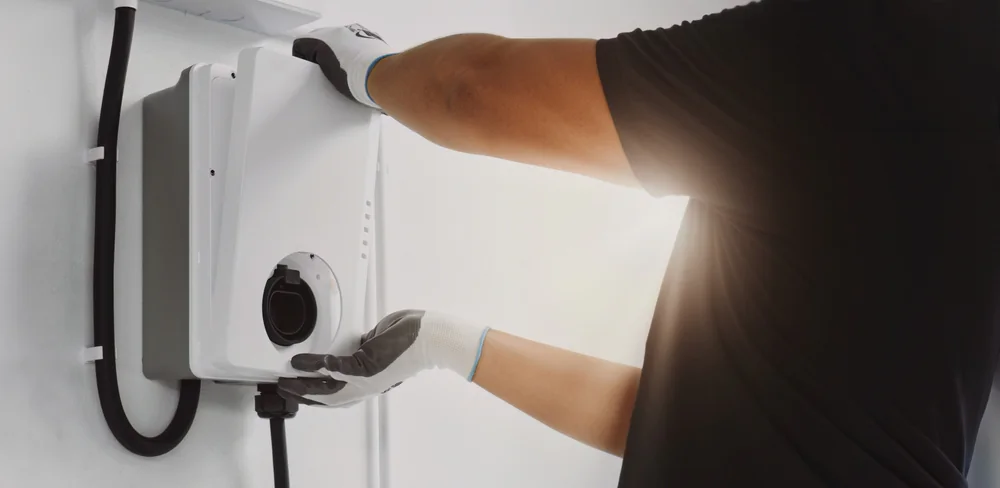
Residential EV Charger Installation Services
Your EV charger installation includes a complete electrical system evaluation. We check your panel capacity, measure voltage, and calculate your home’s total electrical load. If you’re running central air, a heat pump, an electric water heater, and major appliances, we need to know your system can handle an EV charger on top of everything else.
You get a dedicated 240-volt circuit installed to code. This isn’t a standard outlet—it’s a hardwired connection or NEMA 14-50 outlet specifically designed for EV charging. We size the breaker correctly, run appropriate gauge wire, and install proper conduit protection. Cutting corners here creates fire hazards.
We handle all permits and inspections required by High Point and Guilford County. The permitting process isn’t complicated, but it is mandatory. Unpermitted electrical work can void your homeowner’s insurance and create problems when you sell your home.
North Carolina’s EV adoption is climbing fast—the state hit over 100,000 registered EVs in 2024, with nearly 20% purchased just last year. High Point sits in the Greensboro-High Point metro area, where EV ownership is growing even faster than the state average. More EVs mean more demand for qualified installers who know local codes and can get the job done right the first time.
How much does EV charger installation cost in High Point?
Most installations run between $1,000 and $2,500, depending on your electrical panel’s current capacity and how far the charger sits from your panel. That range covers labor, materials, permits, and inspection fees.
If your home already has 200-amp service and your panel has space for a new breaker, you’re looking at the lower end. If you need a panel upgrade, a subpanel, or a long conduit run from your panel to your garage, costs go up. We’ll give you an exact price after evaluating your electrical system.
Duke Energy offers rebates up to $1,133 per household for EV charger installation costs in North Carolina. There’s also a federal tax credit covering up to 30% of electrical panel upgrade costs, capped at $600, if your upgrade meets National Electric Code standards with 200+ amp capacity. These incentives can offset a significant portion of your total installation cost.
Do I need to upgrade my electrical panel for an EV charger?
It depends on your current panel and your home’s total electrical load. Homes built in the last 20 years typically have 200-amp service, which usually handles a Level 2 EV charger without upgrades. Older homes with 100-amp panels are often near capacity and need either a full panel upgrade or a dedicated subpanel.
We calculate your home’s load by accounting for your HVAC system, water heater, major appliances, and existing circuits. A Level 2 EV charger draws 30-50 amps depending on the model. If adding that load pushes your panel past safe capacity, an upgrade isn’t optional—it’s required by code.
Panel upgrades aren’t just about the EV charger. You’re also future-proofing your home for additional EVs, solar panels, or other high-demand electrical additions. A 200-amp panel gives you flexibility for years to come, and it’s an investment that increases your home’s value and functionality.
How long does a Level 2 EV charger take to charge my car?
Most Level 2 home chargers fully charge an EV in 4-8 hours, depending on your battery size and how depleted it is. That’s roughly 25-30 miles of range added per hour of charging. For most drivers, overnight charging is more than enough.
Compare that to a standard 120-volt outlet, which adds only 3-5 miles of range per hour and can take over 20 hours for a full charge. Level 2 chargers use 240-volt circuits—the same voltage as your electric dryer—to deliver significantly faster charging speeds.
If you drive 40 miles round-trip for your commute, you’re looking at about two hours of charging to replenish that range. Plug in when you get home, and your car is ready long before you need it again. The convenience is the entire point of home charging—you’re never waiting on your car.
Can I install an EV charger myself or do I need an electrician?
You need a licensed electrician. High Point requires permits for EV charger installations, and all work must be performed by a certified electrician and pass inspection. Attempting a DIY installation voids your charger’s warranty and creates serious safety risks.
EV chargers operate at 240 volts and draw significant amperage. Incorrect wire sizing, improper breaker selection, or faulty connections can cause electrical fires, damage your home’s wiring, or create shock hazards. These aren’t minor mistakes—they’re dangerous and expensive to fix.
Beyond safety, there’s liability. If unpermitted electrical work causes a fire or injury, your homeowner’s insurance may deny your claim. When you sell your home, unpermitted work can delay or kill the sale. Hiring a licensed electrician costs more upfront, but it protects you legally, financially, and physically.
Will a home EV charger increase my electric bill?
Yes, but charging at home is still significantly cheaper than paying for gas or using public charging stations. The average EV uses about 30-40 kWh to drive 100 miles. In North Carolina, residential electricity averages around $0.12 per kWh, meaning 100 miles of driving costs roughly $3.60-$4.80.
Compare that to a gas vehicle averaging 25 mpg with gas at $3.50 per gallon—100 miles costs $14. You’re saving about $10 per 100 miles, or around $100-$150 per month for typical drivers. Over a year, that’s $1,200-$1,800 in fuel savings.
Duke Energy Progress offers time-of-use programs with rates as low as $0.04 per kWh during off-peak hours. If you charge overnight, your costs drop even further. Many Level 2 chargers include scheduling features so you can automatically charge during the cheapest rate periods. Your electric bill goes up, but your total transportation costs go down.
What's the difference between Level 1, Level 2, and DC fast charging?
Level 1 charging uses a standard 120-volt household outlet and adds 3-5 miles of range per hour. It’s the slowest option and really only works if you drive very little or have all night to charge. Most EV owners find Level 1 too slow for daily use.
Level 2 charging uses a 240-volt circuit and adds 25-30 miles of range per hour. This is the standard for home installations because it balances speed, cost, and convenience. Level 2 chargers fully charge most EVs overnight and work for nearly every residential use case.
DC fast charging is what you find at public charging stations along highways. These chargers can add 100-200 miles of range in 20-30 minutes, but they require commercial-grade electrical infrastructure and cost tens of thousands of dollars to install. They’re not practical or necessary for home use. Level 2 handles daily charging, and you use DC fast chargers on road trips.
Other Services we provide in High Point
About Us

Electrical Service Providers (ESP) has been in business since 2002. ESP started out performing wiring services to new construction, remodeling projects and residential homes. Our company’s president identified a market for electrical services to be performed in homes and businesses independent of new construction. Read More about Electrical Service Providers>>
All Rights Reserved.Organic Marketing LLC
Business Listings


Product Brands Used
Allied, Broan, Cutler Hammer, General Electric, Ideal, Juno, Kohler, Leviton, Lutron, Siemens, Square D
Contact
- Office Address: 3254 S Anthony Ct.
Burlington, NC 27215 - Mailing Address: PO Box 25
Alamance, NC 27201 - Phone: 336-228-3300
- E-mail: [email protected], [email protected]
Service Areas
Chapel Hill, Burlington, Carrboro, Durham, Gibsonville, Hillsborough, Graham, Pittsboro, Morrisville, Cary
About Us
Electrical Service Providers (ESP) has been in business since 2002. ESP started out performing wiring services to new construction, remodeling projects and residential homes. Our company’s president identified a market for electrical services to be performed in homes and businesses independent of new construction. Read More about Electrical Service Providers>>
All Rights Reserved.Organic Marketing LLC