EV Charger Installation in Hillsdale, NC
Charge at Home Without the Electrical Headaches
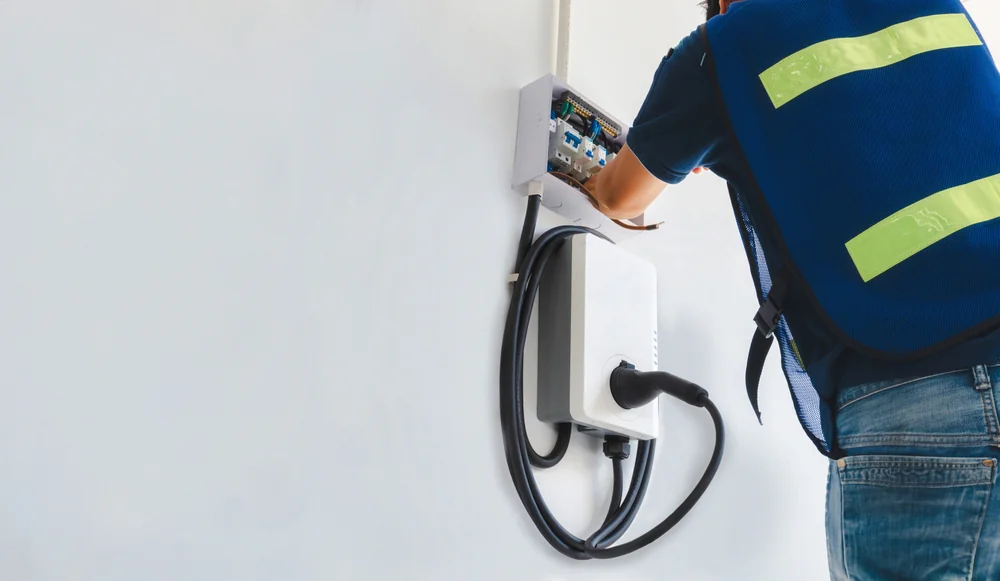
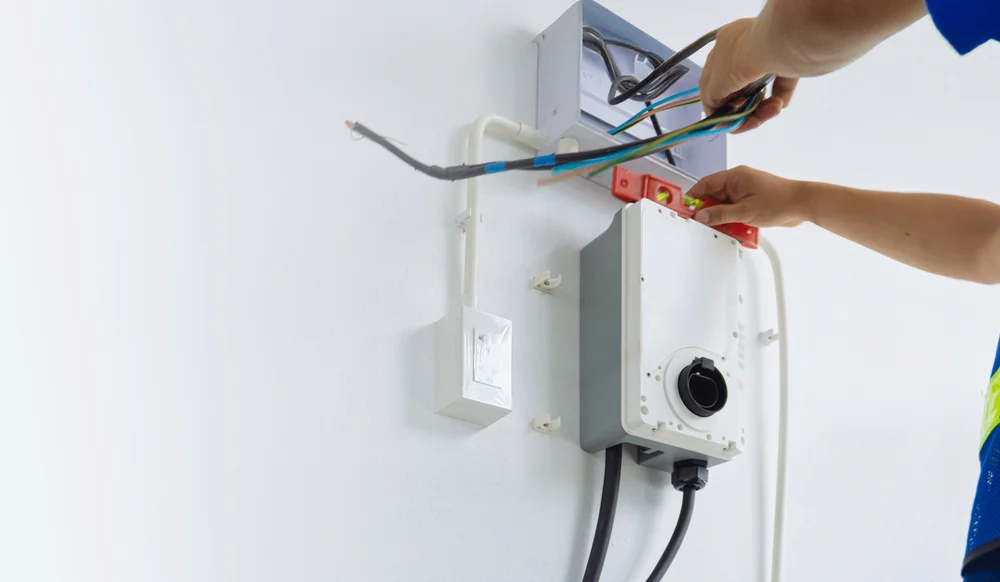
Electric Vehicle Charging Station Setup
You bought an electric vehicle to make life simpler. The last thing you need is hunting for public charging stations or waiting in line behind three other Teslas at the grocery store lot.
Home charging means your car is ready when you are. No apps to check. No detours on the way home. Just plug in overnight and start your day with a full battery—every single time.
But getting there isn’t as simple as buying a charger off Amazon and plugging it into your garage outlet. Most homes in Hillsdale built before the 2000s weren’t designed to handle the electrical load that Level 2 EV charging demands. That’s where the real work happens—and where cutting corners becomes expensive or dangerous.
We handle the electrical side so you can focus on driving. Panel assessments, circuit installation, permits, Duke Energy rebate paperwork—it all gets done right the first time.
Licensed Electricians Serving Hillsdale, NC
We’ve been serving Hillsdale and the surrounding Alamance County area for over two decades. Owner Andy Helton is a Master Electrician with 35+ years of hands-on experience, and our team knows the local housing stock inside and out.
We’ve upgraded panels in century-old farmhouses and wired new construction in every neighborhood between Burlington and Greensboro. When you call, you’re talking to people who’ve seen it all—and who live and work in the same communities you do.
Hillsdale sits in Guilford County, where the median home value is about 20% higher than the state average and household incomes reflect a community that values quality. You’re not looking for the cheapest option. You’re looking for someone who shows up on time, explains what needs to happen, and doesn’t leave until the job is done right.
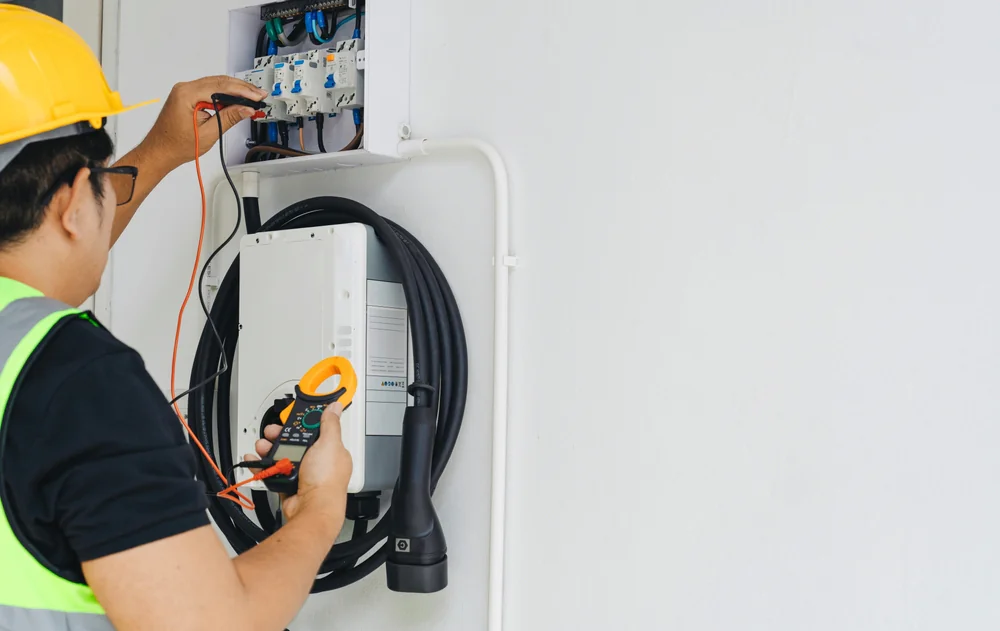
How EV Charger Installation Works
First, we come out and assess your electrical panel. Most EV chargers need a dedicated 240-volt, 40-amp circuit—the same kind of power your dryer uses, but with higher continuous load. If your panel is maxed out or outdated, we’ll tell you what needs upgrading and why.
Next, we map the route from your panel to where you want the charger mounted. If it’s a straight shot through the garage, great. If we need to run conduit along an exterior wall or through a crawl space, we’ll walk you through it before we start drilling.
Then comes installation. We pull permits, install the circuit, mount the charger, and schedule the inspection. Everything gets done to code, which protects you, your home, and your insurance coverage.
Once it passes inspection, we test the system with your vehicle to make sure charging speeds match what you expected. We also help you apply for Duke Energy’s rebate program, which can put over $1,100 back in your pocket. After that, you’re set—just plug in and go.
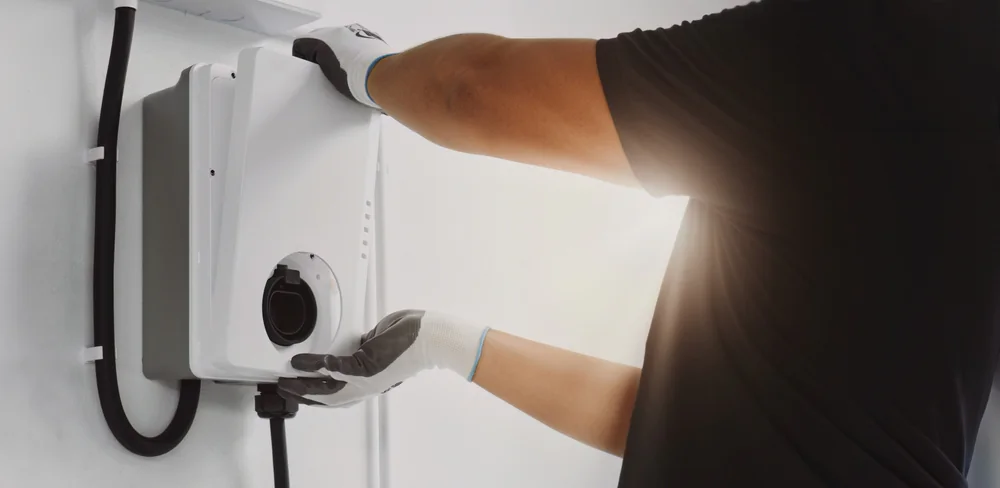
What's Included in EV Charger Setup
Every installation starts with a load calculation. That’s how we determine whether your existing electrical panel can safely support a Level 2 charger. In Hillsdale, where many homes were built in the 1980s and 90s, we often find 100-amp panels that are already running close to capacity. If an upgrade is needed, we’ll give you a flat-rate price that includes the panel, labor, and permit fees.
We install the dedicated 240-volt circuit using the right gauge wire for the distance and load. Chargers mounted in garages typically need 40 to 60 feet of wire, but if your panel is on the opposite side of the house, we charge by the linear foot beyond that. Everything is run through conduit and secured to code.
The charger itself gets mounted at a height that makes plugging in easy, with the cable management built in so you’re not tripping over cords. We work with all major brands—Tesla Wall Connectors, ChargePoint, JuiceBox, Grizzl-E—and can recommend models based on your vehicle and budget.
North Carolina is seeing some of the fastest EV adoption growth in the Southeast, with registrations up 56% year-over-year. That means charging infrastructure is becoming a real selling point for homes in markets like ours. Installing a charger now doesn’t just make your life easier—it’s an investment that buyers will notice when it’s time to sell.
Do I need to upgrade my electrical panel for an EV charger?
It depends on your current panel size and how much capacity you’re already using. Most Level 2 EV chargers need a dedicated 40-amp circuit, and if your panel is a 100-amp service that’s already supporting central air, a water heater, a dryer, and other major appliances, you’re likely close to maxed out.
Homes built before 1990 almost always need an upgrade. Newer homes with 200-amp panels usually have room, but we still run a load calculation to be sure. Skipping this step is how people end up with breakers that trip constantly or, worse, electrical fires.
Panel upgrades typically run between $1,500 and $3,500 depending on the scope of work. The federal government offers a tax credit covering 30% of the upgrade cost, up to $600, as long as the upgrade supports EV charging. We’ll walk you through what qualifies and help you keep the receipts you need.
How long does EV charger installation take?
If your panel has capacity and the charger location is close to your electrical box, most installations take four to six hours. That includes mounting the charger, running the circuit, connecting everything, and testing it with your vehicle.
If you need a panel upgrade, add another half day for that work. Permit approval and inspection scheduling can add a few days to the timeline, but we handle all of that coordination so you’re not chasing down the county office.
From the day you call to the day you’re charging at home, expect about one to two weeks in most cases. We keep trucks fully stocked, so we’re not making multiple trips or waiting on parts to arrive. Once we’re scheduled, we show up ready to finish the job.
What rebates are available for EV charger installation in North Carolina?
Duke Energy offers a Charger Prep Credit that covers up to $1,133 per household for the infrastructure needed to install an EV charger. That includes the circuit, wiring, and panel upgrades if necessary. You apply through Duke Energy’s website after installation, and we’ll provide all the documentation you need.
On the federal side, there’s a tax credit that covers 30% of your total charger and installation costs, up to $1,000 for residential properties. If you upgrade your electrical panel as part of the project, that qualifies for a separate 30% credit capped at $600 under the Energy Efficient Home Improvement Credit.
These programs stack, so you can claim both. We’ll give you an itemized invoice that breaks out charger costs, installation labor, and panel work separately so your accountant has everything needed at tax time. The savings are real, and they make a big difference on total project cost.
Can I install an EV charger myself?
Technically, yes—but it’s not legal in most cases, and it’s definitely not safe unless you’re a licensed electrician. EV charger installation requires pulling a permit, running a dedicated 240-volt circuit, and passing an inspection. If you skip any of those steps, you’re voiding your charger warranty, risking your homeowner’s insurance coverage, and potentially creating a fire hazard.
Even if you’re handy, load calculations and panel work require specialized knowledge. Overloading a circuit or using the wrong wire gauge can cause slow charging speeds at best and electrical fires at worst. Most manufacturers also require professional installation to honor their warranties.
The cost of hiring a licensed electrician is a fraction of what you’d pay to fix a botched DIY job—or deal with the aftermath of an electrical fire. We’ve seen homeowners try to save a few hundred bucks and end up spending thousands to redo the work correctly. It’s not worth the risk.
How much does EV charger installation cost in Hillsdale?
Installation costs vary based on your home’s electrical setup and how far the charger is from your panel. If you’ve got a 200-amp panel with available capacity and the charger mounts in the garage near your breaker box, expect to pay between $800 and $1,500 for a standard installation.
If you need a panel upgrade, add $1,500 to $3,500 depending on whether we’re adding capacity to your existing panel or replacing it entirely. Longer wire runs, outdoor installations, or trenching for detached garages will increase costs, but we’ll give you a flat-rate price before we start so there are no surprises.
The charger itself runs anywhere from $400 for basic models to $1,200+ for smart chargers with app controls and faster charging speeds. When you factor in Duke Energy rebates and federal tax credits, your out-of-pocket cost drops significantly. We’ll walk through all of that during the estimate so you know exactly what you’re paying and what you’re getting back.
What's the difference between Level 1 and Level 2 EV charging?
Level 1 charging uses a standard 120-volt outlet—the same kind you plug a lamp into. It’s slow, adding about three to five miles of range per hour. If you drive 30 miles a day, you’re looking at an overnight charge just to break even. For most EV owners, that’s not practical.
Level 2 charging uses a 240-volt circuit and adds 20 to 60 miles of range per hour depending on your vehicle and charger model. That means a full charge in three to four hours instead of 12 to 24. It’s the difference between plugging in after dinner and being ready by morning versus plugging in Friday night and hoping you’re charged by Sunday.
If you’re serious about daily EV use, Level 2 is the only real option. It’s what Tesla recommends, what most EV manufacturers design their vehicles around, and what makes home charging faster and more convenient than stopping at public stations. The upfront cost is higher, but the time savings and convenience pay off immediately.
Other Services we provide in Hillsdale
About Us

Electrical Service Providers (ESP) has been in business since 2002. ESP started out performing wiring services to new construction, remodeling projects and residential homes. Our company’s president identified a market for electrical services to be performed in homes and businesses independent of new construction. Read More about Electrical Service Providers>>
All Rights Reserved.Organic Marketing LLC
Business Listings


Product Brands Used
Allied, Broan, Cutler Hammer, General Electric, Ideal, Juno, Kohler, Leviton, Lutron, Siemens, Square D
Contact
- Office Address: 3254 S Anthony Ct.
Burlington, NC 27215 - Mailing Address: PO Box 25
Alamance, NC 27201 - Phone: 336-228-3300
- E-mail: [email protected], [email protected]
Service Areas
Chapel Hill, Burlington, Carrboro, Durham, Gibsonville, Hillsborough, Graham, Pittsboro, Morrisville, Cary
About Us
Electrical Service Providers (ESP) has been in business since 2002. ESP started out performing wiring services to new construction, remodeling projects and residential homes. Our company’s president identified a market for electrical services to be performed in homes and businesses independent of new construction. Read More about Electrical Service Providers>>
All Rights Reserved.Organic Marketing LLC