EV Charger Installation in Jamestown, NC
Charge at Home Without the Guesswork
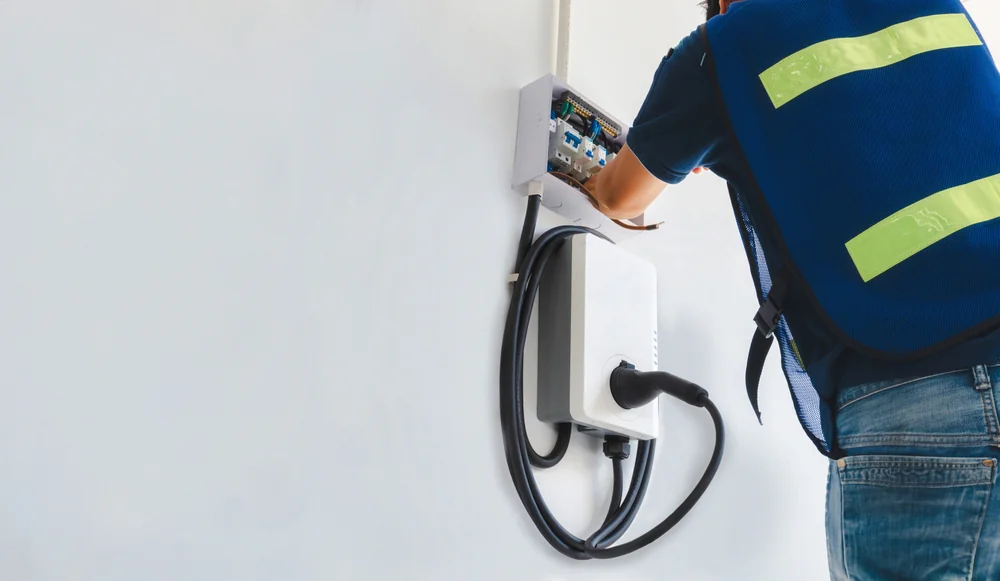
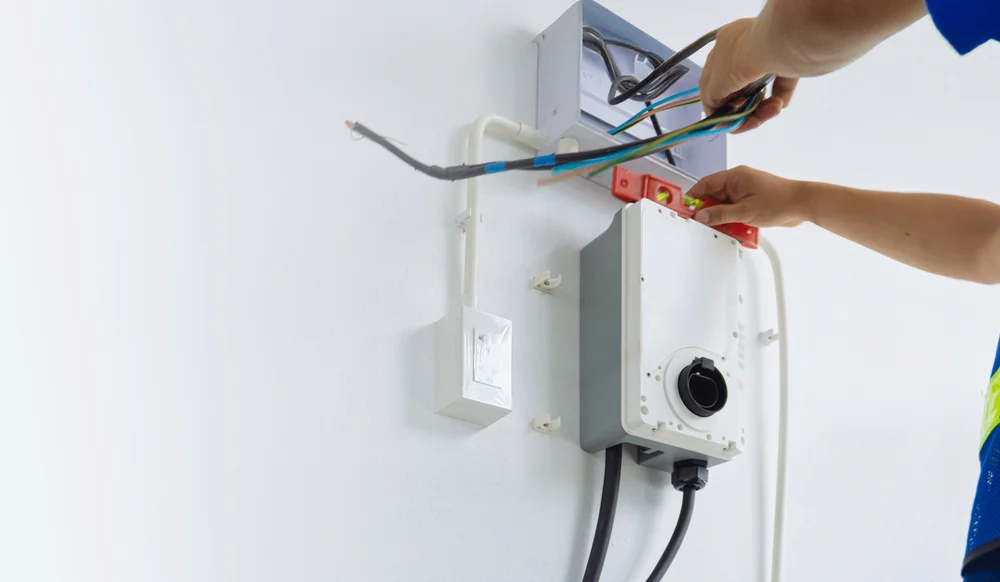
Electric Vehicle Charging Station Setup
You’re not hunting for public charging stations anymore. You’re not sitting in parking lots waiting for a spot to open up. You pull into your driveway, plug in, and you’re done.
Home charging costs less per kilowatt-hour than most public stations. Duke Energy customers can access rebates up to $1,117 for installation expenses like panel upgrades and dedicated circuits. That covers a significant chunk of what you’d spend getting set up properly.
Your home’s value goes up too. Buyers actively search for properties with EV charging already installed. It’s not a nice-to-have anymore in Jamestown and the Triad area—it’s expected. Especially as North Carolina just passed 100,000 registered electric vehicles and is targeting 1.25 million by 2030.
The right setup means you’re charging overnight during off-peak hours when rates are lowest. You’re not dealing with broken public chargers or waiting in line. You’re just living your life with one less thing to think about.
Licensed EV Charger Installers Near You
ESP is locally owned and operated by Andy Helton, a Master Electrician with over 35 years of hands-on electrical experience. Our Operations Manager has held an electrical contractor license since 1989. That’s not corporate training—that’s decades in the field doing the actual work.
We serve Jamestown, Greensboro, High Point, Burlington, and throughout Alamance, Guilford, Orange, and Durham counties. We know local code requirements, permit processes, and which electrical panels in older Triad-area homes need upgrades before they can safely handle a Level 2 charger.
You get flat-rate pricing before we start. You get a fully stocked truck and a uniformed technician who cleans up before leaving. You get 22 years of business history and a satisfaction guarantee that actually means something.
How EV Charger Installation Works
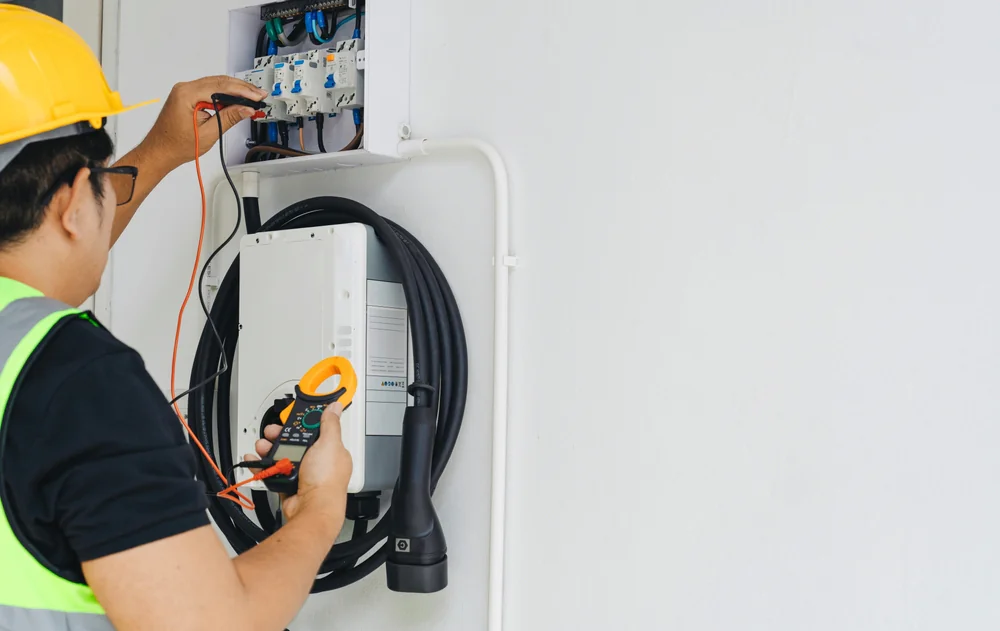
First, we evaluate your electrical system. Most Level 2 chargers need a dedicated 240-volt circuit with 40 to 50 amps. If your panel doesn’t have the capacity, we’ll tell you upfront what needs upgrading. No surprises.
Next, we handle the permit. Jamestown and surrounding municipalities require permits for EV charging station installations. We pull it, schedule the inspection, and make sure everything passes the first time. The 2026 electrical code eliminates DIY installations entirely, so this has to be done by a licensed professional anyway.
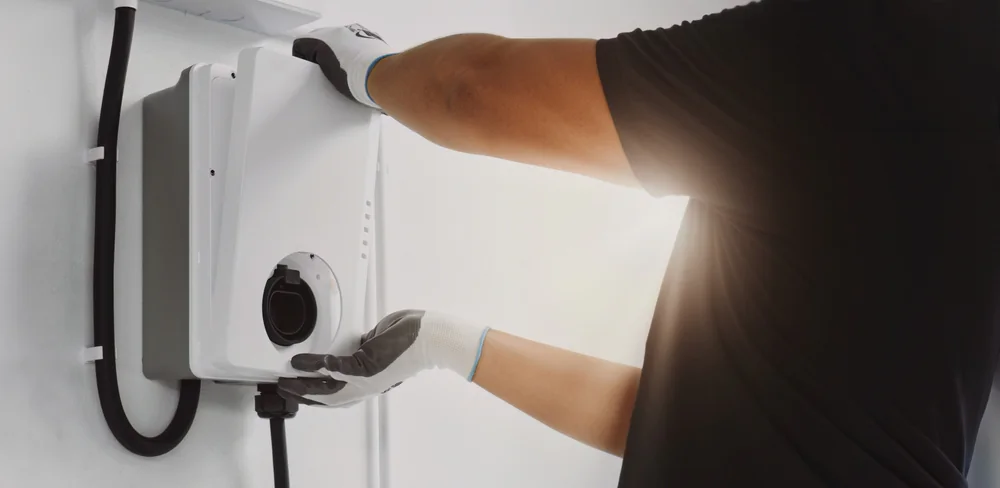
Then we install the charger where you want it—garage wall, exterior post, wherever makes sense. We run the wiring, mount the unit, connect it to your panel, and test the system. If you’re installing a Tesla Wall Connector or a universal Level 2 station, we’ve done both hundreds of times.
Finally, we walk you through how it works. You’ll know how to plug in, monitor charging through your app if your unit has one, and what to do if anything ever seems off. We don’t leave until you’re comfortable with the setup.
What's Included in Your Installation
Every installation includes a full electrical system assessment. We’re checking your main panel, available amperage, and whether your home’s wiring can handle the new load. Many homes built before 2015 need panel upgrades to safely run an EV charger alongside air conditioning, electric dryers, and other high-demand appliances.
We also factor in distance. The farther your charging location is from your electrical panel, the more wiring we need to run. We’ll help you choose a spot that balances convenience with cost. Closer to the panel usually means lower installation costs.
You’re getting permit acquisition and inspection coordination. We work directly with local building departments in Jamestown, Greensboro, Burlington, and surrounding areas. We know what inspectors look for and how to get it done right the first time.
North Carolina is receiving $109 million from the Bipartisan Infrastructure Law to expand EV charging infrastructure. That investment signals where the market is going. Rural areas around Jamestown are seeing more EV adoption as gas prices stay high and people realize home charging cuts fuel costs significantly. Getting your home set up now means you’re ahead of the curve and positioned to take advantage of any future incentives before they expire. The federal charger credit ends June 30, 2026.
How much does it cost to install an EV charger at home in Jamestown?
Installation costs vary based on three main factors: your electrical panel’s current capacity, the distance from your panel to where you want the charger, and whether you need any upgrades to handle the load.
If your panel has available capacity and the charger location is close, you’re looking at the lower end of the range. If we need to upgrade your panel or run wiring a long distance—say from your garage to a panel on the opposite side of your house—costs go up. Most Level 2 chargers require a dedicated 40 to 50-amp, 240-volt circuit.
Duke Energy offers a rebate of up to $1,117 per household for installation expenses including panel upgrades, new circuits, and wiring. That rebate can cover a significant portion of your total cost. We help you understand what’s eligible and how to apply. We use flat-rate pricing, so you’ll know your exact cost before we start any work.
Do I need to upgrade my electrical panel to install an EV charger?
It depends on your current panel and how much capacity you have available. A typical Level 2 EV charger pulls 40 to 50 amps on a 240-volt circuit. If your panel is already maxed out running your HVAC, water heater, dryer, and other appliances, you’ll need an upgrade.
Homes built before 2015 often don’t have enough capacity for today’s electrical demands. When you try to run an EV charger, central air, an electric dryer, and smart home devices all at once, older panels can’t handle it safely. We’ve seen breakers trip repeatedly or, worse, wiring overheat because the system wasn’t designed for that load.
We assess your panel during the initial evaluation. If you need an upgrade, we’ll explain exactly what’s required and what it costs. Panel upgrades are eligible for Duke Energy’s rebate program, which helps offset the expense. The goal is a safe, code-compliant installation that doesn’t put your home at risk.
How long does EV charger installation take in Jamestown?
Most installations take four to eight hours depending on complexity. If your panel has available capacity and the charger location is near your electrical panel, we’re usually done in half a day.
If we’re upgrading your panel or running a longer wire run, it might take a full day. Permit approval and inspection scheduling add time to the overall timeline, but the actual installation work is typically completed in one visit.
We coordinate the permit with local building departments before we start. Jamestown and surrounding municipalities require permits for EV charging installations, and inspections must be completed before you can legally use the charger. We handle all of that coordination so you’re not making calls or waiting on hold with the city. Once the inspection passes, you’re clear to start charging.
Can you install a charger for any electric vehicle brand?
Yes. We install Tesla Wall Connectors, universal Level 2 charging stations, and any other residential EV charger on the market. The electrical requirements are similar across brands—they all need a dedicated 240-volt circuit with adequate amperage.
Tesla chargers use a proprietary plug for Tesla vehicles, but Tesla also sells adapters if you ever switch to a different EV brand. Universal Level 2 chargers use a J1772 plug, which works with nearly every electric vehicle except older Tesla models (and Tesla provides adapters for those).
We’ll help you choose the right charger based on your vehicle, your charging speed preferences, and your budget. Some chargers include smart features like app connectivity, scheduling, and energy monitoring. Others are simpler plug-and-charge units. We install whatever works best for your situation and make sure it’s set up correctly and safely.
What permits are required for EV charger installation in Jamestown?
You need an electrical permit from your local municipality before starting any EV charger installation work. Jamestown, Greensboro, Burlington, and other cities in the Triad require permits for any permanent electrical work, and EV chargers fall under that requirement.
The permit process involves submitting installation plans, getting approval, completing the work, and scheduling an inspection. The inspector verifies that the installation meets National Electrical Code standards and local requirements. Once it passes, you’re cleared to use the charger.
We handle the entire permit process for you. We pull the permit, submit the necessary documentation, schedule the inspection, and make sure everything is code-compliant before the inspector arrives. Starting in 2026, the electrical code mandates that all permanently installed EV charging equipment must be installed by licensed professionals—DIY installations won’t be allowed anymore. Improperly installed 240-volt circuits have caused house fires, which is exactly why these regulations exist.
Will installing an EV charger increase my home's value in Jamestown?
Yes. Buyers actively look for homes with EV charging already installed, especially as electric vehicle adoption increases across North Carolina. The state just surpassed 100,000 registered EVs and is targeting 1.25 million by 2030. That’s a massive shift in how people think about transportation and home features.
A properly installed Level 2 charger signals that your home is updated and ready for modern needs. It’s similar to having updated electrical panels, energy-efficient HVAC, or smart home wiring—it’s infrastructure that buyers expect and value.
In the Jamestown and Triad area, where commuting is common and public charging infrastructure is still catching up to demand, home charging is even more valuable. Buyers don’t want to rely on crowded public stations or plan their lives around charging availability. Having a home charging station already in place removes that friction and makes your property more attractive compared to similar homes without it.
Other Services we provide in Jamestown
About Us

Electrical Service Providers (ESP) has been in business since 2002. ESP started out performing wiring services to new construction, remodeling projects and residential homes. Our company’s president identified a market for electrical services to be performed in homes and businesses independent of new construction. Read More about Electrical Service Providers>>
All Rights Reserved.Organic Marketing LLC
Business Listings


Product Brands Used
Allied, Broan, Cutler Hammer, General Electric, Ideal, Juno, Kohler, Leviton, Lutron, Siemens, Square D
Contact
- Office Address: 3254 S Anthony Ct.
Burlington, NC 27215 - Mailing Address: PO Box 25
Alamance, NC 27201 - Phone: 336-228-3300
- E-mail: [email protected], [email protected]
Service Areas
Chapel Hill, Burlington, Carrboro, Durham, Gibsonville, Hillsborough, Graham, Pittsboro, Morrisville, Cary
About Us
Electrical Service Providers (ESP) has been in business since 2002. ESP started out performing wiring services to new construction, remodeling projects and residential homes. Our company’s president identified a market for electrical services to be performed in homes and businesses independent of new construction. Read More about Electrical Service Providers>>
All Rights Reserved.Organic Marketing LLC