EV Charger Installation in Kimesville, NC
Charge at Home Without the Guesswork or Safety Risks
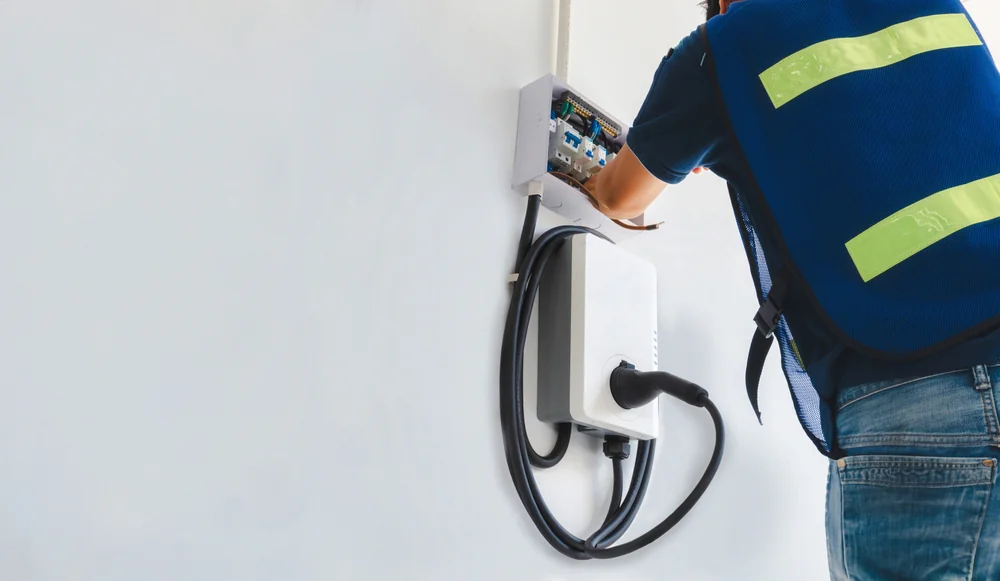
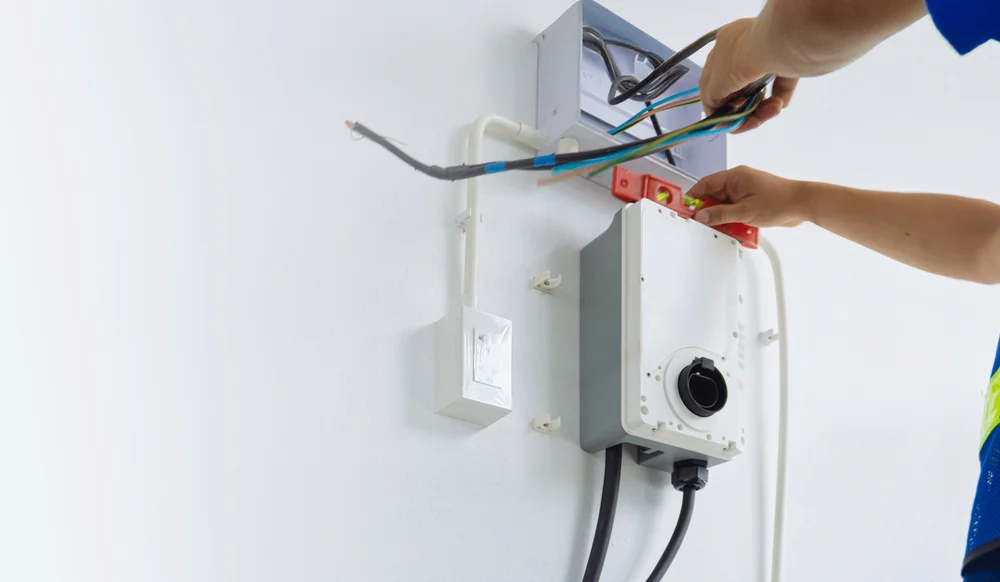
Electric Vehicle Charging Station Setup
You plug in at night and wake up to a full charge. No more planning trips around public charging stations or waiting in line behind three other Teslas at the grocery store.
Your electrical panel handles the load without tripping breakers or overheating. The charger’s mounted exactly where you need it, wired to code, and inspected by the county.
You’re not wondering if the previous homeowner’s nephew did it right or if your insurance would even cover a fire from bad wiring. The installation’s permitted, the rebate paperwork’s filed with Duke Energy, and you know what you paid before anyone picked up a drill. That’s what proper EV charger installation looks like in Kimesville.
Licensed Electricians Serving Kimesville Homes
ESP Electrical Service Providers is locally owned and operated out of Burlington. Our team is led by Andy Helton, a Master Electrician with over 35 years of experience and a licensed contractor since 1989.
We’ve watched Kimesville grow from quiet country roads to a neighborhood where new construction sits next to older homes that need panel upgrades before they can handle a Level 2 charger. We know which houses were built with 100-amp service and which ones can handle the load without a complete rewire.
You’ll talk to a person when you call, not a voicemail system. Our trucks are stocked so we’re not making multiple trips to the supply house on your dime. We show up in uniform, we clean up when we’re done, and we don’t leave until the job passes inspection and you’re satisfied.
How EV Charger Installation Works
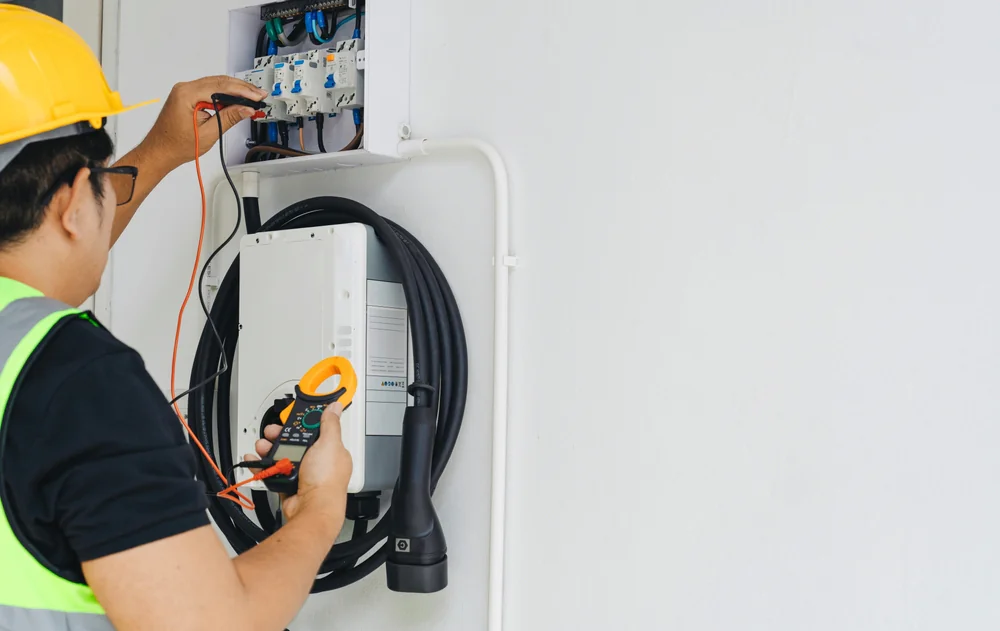
First, we look at your electrical panel and the location where you want the charger. Most Level 2 EV chargers need a dedicated 40-amp circuit on 240 volts. If your panel’s already maxed out or you’ve got an older 100-amp service, we’ll tell you what needs upgrading before we can safely install the charging station.
Next, we pull the permit with Alamance County and schedule the work. We run the wiring from your panel to the mounting location, install the charger, and make sure everything’s grounded and protected properly. No exposed wires, no shortcuts.
Then the county inspector comes out to verify the installation meets code. Once it passes, you’re legal and safe to charge. We also help you file for the Duke Energy rebate if your setup qualifies, which can put over a thousand dollars back in your pocket for electrical improvements. You get flat-rate pricing up front, so there’s no surprise bill at the end.
What's Included in EV Charger Setup
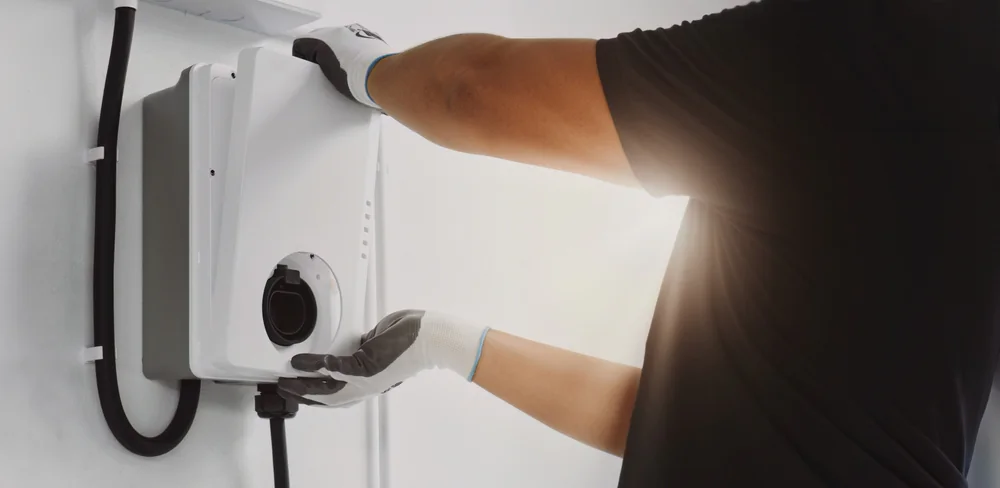
You’re not just getting a charger bolted to your garage wall. The electrical assessment comes first because plenty of homes in Kimesville were built before anyone thought about 40-amp EV loads. We check your panel capacity, your existing circuits, and whether your service can handle the addition without overloading.
If you need a panel upgrade or a service increase from 100 to 200 amps, we handle that too. It’s not always required, but older homes often need it. We’re upfront about what’s necessary and what’s not.
The permit process is on us. Alamance County requires permits for EV charger installations, and the inspection has to pass before you can legally use it. We deal with the paperwork and the inspector so you don’t have to figure out code requirements or take time off work for a failed inspection.
North Carolina’s EV adoption is growing fast. The state hit over 100,000 registered electric vehicles in 2024, and Kimesville’s seeing more Teslas, Rivians, and F-150 Lightnings in driveways every month. Homes with charging stations already installed are becoming more attractive to buyers, especially as public charging infrastructure struggles to keep up with demand around Burlington and Chapel Hill.
How much does it cost to install an EV charger in Kimesville?
The honest answer is it depends on your electrical system. If your panel has space for a new 40-amp breaker and your garage already has power nearby, you’re looking at the lower end of the cost range. If you need a panel upgrade, a service increase, or a long wire run from the other side of the house, the price goes up.
Most installations fall somewhere in between. We give you flat-rate pricing after we assess your setup, so you know the full cost before we start. No hourly billing that drags on or surprise charges when the job takes longer than expected.
Duke Energy offers rebates up to $1,117 for EV charger installation support, which can cover a chunk of your electrical improvements. We help you navigate that process because the paperwork isn’t always straightforward, and leaving money on the table doesn’t make sense when it’s available.
Do I need to upgrade my electrical panel for an EV charger?
Not always, but it’s common in older homes. A Level 2 EV charger typically needs a dedicated 40-amp, 240-volt circuit. If your panel’s already full or you’re running a 100-amp service that’s close to capacity, adding that load isn’t safe without an upgrade.
Homes built before 2015 often weren’t designed for today’s electrical demands. Between HVAC systems, kitchen appliances, and now EV chargers, the math doesn’t always work. We’ll assess your current setup and tell you whether your panel can handle it or if you need more capacity.
A panel upgrade isn’t just about the EV charger. It’s about your whole home’s electrical safety and capacity for future needs. If you’re already tripping breakers or your panel’s outdated, this is the time to address it properly rather than jury-rigging a solution that could cause bigger problems down the road.
Can I install an EV charger myself to save money?
Technically you could try, but it’s not legal in North Carolina without a licensed electrician, and your insurance likely won’t cover any damage from improper installation. The 2026 electrical code specifically mandates that permanently installed EV charging equipment must be installed by qualified professionals.
EV chargers operate at high voltage. A mistake in the wiring can cause electrical fires, damage your vehicle’s charging system, or create a shock hazard. It’s not like installing a ceiling fan. You’re working with 240 volts and significant amperage that requires proper wire sizing, breaker selection, and grounding.
You also need a permit and inspection in Alamance County. The inspector will ask who did the work. If it wasn’t a licensed contractor, you’ll have to tear it out and start over with someone who’s properly licensed. That costs more than hiring a professional from the start, and you’ve wasted time and materials on a failed attempt.
How long does EV charger installation take in Kimesville?
If your electrical system’s ready and we’re just installing the charger, it’s usually a same-day job. We mount the unit, run the wiring, connect it to your panel, and test everything. The county inspection gets scheduled after that, which can add a few days depending on inspector availability.
If you need a panel upgrade or service increase, that adds time. Panel upgrades typically take a full day, sometimes more if there are complications with your existing setup. We’ll give you a realistic timeline when we assess your home.
The permit process also affects timing. Alamance County requires permits before installation begins, and processing times vary. We handle the permit application, but you should plan for at least a week or two from your initial call to final inspection, assuming no major electrical work is needed. Homes requiring significant upgrades can take longer, but we’ll keep you informed throughout the process.
What's the difference between Level 1 and Level 2 EV chargers?
Level 1 chargers plug into a standard 120-volt outlet and add about 3-5 miles of range per hour of charging. That’s fine if you’re only driving short distances and can leave your car plugged in overnight, but it’s painfully slow for most people’s needs.
Level 2 chargers run on 240 volts and add 20-60 miles of range per hour depending on your vehicle and charger capacity. That’s the difference between waking up to a full charge versus waking up to a car that’s still not ready. Most EV owners in Kimesville install Level 2 chargers because they actually meet daily driving needs.
Level 2 installation requires a dedicated circuit and proper electrical capacity, which is why you need a licensed electrician. You can’t just plug it into your dryer outlet and call it good. The wiring, breaker size, and outlet type all have to match your specific charger’s requirements, and it has to be installed to code and inspected.
Will installing an EV charger increase my home's value in Kimesville?
It’s becoming a selling point, especially as more buyers either own EVs or plan to buy one soon. North Carolina exceeded 100,000 EV registrations in 2024, and that number’s climbing. Buyers shopping for homes in Kimesville and surrounding Alamance County areas are starting to ask whether a house has EV charging capability.
A properly installed Level 2 charger shows the home’s electrical system can handle modern demands. It’s one less thing a buyer has to figure out and pay for after closing. Homes without adequate electrical capacity are starting to feel dated, similar to how homes without enough outlets felt outdated a generation ago.
The value increase isn’t massive, but it’s real. You’re appealing to a growing segment of buyers who see EV charging as a must-have rather than a nice-to-have. Even if the next owner doesn’t have an EV yet, they know the infrastructure’s already in place when they do. That peace of mind and convenience translates to market appeal.
Other Services we provide in Kimesville
About Us

Electrical Service Providers (ESP) has been in business since 2002. ESP started out performing wiring services to new construction, remodeling projects and residential homes. Our company’s president identified a market for electrical services to be performed in homes and businesses independent of new construction. Read More about Electrical Service Providers>>
All Rights Reserved.Organic Marketing LLC
Business Listings


Product Brands Used
Allied, Broan, Cutler Hammer, General Electric, Ideal, Juno, Kohler, Leviton, Lutron, Siemens, Square D
Contact
- Office Address: 3254 S Anthony Ct.
Burlington, NC 27215 - Mailing Address: PO Box 25
Alamance, NC 27201 - Phone: 336-228-3300
- E-mail: [email protected], [email protected]
Service Areas
Chapel Hill, Burlington, Carrboro, Durham, Gibsonville, Hillsborough, Graham, Pittsboro, Morrisville, Cary
About Us
Electrical Service Providers (ESP) has been in business since 2002. ESP started out performing wiring services to new construction, remodeling projects and residential homes. Our company’s president identified a market for electrical services to be performed in homes and businesses independent of new construction. Read More about Electrical Service Providers>>
All Rights Reserved.Organic Marketing LLC