EV Charger Installation in Lake Forest, NC
Charge at Home Without the Wait or Worry
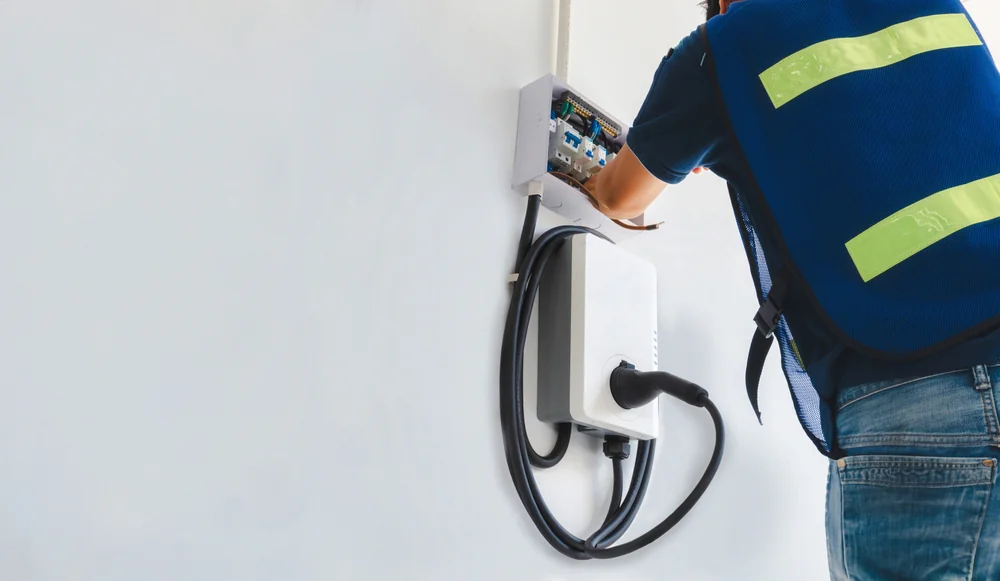
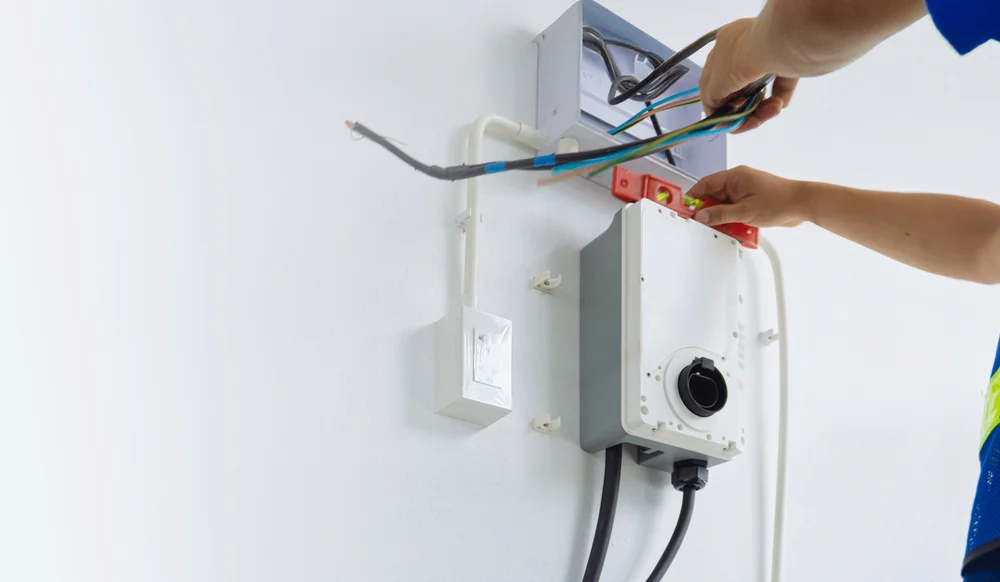
Home EV Charging Station Setup
Lake Forest only has 70 public charging stations. Six of them are DC fast chargers. The rest? You’re looking at up to 10 hours to charge at a Level 2 public station, assuming one’s even available when you need it.
Installing a Level 2 EV charger at home changes that completely. You plug in when you get home, just like your phone. By morning, you’re at 100%. No apps to check. No lines to wait in. No planning routes around charging availability.
You’ll also save money doing it. Home charging costs 25-40% less than public stations, especially if you charge overnight when electricity rates drop. And unlike gas prices that swing wildly, your electric rate stays predictable. You can actually calculate what a full charge costs instead of guessing at the pump.
Your battery stays healthier too. EV manufacturers recommend limiting how often you use Level 3 fast chargers because studies show frequent supercharging degrades batteries faster than Level 2 charging. Charging at home lets you keep your battery in better shape for longer.
Licensed EV Charger Electricians Lake Forest
We’re locally owned and operated by Andy Helton, a Master Electrician with over 35 years of experience. We’ve been serving Lake Forest and the surrounding areas since 2002, which means we know the homes here, the electrical systems they’re built with, and what it takes to install an EV charger correctly.
Lake Forest developments like Baker Ranch tend to have newer infrastructure, which usually means you’ve got 200-amp service panels and spare circuit capacity. That makes installation cleaner. But we still do a full electrical assessment before we start, because guessing isn’t how you protect a home or a vehicle.
We use flat-rate pricing, so you know the cost before we touch anything. Our trucks are fully stocked, our team shows up in uniform, and we pull permits for every install. That’s not extra—it’s standard. Because when something’s connected directly to your electrical panel and your $50,000 vehicle, it needs to be done right.
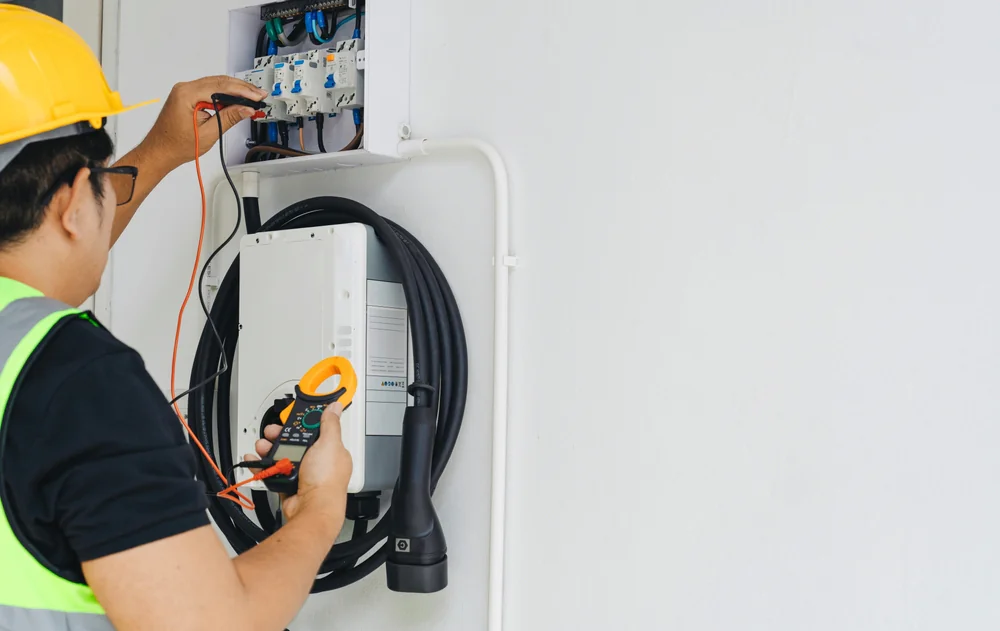
EV Charger Installation Process Lake Forest
First, we assess your electrical panel. Most Lake Forest homes have the capacity for a Level 2 charger, but we confirm that before moving forward. If your panel needs an upgrade, we’ll tell you upfront—not halfway through the job.
Next, we determine the best location for your charger. That’s usually in your garage near where you park, but it depends on your panel location, the distance to your parking spot, and whether we need to run new wiring. We walk through options with you so the setup makes sense for how you actually use your space.
Then we handle the permit. In North Carolina, EV charger installations require electrical permits to ensure safety and code compliance. We pull it, we schedule the inspection, and we make sure everything passes. That protects you if there’s ever an issue with your charger or your vehicle.
Once the permit’s approved, we install the charger, mount it securely, connect it to your panel, and test it with your vehicle. We also walk you through how to use it and help you apply for Duke Energy’s rebate, which covers up to $1,133 of your installation cost. After that, you’re charging at home.
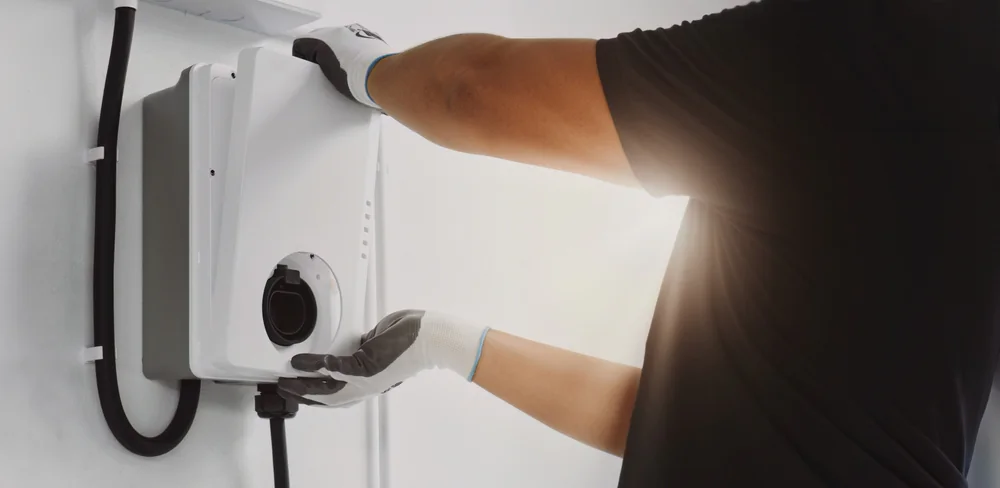
Electric Vehicle Charger Setup Lake Forest
Every installation includes a full electrical assessment to confirm your panel can handle the load. We don’t assume. We test voltage, check your breaker capacity, and make sure your system is ready before we start running wire.
You also get permit handling and inspection coordination. We pull the permit through the local jurisdiction, schedule the inspection, and make sure everything meets North Carolina electrical code. That’s not optional—it’s part of doing the job correctly.
We install the charger itself, mount it to your wall or pedestal, run the wiring from your panel to the charging location, and connect everything according to manufacturer specs. If you’re installing a Tesla Wall Connector, a ChargePoint Home Flex, or any other Level 2 unit, we follow the exact installation requirements to keep your warranty valid.
We also help you apply for Duke Energy’s EV Charger Prep Credit, which reimburses up to $1,133 per household for installation costs. North Carolina is one of the fastest-growing EV markets in the country—over 100,000 EVs were registered here in 2024—and these rebates make home charging more accessible. We’ll walk you through the paperwork so you actually get the money back.
How much does it cost to install an EV charger at home in Lake Forest?
Most Level 2 EV charger installations in Lake Forest run between $800 and $2,000, depending on how far your electrical panel is from where you park, whether you need a panel upgrade, and which charger model you choose. If your garage is close to your panel and you’ve got a 200-amp service with available breaker space, you’re usually on the lower end of that range.
If we need to run 50+ feet of wiring, trench through concrete, or upgrade your panel to handle the load, costs go up. We give you a flat-rate price after we assess your setup, so there’s no surprise billing once we start.
Duke Energy offers a rebate of up to $1,133 for North Carolina residents who install a Level 2 or higher charger, which can cover a significant chunk of your total cost. We help you apply for it as part of the installation process.
Do I need a permit to install an EV charger in Lake Forest, NC?
Yes. Any hardwired EV charger installation in North Carolina requires an electrical permit. That’s not a suggestion—it’s code. The permit ensures your installation is inspected and meets safety standards, which protects you if something goes wrong with your charger or your home’s electrical system.
Some homeowners try to skip the permit to save time or money, but that can void your home insurance, kill your charger’s warranty, and create liability issues if there’s ever a fire or electrical failure. It’s not worth the risk.
We pull the permit, coordinate the inspection, and make sure everything passes. It adds a few days to the timeline, but it’s the right way to do the work. If you ever sell your home, a permitted install also shows the buyer that the charger was installed correctly, which can actually help your resale value.
How long does a home EV charger installation take?
Most installations take 4-6 hours once we’re on-site, assuming your electrical panel has capacity and the charger location is straightforward. If we need to upgrade your panel or run a long wire run, it might take a full day.
The bigger timeline factor is the permit and inspection process. After we pull the permit, it usually takes a few days to get approval and schedule the inspection. Once the inspection passes, you’re good to start charging.
From your first call to a fully operational charger, expect about 1-2 weeks in total. That includes the site assessment, permit approval, installation day, and inspection. We move as fast as the process allows, but we’re not cutting corners to shave off a day or two.
Will my electrical panel support an EV charger?
Most homes in Lake Forest have 200-amp electrical panels, which is usually enough to support a Level 2 EV charger. But “usually” isn’t a guarantee. We need to check your current electrical load, see how many circuits you’re already using, and confirm there’s capacity for the 40-50 amp circuit that most EV chargers require.
If your panel is maxed out or you’ve only got a 100-amp service, you’ll need an upgrade before we can install the charger. That’s more common in older homes, but it happens. We assess your panel during the initial visit and let you know exactly what’s needed.
Some homes also need a sub-panel if the main panel is too far from the garage. We’ll walk through your options and give you a clear cost breakdown before we do anything. The goal is to set up your charging system safely, not just make it work temporarily.
What's the difference between Level 1 and Level 2 EV chargers?
Level 1 chargers plug into a standard 120-volt outlet—the same outlet you use for a lamp. They’re slow. You’re looking at about 4-5 miles of range per hour of charging, which means a full charge can take 24+ hours depending on your battery size. That works if you barely drive or you can leave your car plugged in for days, but it’s not practical for most people.
Level 2 chargers run on 240 volts, the same power your dryer uses. They charge 10-12 times faster than Level 1, giving you 25-30 miles of range per hour. That means a full charge overnight, even if you come home near empty. Most EV owners install Level 2 chargers because they actually keep up with daily driving.
Level 2 chargers require professional installation because they need a dedicated 240-volt circuit connected to your electrical panel. You can’t just plug them into an existing outlet. But once they’re in, you’ve got a charging setup that works with your schedule instead of against it.
Can I get a rebate for installing an EV charger in North Carolina?
Yes. Duke Energy offers a Charger Prep Credit that reimburses North Carolina residential customers up to $1,133 per household for the cost of installing a Level 2 or higher EV charger. That covers a big portion of most installations, especially if your electrical setup is straightforward.
To qualify, you need to be a Duke Energy customer, install a qualifying Level 2 charger, and submit the rebate application with proof of installation and payment. We help you with the paperwork as part of our service, so you’re not figuring it out on your own after the fact.
The rebate doesn’t cover the cost of the charger itself—just the installation labor and electrical work. But since installation is usually the bigger expense, it still makes a significant dent in your total cost. North Carolina is pushing hard to support EV adoption, and this rebate is one of the ways they’re making home charging more affordable.
Other Services we provide in Lake Forest
About Us

Electrical Service Providers (ESP) has been in business since 2002. ESP started out performing wiring services to new construction, remodeling projects and residential homes. Our company’s president identified a market for electrical services to be performed in homes and businesses independent of new construction. Read More about Electrical Service Providers>>
All Rights Reserved.Organic Marketing LLC
Business Listings


Product Brands Used
Allied, Broan, Cutler Hammer, General Electric, Ideal, Juno, Kohler, Leviton, Lutron, Siemens, Square D
Contact
- Office Address: 3254 S Anthony Ct.
Burlington, NC 27215 - Mailing Address: PO Box 25
Alamance, NC 27201 - Phone: 336-228-3300
- E-mail: [email protected], [email protected]
Service Areas
Chapel Hill, Burlington, Carrboro, Durham, Gibsonville, Hillsborough, Graham, Pittsboro, Morrisville, Cary
About Us
Electrical Service Providers (ESP) has been in business since 2002. ESP started out performing wiring services to new construction, remodeling projects and residential homes. Our company’s president identified a market for electrical services to be performed in homes and businesses independent of new construction. Read More about Electrical Service Providers>>
All Rights Reserved.Organic Marketing LLC