EV Charger Installation in McLeansville, NC
Charge at Home Without the Guesswork or Risk
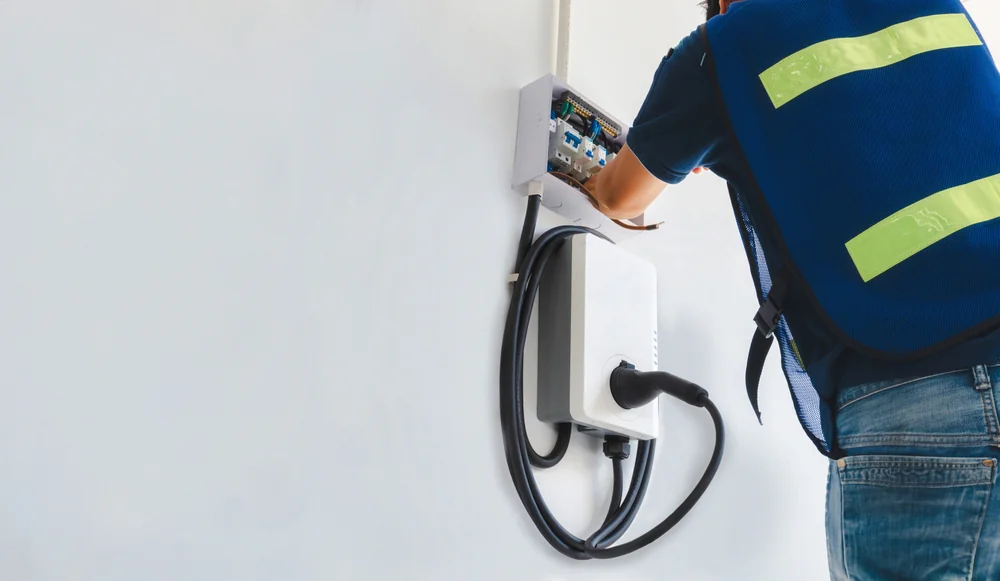
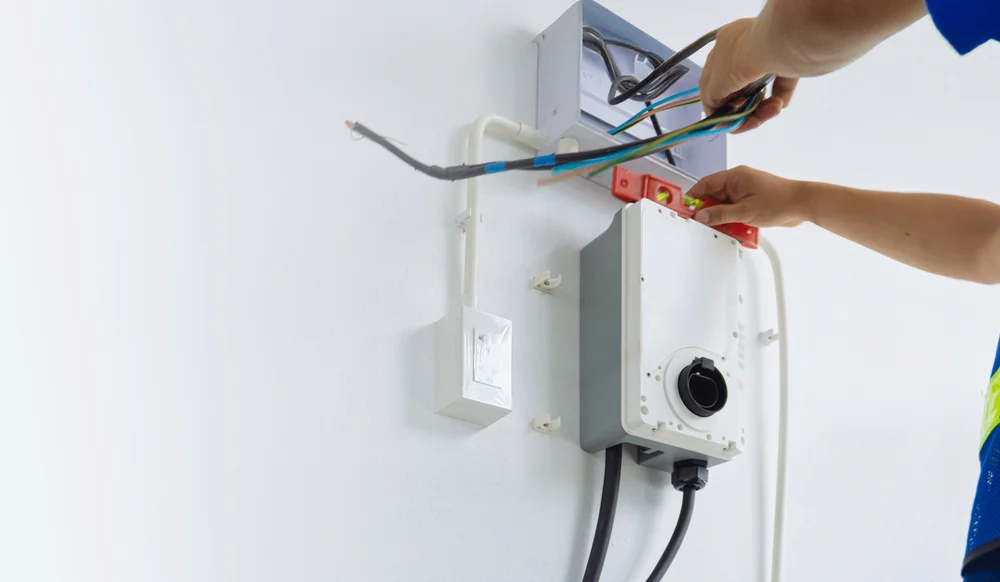
Electric Vehicle Charger Setup in McLeansville
You bought an electric vehicle to make life simpler. But if you’re still planning trips around public chargers or waiting in line behind three other cars, you’re not getting the convenience you paid for.
Home charging changes that. Plug in when you get home, and your car’s ready every morning. No detours. No apps that don’t work. No wondering if the station will be available when you need it.
Most people don’t realize how much cheaper it is to charge at home, either. Residential rates in McLeansville are a fraction of what you’ll pay at a commercial station. And if you charge overnight, you’re using power during off-peak hours when rates drop even lower. Over a year, that adds up to real money back in your pocket.
Duke Energy also offers a credit up to $1,133 per household to cover the cost of electrical upgrades for EV charging infrastructure. That rebate can offset a significant portion of your installation cost, especially if your panel needs an upgrade to handle the load.
Licensed EV Charger Installers Near McLeansville
We’ve been handling electrical work in McLeansville and the surrounding Greensboro area for over two decades. We started with residential wiring and service calls, and we’ve watched this area grow right alongside the homes we’ve worked in.
EV charger installation is newer to most homeowners, but the electrical principles aren’t new to us. We know what older homes need before they can support a Level 2 charger. We know which panels can handle the load and which ones need an upgrade first.
Every installation we do comes with a lifetime warranty on labor, up to 25 years. That’s not marketing talk. We return calls the same day, show up when we say we will, and clean up before we leave. If something’s not right, we come back and make it right.
How EV Charging Station Installation Works
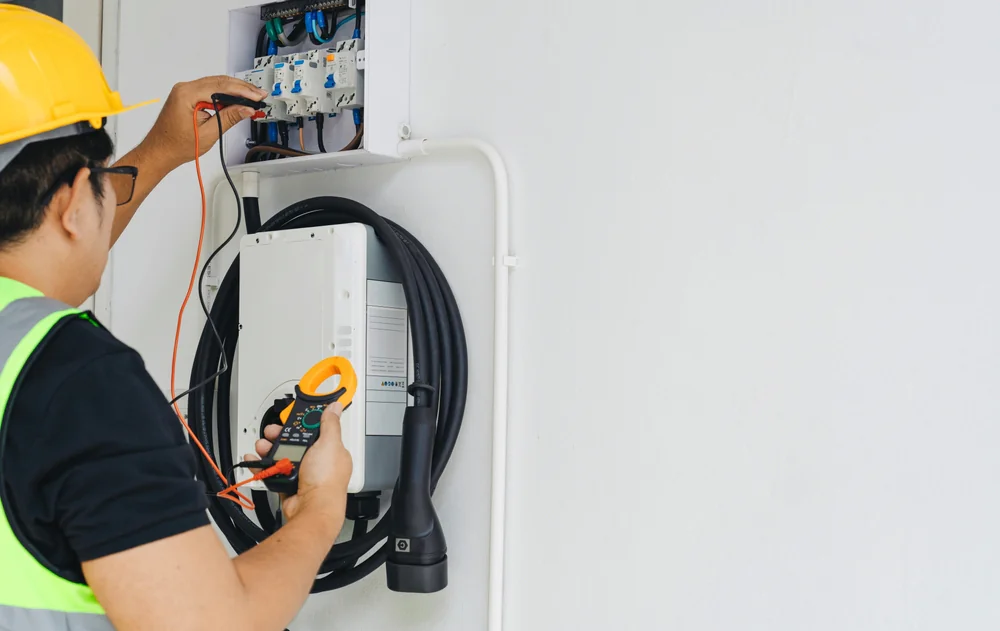
First, we look at your electrical panel and the location where you want the charger installed. Most garages are 60 to 80 feet from the panel, and that distance affects cost. We’ll tell you upfront what’s involved and what it’ll run you before any work starts.
If your panel is older or already running close to capacity, we’ll let you know whether an upgrade is necessary. A lot of homes built before 2000 have 100-amp panels, and once you add HVAC, water heater, and a Level 2 EV charger, you’re pushing limits. We’d rather upgrade it now than have you deal with tripped breakers every time you charge your car.
Once the plan is set, we pull the permit, run the wiring, mount the charger, and connect everything to code. Then the local inspector comes out to sign off on it. After that, you’re done. Plug in your car and let it charge overnight while you sleep.
The whole process usually takes a day, sometimes two if there’s a panel upgrade involved. We don’t drag it out, and we don’t leave a mess. You’ll know the cost before we start, and we’ll stick to it.
What's Included in EV Charger Installation
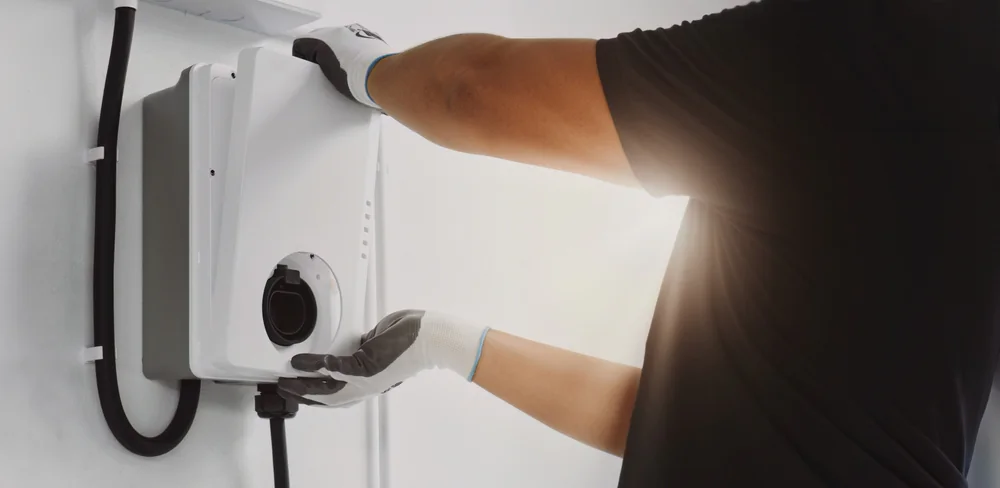
When we install your electric vehicle charger, we’re handling everything that needs to happen electrically. That includes running the dedicated circuit from your panel to the charger location, installing the appropriate breaker, mounting the charging unit, and making sure everything is grounded and wired to meet North Carolina electrical code.
We also coordinate the permit and inspection. In McLeansville and throughout Guilford County, EV charger installations require a permit and a final inspection by a local authority. We handle that process so you don’t have to figure out who to call or what forms to fill out.
If your home needs an electrical panel upgrade to support the charger, we’ll take care of that too. A lot of homes around here were built in the ’80s and ’90s with 100-amp service, and that’s often not enough once you add a 40- or 50-amp EV charger on top of everything else. Upgrading the panel isn’t just about the charger. It’s about making sure your whole system can handle modern electrical demands without constantly tripping breakers or creating safety risks.
We also help you apply for the Duke Energy rebate if you’re eligible. That credit can cover a big chunk of the installation cost, especially if you’re upgrading your panel at the same time.
How much does it cost to install an EV charger in McLeansville?
Most installations run between $1,200 and $2,500, but the final cost depends on how far your garage is from your electrical panel and whether your panel needs an upgrade. Distance is the biggest cost driver. If we’re running wire 80 feet instead of 20, that’s more material and more labor.
Panel upgrades add to the cost, but they’re not always necessary. If your home already has a 200-amp panel with available breaker space, we can usually install the charger without any upgrades. But if you’ve got a 100-amp panel that’s already loaded up with your HVAC, water heater, and other appliances, you’ll likely need an upgrade to avoid overloading the system.
We give you a flat-rate price before we start any work. No surprises, no hourly billing that creeps up as the day goes on. And if you qualify for the Duke Energy rebate, that can offset up to $1,133 of the cost, which makes a real difference.
Do I need to upgrade my electrical panel to install an EV charger?
It depends on what you currently have and how much capacity is left. Most Level 2 EV chargers pull between 30 and 50 amps, and if your panel is already running close to its limit, adding that load could cause problems.
Homes built before 2000 often have 100-amp panels, and those can struggle once you add an EV charger on top of everything else. Even some 100-amp panels can handle it if they’re not fully loaded, but it’s tight. We’ll check your current setup and let you know whether an upgrade is necessary or just a good idea for the long term.
Upgrading to a 200-amp panel gives you room to grow. If you’re planning to add solar, a second EV, or any other major electrical upgrades down the road, doing the panel now saves you from having to do it later. It’s not always required, but when it is, it’s worth doing right.
Can I install an EV charger myself, or do I need a licensed electrician?
You need a licensed electrician, and here’s why. EV chargers operate at 240 volts, the same as your dryer or oven, and improper installation can cause electrical fires, damage your home’s wiring, or create serious shock hazards. It’s not a DIY project unless you’re a licensed electrician yourself.
North Carolina also requires a permit for EV charger installations, and the work has to be inspected by local authorities before you can legally use it. If you install it yourself without a permit and something goes wrong, your homeowner’s insurance might not cover the damage. And if you ever sell your home, an unpermitted installation can become a problem during the inspection process.
We’ve seen people try to cut costs by doing it themselves or hiring someone unlicensed, and it usually ends up costing more to fix than it would have cost to do it right the first time. A licensed electrician knows the code, pulls the permit, and makes sure everything is safe and legal.
How long does EV charger installation take?
Most installations take one day if your panel doesn’t need an upgrade. We’ll run the wiring, mount the charger, connect everything, and clean up before we leave. If your panel does need an upgrade, it usually adds another day to the process.
The permit and inspection process can add a few days to the overall timeline, but that’s mostly waiting for the inspector to come out and sign off on the work. We handle all of that coordination, so you don’t have to chase anyone down or figure out the schedule.
From the time you call us to the time you’re charging your car, you’re usually looking at about a week, give or take. That includes scheduling, the actual installation, and the final inspection. We don’t drag it out, and we’ll give you a clear timeline upfront so you know what to expect.
What's the difference between a Level 1 and Level 2 charger?
A Level 1 charger plugs into a standard 120-volt outlet, the same kind you use for lamps and phone chargers. It’s slow. You’re looking at about 4 to 5 miles of range per hour of charging, which means a full charge can take 24 hours or more depending on your battery size.
A Level 2 charger runs on 240 volts and charges much faster. Most Level 2 chargers add 25 to 30 miles of range per hour, so you can fully charge an empty battery overnight. That’s the difference between plugging in at 10 p.m. and waking up ready to drive versus waiting all day and still not having a full charge.
If you’re only driving 20 or 30 miles a day and you can leave your car plugged in all night, a Level 1 charger might work. But most people who install a home charger go with Level 2 because it’s faster, more convenient, and gives you flexibility if you need a quick top-off during the day.
Will installing an EV charger increase my home's value?
Yes, especially as more people buy electric vehicles. Homes with EV chargers are selling faster and often at a premium because buyers see it as one less thing they have to deal with after they move in. It’s an upgrade that makes the home more functional and more appealing to a growing segment of buyers.
North Carolina is on track to hit 1.25 million EVs by 2030, and McLeansville is seeing that growth too. As more people make the switch, having a charger already installed becomes a selling point, not just a nice-to-have. Real estate agents are starting to list it as a feature in the same way they’d list a new HVAC system or updated electrical panel.
Even if you’re not planning to sell anytime soon, the investment pays for itself in convenience and lower charging costs. And when you do sell, it’s one more reason a buyer chooses your home over the one down the street.
Other Services we provide in Mcleansville
About Us

Electrical Service Providers (ESP) has been in business since 2002. ESP started out performing wiring services to new construction, remodeling projects and residential homes. Our company’s president identified a market for electrical services to be performed in homes and businesses independent of new construction. Read More about Electrical Service Providers>>
All Rights Reserved.Organic Marketing LLC
Business Listings


Product Brands Used
Allied, Broan, Cutler Hammer, General Electric, Ideal, Juno, Kohler, Leviton, Lutron, Siemens, Square D
Contact
- Office Address: 3254 S Anthony Ct.
Burlington, NC 27215 - Mailing Address: PO Box 25
Alamance, NC 27201 - Phone: 336-228-3300
- E-mail: [email protected], [email protected]
Service Areas
Chapel Hill, Burlington, Carrboro, Durham, Gibsonville, Hillsborough, Graham, Pittsboro, Morrisville, Cary
About Us
Electrical Service Providers (ESP) has been in business since 2002. ESP started out performing wiring services to new construction, remodeling projects and residential homes. Our company’s president identified a market for electrical services to be performed in homes and businesses independent of new construction. Read More about Electrical Service Providers>>
All Rights Reserved.Organic Marketing LLC