EV Charger Installation in Mebane, NC
Charge at Home for Less Than Half the Cost
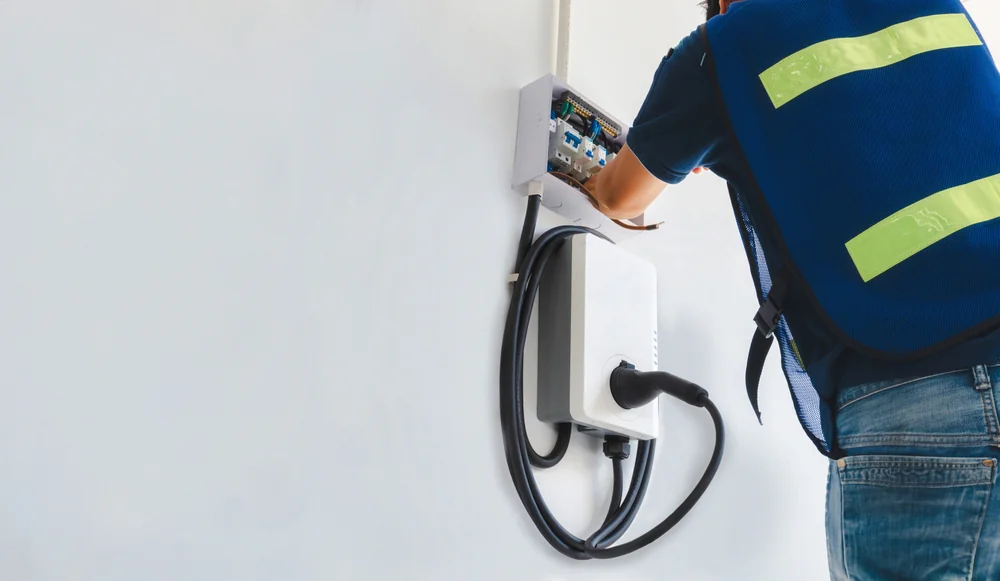
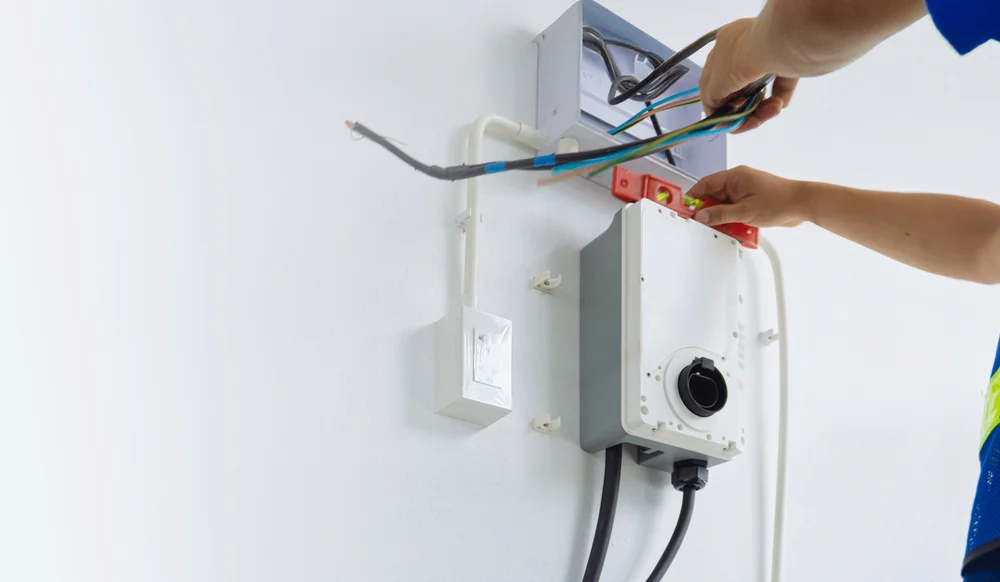
Home EV Charging Station Setup
You stop planning your week around where you can charge. No more sitting in parking lots waiting for a spot to open up at a public station, which matters in Mebane where charging infrastructure is still catching up to the number of EVs on the road.
You plug in when you get home. Your car charges overnight while you sleep, using Duke Energy’s off-peak rates that drop as low as $0.04 per kilowatt-hour during discount hours. That’s the difference between spending $50 a month on charging versus $150.
Your electrical panel gets evaluated before anything goes in. Most homes built before 2000 have 100-amp panels that can struggle once you add a Level 2 charger pulling 30-50 amps. If your panel needs an upgrade, you know that upfront, not after something trips or overheats. The installation gets permitted, inspected, and done to code so your insurance stays valid and your home stays safe.
Licensed Electricians Serving Mebane, NC
ESP Electrical Service Providers is locally owned and operated by Andy Helton, a Master Electrician with over 35 years in the trade. Our Operations Manager has been licensed since 1989, which means the person overseeing your EV charger installation has seen how electrical systems age, fail, and hold up under real-world loads.
We’ve been serving Mebane, Burlington, Graham, and Alamance County since 2002. That’s 22+ years of service calls, panel upgrades, and code-compliant installations in homes that look a lot like yours. We use flat-rate pricing, so you know the cost before we start. Our trucks are fully stocked, our technicians wear uniforms, and we clean up before we leave.
North Carolina hit over 100,000 registered EVs in 2024, and Mebane is part of that growth. You need an electrician who understands both the older housing stock in this area and the newer electrical demands that come with electric vehicle charging.
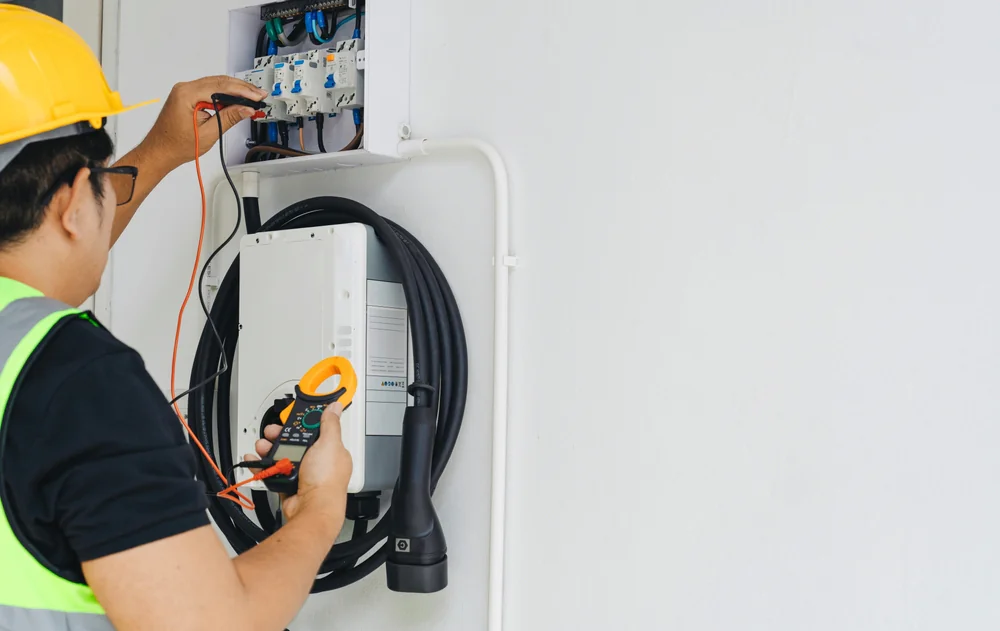
EV Charger Installation Process Mebane
You call or message us with your EV model and where you want the charger installed. We schedule a site visit to evaluate your electrical panel, the distance from the panel to your preferred charger location, and whether your current setup can handle a Level 2 EVSE without an upgrade.
If your panel is undersized or your wiring needs work, we tell you that upfront with a flat-rate price that covers everything. No surprises halfway through the job. Most installations take a few hours once we’re onsite, but if you need a panel upgrade or a long wire run, we give you a realistic timeline before we start.
We pull the permit, install the charger, run the wiring to code, and schedule the inspection. Once it passes, we walk you through how to use the system and answer any questions about charging schedules, breaker locations, or how to take advantage of Duke Energy’s time-of-use rates. Then you plug in your car and start charging.
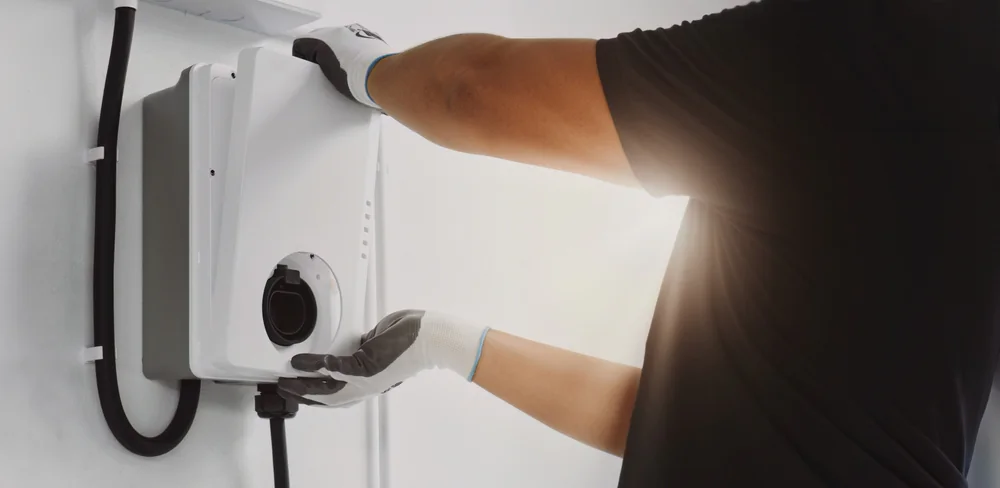
What's Included in EV Charger Setup
Your installation includes a full electrical assessment of your current panel and wiring. We check whether your system can support the additional load from a Level 2 charger, which typically adds 12 to 80 miles of range per hour depending on your vehicle and charger model. If you need a panel upgrade, we handle that as part of the same job.
We install the charging station where you want it, whether that’s in your garage, carport, or outside near your driveway. The wiring gets run to meet National Electrical Code standards and local requirements in Alamance County. We mount the unit, connect it to a dedicated circuit, and make sure the breaker is properly sized and labeled.
Duke Energy offers rebates up to $1,133 per household in North Carolina for EV charger installation costs. We can help you understand what qualifies and how to apply, so you’re not leaving money on the table. The rebate doesn’t cover everything, but it takes a significant chunk out of your upfront cost.
If you’re installing a Tesla Wall Connector, a ChargePoint Home Flex, or another specific brand, we work with what you’ve already purchased or help you choose a unit that fits your vehicle and budget. We also handle any future troubleshooting or EV charger repair if something stops working down the line.
How much does it cost to install an EV charger in Mebane?
Most installations run between $800 and $3,000 depending on how far your charger location is from your electrical panel and whether you need a panel upgrade. If your panel is close to your garage and you’ve got a modern 200-amp service, you’re looking at the lower end. If we’re running wire across your house or upgrading a 100-amp panel to handle the new load, the cost goes up.
We use flat-rate pricing, so you get a firm number before we touch anything. That price includes the labor, materials, permit, and inspection. It doesn’t include the charger itself if you haven’t bought one yet, but we can walk you through options that fit your car and charging needs.
Duke Energy’s rebate program can cover up to $1,133 of your installation cost, which helps. We’ll give you the documentation you need to apply, but the rebate comes after the work is done, so plan for the full cost upfront and treat the rebate as money back.
Do I need a permit to install an electric vehicle charger?
Yes. Most EV charger installations require a permit in Mebane and Alamance County because you’re adding a high-draw appliance to your electrical system. The permit process ensures the work meets code, the breaker is sized correctly, and the installation won’t create a fire hazard or overload your panel.
Some homeowners skip the permit to save time or money, but that creates problems later. If you ever sell your home, an unpermitted installation can show up during inspection and kill your deal. If something goes wrong and your insurance finds out the work wasn’t permitted, they can deny your claim.
We pull the permit as part of the installation and schedule the inspection once the work is done. It adds a few days to the timeline, but it protects you legally and makes sure everything is done right. You don’t want to shortcut this part.
Can I install an EV charger myself to save money?
Technically you can, but it’s a bad idea unless you’re a licensed electrician. Installing a Level 2 charger means working with 240-volt circuits, which is the same voltage that powers your dryer and oven. If you wire it wrong, you risk electrical fires, damage to your vehicle’s charging system, or a failed inspection that forces you to rip it out and start over.
Most EV charger manufacturers void the warranty if the unit isn’t installed by a licensed professional. So even if you get it working, you’re on your own if it breaks. Insurance companies also care about this. If an unpermitted DIY installation causes a fire, your homeowner’s policy might not cover the damage.
The bigger issue is your electrical panel. If you don’t know how to calculate load capacity or size a breaker correctly, you could overload your system without realizing it. That’s not something you notice until your panel starts tripping or overheating. Hiring an electrician costs more upfront, but it’s cheaper than fixing a fire or replacing a $30,000 car battery.
Will my electrical panel need to be upgraded for an EV charger?
It depends on your current panel size and how much electrical load you’re already using. Most homes built before 2000 have 100-amp panels, and adding a Level 2 EV charger that draws 30-50 amps can push that system to its limit, especially if you’re also running your AC, water heater, and other appliances at the same time.
We check your panel capacity during the site visit and calculate how much headroom you have left. If you’re close to maxing out, we recommend upgrading to a 200-amp panel before installing the charger. That’s not just for the EV, it future-proofs your home if you add another charger, a pool, or any other high-draw equipment later.
Panel upgrades add to the cost and timeline, but they’re not optional if your system can’t handle the load. We’d rather tell you that upfront than install a charger that trips your main breaker every time you use it. If your panel is newer and properly sized, you’re good to go without any upgrades.
How long does it take to charge an electric vehicle at home?
With a Level 2 charger, most EVs add 12 to 80 miles of range per hour depending on the vehicle and charger output. A Tesla Model 3 with a 48-amp charger can go from empty to full overnight, usually in 6-8 hours. A Chevy Bolt on a 32-amp charger takes a bit longer, but still finishes while you sleep.
Level 1 charging, which is just plugging into a standard 120-volt outlet, adds about 3-5 miles per hour. That’s fine if you only drive 20 miles a day, but it’s painfully slow if you’re coming home with a low battery. Level 2 charging is 10 times faster, which is why most EV owners install a dedicated charging station instead of relying on a regular outlet.
If you’re using Duke Energy’s time-of-use rate plan, you can set your car to charge during off-peak hours when electricity costs as little as $0.04 per kilowatt-hour. That means a full charge might cost you $4-$6 instead of $15-$20 at a public fast charger. The time it takes is about the same either way, but you’re doing it at home while you’re asleep.
What's the difference between Level 1 and Level 2 EV charging?
Level 1 charging uses a standard 120-volt outlet, the same kind you plug a lamp into. It’s slow, adding about 3-5 miles of range per hour, which works if you barely drive or have all night to charge. Most EVs come with a Level 1 charging cable, so you don’t need to install anything, but you’ll spend a lot of time waiting for your battery to fill up.
Level 2 charging uses a 240-volt circuit, the same voltage as your electric dryer. It requires a dedicated charging station and professional installation, but it charges 10 times faster than Level 1. You’re looking at 12-80 miles of range per hour depending on your charger and vehicle. That’s the difference between plugging in at 7 p.m. and being full by midnight versus still charging when you leave for work the next morning.
If you drive more than 30-40 miles a day or you want the flexibility to charge quickly when you need it, Level 2 is the only realistic option. It costs more to install, but it’s the standard for home EV charging and the reason most people call an electrician instead of just using the cable that came with their car.
Other Services we provide in Mebane
About Us

Electrical Service Providers (ESP) has been in business since 2002. ESP started out performing wiring services to new construction, remodeling projects and residential homes. Our company’s president identified a market for electrical services to be performed in homes and businesses independent of new construction. Read More about Electrical Service Providers>>
All Rights Reserved.Organic Marketing LLC
Business Listings


Product Brands Used
Allied, Broan, Cutler Hammer, General Electric, Ideal, Juno, Kohler, Leviton, Lutron, Siemens, Square D
Contact
- Office Address: 3254 S Anthony Ct.
Burlington, NC 27215 - Mailing Address: PO Box 25
Alamance, NC 27201 - Phone: 336-228-3300
- E-mail: [email protected], [email protected]
Service Areas
Chapel Hill, Burlington, Carrboro, Durham, Gibsonville, Hillsborough, Graham, Pittsboro, Morrisville, Cary
About Us
Electrical Service Providers (ESP) has been in business since 2002. ESP started out performing wiring services to new construction, remodeling projects and residential homes. Our company’s president identified a market for electrical services to be performed in homes and businesses independent of new construction. Read More about Electrical Service Providers>>
All Rights Reserved.Organic Marketing LLC