EV Charger Installation in Morgan Creek, NC
Charge at Home Without the Guesswork or Risk
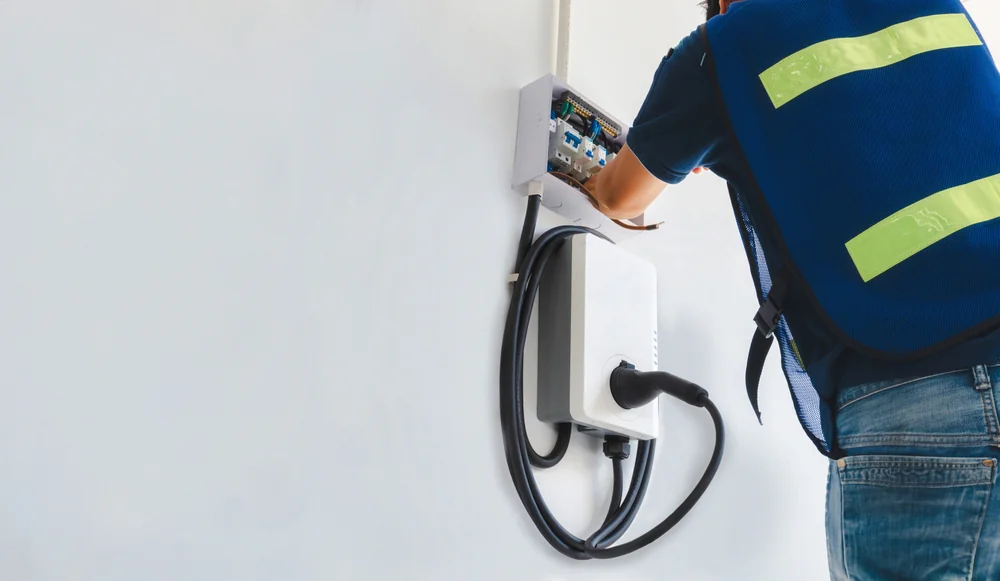
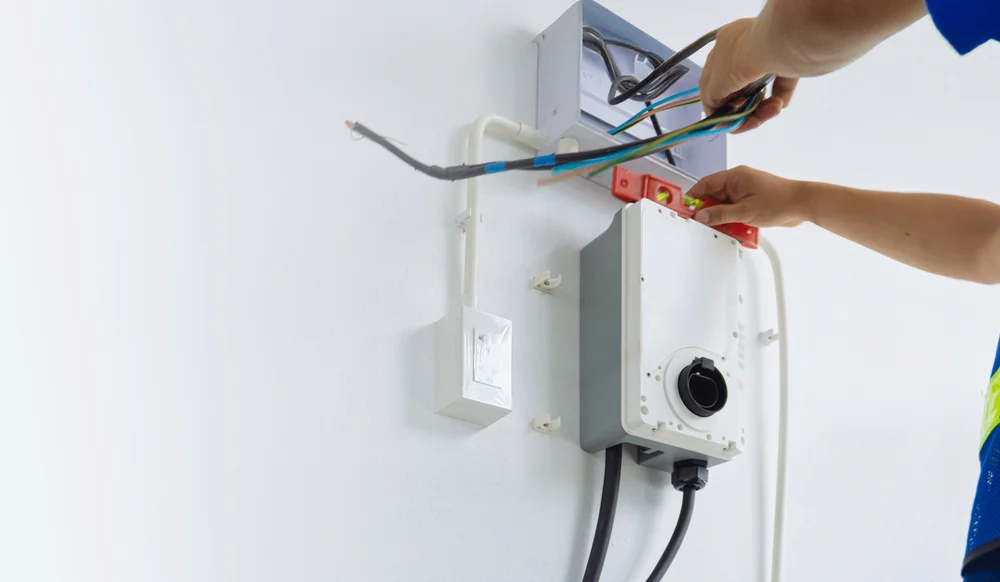
Electric Vehicle Charger Setup Done Right
You plug in before bed. Your car charges overnight while you sleep. No more planning trips around charging stations or waiting in line at public chargers.
That’s what a properly installed Level 2 home charging station gives you. Faster charging than a standard outlet—usually a full battery in four to eight hours depending on your vehicle. Lower cost per charge than public stations, especially if you’re charging during off-peak hours when electricity rates drop.
And if you’re planning to sell your home down the road, you’re adding a feature that buyers with EVs actively look for. Homes with EV chargers are moving faster in markets like Morgan Creek, where EV adoption is climbing steadily. It’s not just convenience—it’s a smart investment in your property.
Licensed EV Charger Electricians Near You
We’ve been serving Morgan Creek and the surrounding Chapel Hill and Durham areas since 2002. We’re locally owned, and our master electrician has been licensed since 1989—that’s more than three decades of knowing how homes are wired, what panels can handle, and how to do electrical work that passes inspection the first time.
We’re not a national franchise. We’re the team that shows up in uniform, with a stocked truck, and cleans up before we leave. You’ll talk to a real person when you call, not an answering machine. And you’ll know the cost before we start any work—we use flat-rate pricing so there are no surprises when the job is done.
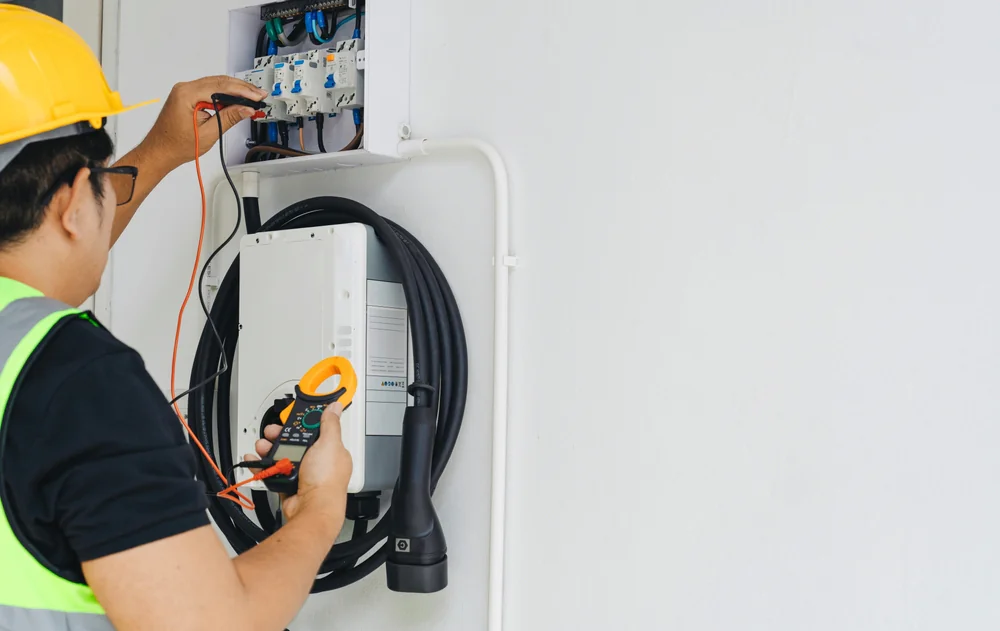
How We Install Your EV Charging Station
First, we assess your electrical panel. Most EV chargers need a 240-volt circuit, and not every panel has the capacity to handle that load safely. If your panel is older or already near capacity, we’ll let you know upfront whether an upgrade is needed. No surprises later.
Next, we handle the permits. EV charger installations require permits in most areas, and inspections confirm the work meets local and national electrical codes. We take care of that process so you don’t have to figure it out yourself.
Then we install the charger. We run the wiring, mount the unit where you want it (usually in your garage or near your driveway), and make sure everything is connected correctly. We test the system before we leave, and we don’t consider the job done until it’s working and you understand how to use it.
After installation, the local inspector signs off. Once that’s complete, you’re ready to charge at home whenever you need to.
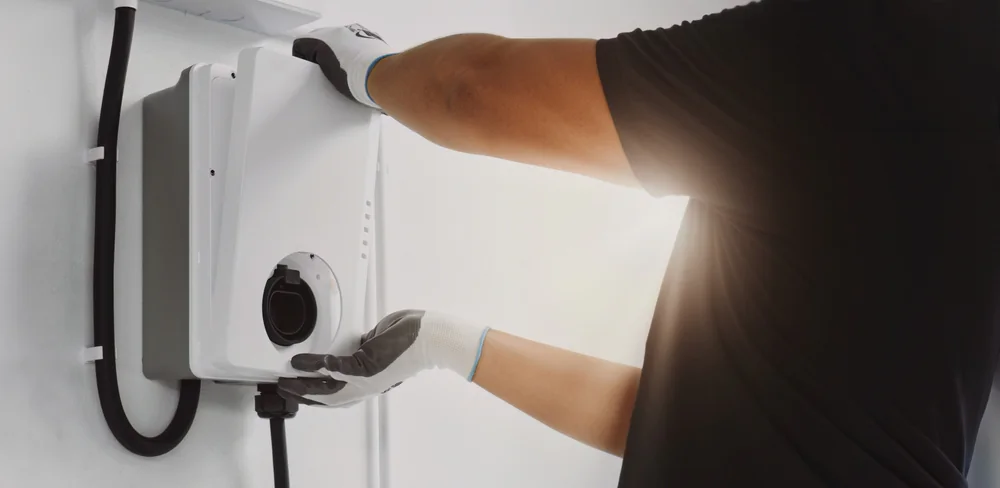
What's Included in EV Charger Installation
Every installation starts with an electrical panel evaluation. We check whether your current system can support a Level 2 charger or if you’ll need an upgrade. Many homes in Morgan Creek were built before EVs became common, and older panels rated at 100 amps often need more capacity.
We also coordinate all permits and inspections required by local code. That paperwork protects you if there’s ever an insurance claim related to electrical work, and it ensures the installation is documented and compliant.
You’ll get a charger that’s compatible with your vehicle and installed in the location that makes the most sense for your property. We work with quality brands and make sure the setup matches your charging needs—whether that’s a hardwired unit or one with a plug for flexibility.
And because North Carolina is pushing toward 1.25 million EVs on the road by 2030, the demand for home charging is only going up. Getting your setup done now means you’re ahead of the curve, especially with federal charging equipment credits expiring in mid-2026.
How much does it cost to install an EV charger at home in Morgan Creek?
Most homeowners pay between $600 and $2,000 for a complete EV charger installation, with the national average around $1,000. That range depends on a few factors: the distance from your electrical panel to where the charger will be mounted, whether your panel needs an upgrade, and what type of charger you choose.
If your panel is already near capacity or rated below 200 amps, you may need an upgrade before the charger can be installed safely. Panel upgrades add to the cost but are necessary to prevent overloads, tripped breakers, or fire hazards. We assess your panel during the initial visit and give you a flat-rate price before any work begins—so you’ll know exactly what you’re paying.
Duke Energy also offers a rebate program that covers up to $1,117 per household for EV charger installation costs, including panel upgrades and wiring. That can offset a significant portion of your total expense if you qualify.
Do I need a permit to install an EV charger in North Carolina?
Yes. EV charger installations require a permit in most North Carolina municipalities, including Morgan Creek. The permit ensures the work meets local and national electrical codes, and the inspection that follows confirms everything was installed correctly.
Permits aren’t just red tape—they protect you. If there’s ever a fire or electrical issue related to unpermitted work, your insurance company may deny coverage. The permit and inspection create a paper trail that proves the installation was done safely and legally.
We handle the permit process as part of the installation. You don’t need to visit the building department or figure out what forms to fill out. We submit the paperwork, schedule the inspection, and make sure everything passes before we consider the job complete.
Can my electrical panel handle an EV charger, or will I need an upgrade?
It depends on your panel’s capacity and how much load it’s already carrying. Level 2 EV chargers typically require a 240-volt circuit with a 40- to 50-amp breaker. If your panel is rated at 100 amps or is already near capacity with your home’s existing electrical demands, an upgrade is usually necessary.
Older homes in the Morgan Creek area often have 100- or 150-amp panels, which were fine before EVs became common. But adding a high-draw appliance like an EV charger without enough capacity can cause overheating, tripped breakers, or even fire hazards. A panel upgrade solves that problem and gives you room for future electrical needs.
We assess your panel during the initial consultation and let you know right away whether an upgrade is needed. If it is, we’ll include that in the flat-rate price so there are no surprises. And if your panel can handle the load as-is, we’ll tell you that too.
How long does it take to install an EV charging station?
Most installations take four to eight hours, depending on the complexity of the job. If your electrical panel is in good shape and the charger location is close to the panel, the work goes faster. If we need to run wiring a longer distance, upgrade your panel, or work around obstacles in your garage or exterior wall, it takes longer.
The permit and inspection process adds time to the overall timeline, but that’s separate from the physical installation. We submit the permit before we start work, and we schedule the inspection once the installation is complete. In most cases, you’ll be able to start charging within a few days of the initial install, once the inspector signs off.
We’ll give you a clear timeline during the consultation so you know what to expect. And we work efficiently—our trucks are stocked with the materials we need, so we’re not making multiple trips or waiting on parts.
What's the difference between a Level 1 and Level 2 EV charger?
A Level 1 charger plugs into a standard 120-volt outlet—the same kind you use for lamps and phone chargers. It’s the slowest option, adding about three to five miles of range per hour of charging. That’s fine if you drive short distances and can leave your car plugged in overnight, but it’s not practical for most people.
A Level 2 charger runs on a 240-volt circuit, the same voltage as your dryer or oven. It charges much faster—typically adding 20 to 30 miles of range per hour, depending on your vehicle. Most EVs can fully charge overnight with a Level 2 setup, which is why it’s the standard choice for home installations.
Level 2 chargers also future-proof your setup. As EV batteries get larger and more efficient, you’ll want the faster charging speed. Installing a Level 2 charger now means you won’t need to upgrade later if you buy a different EV or if your driving habits change.
Can you install a charger for any type of electric vehicle?
Yes. Level 2 chargers work with all electric vehicles sold in the U.S., including Tesla, Ford, Chevrolet, Nissan, Hyundai, and every other brand. The charger connects to your car using a standardized plug (J1772 for most EVs, or Tesla’s proprietary connector), and most chargers come with adapters if needed.
If you own a Tesla, you can use a Tesla Wall Connector or a universal Level 2 charger with an adapter. If you own a different brand, any Level 2 charger will work as long as it’s properly installed and meets your vehicle’s charging specifications.
We’ll help you choose a charger that fits your vehicle and your budget. Some chargers have smart features like scheduling and energy monitoring, which can help you take advantage of lower electricity rates during off-peak hours. Others are simpler and more affordable. We’ll walk you through the options so you can make the right choice for your situation.
Other Services we provide in Morgan Creek
About Us

Electrical Service Providers (ESP) has been in business since 2002. ESP started out performing wiring services to new construction, remodeling projects and residential homes. Our company’s president identified a market for electrical services to be performed in homes and businesses independent of new construction. Read More about Electrical Service Providers>>
All Rights Reserved.Organic Marketing LLC
Business Listings


Product Brands Used
Allied, Broan, Cutler Hammer, General Electric, Ideal, Juno, Kohler, Leviton, Lutron, Siemens, Square D
Contact
- Office Address: 3254 S Anthony Ct.
Burlington, NC 27215 - Mailing Address: PO Box 25
Alamance, NC 27201 - Phone: 336-228-3300
- E-mail: [email protected], [email protected]
Service Areas
Chapel Hill, Burlington, Carrboro, Durham, Gibsonville, Hillsborough, Graham, Pittsboro, Morrisville, Cary
About Us
Electrical Service Providers (ESP) has been in business since 2002. ESP started out performing wiring services to new construction, remodeling projects and residential homes. Our company’s president identified a market for electrical services to be performed in homes and businesses independent of new construction. Read More about Electrical Service Providers>>
All Rights Reserved.Organic Marketing LLC