EV Charger Installation in Mount Gilead, NC
Charge at Home Without the Guesswork
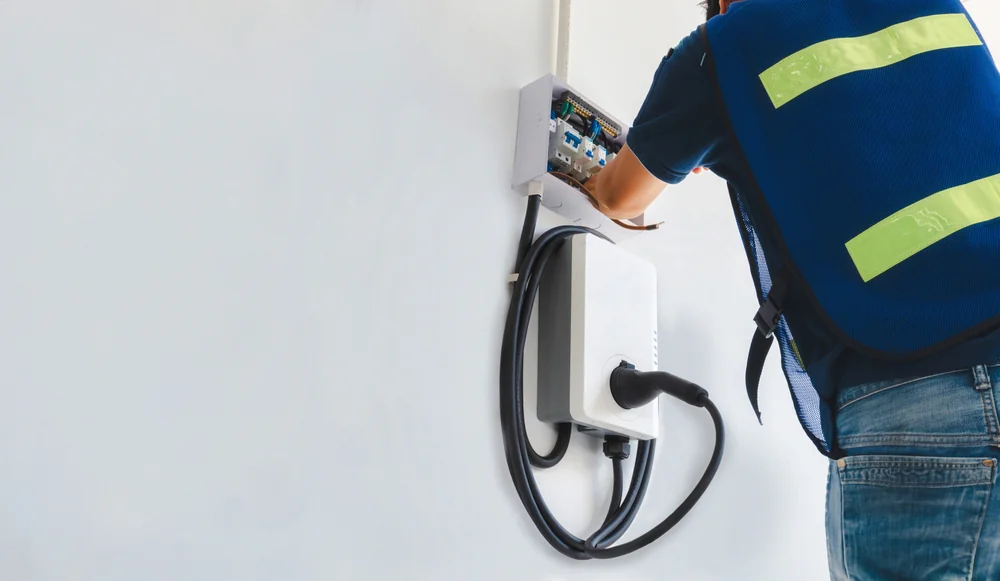
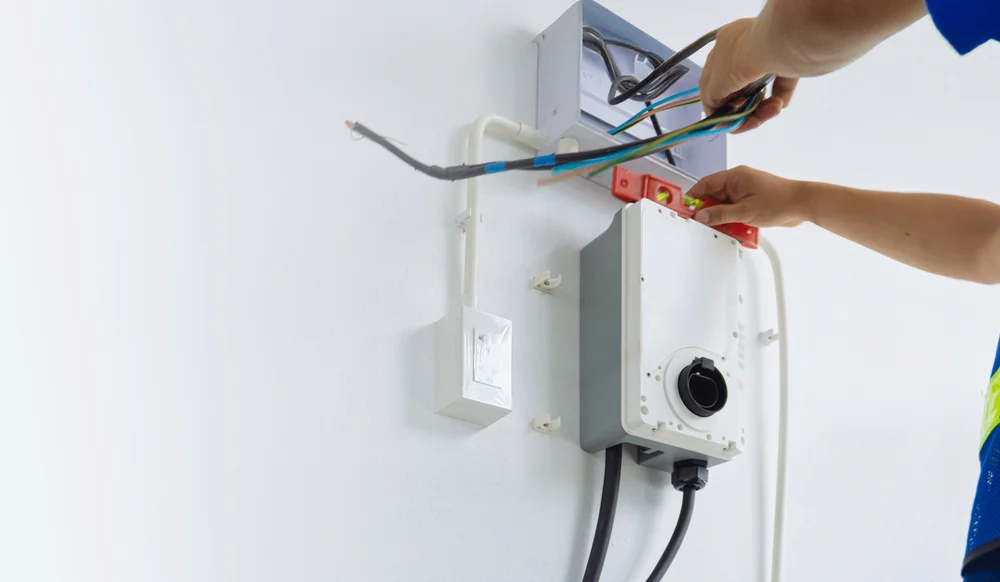
Electric Vehicle Charger Setup Mount Gilead
You bought an EV to save money on gas and skip the pump. But public charging stations are inconsistent, sometimes broken, and always inconvenient when you’re in a hurry.
Home charging changes that. You plug in when you get home, and your car’s ready the next morning. No detours. No waiting. No wondering if the station down the road is occupied or out of service.
Most EV owners charge overnight during off-peak hours when electricity costs less. That’s real savings on top of what you’re already avoiding at the gas station. And if you’re in Duke Energy’s service area, you may qualify for up to $1,117 in rebates for installing a Level 2 home charging station. That rebate covers a significant chunk of the installation cost.
The difference between public charging and home charging isn’t just convenience. It’s control. You’re not hunting for an available spot or planning your day around a charging stop. You’re plugging in at home like you charge your phone.
Licensed EV Charger Installers Near Mount Gilead
We’ve been handling electrical installations across North Carolina for over two decades. We’re licensed, insured, and we’ve seen what happens when EV chargers get installed incorrectly. Electrical fires from improper 240-volt circuits aren’t common, but they’re preventable.
Mount Gilead sits in Montgomery County, where homes vary widely in age and electrical capacity. Older homes often need panel upgrades before they can support a Level 2 charger. Newer builds might be ready to go. We assess your specific setup before recommending anything.
We’re based in Burlington and serve surrounding counties including areas near Mount Gilead. Our team has more than 50 years of combined experience, and we use flat-rate pricing so you know the cost before we start. No surprises.
How EV Charging Station Installation Works
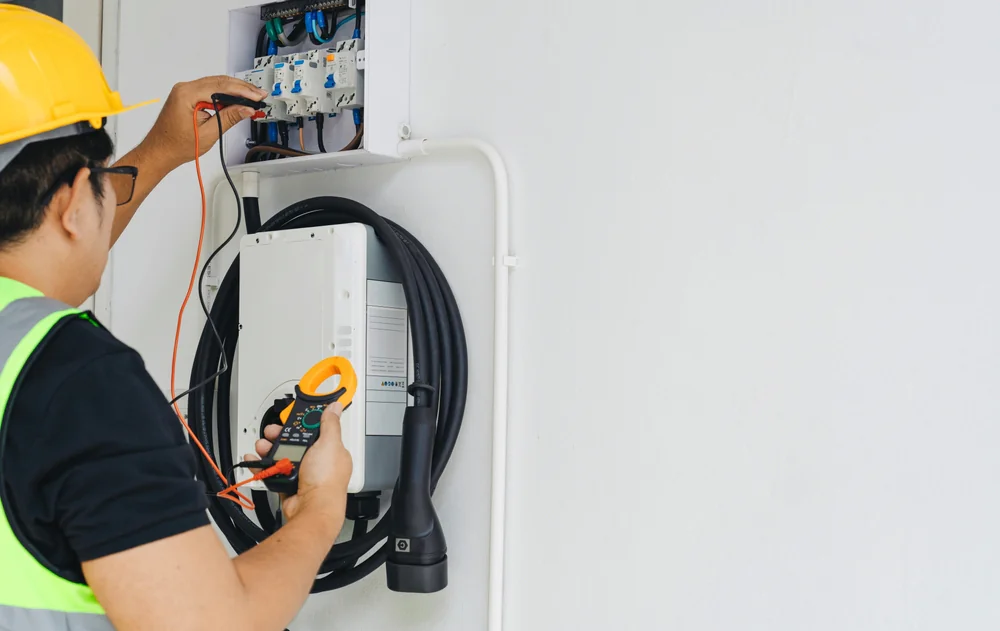
First, we look at your electrical panel. Most EV chargers need a dedicated 240-volt circuit, and your panel needs available capacity to handle that load. If your panel is maxed out or outdated, we’ll tell you what upgrade is required. Some homes need a full panel replacement. Others just need a subpanel or circuit addition.
Next, we map the route from your panel to where you want the charger installed. If your garage is attached and close to the panel, installation is straightforward. Detached garages or carports farther from the house mean more wiring, trenching, or conduit work. Distance affects cost, and we’ll walk you through what’s involved.
Once the electrical work is planned, we handle permits and code compliance. North Carolina’s 2026 electrical code requires professional installation for EV charging equipment. DIY isn’t an option anymore, and that’s for good reason. Improperly installed 240-volt circuits are a fire hazard.
After permits are approved, we install the charger, test the circuit, and make sure everything works as it should. You’ll know how to operate it, how to troubleshoot basic issues, and when to call if something’s off. The whole process typically takes a day or two depending on the scope of electrical work required.
What's Included in EV Charger Installation
Every EV charger installation starts with an electrical assessment. We check your panel’s capacity, evaluate the condition of your existing wiring, and determine whether upgrades are necessary. You’ll get a clear answer about what your home can handle and what it can’t.
If your panel needs an upgrade, we’ll explain why and what’s involved. Panel upgrades aren’t just about adding a charger. They’re about making sure your entire electrical system can handle modern loads safely. Homes in Mount Gilead range from historic properties to newer construction, and electrical needs vary significantly.
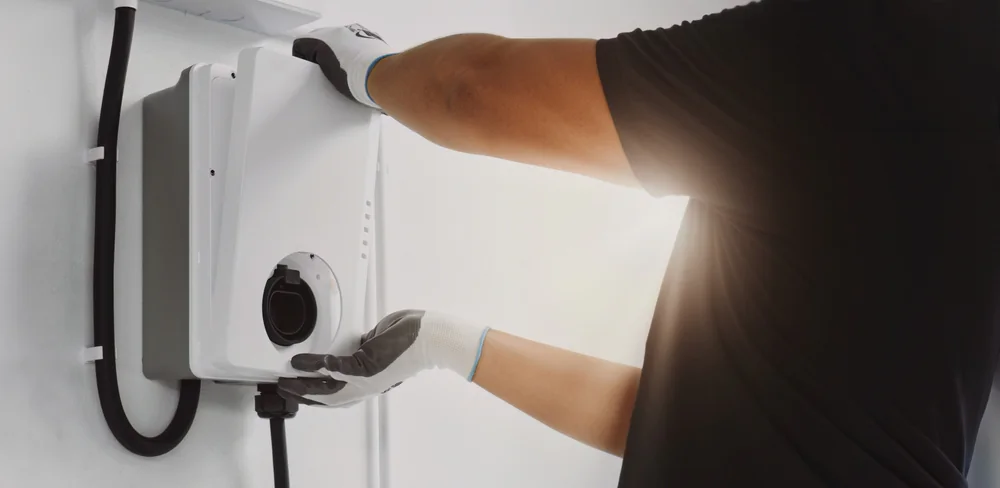
We install weather-resistant outdoor chargers or indoor units depending on where you park. All installations meet National Electrical Code standards and local requirements. We pull permits, schedule inspections, and make sure everything passes before we consider the job done.
North Carolina added nearly 240,000 electric and plug-in hybrid vehicles between 2020 and 2024. EV adoption is accelerating, and homes with charging stations are becoming more attractive to buyers. You’re not just installing a charger. You’re adding functionality that more people are actively looking for when they shop for homes.
Duke Energy’s rebate program is available for residential Level 2 charger installations. We can help you navigate that process and make sure your installation qualifies. The rebate reduces your upfront cost and makes the investment more accessible.
How much does it cost to install an EV charger in Mount Gilead?
Installation costs vary based on your home’s electrical setup and how far the charger is from your panel. If your panel has available capacity and your garage is close, you’re looking at the lower end of the cost range. If you need a panel upgrade or significant wiring work, costs go up.
Panel upgrades can add $1,500 to $3,000 depending on the scope. Running new wiring across long distances or underground to a detached garage adds labor and material costs. We provide flat-rate pricing after assessing your specific situation, so you’ll know the total before any work begins.
Duke Energy offers up to $1,117 in rebates for residential Level 2 EV charger installations. That rebate can offset a significant portion of your installation cost. We’ll help you understand what qualifies and how to apply.
Do I need to upgrade my electrical panel to install an EV charger?
It depends on your current panel’s capacity and how much load it’s already handling. Most Level 2 EV chargers require a 240-volt, 40- to 50-amp dedicated circuit. If your panel is near capacity or outdated, an upgrade is necessary.
Homes built before the 1990s often have 100-amp or 150-amp panels, which may not have room for an EV charger circuit without removing other circuits or upgrading the panel entirely. Newer homes with 200-amp panels usually have the capacity, but it’s not guaranteed.
We assess your panel during the initial consultation and tell you exactly what’s needed. If an upgrade is required, we’ll explain why and what it involves. Panel upgrades aren’t just about the charger. They improve your home’s overall electrical safety and capacity for future needs.
How long does EV charger installation take?
If your electrical panel has capacity and the charger location is straightforward, installation typically takes four to eight hours. That includes mounting the charger, running the circuit, connecting everything, and testing.
If you need a panel upgrade, add another day or two depending on the complexity. Detached garages or installations requiring trenching and underground wiring take longer. Permit approval times vary by jurisdiction, which can add a few days to the overall timeline.
We’ll give you a realistic timeline during the estimate. Most installations are completed within a few days from start to finish, including permit processing. Emergency service and after-hours appointments are available if you need faster turnaround.
What's the difference between Level 1 and Level 2 EV charging?
Level 1 charging uses a standard 120-volt household outlet. It’s slow, adding about three to five miles of range per hour of charging. If you drive 30 miles a day, you’d need six to ten hours to recharge overnight. That works for some people, but it’s limiting.
Level 2 charging uses a 240-volt circuit, the same voltage as your dryer or oven. It charges much faster, adding 20 to 60 miles of range per hour depending on your vehicle and charger capacity. Most EV owners prefer Level 2 because it fully charges the car overnight even after longer drives.
Level 2 chargers require professional installation. You can’t just plug them into an existing outlet. They need a dedicated circuit, proper wiring, and code-compliant installation. That’s where we come in.
Can I install an EV charger myself?
Not legally, and not safely. North Carolina’s 2026 electrical code mandates professional installation for EV charging equipment. The code change happened because improperly installed 240-volt circuits caused house fires.
EV chargers draw significant power. If the circuit isn’t sized correctly, the breaker isn’t rated properly, or the wiring isn’t up to code, you’re creating a serious fire hazard. Even if you have electrical experience, permits and inspections are required.
Professional installation ensures your charger is safe, code-compliant, and covered by insurance if something goes wrong. We handle the permits, the inspection, and the installation. You get peace of mind and a charger that works correctly from day one.
Will installing an EV charger increase my home's value?
It’s starting to. Homes with EV chargers were listed 91.6% more often in 2025 compared to previous years, and that trend is accelerating as EV adoption grows. North Carolina exceeded 100,000 EV registrations in 2024, and the state is targeting 1.25 million EVs by 2030.
Buyers shopping for homes are increasingly looking for EV charging capability. It’s not a universal must-have yet, but it’s becoming more common on buyer checklists, especially in areas where EV ownership is growing quickly.
Even if it doesn’t directly increase your home’s appraised value today, it makes your home more attractive to a growing segment of buyers. That can mean faster sales and fewer objections during negotiations. You’re future-proofing your property for a market that’s clearly moving toward electric vehicles.
Other Services we provide in Mount Gilead
About Us

Electrical Service Providers (ESP) has been in business since 2002. ESP started out performing wiring services to new construction, remodeling projects and residential homes. Our company’s president identified a market for electrical services to be performed in homes and businesses independent of new construction. Read More about Electrical Service Providers>>
All Rights Reserved.Organic Marketing LLC
Business Listings


Product Brands Used
Allied, Broan, Cutler Hammer, General Electric, Ideal, Juno, Kohler, Leviton, Lutron, Siemens, Square D
Contact
- Office Address: 3254 S Anthony Ct.
Burlington, NC 27215 - Mailing Address: PO Box 25
Alamance, NC 27201 - Phone: 336-228-3300
- E-mail: [email protected], [email protected]
Service Areas
Chapel Hill, Burlington, Carrboro, Durham, Gibsonville, Hillsborough, Graham, Pittsboro, Morrisville, Cary
About Us
Electrical Service Providers (ESP) has been in business since 2002. ESP started out performing wiring services to new construction, remodeling projects and residential homes. Our company’s president identified a market for electrical services to be performed in homes and businesses independent of new construction. Read More about Electrical Service Providers>>
All Rights Reserved.Organic Marketing LLC