EV Charger Installation in Ossipee, NC
Charge at Home Without the Guesswork
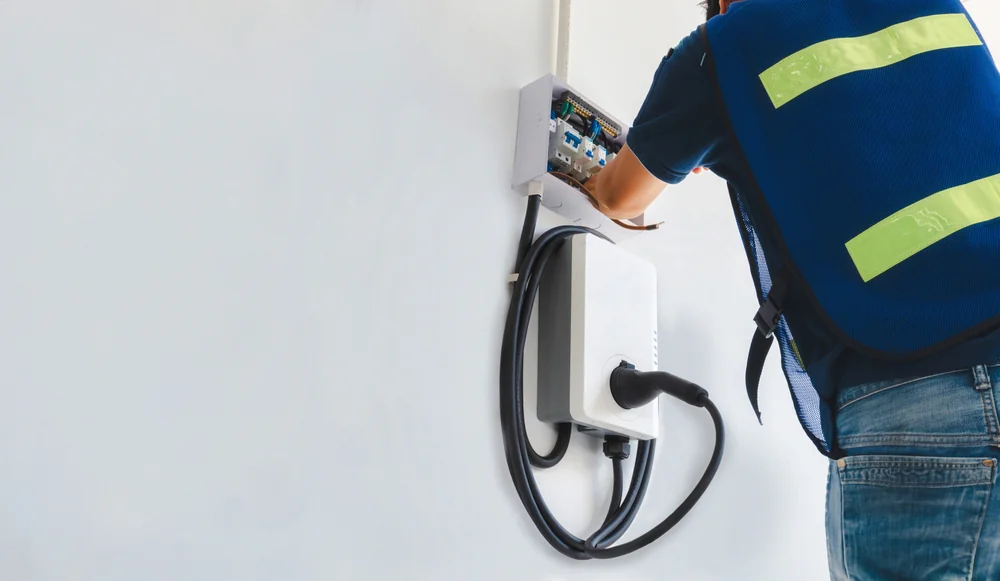
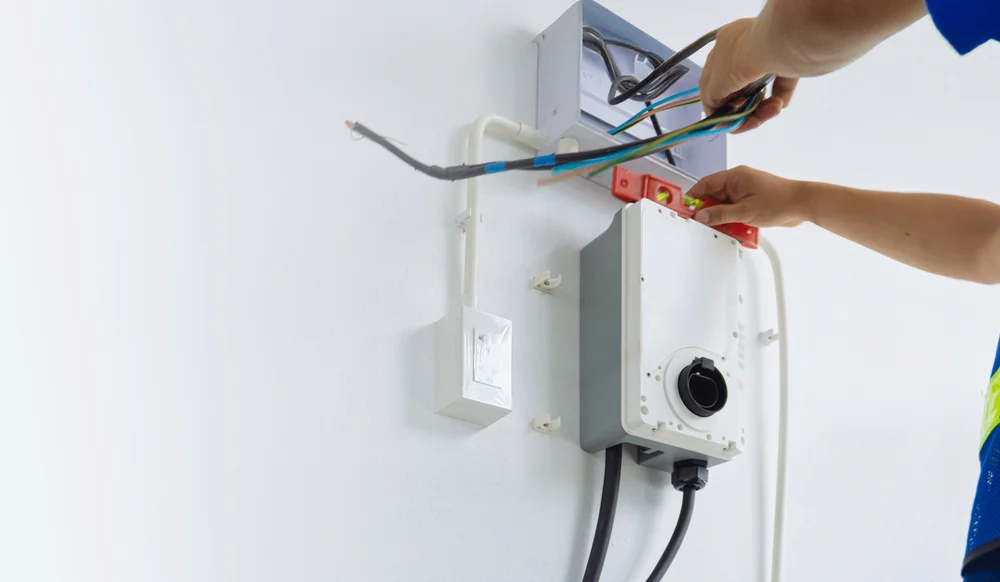
Home EV Charging Station Setup
You bought an EV to simplify your life, not to plan trips around public charging stations. A Level 2 home charger gives you 25 to 40 miles of range per hour, which means a full charge overnight—usually in 3 to 8 hours depending on your battery size.
No more waiting at crowded charging stations. No more wondering if you’ll have enough range to get home. You plug in when you pull into your driveway, and your car is ready the next morning.
And if you’re worried about your electric bill, home charging typically costs less per kilowatt-hour than public stations. Duke Energy even offers rebates up to $1,117 for the electrical work needed to support your charger—wiring upgrades, panel work, outlet installation, all of it. That’s money back in your pocket for doing what you were going to do anyway.
Your home becomes your refueling station. That’s the outcome here.
Licensed Electricians Serving Ossipee, NC
We’ve been handling electrical work across Alamance, Orange, Chatham, and Durham counties for over two decades. We’re locally owned, and our team is led by Andy Helton, a Master Electrician with 35+ years of hands-on experience.
We started with new construction and remodeling work, but we’ve always focused on service—the kind where you talk to a real person, not a recording. Our trucks are fully stocked, our pricing is flat-rate so you know the cost before we start, and we don’t leave until the job is done right.
EV charger installation isn’t new to us. We’ve done the panel upgrades, the permit paperwork, the Duke Energy rebate applications. We know what your electrical system can handle and what it can’t. If you’re in Ossipee or anywhere nearby, we’ve likely worked on homes just like yours.
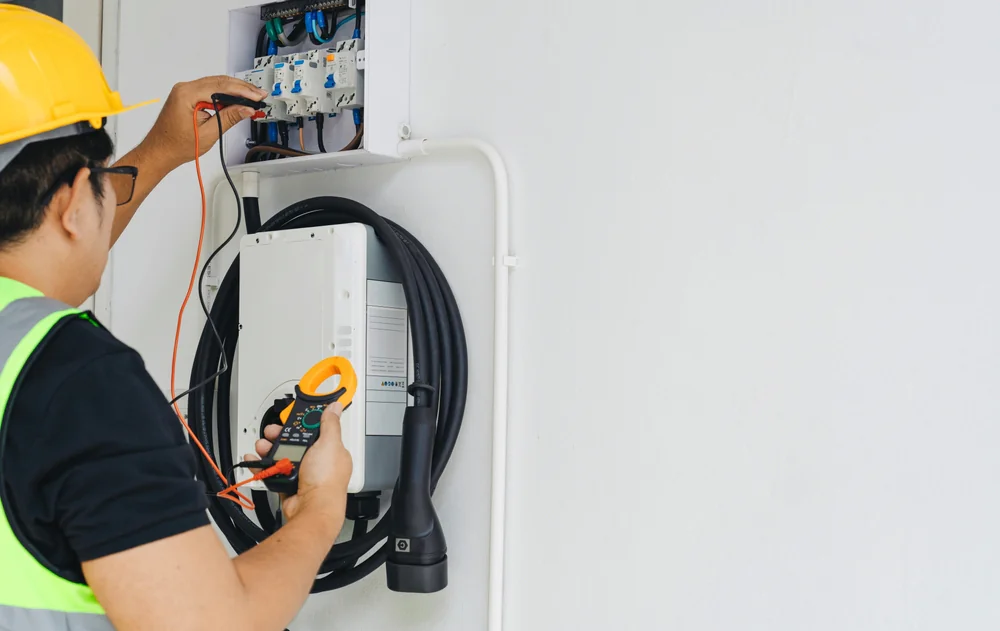
Our EV Charger Installation Process
First, we assess your current electrical panel. Most EV chargers need a dedicated 240-volt circuit with 40 to 50 amps, and not every panel can handle that load without an upgrade. We’ll tell you exactly what your system needs—no surprises later.
If your panel is good to go, we map out the best route from your breaker box to where you want the charger installed. That might be your garage, your carport, or an exterior wall near your driveway. The shorter and simpler the run, the less labor and materials you’ll pay for.
Next, we pull the permits. In North Carolina, adding a 240-volt circuit or hardwired charger almost always requires a permit and inspection. We handle that paperwork, schedule the inspection, and make sure everything passes the first time.
Then we install the charger, test it, and walk you through how it works. If you’re eligible for Duke Energy’s rebate, we’ll help you with that application too. You’ll have everything you need to start charging at home the same day we finish.
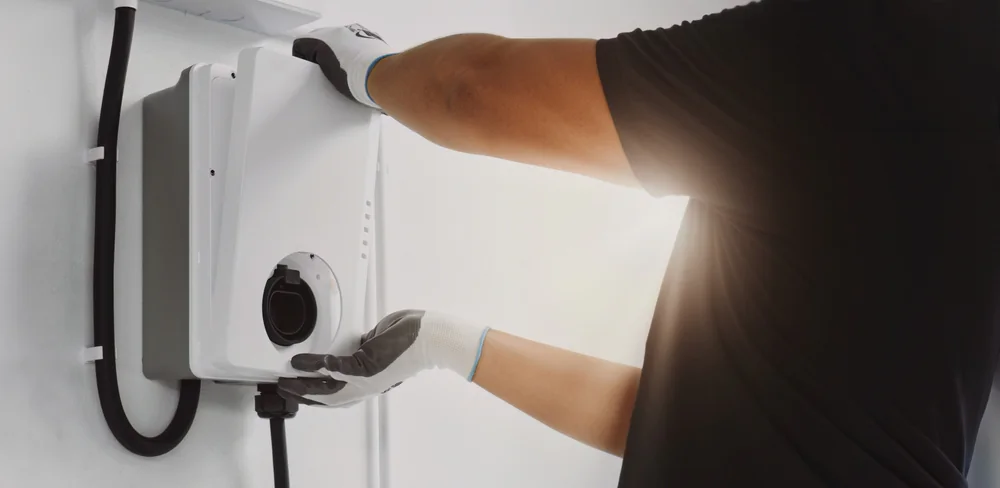
What's Included in Your Installation
Your installation includes a full electrical assessment to confirm your panel can support the load. If it can’t, we’ll upgrade it. That’s not an upsell—it’s a safety requirement. Undersized panels cause tripped breakers, overheating, and potential fire hazards.
You also get the wiring run from your panel to the charger location, whether that’s 10 feet or 50 feet. We’ll route it through walls, attics, or conduit depending on your home’s layout. All materials—wire, breakers, conduit, mounting hardware—are included in your flat-rate price.
We pull the permit, coordinate the inspection, and handle any corrections if the inspector asks for adjustments. You don’t have to call the county or figure out code requirements. We do that.
And because North Carolina added over 20,000 new EVs in 2024 alone, the demand for home charging is only growing. Ossipee and the surrounding Burlington area are seeing more EV owners every month, which means more homes need the electrical infrastructure to support them. If you’re one of those owners, you’re making a smart move by getting this done now—before your panel becomes a bottleneck.
How much does it cost to install an EV charger at home?
Most homeowners in North Carolina spend between $1,000 and $2,500 for a complete Level 2 EV charger installation. That range depends on whether your electrical panel needs an upgrade, how far the wiring has to run, and whether your install requires any wall or structural work.
If your panel is already sized correctly and the charger goes in your garage near the breaker box, you’re looking at the lower end. If we need to upgrade your panel to 200 amps, run wire through finished walls, or install the charger on a detached structure, the cost goes up.
Duke Energy offers rebates up to $1,117 for the electrical improvements needed to support EV charging, which can offset a significant portion of your installation cost. We’ll help you apply for that rebate as part of the process. You’ll know your exact price before we start any work—we use flat-rate pricing, so there’s no guessing.
Do I need to upgrade my electrical panel for an EV charger?
It depends on your current panel’s capacity and how much load you’re already using. Most Level 2 EV chargers require a dedicated 240-volt circuit with 40 to 50 amps. If your panel is maxed out or undersized, you’ll need an upgrade to safely support that load.
Many older homes in Alamance and Orange counties have 100-amp panels, which might not leave enough capacity for an EV charger once you account for your HVAC, water heater, dryer, and other appliances. Upgrading to a 200-amp panel is common and ensures you won’t trip breakers or create safety issues.
We assess your panel during the initial consultation and tell you exactly what’s needed. If an upgrade is required, that’s included in your total project cost. It’s not optional—it’s about keeping your home safe and your charger working reliably every time you plug in.
How long does the installation take from start to finish?
Most installations take one day for the actual electrical work, but the full timeline depends on permitting and inspection schedules. Once we assess your home and you approve the quote, we pull the permit, which usually takes a few days to a week depending on the county.
After the permit is approved, we schedule the installation. The work itself—running wire, installing the breaker, mounting the charger, and testing everything—typically takes 4 to 8 hours depending on complexity. Then we schedule the inspection, which usually happens within a few days.
From your first call to a fully operational charger, expect about two weeks in most cases. If your panel needs an upgrade, that might add a few days. We’ll give you a clear timeline upfront so you know what to expect. No one likes waiting around wondering when things will get done.
Can I install an EV charger myself to save money?
You legally can’t in most cases, and even if you could, you shouldn’t. Installing a 240-volt circuit requires a permit and inspection in North Carolina, and the permit process requires a licensed electrician to pull it. Inspectors won’t sign off on DIY electrical work for something this significant.
Beyond the legal issues, there are real safety risks. Incorrectly sized wire, improper breaker selection, or faulty connections can cause electrical fires, damage your vehicle’s charging system, or void your home insurance. If something goes wrong and you didn’t use a licensed electrician, your insurance might not cover the damage.
You also risk voiding your charger’s warranty. Most manufacturers require professional installation by a licensed electrician to honor their warranty. If your charger fails and you installed it yourself, you’re buying a new one out of pocket. The money you save upfront isn’t worth the risk of doing it twice or dealing with a fire.
What's the difference between Level 1 and Level 2 charging?
Level 1 charging uses a standard 120-volt outlet—the same outlet you’d plug a lamp into. It’s slow, adding about 3 to 5 miles of range per hour. If you drive 40 miles a day, you’d need 8 to 12 hours to recharge, which works if you barely use your car but becomes a problem quickly if you drive more.
Level 2 charging uses a 240-volt circuit, the same voltage as your dryer or oven. It adds 25 to 40 miles of range per hour, which means most EVs fully charge overnight in 3 to 8 hours. That’s the difference between waking up to a half-charged car and waking up ready to drive wherever you need to go.
If you’re serious about using your EV as your primary vehicle, Level 2 is the only practical option. Level 1 works as a backup or for people who drive very little, but it’s not a long-term solution for most drivers. You bought an EV to use it—Level 2 charging makes that possible without planning your life around charging times.
Will installing an EV charger increase my home's value?
It can, especially as EV adoption continues to grow in North Carolina. The state added nearly 240,000 electric and plug-in hybrid vehicles between 2020 and 2024, and Governor Cooper’s executive order aims for 1.25 million EVs on the road by 2030. That means more buyers will be looking for homes with charging infrastructure already in place.
A home with a Level 2 charger installed is more attractive to EV owners than one without. It’s one less thing they have to deal with after closing, and it signals that the home’s electrical system can handle modern demands. That’s particularly true in areas like Ossipee, Burlington, and Chapel Hill where EV ownership is growing faster than the state average.
Whether it increases your home’s appraised value depends on your local market, but it certainly doesn’t hurt. At minimum, it makes your home easier to sell to a growing segment of buyers. And if you’re planning to stay in your home, the value is in the convenience and cost savings you get from charging at home instead of relying on public stations.
Other Services we provide in Ossipee
About Us

Electrical Service Providers (ESP) has been in business since 2002. ESP started out performing wiring services to new construction, remodeling projects and residential homes. Our company’s president identified a market for electrical services to be performed in homes and businesses independent of new construction. Read More about Electrical Service Providers>>
All Rights Reserved.Organic Marketing LLC
Business Listings


Product Brands Used
Allied, Broan, Cutler Hammer, General Electric, Ideal, Juno, Kohler, Leviton, Lutron, Siemens, Square D
Contact
- Office Address: 3254 S Anthony Ct.
Burlington, NC 27215 - Mailing Address: PO Box 25
Alamance, NC 27201 - Phone: 336-228-3300
- E-mail: [email protected], [email protected]
Service Areas
Chapel Hill, Burlington, Carrboro, Durham, Gibsonville, Hillsborough, Graham, Pittsboro, Morrisville, Cary
About Us
Electrical Service Providers (ESP) has been in business since 2002. ESP started out performing wiring services to new construction, remodeling projects and residential homes. Our company’s president identified a market for electrical services to be performed in homes and businesses independent of new construction. Read More about Electrical Service Providers>>
All Rights Reserved.Organic Marketing LLC