EV Charger Installation in Seaforth, NC
Charge at Home for $3 Per 100 Miles
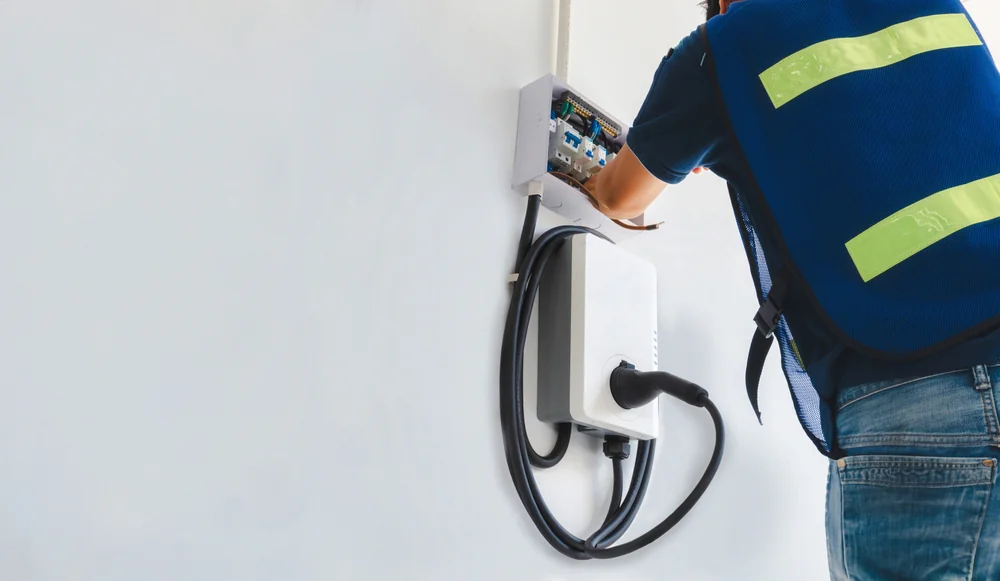
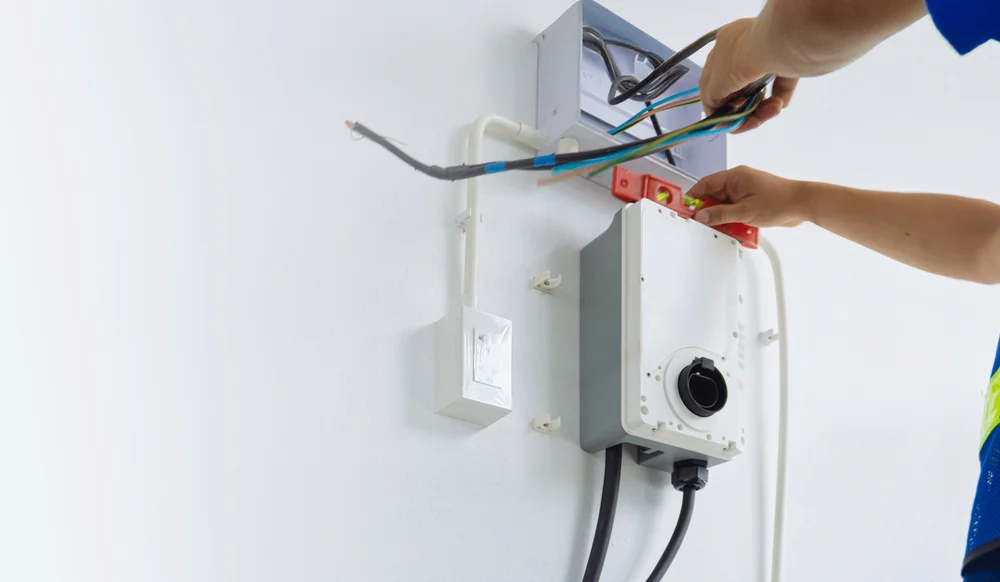
Electric Vehicle Charger Setup Seaforth
Charging at home costs about $3 to $5 per 100 miles. Public DC fast charging runs $10 to $15 for the same distance. Over a year, that difference adds up fast.
You plug in when you get home. Your car charges overnight while you sleep. No more planning trips around charging stations or waiting in line behind three other EVs at the only working charger in town.
Your home’s value goes up too. Buyers in Alamance County and Orange County are actively looking for homes with EV charging already installed. It’s becoming as expected as a two-car garage. North Carolina is on track to hit 1.25 million registered EVs by 2030, and your home will already be ready.
Level 2 charging uses a 240-volt circuit to deliver real power. Depending on your vehicle and charger, you’re looking at a full charge in 4 to 8 hours instead of the 20+ hours a standard 120-volt outlet would take.
Licensed EV Charger Installer Seaforth
We’ve been operating in Seaforth, NC and surrounding areas since 2002. Our master electrician, Andy Helton, brings over 35 years of hands-on electrical experience. Our operations manager has held an electrical contractor license since 1989.
We’ve watched EV adoption grow across Alamance County, Chatham County, and Orange County. We know the local code requirements, the permitting process, and what Duke Energy needs to see for rebate approval. Our trucks are fully stocked, our technicians show up in uniform, and we don’t leave until the job site is clean and you’re satisfied.
You’re not getting a national franchise or a contractor who learned about EVs last month. You’re getting electricians who’ve been doing this work in your area for decades and who’ve adapted as the technology has evolved.
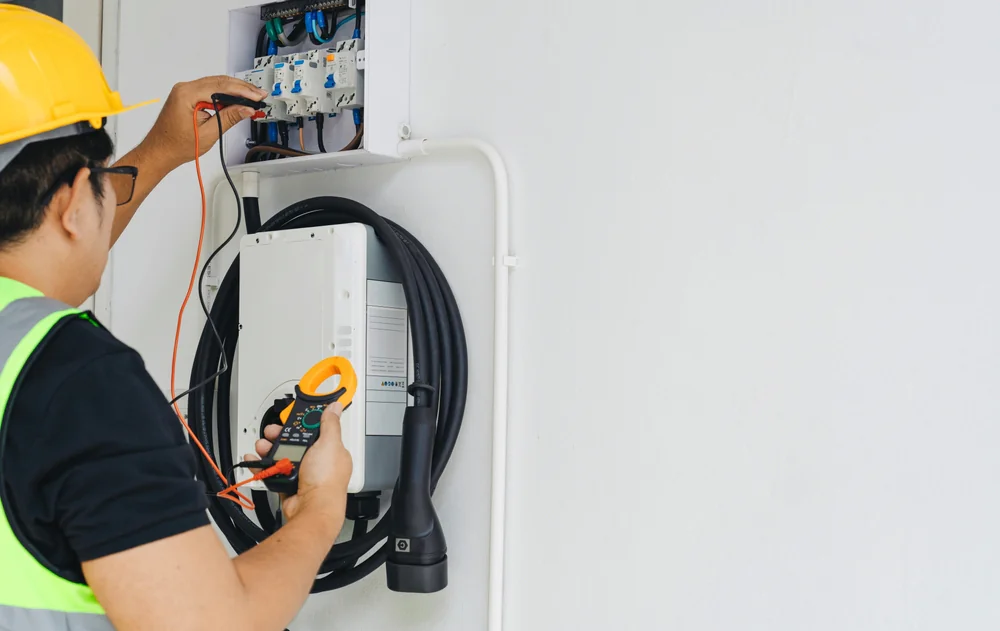
EV Charging Station Installation Process
First, we assess your electrical panel. Most Level 2 EV chargers need a dedicated 240-volt circuit with 40-amp service. If your current panel can handle the load, great. If not, we’ll need to upgrade it. We’ll tell you upfront which scenario applies to your home.
Next comes permitting. Any electrical work involving a panel upgrade or new 240-volt circuit requires a permit in North Carolina. We handle the paperwork, pull the permits, and schedule the required inspections. You don’t have to call the county or figure out what forms they need.
Installation day is straightforward. We mount the charging unit where you want it (usually in your garage or on an exterior wall near where you park). We run the wiring from your electrical panel to the charger location. We connect everything, test the system, and make sure your vehicle charges properly.
After installation, we walk you through how to use your new charger. Many modern units include smartphone apps that let you schedule charging during off-peak hours when electricity rates are lower. We’ll show you how that works before we leave.
The final step is inspection. A county inspector verifies everything meets code. Once you pass inspection, you’re done. If you’re applying for the Duke Energy rebate (up to $1,117 per household), we’ll provide all the documentation you need for that too.
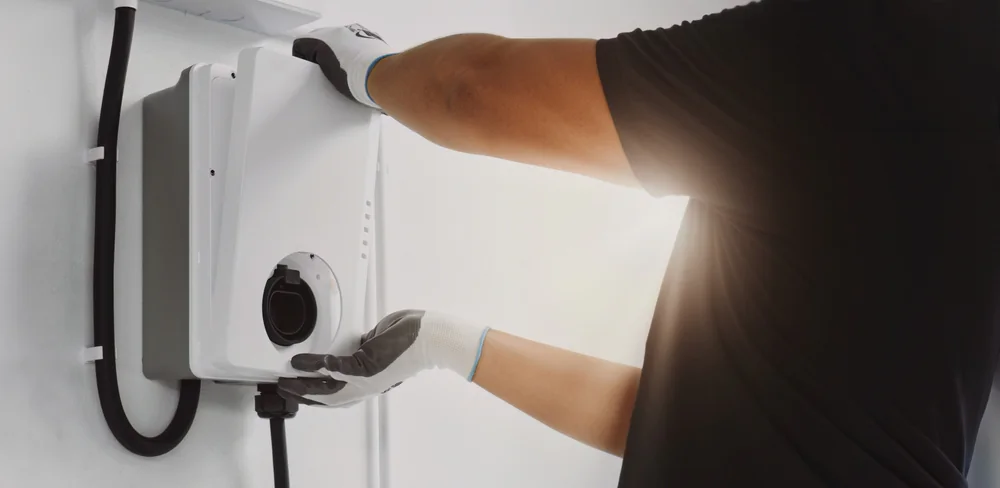
Residential EV Charging Solutions Seaforth
You get a complete electrical assessment before we start. We’ll measure your current panel capacity, check your existing circuits, and determine whether an upgrade is necessary. That assessment comes with flat-rate pricing, so you know the total cost before any work begins.
The installation includes all necessary wiring, circuit breakers, conduit, and mounting hardware. If your electrical panel needs an upgrade to handle the additional load, that’s part of the scope. We’re not going to install a charger on a system that can’t safely support it.
We handle all permitting and coordinate inspections with Alamance County or the relevant local authority. Electrical work in North Carolina requires permits for safety and code compliance. Skipping that step isn’t an option, and trying to DIY this kind of installation can create serious safety hazards or problems when you try to sell your home later.
North Carolina exceeded 100,000 EV registrations in 2024, well ahead of the state’s original goal. Seaforth and the surrounding communities in Orange County are seeing faster EV adoption than rural areas. That means more charging infrastructure, more familiarity with the technology, and more available support when you need service or repairs down the road.
You also get guidance on available rebates. Duke Energy offers credits for EV charger installation, and there are federal tax incentives depending on your situation. We’ll point you toward what applies to your household so you’re not leaving money on the table.
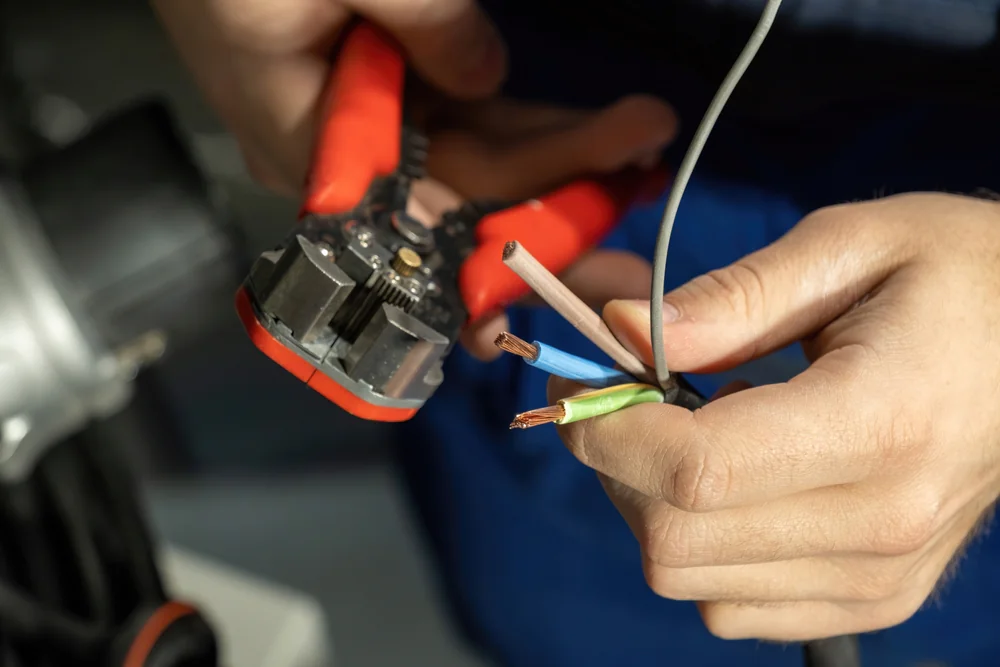
How much does it cost to install an EV charger at my home in Seaforth?
Most homeowners in Seaforth, NC should expect to invest between $1,000 and $2,500 for a complete Level 2 EV charger installation. That range accounts for the charger unit itself, labor, materials, permits, and any minor electrical work needed.
The lower end of that range applies when your existing electrical panel has available capacity and the charger location is close to the panel. The higher end comes into play when you need a panel upgrade or when the charger needs to be mounted farther from your electrical service, requiring more conduit and wiring.
Panel upgrades add cost but they’re sometimes necessary. A typical 240-volt EV charging station requires a dedicated 40-amp circuit. If your panel is already maxed out or if it’s an older model that doesn’t meet current code, upgrading it is the right move for safety and long-term reliability. We’ll assess your specific situation and give you an exact price before starting any work. Duke Energy also offers rebates up to $1,117 per household for EV charging installation, which can offset a significant portion of your total cost.
Can I install an EV charger myself or do I need a licensed electrician?
You need a licensed electrician for EV charger installation in North Carolina. This isn’t like mounting a TV or installing a ceiling fan. You’re working with 240-volt circuits, which carry significantly more power than standard household outlets.
Improper installation can lead to electrical fires, damage to your vehicle’s charging system, or failure to pass inspection when you sell your home. Even if you have some electrical experience, the permitting and inspection requirements in Alamance County and surrounding areas require a licensed contractor to pull permits and sign off on the work.
There’s also liability to consider. If something goes wrong with a DIY installation and it causes damage or injury, your homeowner’s insurance may not cover it. A licensed electrician carries insurance and guarantees their work. We’ve been licensed since 1989 and have seen plenty of DIY electrical jobs that had to be completely redone to meet code. Doing it right the first time costs less than fixing it later.
How long does EV charger installation take from start to finish?
If your electrical panel doesn’t need an upgrade, the physical installation typically takes 4 to 6 hours. That includes mounting the charger, running the wiring, connecting everything to your panel, and testing the system to make sure your vehicle charges properly.
When a panel upgrade is required, add another day for that work. Panel upgrades involve more complexity because we’re replacing or expanding your home’s main electrical service. That work requires its own permit and inspection before we can proceed with the charger installation.
Permitting and inspection scheduling can add a few days to a week to the overall timeline, depending on how busy the county is. We handle all of that coordination, but it’s not something we control. Once the inspection passes, you’re fully operational. From your first call to a completed, inspected installation, most Seaforth homeowners are charging at home within one to two weeks. If you’re in a rush, let us know upfront and we’ll do everything possible to expedite the process.
Will installing an EV charger require upgrading my electrical panel?
It depends on your current panel’s capacity and age. Many homes in Seaforth, NC have 200-amp electrical panels, which can usually handle a Level 2 EV charger without an upgrade. Older homes with 100-amp panels or panels that are already running close to capacity will likely need an upgrade.
We’ll assess your panel during the initial consultation. We’re looking at total amperage, available breaker slots, and whether your existing setup meets current electrical code. If your panel was installed before the 1990s, there’s a good chance it needs updating regardless of the EV charger, simply for safety and code compliance.
Panel upgrades aren’t just about adding capacity for your EV. They also improve your home’s overall electrical safety and make future upgrades easier. If you ever want to add solar panels, a backup generator, or additional high-draw appliances, having a modern 200-amp panel gives you that flexibility. The upgrade is an investment in your home’s infrastructure, not just a requirement for EV charging. And again, Duke Energy rebates can help offset the cost when the upgrade is specifically to support EV charging.
What's the difference between Level 1 and Level 2 EV charging?
Level 1 charging uses a standard 120-volt household outlet. It’s the slowest option, adding about 3 to 5 miles of range per hour of charging. If you drive 40 miles a day, you’re looking at 8 to 12 hours to fully recharge. That works for some people, but it’s not practical if you have a longer commute or if you need your car ready quickly.
Level 2 charging uses a 240-volt circuit, the same type that powers your electric dryer or oven. It delivers 12 to 60 miles of range per hour depending on your vehicle and charger specifications. Most EVs fully charge overnight in 4 to 8 hours. That’s the difference between waking up to a half-charged car and waking up to a full battery every single day.
Level 2 is what most homeowners install because it matches how people actually use their vehicles. You get home, plug in, and forget about it. By morning, you’re ready to go. The upfront cost is higher than just using a standard outlet, but the convenience and faster charging make it worth it for anyone who drives regularly. If you’re buying an EV, installing Level 2 charging at home should be part of your plan from day one.
Do I qualify for rebates or tax credits for EV charger installation in North Carolina?
Yes. Duke Energy offers rebates up to $1,117 per household specifically for residential EV charger installation and any necessary electrical upgrades to support it. That rebate is available to Duke Energy customers in Seaforth, NC and surrounding areas. You’ll need to provide documentation of the installation, which we supply as part of our service.
There are also federal tax incentives depending on your situation. The federal EV charger tax credit covers 30% of installation costs up to certain limits. For residential installations, that credit has specific eligibility requirements that change periodically, so it’s worth checking the current IRS guidelines or talking to your tax advisor.
The key is to keep all your receipts, permits, and inspection documents. Rebate and tax credit applications require proof that the work was done by a licensed contractor and that it meets code. We provide everything you need for the Duke Energy rebate application. For federal tax credits, your tax preparer will need the same documentation. Between state utility rebates and federal incentives, you can significantly reduce the net cost of installing an EV charger at your home. Don’t leave that money on the table.
Other Services we provide in Seaforth
About Us

Electrical Service Providers (ESP) has been in business since 2002. ESP started out performing wiring services to new construction, remodeling projects and residential homes. Our company’s president identified a market for electrical services to be performed in homes and businesses independent of new construction. Read More about Electrical Service Providers>>
All Rights Reserved.Organic Marketing LLC
Business Listings


Product Brands Used
Allied, Broan, Cutler Hammer, General Electric, Ideal, Juno, Kohler, Leviton, Lutron, Siemens, Square D
Contact
- Office Address: 3254 S Anthony Ct.
Burlington, NC 27215 - Mailing Address: PO Box 25
Alamance, NC 27201 - Phone: 336-228-3300
- E-mail: [email protected], [email protected]
Service Areas
Chapel Hill, Burlington, Carrboro, Durham, Gibsonville, Hillsborough, Graham, Pittsboro, Morrisville, Cary
About Us
Electrical Service Providers (ESP) has been in business since 2002. ESP started out performing wiring services to new construction, remodeling projects and residential homes. Our company’s president identified a market for electrical services to be performed in homes and businesses independent of new construction. Read More about Electrical Service Providers>>
All Rights Reserved.Organic Marketing LLC