EV Charger Installation in Siler City, NC
Charge at Home Without the Guesswork
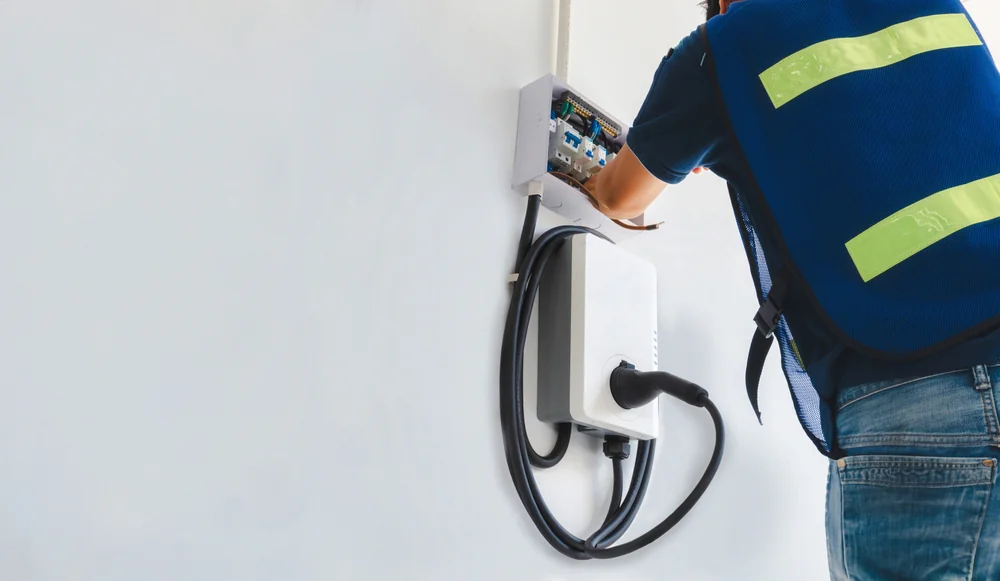
Home EV Charging Solutions Siler City
You plug in when you get home. You wake up with a full charge. No more planning your week around public charging stations or sitting in your car at a shopping center while your battery fills.
That’s the baseline. But here’s what matters more: your home electrical system can handle it safely, your installation qualifies for Duke Energy’s $1,133 rebate, and you’re not dealing with three different contractors who all blame each other when something goes wrong.
Most EV owners in Siler City don’t realize their 240-volt charging station needs a dedicated 40-amp circuit. Some homes need a panel upgrade before installation even starts. We assess that upfront so you’re not surprised halfway through the job. You get one clear price, one team handling permits and inspection, and a charging setup that works the day we leave.
Siler City Electricians Since 2002
We’ve been operating in Chatham County since 2002. Andy Helton, a Master Electrician with over 35 years of experience, started this company doing residential wiring and service work across Siler City, Pittsboro, and the surrounding area.
We’re not a national franchise. You call us, you talk to someone local who knows the building codes here and has worked with Duke Energy Carolinas on rebate applications before. Our trucks are stocked with the parts most EV installations require, and our technicians show up in uniform, do the work, clean up, and make sure everything passes inspection the first time.
Siler City has roughly 3,400 residents commuting by car daily. As more of those vehicles go electric, the demand for home charging grows. We’ve been handling the electrical side of that transition since before it was trendy.
EV Charger Setup Process Explained
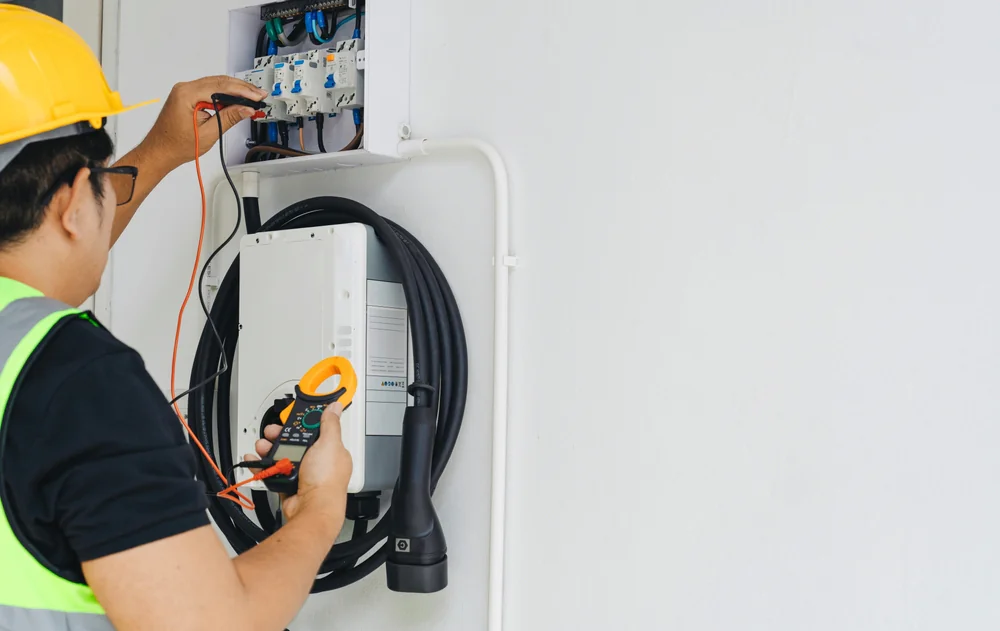
First, we evaluate your electrical panel. Most homes in Siler City weren’t built expecting a 40 to 50-amp dedicated circuit for a car charger. If your panel has capacity, great. If not, we’ll tell you what upgrade is needed and give you a flat-rate price before any work starts.
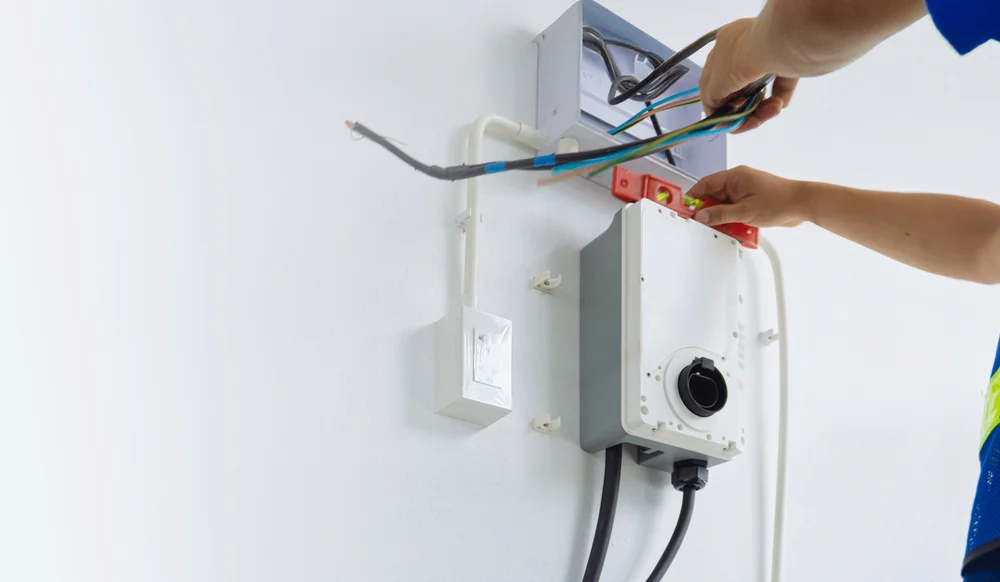
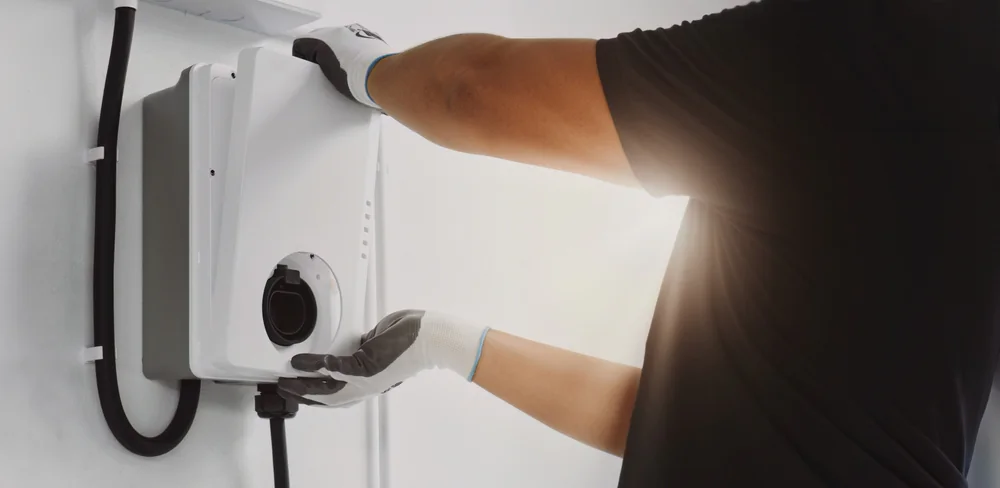
Next, we handle the permit with Chatham County and coordinate the inspection. You don’t chase down paperwork or wait on hold with the building department. We run the wiring from your panel to wherever you’re parking—garage, carport, driveway. We mount the Level 2 charging station, test the circuit, and make sure your smartphone app connects if your charger has that feature.
Then we walk you through how it works. How to start and stop a charge. How to check energy usage. How to apply for the Duke Energy rebate if you haven’t already. The whole process typically takes one day for straightforward installs, longer if a panel upgrade is involved. You’ll know the timeline before we start.
What's Included in Your Installation
Your installation includes a full electrical assessment to determine if your current service can support a Level 2 EV charging station. That means checking your main panel, calculating load capacity, and identifying whether you need a breaker upgrade or a full panel replacement. In Siler City, many homes still have 100-amp or 150-amp service, which can get tight when you add a 40-amp EV charger on top of HVAC, water heater, and everything else.
We pull the permit, install the dedicated circuit with proper wire gauge and conduit, mount your charging station where you want it, and schedule the county inspection. If you’re using a smart charger from ChargePoint, Tesla, or another brand, we’ll connect it to your home network and make sure the app is communicating properly. Everything gets tested under load before we consider the job done.
You also get guidance on the Duke Energy rebate program, which covers up to $1,133 for residential Level 2 charger installations. We’ll provide the documentation you need for that application. And because North Carolina has a goal of 1.25 million EVs on the road by 2030, this infrastructure is only going to become more valuable. You’re setting up your home now while rebates are still available and before electricians in the area get backlogged with requests.
How much does it cost to install an EV charger in Siler City?
Installation costs vary based on your electrical panel’s current capacity and how far the charger is from your breaker box. If your panel has an open slot and adequate amperage, you’re looking at the lower end of the range. If we need to upgrade your panel or run a long conduit run to a detached garage, the price goes up.
Most Level 2 home charger installations in Siler City fall between $1,200 and $3,000 depending on complexity. That includes the labor, materials, permit, and inspection. The charger itself is separate—you can buy that on your own or we can source it for you. Duke Energy’s $1,133 rebate covers a significant portion of the installation cost if you qualify.
We give you a flat-rate price after the initial assessment. You’ll know what you’re paying before we start any work. No surprises, no hourly rates that spiral, no change orders unless you change the scope.
Will my electrical panel need an upgrade for an EV charger?
It depends on your current service size and what else is running in your home. A 240-volt Level 2 charger typically requires a 40-amp or 50-amp dedicated circuit. If you have a 200-amp main panel with available capacity, we can usually add the circuit without issue.
But many older homes in Siler City have 100-amp or 150-amp service. Once you account for your HVAC system, water heater, range, dryer, and other large appliances, there may not be enough capacity left for an EV charger. In those cases, we’ll recommend a panel upgrade to 200 amps. That’s a bigger job, but it also future-proofs your home for other electrical needs down the road.
We assess this during the initial visit. If an upgrade is necessary, we’ll explain why, show you the load calculation, and give you a clear price for the work. You’re not guessing or hoping it’ll be fine—you’ll know exactly what your home needs.
Can I use a regular outlet to charge my electric vehicle?
You can, but it’s slow and potentially unsafe for regular use. A standard 120-volt outlet delivers about 3 to 5 miles of range per hour of charging. If you’re driving 40 miles a day, that’s 8 to 12 hours of charging just to break even. It’s manageable for plug-in hybrids or very light use, but not practical for most EV owners.
The bigger issue is safety. Standard outlets aren’t designed for continuous high-load use. Charging an EV for hours every day can overheat the wiring, especially in older homes where outlets may not be up to current code. We’ve seen melted outlets, tripped breakers, and even fire hazards in neighborhoods where people tried to make a regular outlet work long-term.
A Level 2 charger on a dedicated 240-volt circuit gives you 25 to 30 miles of range per hour. That means a full charge overnight, every night, without stressing your electrical system. It’s the right way to do it, and it’s what your home needs if you’re serious about driving electric.
How long does an EV charger installation take?
Most straightforward installations take one day. If your panel has capacity, the charger location is close to the breaker box, and we’re mounting it in a garage or carport, we can typically finish in 4 to 6 hours. That includes running the circuit, installing the charger, testing everything, and cleaning up.
If your home needs a panel upgrade, add another day or two depending on scheduling with the county inspector. Panel upgrades require a permit and inspection, and Chatham County’s schedule can vary. We coordinate all of that, but it does extend the timeline.
Weather can also be a factor if we’re running conduit outside or mounting the charger on an exterior wall. We’ll give you a realistic timeline during the estimate so you know what to expect. Once we start, we finish. We don’t leave jobs half-done or come back three times to complete something that should’ve been handled in one visit.
What's the Duke Energy rebate for EV charger installation?
Duke Energy Carolinas offers a $1,133 rebate for residential customers who install a Level 2 EV charging station. The rebate is designed to offset installation costs and encourage more home charging infrastructure across North Carolina. You have to be a Duke Energy customer, the charger has to be Level 2 (240-volt), and the installation has to meet their program requirements.
We’ll provide the documentation you need to apply, including proof of installation and electrical specs. The rebate application goes through Duke Energy’s website, and processing typically takes a few weeks. It’s a straightforward process, but you do need to make sure your installation qualifies before you start the work.
Not every electrician is familiar with the rebate requirements. We’ve handled these applications before and know what Duke Energy is looking for. If you’re planning to install an EV charger in Siler City, this rebate makes a significant dent in your upfront cost. Take advantage of it while the program is still active.
Do you install Tesla chargers and other brand-specific charging stations?
Yes. We install Tesla Wall Connectors, ChargePoint Home Flex, JuiceBox, Grizzl-E, and any other Level 2 charging station you want to use. The electrical work is the same regardless of brand—you need a dedicated 240-volt circuit with the right amperage and a properly rated breaker. The charger itself just plugs into that circuit or gets hardwired depending on the model.
Some EV owners prefer a specific brand because of app features, charging speed, or compatibility with their vehicle. That’s fine. You can buy the charger yourself and we’ll install it, or we can source it for you if you’d rather have us handle the whole process. Either way, we’ll make sure it’s mounted securely, wired correctly, and tested before we leave.
Tesla vehicles can use any Level 2 charger with the right adapter, so you’re not locked into the Tesla Wall Connector if you don’t want to be. We’ll walk you through the options during the estimate so you can make an informed decision based on your vehicle, your budget, and how you plan to use the charger.
Other Services we provide in Siler City
About Us

Electrical Service Providers (ESP) has been in business since 2002. ESP started out performing wiring services to new construction, remodeling projects and residential homes. Our company’s president identified a market for electrical services to be performed in homes and businesses independent of new construction. Read More about Electrical Service Providers>>
All Rights Reserved.Organic Marketing LLC
Business Listings


Product Brands Used
Allied, Broan, Cutler Hammer, General Electric, Ideal, Juno, Kohler, Leviton, Lutron, Siemens, Square D
Contact
- Office Address: 3254 S Anthony Ct.
Burlington, NC 27215 - Mailing Address: PO Box 25
Alamance, NC 27201 - Phone: 336-228-3300
- E-mail: [email protected], [email protected]
Service Areas
Chapel Hill, Burlington, Carrboro, Durham, Gibsonville, Hillsborough, Graham, Pittsboro, Morrisville, Cary
About Us
Electrical Service Providers (ESP) has been in business since 2002. ESP started out performing wiring services to new construction, remodeling projects and residential homes. Our company’s president identified a market for electrical services to be performed in homes and businesses independent of new construction. Read More about Electrical Service Providers>>
All Rights Reserved.Organic Marketing LLC