EV Charger Installation in Vandalia, NC
Charge at Home Without the Guesswork
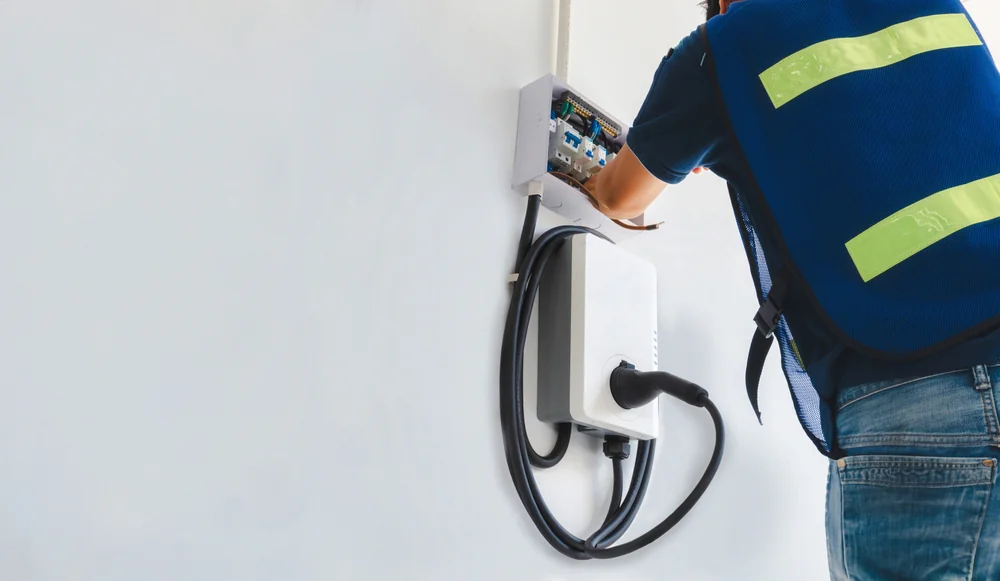
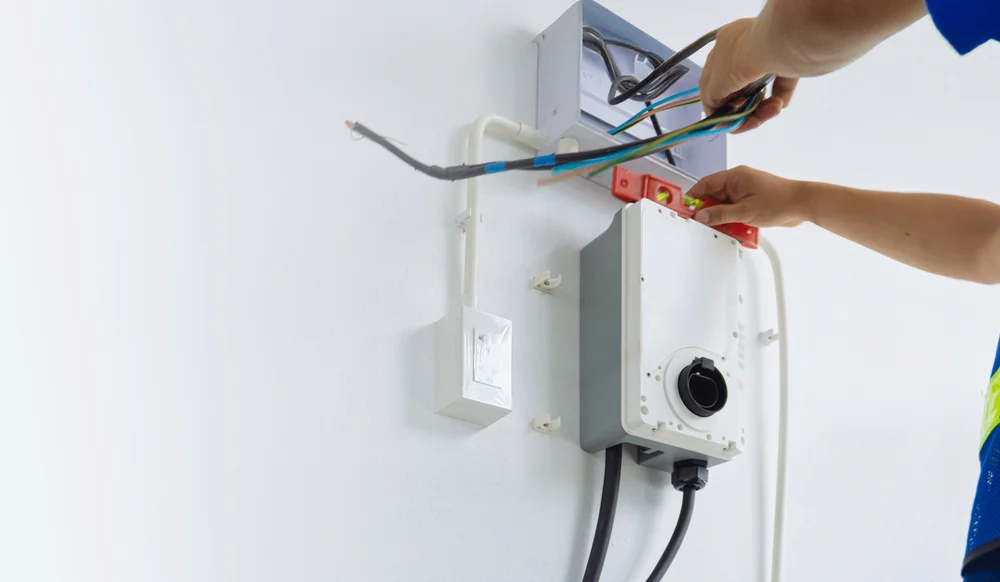
Electric Vehicle Charger Setup Vandalia
You bought an electric vehicle to simplify your life, not to plan your week around charging station availability. Home charging means you plug in when you get home and start every day with a full battery. No more sitting in parking lots. No more route planning based on charger locations.
The average public charging session costs more per kilowatt-hour than charging at home during off-peak hours. Over a year, that adds up. A properly installed Level 2 charger in your garage cuts your charging time and your costs, usually paying for itself within the first few years of ownership.
But here’s what most people don’t realize until they start looking into it: your home’s electrical system might not be ready. Most Level 2 chargers pull 40 to 50 amps. If your panel is already running your HVAC, water heater, and kitchen appliances, you’ll need an upgrade before any charger goes in. That’s not a problem—it just needs to be done right.
Licensed EV Charger Installer Vandalia
We’ve been serving Vandalia and the surrounding Alamance County area for over two decades. We’re locally owned and operated by Andy Helton, a Master Electrician with more than 35 years in the field. That means we’ve seen every type of electrical system in this area—old aluminum wiring, undersized panels, garages on the opposite side of the house from the breaker box.
Vandalia sits in a part of North Carolina where EV adoption is climbing fast. More residents are making the switch, especially as gas prices stay unpredictable and charging infrastructure improves. We’ve installed chargers in single-family homes, older properties that needed panel upgrades, and new construction where the wiring was already in place.
You’re not getting a national franchise or a contractor who’s learning on the job. You’re getting a licensed team that knows local code requirements, handles permits without delays, and shows up in uniform with fully stocked trucks.
How EV Charger Installation Works
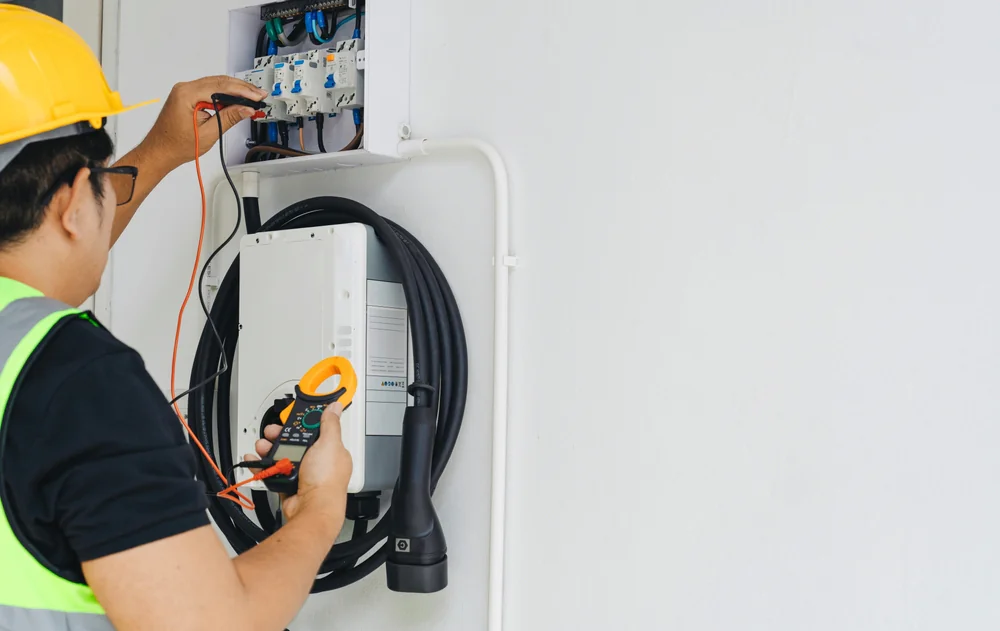
First, we come out to assess your electrical panel and the location where you want the charger installed. We check your current load, the distance from the panel to your garage or parking area, and whether your system can handle the additional demand. If you need a panel upgrade, we’ll tell you upfront—no surprises halfway through the job.
Next, we pull the necessary permits. In North Carolina, EV charger installations require permits to ensure everything meets state and local electrical codes. We handle that process so you don’t have to deal with the county office or worry about inspections. Permit costs typically run a few hundred dollars depending on your jurisdiction, and we factor that into your flat-rate quote before we start.
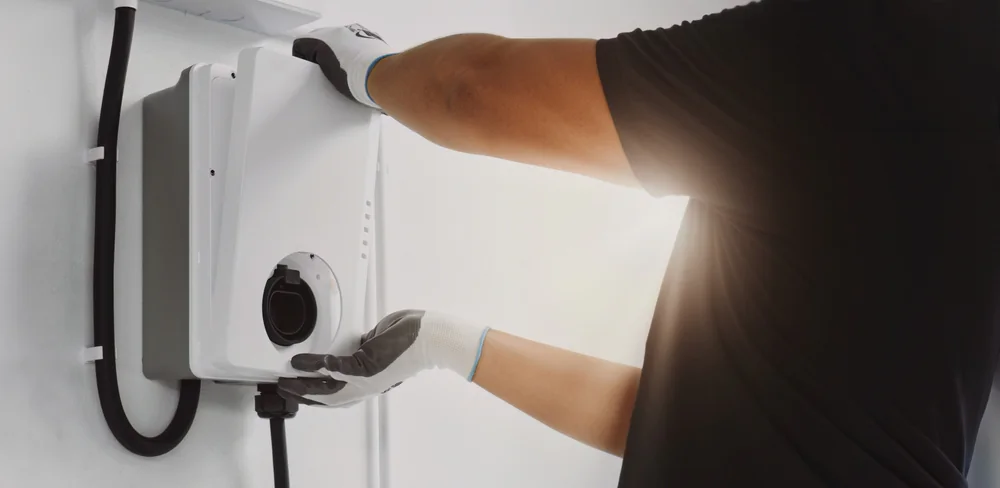
Then we install the charger. That includes running the appropriate gauge wire from your panel to the mounting location, installing a dedicated circuit breaker, mounting the charging unit, and testing the entire system to make sure it’s safe and functional. If your panel needs an upgrade or we’re running wire across a long distance, that’s built into the timeline. We clean up when we’re done, and the job isn’t complete until you’re fully satisfied and your charger is operational.
What's Included in EV Charger Installation
Every installation includes a full electrical assessment of your home’s current capacity. We don’t just bolt a charger to the wall and hope it works. We calculate your existing load, verify your panel can support a Level 2 charger, and recommend upgrades if needed. Most homes in Vandalia built before 2010 have 100- or 150-amp panels, which can work—but not always without adjustments.
You also get permit acquisition and code compliance as part of the service. We submit the paperwork, coordinate inspections, and make sure everything passes the first time. North Carolina has specific requirements for EV charging equipment, and local inspectors in Alamance County know what to look for. We’ve been doing this long enough that we know exactly what they expect.
The installation itself covers all materials and labor: dedicated circuit breaker, proper gauge wiring (usually 6- or 8-gauge copper depending on distance and amperage), conduit if required, charger mounting, and final testing. If you’re installing a Tesla Wall Connector, a ChargePoint Home Flex, or any other Level 2 unit, we handle it the same way—safely and to code.
One thing people ask about often: what if my electrical panel is on the far side of the house? That’s the biggest cost variable. If we’re running 50 feet of wire through finished walls or underground conduit, it takes more time and materials. We’ll walk the site with you and give you a flat-rate price before we start, so there’s no sticker shock later.
How much does it cost to install an EV charger in Vandalia?
Most installations in Vandalia run between $1,200 and $3,000 depending on your home’s electrical setup and how far the charger is from your panel. If your panel is in the garage and you’ve got capacity to spare, you’re on the lower end. If we need to upgrade your panel or run wire across the house, costs go up.
The biggest cost driver is distance. Running 10 feet of wire through one wall is straightforward. Running 60 feet of wire through a crawlspace or around the exterior of your home takes more labor and materials. We also factor in whether your home has aluminum wiring, which sometimes requires additional work to meet current code.
Permits in Alamance County typically add a few hundred dollars, and that’s separate from the installation labor. We include permit costs in your flat-rate quote so you know the full price upfront. There’s also a federal tax credit available through 2026 that covers 30% of installation costs up to $1,000, which can offset some of the expense.
Do I need to upgrade my electrical panel to install an EV charger?
It depends on your current panel’s capacity and what’s already running on it. Most Level 2 chargers need a 40- or 50-amp dedicated circuit. If you’ve got a 200-amp panel with room to spare, you’re usually fine. If you’ve got a 100-amp panel that’s already maxed out with your HVAC, water heater, and kitchen appliances, you’ll need an upgrade.
We see this often in older homes around Vandalia. A lot of properties built in the ’80s and ’90s have 100- or 150-amp panels, which were fine for the time but weren’t designed with EV charging in mind. Upgrading to a 200-amp panel costs more upfront, but it also future-proofs your home and adds capacity for other upgrades down the line.
During the initial assessment, we’ll measure your current load and tell you whether an upgrade is necessary. If it is, we handle the whole process—new panel installation, permit coordination, and inspection. If it’s not, we move forward with the charger installation on your existing system.
How long does EV charger installation take?
Most installations take four to eight hours depending on the complexity. If your panel is close to your garage and we don’t need to run wire through walls or upgrade anything, we can usually finish in half a day. If we’re doing a panel upgrade or running a long wire run, it might take a full day or require a second visit.
Permitting adds time to the overall timeline, but not to the actual work. Once we pull the permit, we typically schedule the installation within a week or two depending on our availability and inspection schedules. Alamance County inspections usually happen within a few days of completion, and we coordinate that so you don’t have to.
The charger itself is operational as soon as we finish and test it. You can start charging that same day. The inspection is a formality to close out the permit, but it doesn’t prevent you from using the charger once we’ve verified everything works safely.
What's the difference between Level 1 and Level 2 charging?
Level 1 charging uses a standard 120-volt outlet—the same kind you plug a lamp into. It’s slow. You’ll add about 3 to 5 miles of range per hour, which means a full charge can take 24 hours or more depending on your battery size. It works if you drive short distances and can leave your car plugged in overnight, but most people find it frustrating.
Level 2 charging uses a 240-volt circuit, the same kind that powers your dryer or oven. It’s much faster—typically adding 20 to 30 miles of range per hour. That means you can fully charge most EVs in 4 to 8 hours, which fits neatly into an overnight schedule. It’s what most homeowners install because it’s practical for daily use.
Level 2 chargers require professional installation because they pull significant amperage and need a dedicated circuit. You can’t just plug them into an existing outlet. That’s where we come in—we run the proper wiring, install the breaker, mount the unit, and make sure everything is safe and code-compliant.
Can you install a charger if my garage is detached?
Yes, but it requires running wire from your main panel to the detached structure, which adds cost and complexity. If your garage already has its own subpanel with adequate capacity, we can often work with that. If it doesn’t, we’ll need to either upgrade the subpanel or run a new circuit directly from your main panel.
The distance between your house and garage is the main factor. Running wire underground in conduit is the most common approach for detached garages, and it’s more labor-intensive than running wire through an attached garage wall. We’ll measure the distance during the assessment and give you an accurate quote based on what’s involved.
Some detached garages in older Vandalia properties only have basic lighting circuits and aren’t set up for high-amperage equipment. In those cases, we’re essentially bringing new power to the structure, which is a bigger job but absolutely doable. We’ve handled plenty of these installations, and the end result is the same—a fully functional Level 2 charger ready to use every day.
Do you handle the permit and inspection process?
Yes. We pull the permit, submit the required documentation to Alamance County, and coordinate the inspection after installation. You don’t have to visit the county office or deal with any paperwork. It’s included in our service because we know most people don’t want to navigate that process themselves.
Permits are required for EV charger installations in North Carolina to ensure the work meets electrical code and safety standards. Inspectors check that the circuit is properly sized, the wiring is correct, the breaker is rated appropriately, and everything is installed according to code. We’ve been doing this long enough that our work passes inspection the first time.
The permit cost varies depending on your jurisdiction, but it typically runs a couple hundred dollars. We include that in your upfront flat-rate quote so there are no surprise fees later. Once the inspection is complete and signed off, the permit is closed and you’re all set.
Other Services we provide in Vandalia
About Us

Electrical Service Providers (ESP) has been in business since 2002. ESP started out performing wiring services to new construction, remodeling projects and residential homes. Our company’s president identified a market for electrical services to be performed in homes and businesses independent of new construction. Read More about Electrical Service Providers>>
All Rights Reserved.Organic Marketing LLC
Business Listings


Product Brands Used
Allied, Broan, Cutler Hammer, General Electric, Ideal, Juno, Kohler, Leviton, Lutron, Siemens, Square D
Contact
- Office Address: 3254 S Anthony Ct.
Burlington, NC 27215 - Mailing Address: PO Box 25
Alamance, NC 27201 - Phone: 336-228-3300
- E-mail: [email protected], [email protected]
Service Areas
Chapel Hill, Burlington, Carrboro, Durham, Gibsonville, Hillsborough, Graham, Pittsboro, Morrisville, Cary
About Us
Electrical Service Providers (ESP) has been in business since 2002. ESP started out performing wiring services to new construction, remodeling projects and residential homes. Our company’s president identified a market for electrical services to be performed in homes and businesses independent of new construction. Read More about Electrical Service Providers>>
All Rights Reserved.Organic Marketing LLC