EV Charger Installation in Westwood, NC
Charge at Home Every Night Without the Hassle
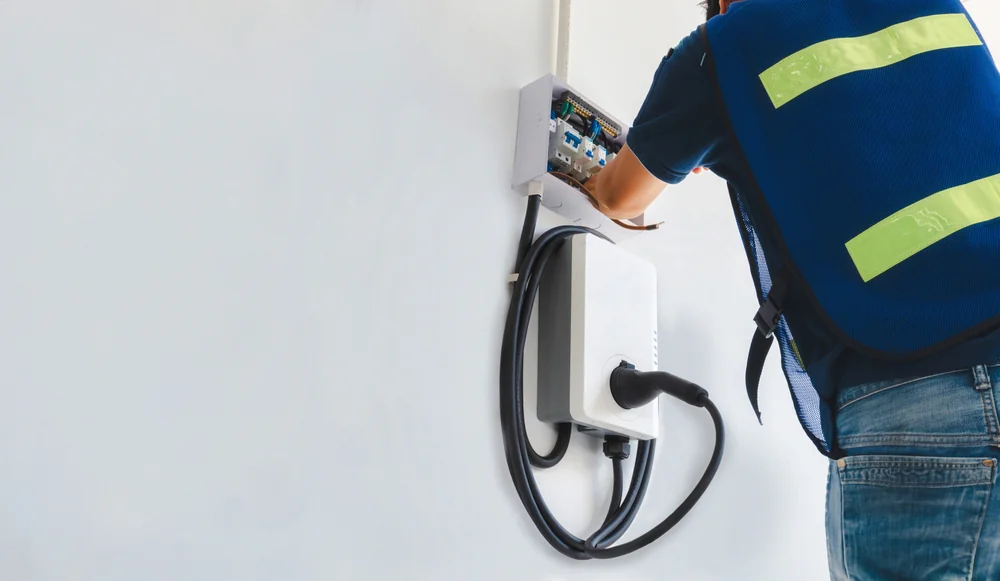
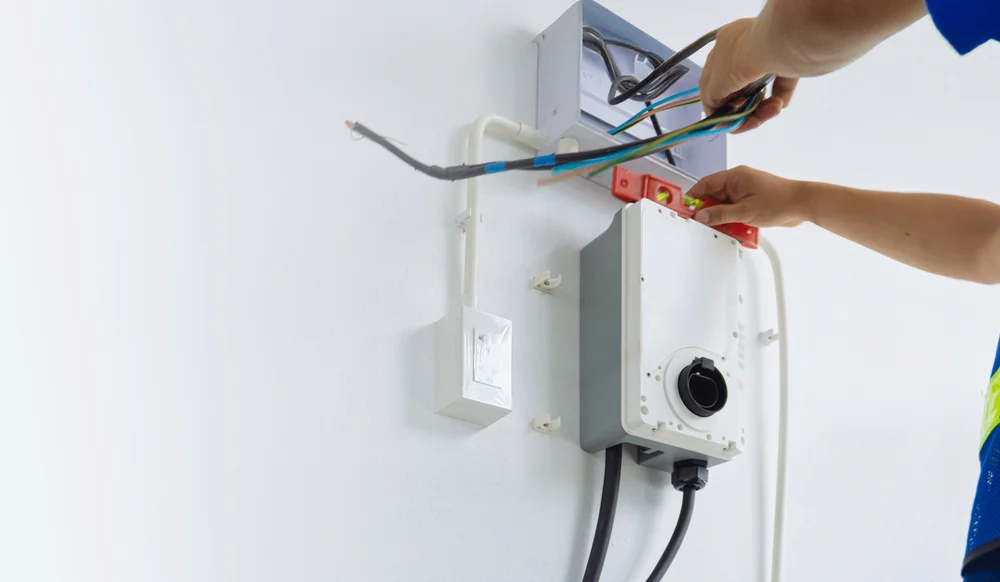
Electric Vehicle Charger Setup Westwood
Imagine plugging in when you get home and never thinking about charging again. No more planning trips around charging stations. No more waiting in line at public chargers that may or may not work.
With a Level 2 home charging station, you’ll add 25 to 40 miles of range per hour. Most EVs fully charge overnight in 3 to 8 hours. That means your car is ready when you are, every single day.
You’ll also skip the markup on public charging fees. Charging at home costs significantly less per kilowatt-hour than most public stations. Over time, that adds up to real money back in your pocket. Plus, Duke Energy offers rebates up to $1,133 per household to cover electrical upgrades for EV charging infrastructure, which helps offset your installation costs.
The convenience alone changes how you think about your vehicle. You’re not managing charge levels or planning detours. You’re just living your life with a car that’s always ready to go.
Licensed EV Charger Electrician Westwood, NC
ESP Electrical Service Providers is locally owned and operated by Andy Helton, a Master Electrician with over 35 years of electrical experience. We’ve been serving Westwood and the surrounding areas in Alamance County, Orange County, and beyond since 2002.
EV charger installation isn’t the same as installing a dryer outlet. It requires higher-grade materials, additional safety measures, and a licensed electrician who understands the unique demands of continuous EV charging loads. We’ve installed charging stations for homeowners throughout the region and know how to assess your electrical panel, pull permits, and get the job done to code.
You’ll get flat-rate pricing before we start, so there are no surprises. Our technicians show up in uniform, in a stocked truck, and we clean up before we leave. We’re not finished until you’re satisfied with the work.
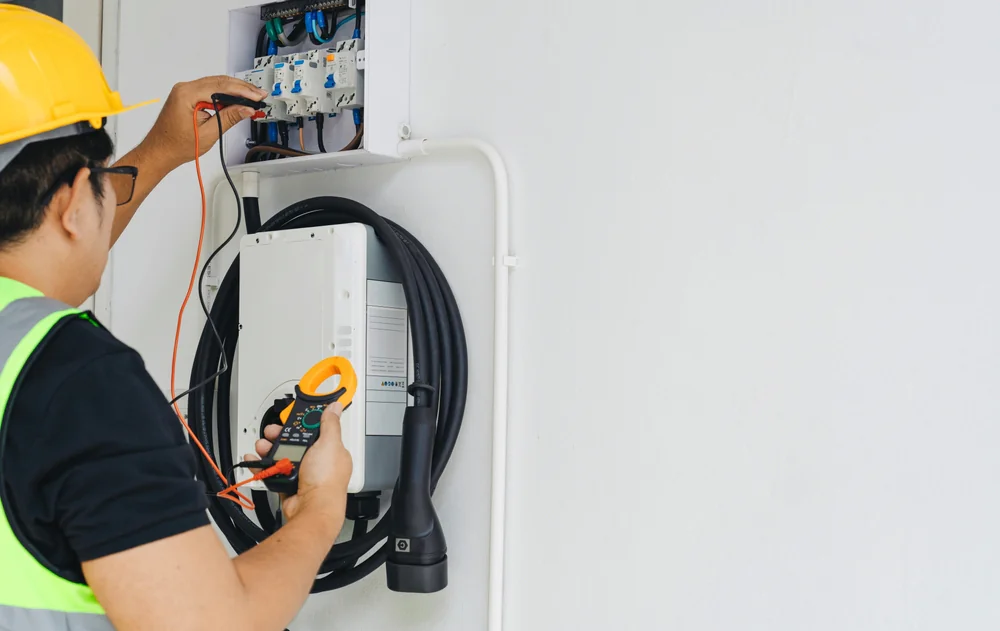
Home EV Charging Installation Process
First, we assess your current electrical system. Most modern homes in Westwood, NC have 200-amp service, which typically handles a Level 2 EV charger without issues. If your home has an older 100-amp panel, we’ll let you know if an upgrade is needed. We’d rather tell you upfront than create a safety issue down the road.
Next, we determine the best location for your charging station. Usually that’s in your garage near where you park, but we’ll also consider the distance from your electrical panel and whether any additional wiring or conduit is required. We handle the permit process and make sure everything meets current National Electrical Code standards.
Then we install the charger using materials rated for continuous use. This isn’t a standard outlet installation. EV charging puts sustained load on your electrical system, so we use circuit breakers, wiring, and outlets designed specifically for that purpose.
Once everything is installed and inspected, we’ll walk you through how to use your new charging station. You’ll know exactly how to plug in, what the indicator lights mean, and how to troubleshoot any basic issues. After that, you’re set. Just plug in when you get home and let it charge overnight.
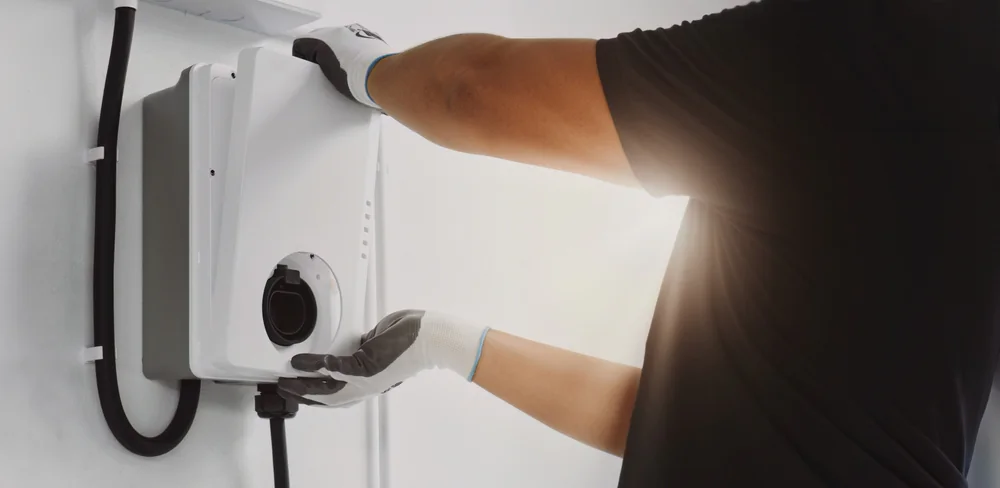
EV Charging Station Installation Westwood, NC
Every installation starts with a full electrical system evaluation. We check your panel capacity, assess your current load, and determine whether your existing service can support a Level 2 charger. If you’re borderline on capacity now, we’ll talk through whether a panel upgrade makes sense for your situation.
We install the dedicated 240-volt circuit required for Level 2 charging. That includes running the appropriate gauge wire from your panel to the charging location, installing a properly rated circuit breaker, and mounting the charging station itself. All materials are selected for continuous-duty use, which is critical for EV charging applications.
We also handle all permitting and inspections required by local code. North Carolina follows the National Electrical Code, and we stay current on those standards. You won’t have to deal with the paperwork or coordinate with inspectors. We take care of that.
If you’re eligible for Duke Energy’s EV Charger Installation Support Program, we can help you navigate that process too. The rebate covers up to $1,133 for electrical upgrades like panel enhancements, new wiring, and outlet installation. With over 100,000 EVs now registered in North Carolina and that number growing fast, more homeowners in Westwood, NC are taking advantage of these incentives to make home charging affordable and accessible.
How much does it cost to install an EV charger at home in Westwood?
Installation costs vary depending on your home’s current electrical setup and how far the charger is from your panel. If you already have 200-amp service and the charger location is close to your electrical panel, you’re looking at the lower end of the range. If you need a panel upgrade or significant wiring runs, costs go up.
The charger itself ranges from a few hundred dollars for a basic model to over a thousand for units with smart features and faster charging speeds. Installation labor and materials add to that. Most homeowners spend between $1,200 and $3,000 for a complete Level 2 home charging setup, though it can be higher if electrical upgrades are needed.
Duke Energy offers rebates up to $1,133 per household to help cover those electrical upgrades. That can significantly offset your upfront costs. We provide flat-rate pricing after we assess your specific situation, so you’ll know exactly what you’re paying before any work begins.
Do I need to upgrade my electrical panel to install an EV charger?
It depends on your current panel capacity and how much load you’re already using. Most modern homes built in the last 20 years have 200-amp service, which typically handles a Level 2 EV charger without issues. Older homes with 100-amp panels are more likely to need an upgrade.
We calculate your existing electrical load and factor in the additional demand from EV charging, which usually draws between 30 and 50 amps continuously. If your panel is already near capacity with HVAC, water heater, appliances, and other circuits, adding an EV charger could overload the system. That’s a safety issue, not just a convenience problem.
Upgrading to 200-amp service also future-proofs your home. If you’re planning to add solar panels, a second EV, or other high-demand appliances down the road, doing the upgrade now makes sense. We’ll assess your panel during the initial evaluation and give you a straight answer about whether an upgrade is necessary or just a good idea for the long term.
How long does it take to charge an electric vehicle at home?
With a Level 2 home charger, most EVs fully charge overnight in 3 to 8 hours, depending on your battery size and how depleted it is. You’re adding roughly 25 to 40 miles of range per hour of charging. For most daily driving, that’s more than enough.
If you drive 40 miles in a day, you’ll replace that range in about an hour or two of charging. Plug in when you get home, and your car is fully charged by morning. You’re not sitting around waiting for it. It’s happening while you’re asleep or eating dinner.
Level 1 charging using a standard 120-volt outlet is much slower, adding only 3 to 5 miles of range per hour. That’s fine if you barely drive and have all night to charge, but most EV owners find it too slow for practical daily use. Level 2 charging is the standard for home installations because it actually keeps up with real-world driving habits.
Can any electrician install an EV charger, or do I need someone with special training?
You need a licensed electrician, but not all electricians have experience with EV charger installations. This isn’t the same as wiring a dryer outlet. EV charging creates a continuous electrical load for hours at a time, which requires higher-grade materials and additional safety considerations.
The circuit breaker, wiring gauge, and outlet all need to be rated for continuous duty. Standard residential wiring is typically rated for intermittent use. Using the wrong materials can create a fire hazard. There have been cases where improperly installed chargers caused electrical fires, including one where flames shot out of a junction box just weeks after installation.
An electrician with EV charger installation experience will also know how to assess your panel capacity, pull the right permits, and install everything to current National Electrical Code standards. North Carolina follows the NEC, but not all states adopt the same version at the same time. You want someone who knows the local code requirements and has done this type of work before.
Will installing an EV charger increase my home's value?
It can, especially as EV adoption continues to grow. Homebuyers increasingly look for properties with EV charging already installed. It’s one less thing they have to deal with, and it signals that the home’s electrical system is up to date.
North Carolina now has over 100,000 registered EVs, and that number is growing fast. Almost 20% of all EVs on the road were purchased in 2024. Governor Cooper’s Executive Order 246 sets a target of 1.25 million EVs on North Carolina roads by 2030. As more people drive electric vehicles, having a charging station becomes a real selling point.
The value increase isn’t necessarily dramatic, but it does make your home more attractive to a growing segment of buyers. It’s similar to having a garage or updated electrical panel. It’s not the main reason someone buys your house, but it removes a barrier and adds convenience. In a competitive market, that can make a difference.
What's the difference between Level 1 and Level 2 EV charging?
Level 1 charging uses a standard 120-volt household outlet. It’s the slowest option, adding only 3 to 5 miles of range per hour. You can plug in anywhere, but it takes a full day or more to charge a depleted battery. Most EV owners find Level 1 charging too slow for daily use unless they drive very little.
Level 2 charging uses a 240-volt circuit, the same voltage as your electric dryer or oven. It adds 25 to 40 miles of range per hour, which means most EVs fully charge overnight in 3 to 8 hours. This is the standard for home EV charging because it keeps up with normal driving habits. You plug in at night and wake up to a full battery.
Level 2 charging requires professional installation by a licensed electrician. You need a dedicated circuit, proper wiring, and a charging station mounted in your garage or carport. The upfront cost is higher than Level 1, but the convenience and speed make it worth it for most EV owners. It’s the difference between charging being a hassle and charging being something you never think about.
Other Services we provide in Westwood
About Us

Electrical Service Providers (ESP) has been in business since 2002. ESP started out performing wiring services to new construction, remodeling projects and residential homes. Our company’s president identified a market for electrical services to be performed in homes and businesses independent of new construction. Read More about Electrical Service Providers>>
All Rights Reserved.Organic Marketing LLC
Business Listings


Product Brands Used
Allied, Broan, Cutler Hammer, General Electric, Ideal, Juno, Kohler, Leviton, Lutron, Siemens, Square D
Contact
- Office Address: 3254 S Anthony Ct.
Burlington, NC 27215 - Mailing Address: PO Box 25
Alamance, NC 27201 - Phone: 336-228-3300
- E-mail: [email protected], [email protected]
Service Areas
Chapel Hill, Burlington, Carrboro, Durham, Gibsonville, Hillsborough, Graham, Pittsboro, Morrisville, Cary
About Us
Electrical Service Providers (ESP) has been in business since 2002. ESP started out performing wiring services to new construction, remodeling projects and residential homes. Our company’s president identified a market for electrical services to be performed in homes and businesses independent of new construction. Read More about Electrical Service Providers>>
All Rights Reserved.Organic Marketing LLC