EV Charger Installation in Whitsett, NC
Wake Up to a Full Battery Every Morning
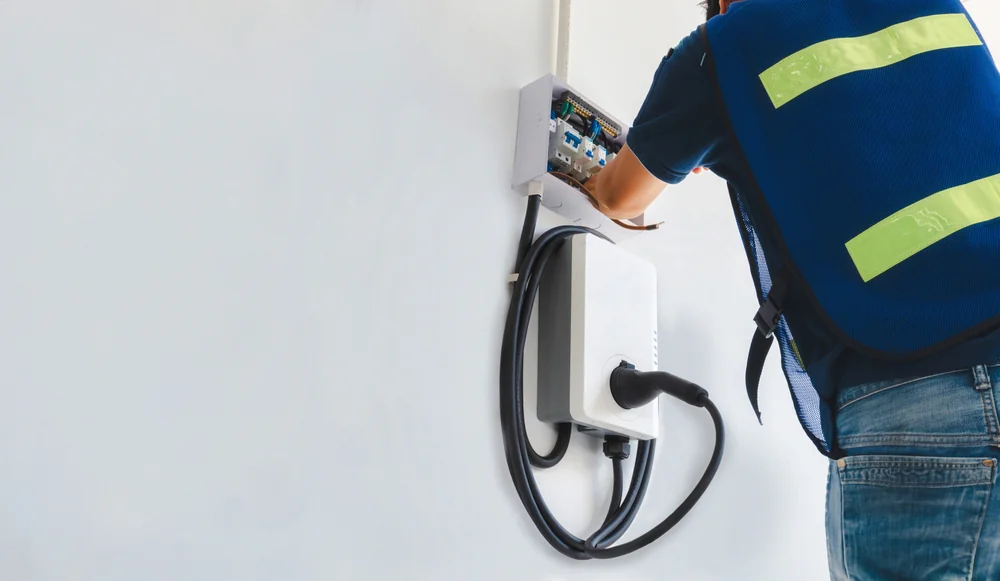
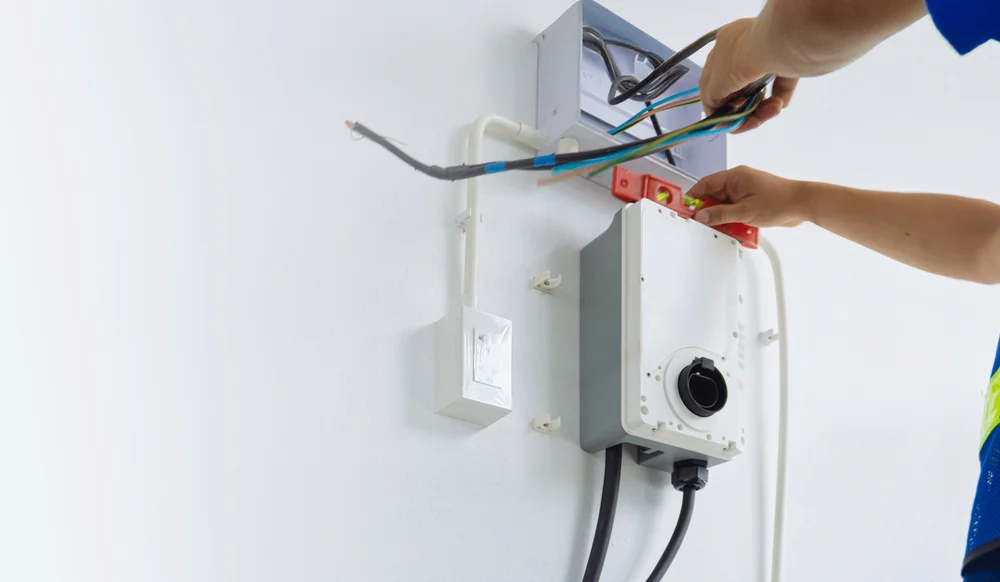
Home EV Charging Station Setup
Public charging stations in North Carolina cost you $0.25 to $0.47 per kWh depending on the charger type. At home, you’re paying around $0.17 per kWh. That’s not a small difference when you’re charging several times a week.
Over a year, that adds up to roughly $950 in fuel savings compared to a gas vehicle. Over the life of your EV, you’re looking at $6,000 to $10,000 back in your pocket. And you’re not sitting at a charging station for 30 minutes hoping someone doesn’t take the spot before you.
You plug in when you get home. You unplug when you leave. Your battery’s full, and you didn’t have to think about it.
Licensed Electricians Serving Whitsett
ESP Electrical Service Providers is locally owned and operated by Andy Helton, a Master Electrician with over 35 years in the trade. We’ve been serving Alamance County and the surrounding areas since 2002, and we’re not going anywhere.
Our trucks are fully stocked. Our pricing is flat-rate, so you know the cost before we start. And if something’s not right, we stay until it is. You’re not dealing with a call center or a franchise—you’re talking directly to people who’ve been in Whitsett long enough to know how things work here.
North Carolina added 50,000 EVs in just 23 months, and Whitsett is part of that growth. We’re installing chargers every week for people who are tired of guessing whether the public station will be available.
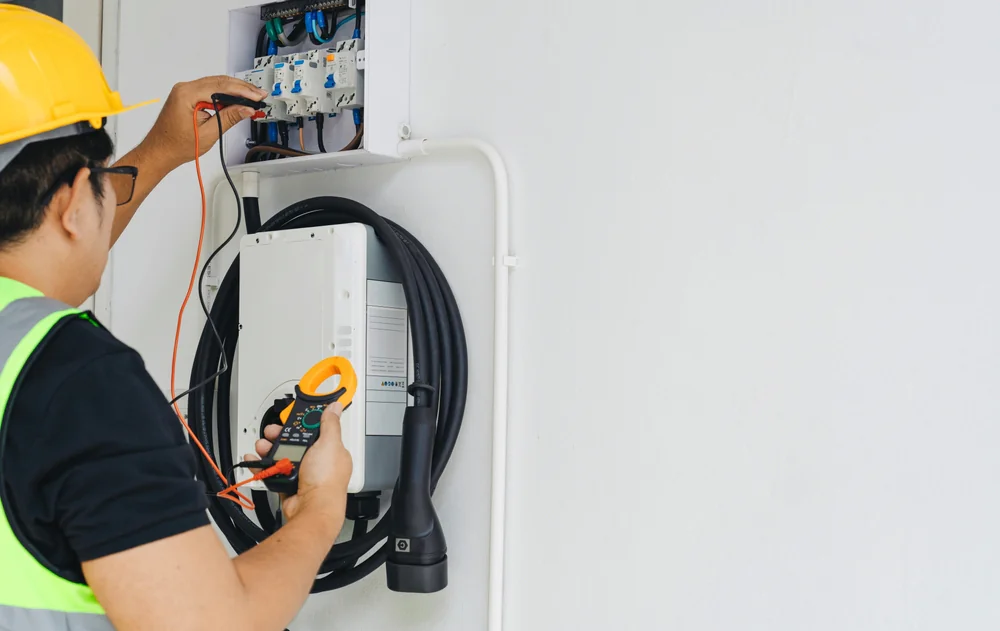
Electric Vehicle Charger Installation Process
First, we look at your electrical panel. Most EV chargers need a dedicated 50-amp circuit, and not every panel has the capacity without an upgrade. If yours doesn’t, we’ll tell you what’s needed and what it costs before moving forward.
Next, we figure out the best location for your charger. Closer to the panel means less wiring and lower cost. We also factor in where you park and whether you want the charger mounted inside your garage or outside.
Then we pull the permit. In North Carolina, EV charger installations require a permit and inspection. We handle that process, and we make sure the work passes the first time.
Once the permit’s approved, we install the charger, run the wiring, and connect everything to your panel. We test the system, walk you through how it works, and clean up before we leave. The whole process typically takes a few hours once we’re on-site, depending on the complexity of your setup.
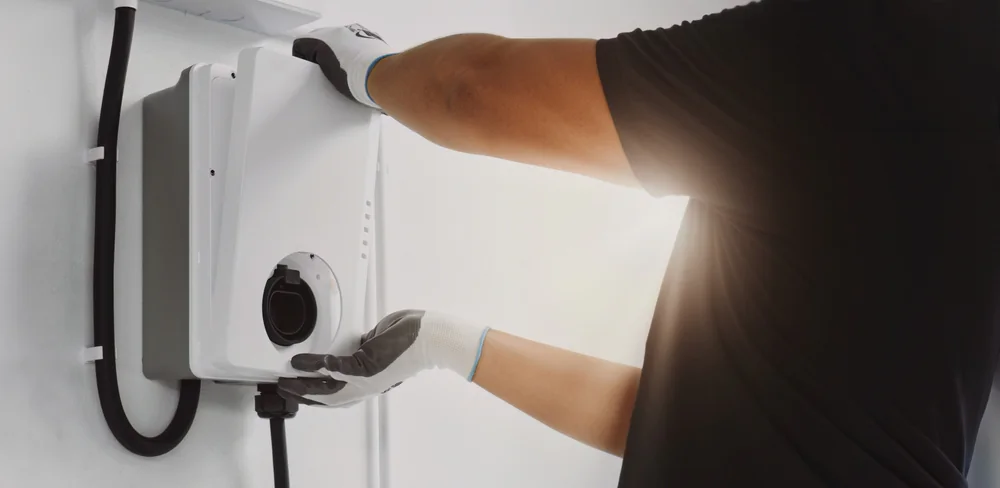
What's Included in Your Installation
Your installation includes the electrical work, the permit, the inspection coordination, and a walkthrough of your new system. We also help you apply for the Duke Energy rebate—$1,133 if you’re in Duke Energy Carolinas territory, or $1,117 if you’re in Duke Energy Progress territory. That rebate alone covers a significant portion of your installation cost.
If your panel needs an upgrade or we need to install a load-shedding device to manage power distribution, we’ll handle that too. Some homes in Whitsett have older panels that weren’t designed for the kind of load an EV charger pulls. That’s not a dealbreaker—it just means we add a step to make sure your system is safe and code-compliant.
You also get access to smart charger features if you choose a model that supports them. Many newer chargers integrate with your phone so you can monitor charging status, schedule charging during off-peak hours, and even track how much you’re spending per charge. That’s helpful if you’re on a time-of-use rate plan with Duke Energy, where electricity costs less at night.
And because we’re local, you’re not calling a 1-800 number if something comes up later. You call us, and we answer.
How much does it cost to install an EV charger in Whitsett?
Most installations in Whitsett run between $800 and $3,000 before equipment, depending on how far your charger is from your electrical panel and whether your panel has enough capacity. If you need a panel upgrade or a load-shedding device, that adds to the cost.
The charger itself typically costs between $400 and $1,200, depending on the brand and features. We use flat-rate pricing, so you’ll know the total cost before we start any work. No surprises, no hourly rates that creep up as the job goes on.
Duke Energy rebates can offset a big chunk of that cost. If you’re eligible, you’re looking at over $1,100 back, which makes the investment a lot easier to justify. We’ll help you with the rebate application so you’re not figuring it out on your own.
Do I need to upgrade my electrical panel for an EV charger?
It depends on your current panel’s capacity. Most Level 2 EV chargers require a 50-amp dedicated circuit, and if your panel is already near its limit, you’ll need an upgrade or a load-shedding device.
A load-shedding device is a smart option if you don’t want to replace your entire panel. It manages power distribution between your charger and other high-draw appliances like your HVAC system or water heater, making sure nothing overloads. It’s less expensive than a full panel upgrade and works well for most homes.
We’ll assess your panel during the initial consultation and give you a clear answer. If an upgrade is needed, we’ll explain why and what it involves. A lot of homes in Whitsett were built before EVs were common, so this comes up more often than you’d think. It’s a normal part of the process, and we handle it every week.
How long does it take to charge an EV at home?
With a Level 2 charger, you’re adding 20 to 40 miles of range per hour, depending on your vehicle and charger output. Most EVs can fully recharge overnight in 4 to 10 hours, which works perfectly if you’re plugging in when you get home and unplugging in the morning.
That’s a huge difference from Level 1 charging, which uses a standard 120-volt outlet and only adds 3 to 5 miles of range per hour. Level 1 is fine if you barely drive, but it’s not practical for most people. Level 2 is the standard for home charging because it’s fast enough to keep up with daily driving without needing to plan around it.
If you drive more than average—say, 50 or 60 miles a day—you’ll still wake up to a full battery as long as you’re plugged in for 6 to 8 hours. The average American drives about 36 miles a day, so for most people, overnight charging is more than enough.
Can I install an EV charger myself, or do I need an electrician?
You need a licensed electrician. EV charger installation in North Carolina requires a permit and an inspection, and the work has to be done by someone who’s licensed. If you try to do it yourself and something goes wrong—or if it doesn’t pass inspection—you’re looking at costly fixes and potential safety issues.
There’s also the issue of your home’s electrical system. Running a new 50-amp circuit isn’t the same as swapping out a light fixture. You’re working with your main panel, possibly upgrading breakers, and making sure everything is properly grounded and code-compliant. One mistake can cause a fire hazard or damage your vehicle’s charging system.
We’ve seen DIY installs that didn’t go well, and fixing them costs more than just hiring a professional from the start. Plus, if you ever sell your home, buyers will want to see that the work was permitted and done correctly. An unpermitted install can become a problem during a home inspection.
What rebates or incentives are available for EV charger installation in North Carolina?
Duke Energy offers rebates for Level 2 EV charger installations—$1,133 if you’re in Duke Energy Carolinas territory, and $1,117 if you’re in Duke Energy Progress territory. That rebate applies to the installation cost, and we’ll help you with the application process so you’re not navigating it alone.
There’s also a federal tax credit available through the Alternative Fuel Vehicle Refueling Property Credit, which is worth up to $1,000. This credit applies to the cost of purchasing and installing the charger, and it’s claimed on your federal tax return. You’ll want to check with your tax advisor to make sure you qualify, but it’s available for most residential installations.
Between the Duke Energy rebate and the federal tax credit, you’re looking at over $2,000 in potential savings. That makes a big dent in the total cost and brings the investment down to something much more manageable. These incentives exist because North Carolina is pushing to get more EVs on the road, and home charging infrastructure is a big part of that.
Will installing an EV charger increase my home's value?
It can, especially as more buyers look for homes that are EV-ready. North Carolina passed 100,000 registered EVs in 2024, and that number is growing fast. Buyers who already own an EV or are planning to buy one see a home charger as a major convenience—and they’re willing to pay for it.
Even if a buyer doesn’t have an EV yet, having the infrastructure in place signals that your home is modern and ready for the future. It’s similar to having a smart thermostat or energy-efficient windows—it’s not the main selling point, but it adds to the overall appeal.
The bigger benefit is for you while you’re living there. You’re saving money on charging costs, you’re not dealing with public stations, and you’re making your daily routine easier. If the charger also helps your home sell faster or for a bit more when the time comes, that’s a bonus. But the real value is in what it does for you now.
Other Services we provide in Whitsett
About Us

Electrical Service Providers (ESP) has been in business since 2002. ESP started out performing wiring services to new construction, remodeling projects and residential homes. Our company’s president identified a market for electrical services to be performed in homes and businesses independent of new construction. Read More about Electrical Service Providers>>
All Rights Reserved.Organic Marketing LLC
Business Listings


Product Brands Used
Allied, Broan, Cutler Hammer, General Electric, Ideal, Juno, Kohler, Leviton, Lutron, Siemens, Square D
Contact
- Office Address: 3254 S Anthony Ct.
Burlington, NC 27215 - Mailing Address: PO Box 25
Alamance, NC 27201 - Phone: 336-228-3300
- E-mail: [email protected], [email protected]
Service Areas
Chapel Hill, Burlington, Carrboro, Durham, Gibsonville, Hillsborough, Graham, Pittsboro, Morrisville, Cary
About Us
Electrical Service Providers (ESP) has been in business since 2002. ESP started out performing wiring services to new construction, remodeling projects and residential homes. Our company’s president identified a market for electrical services to be performed in homes and businesses independent of new construction. Read More about Electrical Service Providers>>
All Rights Reserved.Organic Marketing LLC