EV Charger Installation in Willardville, NC
Charge at Home Without the Guesswork
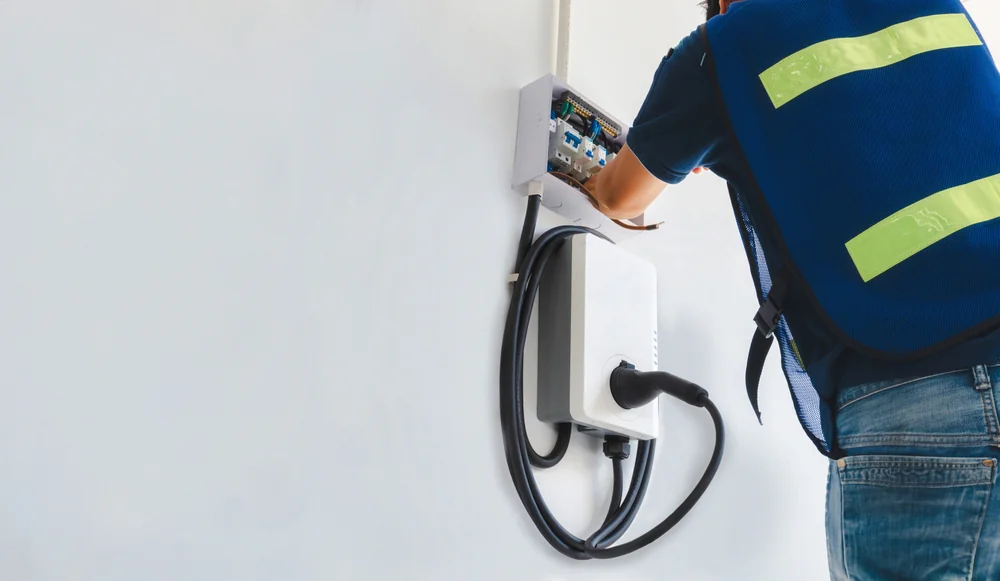
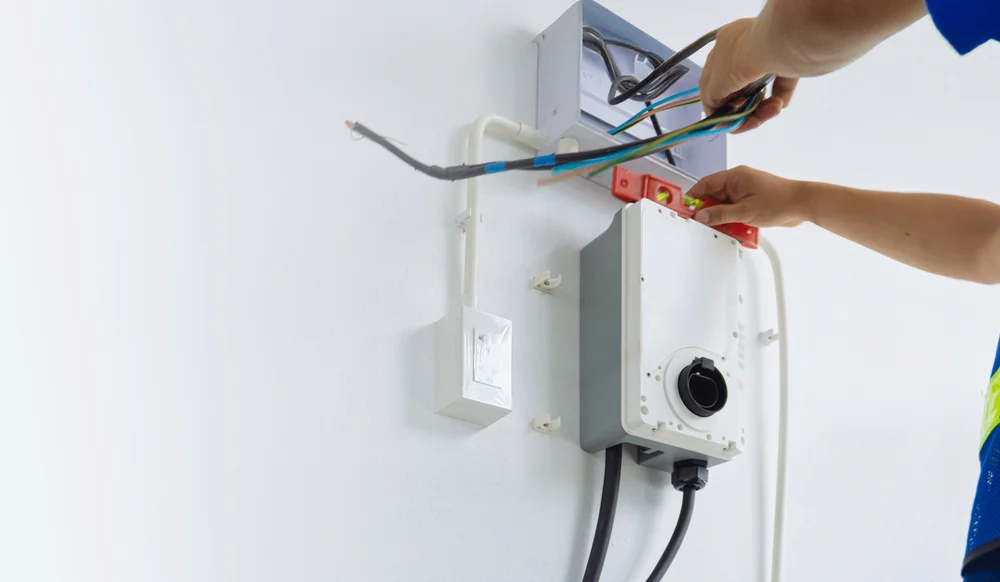
Electric Vehicle Charger Setup in Willardville
You plug in when you get home. While you sleep, your EV charges using your home’s electricity at rates that beat any public charging station. No more planning trips around charging stops or waiting in line at a Level 3 station during your lunch break.
A Level 2 home charger adds 25 to 35 miles of range per hour. That’s a full charge overnight for most daily driving. You leave in the morning with a full battery, every single day.
The math works in your favor too. Home electricity in North Carolina runs cheaper than commercial charging rates. Over a year, that’s real money back in your pocket. Plus, Duke Energy’s rebate program can cover up to $1,117 of your installation cost. We’ll help you access that credit when we set up your system.
Licensed Electricians Serving Willardville, NC
We’ve been doing electrical work in Willardville and the surrounding Chatham, Durham, Orange, and Alamance county areas since 2002. Our operations manager earned his electrical contractor license in 1989. That’s over three decades of actual field experience, not just business ownership.
We started with residential wiring and service work. EV charger installation is a natural extension of what we already do well: evaluating electrical systems, upgrading panels when needed, and making sure everything meets code. We’re not a new company jumping on the EV trend. We’re electricians who’ve been here through multiple technology shifts.
When North Carolina hit 100,000 registered EVs in 2024, the demand for home charging infrastructure finally caught up with what we’ve been preparing for. You’re not our first EV charger installation in Willardville, and you won’t be our last.
How EV Charging Station Installation Works
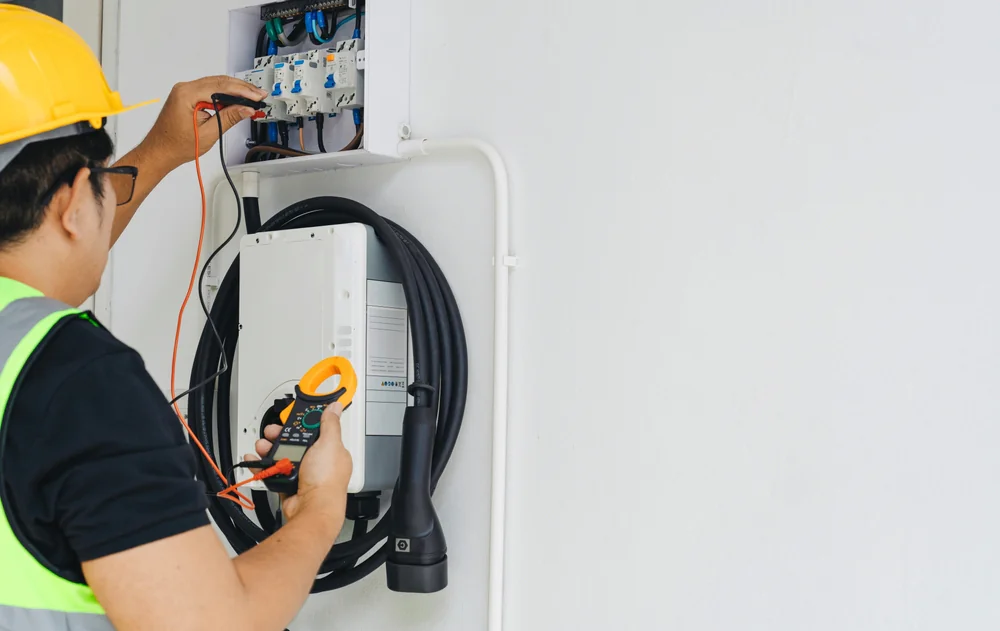
First, we look at your electrical panel. Most homes need a 200-amp panel to support a Level 2 EV charger without overloading the system. If your panel can’t handle it, we’ll tell you upfront and give you a clear cost for the upgrade. No surprises halfway through the job.
Next, we calculate the load requirements for your specific EV charger model. Different chargers pull different amperage. We size the circuit breaker and wiring to match your charger’s specs and your vehicle’s charging capacity. This isn’t one-size-fits-all work.
Then we handle the permit. Willardville and Chatham County require electrical permits for EV charger installations. We pull the permit, do the installation according to National Electrical Code Section 625, and schedule the inspection. You don’t have to deal with the county or chase down paperwork.
After installation, the inspector verifies everything meets code. Once you pass inspection, you’re charging at home. We also walk you through your charger’s features and answer any questions about optimal charging schedules or settings.
What's Included in EV Charger Installation
Every installation starts with an electrical system evaluation. We measure your current panel capacity, check your existing circuits, and determine whether you need an upgrade before adding an EV charger. Most homes built before 2000 will need panel work. That’s normal, and we handle it.
You get a detailed estimate that breaks down equipment costs, labor, permit fees, and any panel upgrades. We also help you apply for Duke Energy’s EV Charger Installation Support Program, which provides up to $1,117 in rebate credits for residential Level 2 charger installations. That rebate can offset a significant portion of your total cost.
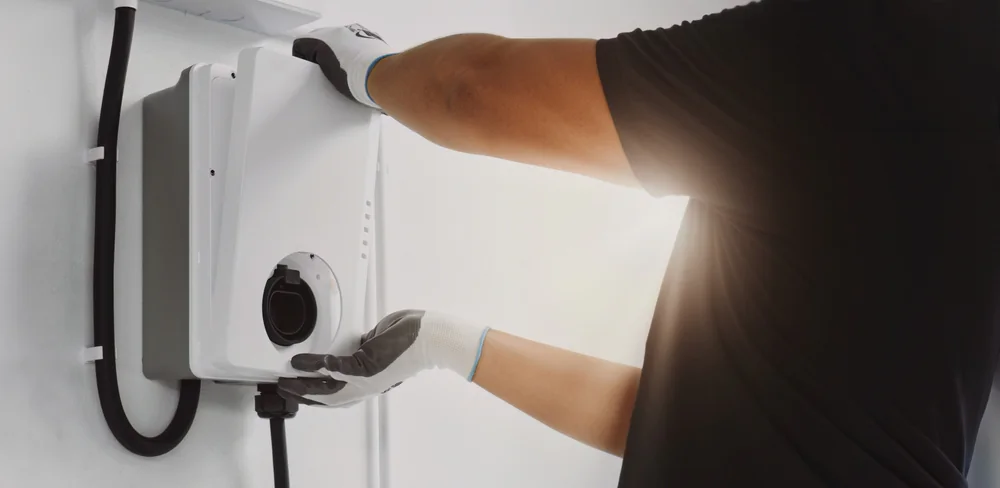
The installation itself includes running the appropriate gauge wiring from your panel to your charger location, installing a dedicated circuit breaker, mounting your charger, and making all final connections. We test everything before we leave. You also get a lifetime labor warranty—up to 25 years—on our installation work. If something goes wrong with our workmanship, we fix it.
Willardville sits in an area where EV adoption is growing fast. North Carolina added 50,000 EVs in just 23 months recently, and nearly half of all EVs registered in the state were purchased in the last two years. Your home charging setup positions you ahead of the curve as infrastructure continues expanding across Durham, Chapel Hill, and the surrounding counties.
How much does it cost to install an EV charger at my home in Willardville?
Installation costs typically range from $1,200 to $3,500 depending on your electrical panel’s current capacity and how far we need to run wiring from the panel to your charger location. If your home has a 200-amp panel with available capacity, you’re looking at the lower end. If you need a panel upgrade from 100 amps to 200 amps, that adds to the project cost.
The charger itself runs between $400 and $1,200 depending on features and brand. Some chargers offer WiFi connectivity, scheduling features, and energy monitoring. Others are basic plug-and-charge units. We can recommend options based on your vehicle and budget.
Duke Energy’s rebate program covers up to $1,117 for residential EV charger installations. We help you access that credit, which can cut your out-of-pocket cost significantly. There’s also a federal tax credit covering up to 30% of installation costs. Between the utility rebate and federal credit, many homeowners recover a substantial portion of their investment.
Does my electrical panel need to be upgraded for an EV charger?
Most homes built before 2000 have 100-amp or 150-amp panels. A Level 2 EV charger typically requires a dedicated 40-amp or 50-amp circuit. If your panel is already running close to capacity with your HVAC system, water heater, and other appliances, adding an EV charger will overload it.
We do a load calculation during the initial assessment. This tells us exactly how much capacity your panel has available. If you’re borderline, we’ll explain your options. Sometimes we can rebalance existing circuits. Other times, a panel upgrade to 200 amps is the right move—not just for the EV charger, but for your home’s overall electrical safety and future needs.
A panel upgrade typically adds $1,500 to $2,500 to the project. That includes the new panel, labor, permit, and inspection. It sounds like a lot, but you’re also fixing an outdated electrical system that may have been a problem waiting to happen. Plus, a modern 200-amp panel increases your home’s resale value, especially as EV ownership becomes more common in Willardville and the surrounding area.
How long does EV charger installation take from start to finish?
If your panel has capacity and doesn’t need an upgrade, the physical installation takes four to six hours. That includes running the wiring, installing the breaker, mounting the charger, and testing everything. We schedule the work at a time that works for you, and we clean up completely when we’re done.
The permit and inspection process adds time to the overall timeline. Chatham County typically processes electrical permits within a few business days. After installation, we schedule the county inspection, which usually happens within a week. You can’t legally use your charger until it passes inspection, so we prioritize getting that scheduled quickly.
If you need a panel upgrade, add another day for that work. We upgrade the panel first, get it inspected, then install the EV charger. Total timeline from your first call to charging at home is usually two to three weeks, depending on permit processing times and inspection availability. We keep you updated throughout the process so you know exactly where things stand.
Can I install an EV charger myself to save money?
North Carolina requires a licensed electrician to install EV chargers. You can’t pull a permit without a contractor’s license, and you can’t legally operate the charger without a passed inspection. Even if you have electrical experience, the county won’t approve a homeowner-installed EV charging station.
There’s a good reason for that requirement. EV chargers pull significant amperage for extended periods. Improper wire sizing, incorrect breaker selection, or faulty connections create fire hazards. We’ve seen DIY electrical work that looked fine on the surface but failed inspection because the wiring couldn’t handle the sustained load.
The bigger issue is liability. If something goes wrong with a DIY installation—a fire, electrical shock, or damage to your vehicle—your homeowner’s insurance may not cover it. Professional installation with proper permits and inspections protects you legally and financially. Our lifetime labor warranty also means if anything goes wrong with the installation itself, we fix it at no cost to you.
What's the difference between Level 1 and Level 2 EV chargers?
Level 1 charging uses a standard 120-volt household outlet. It’s the cord that comes with your EV. You plug it into any regular outlet and it charges your vehicle at about 3 to 5 miles of range per hour. For most EV owners, that’s too slow to be practical. If you drive 40 miles a day, you need 8 to 12 hours of charging just to replace what you used.
Level 2 charging uses a 240-volt circuit—the same voltage as your electric dryer or oven. It charges your EV at 25 to 35 miles of range per hour, depending on your vehicle and charger specifications. That’s fast enough to fully charge most EVs overnight, even if you come home with a nearly empty battery.
Level 2 is what we install for homes. It requires a dedicated circuit, proper wiring, and a wall-mounted charging unit. The upfront cost is higher than just using your Level 1 cord, but the convenience and speed make it worth it for anyone driving their EV regularly. You’re not waiting half a day for a charge. You’re plugging in after work and waking up ready to drive.
Do you service and repair EV chargers, or just install them?
We handle both installation and repair. If your charger stops working, throws an error code, or isn’t communicating with your vehicle properly, we can diagnose and fix it. Common issues include tripped breakers, faulty GFCI protection, damaged charging cables, or internal component failures in the charger unit itself.
Some problems are simple—a breaker that needs resetting or a GFCI outlet that got wet and shut down. Others require parts replacement or rewiring. We carry common replacement parts and can source manufacturer-specific components when needed. If your charger is still under warranty, we’ll work with the manufacturer to get covered parts replaced.
We also do routine maintenance and safety inspections. Over time, connections can loosen, especially in outdoor installations where temperature changes cause expansion and contraction. We check all connections, test the circuit, and make sure everything still meets code. Regular maintenance catches small problems before they become expensive repairs or safety hazards.
Other Services we provide in Willardville
About Us

Electrical Service Providers (ESP) has been in business since 2002. ESP started out performing wiring services to new construction, remodeling projects and residential homes. Our company’s president identified a market for electrical services to be performed in homes and businesses independent of new construction. Read More about Electrical Service Providers>>
All Rights Reserved.Organic Marketing LLC
Business Listings


Product Brands Used
Allied, Broan, Cutler Hammer, General Electric, Ideal, Juno, Kohler, Leviton, Lutron, Siemens, Square D
Contact
- Office Address: 3254 S Anthony Ct.
Burlington, NC 27215 - Mailing Address: PO Box 25
Alamance, NC 27201 - Phone: 336-228-3300
- E-mail: [email protected], [email protected]
Service Areas
Chapel Hill, Burlington, Carrboro, Durham, Gibsonville, Hillsborough, Graham, Pittsboro, Morrisville, Cary
About Us
Electrical Service Providers (ESP) has been in business since 2002. ESP started out performing wiring services to new construction, remodeling projects and residential homes. Our company’s president identified a market for electrical services to be performed in homes and businesses independent of new construction. Read More about Electrical Service Providers>>
All Rights Reserved.Organic Marketing LLC