EV Charger Installation in Wilsonville, NC
Charge at Home Without the Guesswork
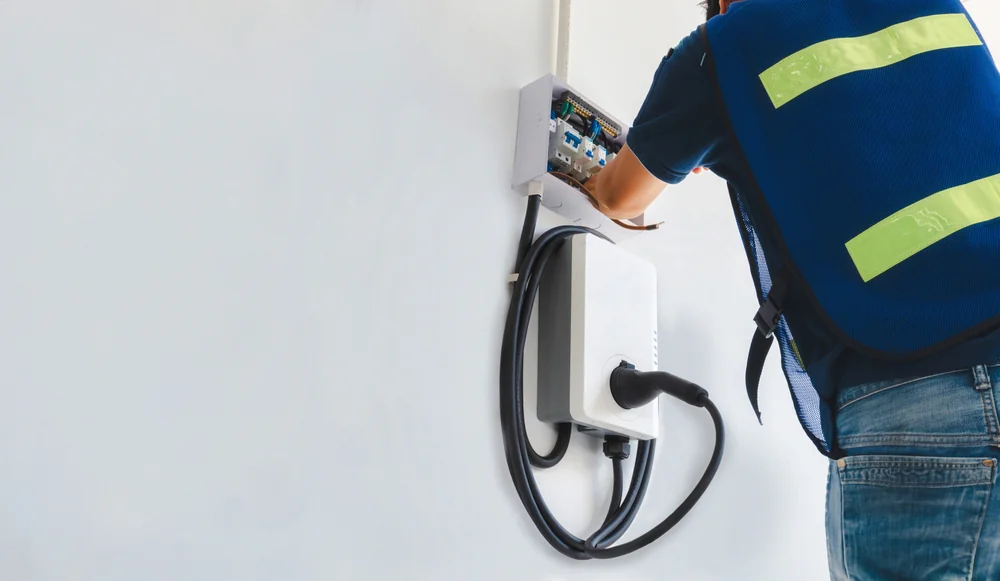
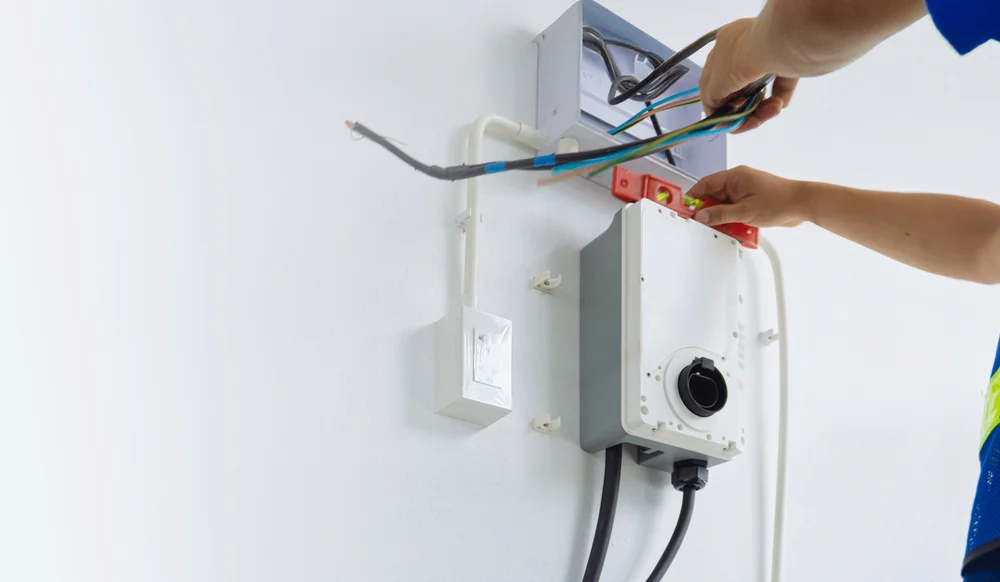
Electric Vehicle Charger Setup Wilsonville
You bought an EV to simplify your life, not complicate it. But without a Level 2 charger at home, you’re stuck with a standard outlet that adds maybe 3 miles of range per hour. That’s not charging—that’s waiting.
A proper electric vehicle charger installation changes that. You’ll get up to 44 miles of range per hour, which means a full charge overnight while you sleep. No more mapping out public stations or sitting in parking lots. Just plug in when you get home and you’re ready the next morning.
And if you’re worried about what this does to your electric bill, most Wilsonville homeowners find that charging at home costs less than half what they were spending on gas. Duke Energy even offers off-peak rates that drop the cost further if you charge late at night. You’re not just saving time—you’re saving real money every month.
Licensed EV Charger Electrician Wilsonville
ESP Electrical Service Providers has been serving Wilsonville and the surrounding Alamance County area for over two decades. Our owner, Andy Helton, is a Master Electrician with 35+ years in the field—not someone who just started doing EV installs because they’re trendy.
We’ve seen electrical systems in homes built in the 1960s and brand-new construction. We know what works, what doesn’t, and what’s going to cause you problems down the road. That experience matters when you’re adding a 240-volt circuit that pulls serious amperage.
North Carolina is seeing explosive EV growth—over 100,000 registrations in 2024 alone. Wilsonville homeowners are part of that shift, and we’re here to make sure your home’s electrical system can handle it safely and correctly.
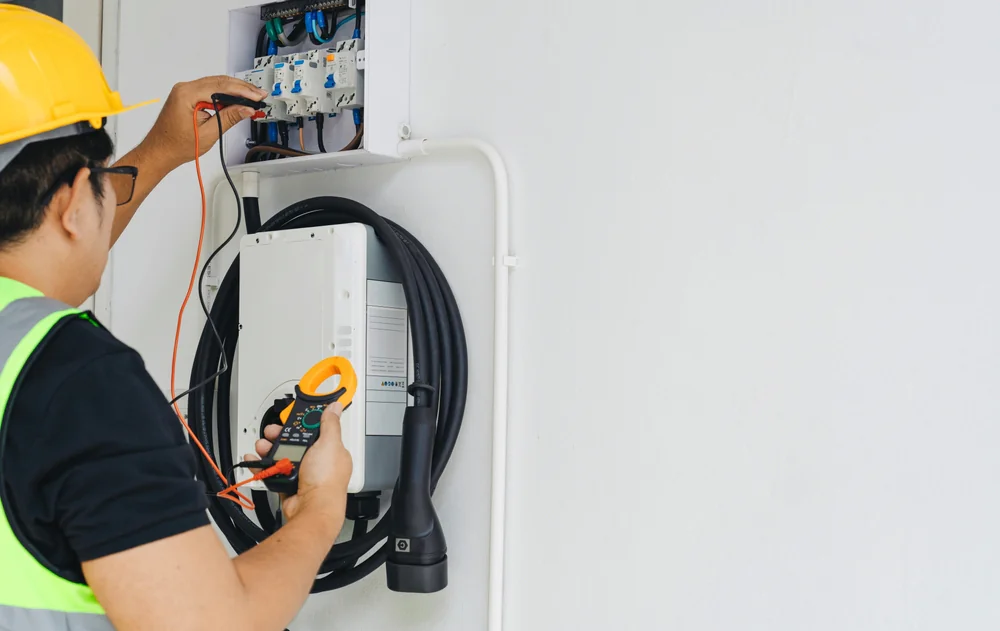
EV Charging Station Installation Process
First, we assess your electrical panel. Most EV chargers need a dedicated 240-volt, 40-amp circuit. If your panel is already at capacity or you’ve got an older 100-amp service, we’ll talk through what an upgrade looks like and what it costs before we do anything.
Next, we handle the permit and plan the installation route. We’ll run the wiring from your panel to wherever you park—garage, carport, driveway. Our trucks come fully stocked, so we’re not making runs to the supply house on your time.
Then we install the charger, test the circuit, and walk you through how it works. If you’re eligible for Duke Energy’s EV Charger Prep Credit—which covers up to $1,117 for wiring, outlets, and panel improvements—we’ll help you navigate that process too. We clean up, haul off any debris, and you’re charging that night.

What's Included in EV Charger Installation
This isn’t just mounting a box on the wall. You’re getting a complete electrical evaluation, load calculation, and circuit installation by a licensed electrician. We’ll confirm your panel can handle the load or recommend an upgrade if it can’t. You’ll know the cost upfront—flat rate pricing, no surprises.
We install Level 2 chargers from trusted brands, and if you’ve already bought one (like a Tesla Wall Connector), we’ll install yours. The work includes running conduit and wiring to code, installing the appropriate breaker, mounting the charging unit, and testing everything before we leave.
Wilsonville is part of North Carolina’s push to get 1.25 million EVs on the road by 2030, and Duke Energy is backing that with rebates and incentives. We’ll help you take advantage of those programs so the installation costs less than you’d expect. And because we’ve been doing electrical work in this area since 2002, we know the local inspection requirements and how to get things approved the first time.
How much does it cost to install an EV charger in Wilsonville?
Most installations run between $800 and $2,500 depending on the distance from your electrical panel to where you park and whether your panel needs an upgrade. If you’ve got an older home with a 100-amp panel, you might need to upgrade to a 200-amp service to safely handle the charger. That adds another $1,500 to $4,000, but it’s not always necessary.
We’ll assess your system during the estimate and tell you exactly what’s required. No upselling, no scare tactics—just a straight answer about what your home needs. And if you qualify for Duke Energy’s rebate program, that can cover up to $1,117 of the prep work, which offsets a big chunk of the cost.
The federal government also offers a tax credit of up to $1,000 for residential EV charger installations, so factor that in when you’re calculating your total investment. Between the rebates and long-term savings on gas, most Wilsonville homeowners break even faster than they expect.
Will my electrical panel support a Level 2 EV charger?
It depends on your current panel capacity and what else is running in your home. A Level 2 charger typically needs a dedicated 40-amp circuit on a 240-volt line. If your panel is already maxed out with HVAC, water heater, dryer, and other appliances, there might not be room for another large load.
Homes built in the last 20 years usually have 200-amp service, which handles an EV charger without issue. Older homes—especially those built before 1980—often have 100-amp panels, and those usually need an upgrade. We’ll do a load calculation during the site visit to see where you stand.
If an upgrade is necessary, it’s not just about the EV charger. You’re also future-proofing your home for other electrical needs and increasing your property value. We’ve done hundreds of panel upgrades in the Wilsonville area, and we’ll walk you through what’s involved, how long it takes, and what it costs before you commit to anything.
How long does an EV charger installation take?
Most installations take four to eight hours if your panel has capacity and the charger location is close to your electrical panel. If we’re running a longer conduit to a detached garage or outdoor parking area, it might take a full day.
Panel upgrades add time—usually another day for the upgrade itself, plus scheduling the utility company to disconnect and reconnect service. Inspections can add a few days to the timeline depending on how busy the local inspector is, but we handle all the scheduling and coordination.
From the day you call to the day you’re charging, the whole process typically takes one to two weeks. We’ll give you a clear timeline during the estimate so you know what to expect. And if something changes, we’ll let you know immediately—not the day of the job.
Can I install an EV charger myself to save money?
Technically, North Carolina law allows homeowners to do their own electrical work on their primary residence. But EV charger installation involves running a new 240-volt circuit, installing a large breaker, and working inside your main electrical panel. If you make a mistake, you’re looking at electrical fires, code violations, or a failed inspection that costs more to fix than hiring a licensed electrician in the first place.
Insurance is another issue. If something goes wrong with a DIY electrical job and your house is damaged, your homeowner’s insurance might deny the claim. Most policies require electrical work to be done by a licensed professional, especially for high-voltage installations.
And then there’s resale value. When you sell your home, buyers and inspectors will look at your EV charger setup. If it’s not permitted and installed to code, that becomes a negotiating point or a deal-breaker. Spending $1,500 now to do it right saves you thousands later when you’re trying to close on a sale.
What's the difference between a Level 1 and Level 2 charger?
Level 1 charging uses a standard 120-volt outlet—the same one you’d plug a lamp into. It’s slow. You’ll get about 3 to 5 miles of range per hour, which means a full charge on most EVs takes 24 hours or more. That works if you drive 20 miles a day and can leave it plugged in overnight, but it’s not practical for most people.
Level 2 charging uses a 240-volt circuit, the same voltage as your dryer or oven. It delivers 25 to 44 miles of range per hour depending on your vehicle and charger model. A full charge happens in four to eight hours, which means you plug in after work and you’re ready the next morning.
If you’re serious about owning an EV, Level 2 is the only real option. It’s faster, more convenient, and it means you’re not constantly worried about whether you’ll have enough range for tomorrow. The upfront cost is higher, but the time savings alone make it worth it.
Do you help with Duke Energy rebates for EV charger installation?
Yes. Duke Energy offers a rebate of up to $1,117 per household for EV charging preparation, which includes things like outlet installation, wiring upgrades, panel improvements, and other electrical work needed to support your charger. It’s not automatic—you have to apply and meet certain requirements—but we’ll walk you through the process.
We’ll provide the documentation you need, including proof of installation and electrical work details. Most Wilsonville homeowners qualify as long as they’re Duke Energy customers and the work meets program guidelines. The rebate doesn’t cover the charger itself, but it does cover a significant portion of the installation cost.
There’s also a federal tax credit of up to $1,000 for residential EV charger installations, and businesses can claim up to $100,000 per charging port. Between the Duke Energy rebate and federal tax credit, you’re looking at real savings that make the installation much more affordable. We’ll make sure you have everything you need to claim both.
Other Services we provide in Wilsonville
About Us

Electrical Service Providers (ESP) has been in business since 2002. ESP started out performing wiring services to new construction, remodeling projects and residential homes. Our company’s president identified a market for electrical services to be performed in homes and businesses independent of new construction. Read More about Electrical Service Providers>>
All Rights Reserved.Organic Marketing LLC
Business Listings


Product Brands Used
Allied, Broan, Cutler Hammer, General Electric, Ideal, Juno, Kohler, Leviton, Lutron, Siemens, Square D
Contact
- Office Address: 3254 S Anthony Ct.
Burlington, NC 27215 - Mailing Address: PO Box 25
Alamance, NC 27201 - Phone: 336-228-3300
- E-mail: [email protected], [email protected]
Service Areas
Chapel Hill, Burlington, Carrboro, Durham, Gibsonville, Hillsborough, Graham, Pittsboro, Morrisville, Cary
About Us
Electrical Service Providers (ESP) has been in business since 2002. ESP started out performing wiring services to new construction, remodeling projects and residential homes. Our company’s president identified a market for electrical services to be performed in homes and businesses independent of new construction. Read More about Electrical Service Providers>>
All Rights Reserved.Organic Marketing LLC