The Silent Guardian: How an In-Home Generator Saves Your Food (and Your Sanity)
Power outages don't just kill your lights—they threaten hundreds of dollars in groceries and family comfort. Here's how an in-home generator protects what matters most.
Share:
Summary:
The power flickers. Then it’s gone. You grab your phone for light and immediately start calculating: How long has it been? How long until the food in the fridge goes bad? Should you start moving things to a cooler? Do you even have enough ice?
If you’ve lived through a North Carolina storm season, you know this drill too well. But there’s a better way. An in-home generator doesn’t just keep your lights on—it protects your investment in groceries, maintains your family’s comfort, and gives you one less thing to worry about when severe weather hits. Let’s talk about what backup power really means for your home.
Most people think about candles and flashlights when the power goes out. But the real financial hit? It’s sitting in your refrigerator and freezer.
Your fridge keeps food safe for about four hours without power—as long as you keep the door closed. After that, perishable items like meat, dairy, eggs, and leftovers enter the danger zone. Your freezer buys you more time, holding temperature for up to 48 hours if it’s full, or 24 hours if it’s half empty. But once those windows close, you’re looking at throwing away everything that could make your family sick.
That’s not just inconvenient. For a family with a well-stocked fridge and freezer, a single extended outage can mean $200 to $500 in lost groceries. And if you’ve just done your monthly Costco run? The number climbs even higher.

Here’s what actually happens when your refrigerator loses power. The temperature inside starts climbing immediately. Within the first hour, it’s usually still safe—your fridge is well-insulated. But by hour two or three, especially if someone opens the door to check on things, the internal temperature is rising past the safe zone of 40°F.
Bacteria don’t wait around. Once food hits that threshold and stays there for more than two hours, harmful bacteria like E. coli and salmonella start multiplying rapidly. You can’t see it, you can’t smell it yet, and you definitely can’t taste-test your way to safety. By the four-hour mark, anything perishable needs to go—even if it looks and smells fine.
Your freezer works differently but faces the same problem. A fully stocked freezer acts like a giant ice block, holding its cold for about two days. But if your freezer is only half full, that time gets cut in half. And if you’re opening it to grab items or check the temperature, you’re letting warm air in and cold air out, speeding up the thaw.
The frustrating part? You often don’t know how long the outage will last. Is it a quick fix that’ll be resolved in an hour, or are you looking at days without power? That uncertainty makes it hard to know when to start transferring food to coolers, when to fire up the grill to cook what you can, or when to just accept the loss and start tossing things.
This is where an in-home generator changes everything. Instead of watching the clock and making difficult decisions, your refrigerator and freezer just keep running. Your food stays cold. Your family stays fed. And you can focus on more important things—like making sure everyone’s safe and comfortable.
North Carolina homeowners know the drill. Summer brings thunderstorms with high winds that snap tree limbs onto power lines. Winter weather can coat everything in ice, taking down entire sections of the grid. And hurricane season? That’s a whole different level of preparation and anxiety.
In Durham and Orange counties, strong winds regularly knock out power for thousands of customers at a time. Alamance and Chatham counties face similar challenges, especially in areas where older infrastructure meets severe weather. When utility equipment gets damaged, you’re not looking at a quick fix—restoration can take hours or even days depending on the extent of the damage and how many customers are affected.
The financial impact goes beyond just groceries. If you’re working from home, a power outage means lost productivity and missed deadlines. Families with kids end up eating out for every meal, which adds up fast. Some people book hotel rooms just to escape the heat or cold, especially if the outage stretches into multiple days. And if you have a sump pump that stops working or pipes that freeze because your heat is out, you’re looking at potential damage that makes spoiled food seem like a minor inconvenience.
But even without those extreme scenarios, there’s the stress factor. The constant checking of your phone to see if the power company has updated the estimated restoration time. The mental math of figuring out what to save and what to sacrifice. The worry about whether your elderly parents or neighbors are okay. The frustration of not being able to do simple things like make coffee, take a hot shower, or charge your devices.
An in-home generator eliminates most of that stress. It doesn’t prevent the storm or stop the tree from falling. But it does mean that when the power goes out, your home doesn’t. Your refrigerator keeps humming. Your heat or AC keeps running. Your Wi-Fi stays connected. Life continues with minimal disruption, which is exactly what you need when everything else feels chaotic.
And here’s something most people don’t consider until they need it: if you have anyone in your household who depends on medical equipment—CPAP machines, oxygen concentrators, medication that needs refrigeration—an in-home generator isn’t just convenient. It’s essential. The peace of mind that brings is hard to put a price on.
Want live answers?
Connect with a Electrical Service Providers expert for fast, friendly support.
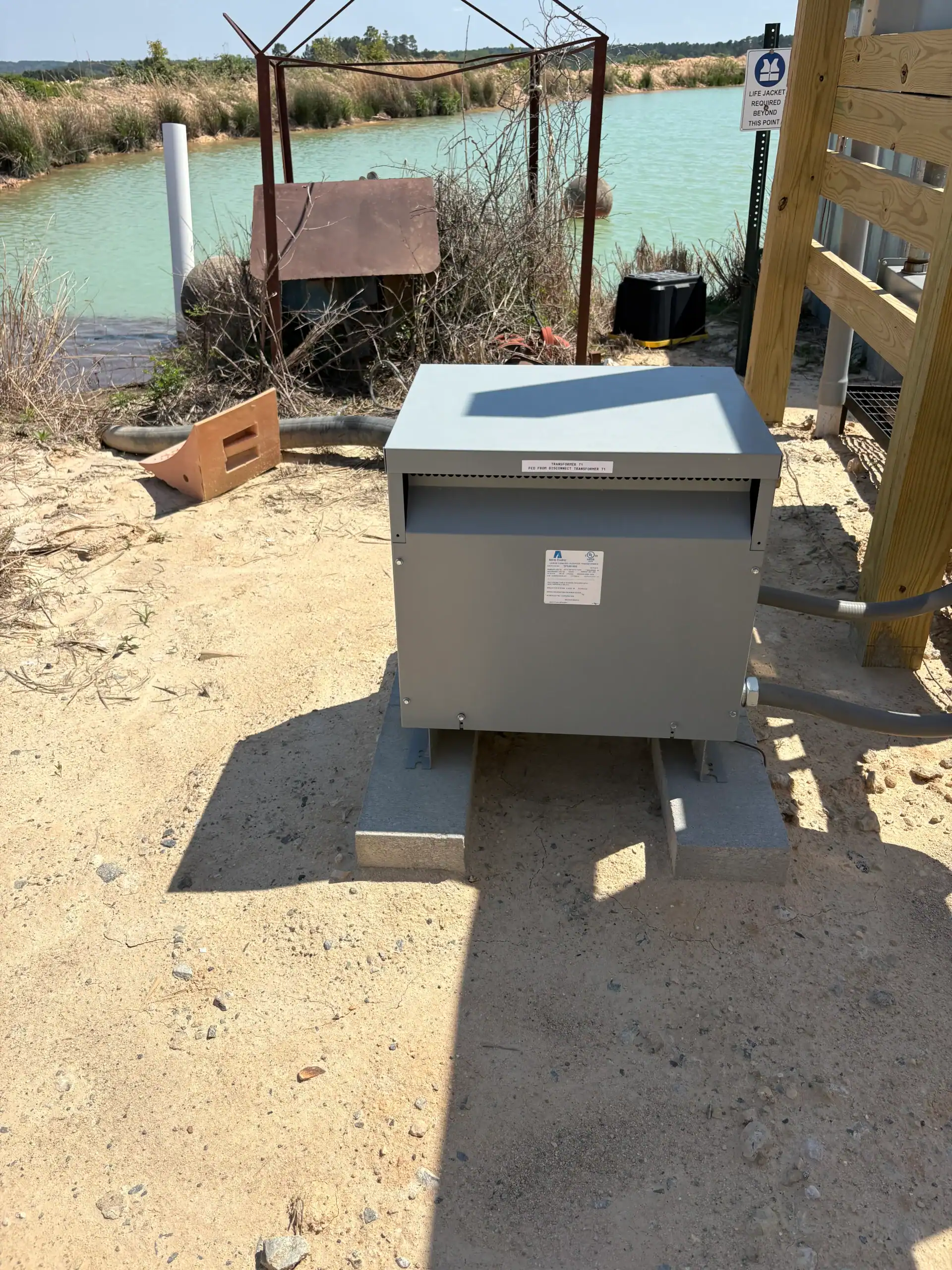
If you’re picturing a loud, gas-guzzling machine that you have to drag out of the garage and set up in the rain, that’s not what we’re talking about. A whole-house standby generator is a permanent installation that sits outside your home, similar to your HVAC unit. It’s connected to your home’s electrical system through an automatic transfer switch, and it runs on either natural gas from your utility line or liquid propane from a tank.
Here’s the part that makes it worth the investment: it’s completely automatic. When the generator detects that power from the grid has been interrupted, the automatic transfer switch kicks in within seconds. It safely disconnects your home from the utility line, fires up the generator, and starts supplying power to your home. You might notice the lights flicker for a moment, but that’s it. Everything just keeps working.

One of the first decisions you’ll make when considering an in-home generator is what fuel source to use. The two main options are natural gas and liquid propane, and each has distinct advantages depending on your situation.
Natural gas generators connect directly to your home’s existing gas line—the same line that might already be fueling your furnace, water heater, or stove. The biggest advantage here is convenience. You never have to worry about refueling or running out of gas during an extended outage. As long as the natural gas infrastructure is functioning, your generator has an unlimited fuel supply. Natural gas is also typically less expensive per unit of energy compared to propane—about 40 percent of propane’s cost—which can mean lower operating costs if you’re running the generator for several days. It burns clean, produces fewer emissions, and requires less maintenance over time.
The downside? Natural gas isn’t available everywhere. If you live in a rural area or a neighborhood without gas line infrastructure, it’s simply not an option. And in extreme weather events or natural disasters, there’s a small risk that gas lines could be damaged or shut off, though this is relatively rare. Natural gas also has lower energy density than propane, meaning the generator needs to consume more volume to produce the same amount of power—though modern generators are designed to handle this efficiently.
Liquid propane, on the other hand, gives you complete independence from utility infrastructure. The fuel is stored in a tank on your property—usually a 250-gallon or 500-gallon tank that sits above or below ground. Propane has higher energy density than natural gas, delivering more than double the BTUs per cubic foot. It also stores indefinitely without degrading, which makes it reliable for infrequent use. If you only experience a few outages per year, that propane will be sitting there ready to go whenever you need it.
The tradeoff with propane is that you’re responsible for managing your fuel supply. You’ll need to schedule deliveries from a propane supplier to keep your tank filled, and you’ll want to monitor levels to make sure you don’t run low during storm season. There’s also the upfront cost of installing the propane tank if you don’t already have one, typically $500 to $1,500 for a 250-gallon tank. And while propane is efficient, it does typically cost more per BTU than natural gas, which can add up during extended outages.
So which one is right for your home in Burlington, Chapel Hill, Durham, or Hillsborough? If you already have natural gas service and your area has reliable gas infrastructure, natural gas is usually the more convenient and cost-effective choice. It’s one less thing to think about, and you’ll never have to worry about running out of fuel. But if natural gas isn’t available in your area, or if you want the security of having your own fuel supply that’s independent of any utility, propane is an excellent option. Many homeowners in more rural parts of Alamance, Chatham, and Orange counties rely on propane generators and find them perfectly reliable.
Some newer generator models even offer dual-fuel capability, meaning they can run on either natural gas or propane. This gives you maximum flexibility—you can connect to your gas line for everyday use but have a propane tank as a backup if gas service is ever interrupted. It’s the best of both worlds, though it does add to the initial installation cost.
Generator sizing isn’t one-size-fits-all, and this is where working with an experienced installer makes a real difference. The size you need depends on what you want to power during an outage and how your home is set up.
Generators are measured in kilowatts (kW), with each kilowatt providing 1,000 watts of power. A typical whole-house generator for an average-sized home ranges from 13kW to 24kW. To give you some perspective, a 20kW generator can usually power most of a 2,500-square-foot home, including HVAC, kitchen appliances, lighting, and electronics. Smaller homes or homeowners who only want to power essential circuits can get by with a 10kW to 13kW unit.
The key is understanding your actual power needs. Your refrigerator and freezer are obvious priorities—they’re the whole reason we’re having this conversation about preventing food spoilage during outages. But what else matters to your family? Do you need to run central air conditioning during summer outages, or can you get by with fans? Is your heat electric or gas? Do you have a well pump that needs power, or are you on city water? What about your garage door, security system, or sump pump?
We’ll calculate your home’s electrical load by looking at your main electrical panel and the circuits you want to keep powered. We account for starting watts (the surge of power needed when appliances first turn on) versus running watts (what they need to operate continuously). High-draw appliances like air conditioners, electric dryers, and ovens require more capacity, so if you want to power everything in your home simultaneously, you’ll need a larger generator.
But here’s where you have options. You don’t necessarily need to power your entire home. Many homeowners choose to install a generator that covers essential circuits only—refrigerator, freezer, furnace or AC, some lights, a few outlets, and maybe the garage door. This approach costs less upfront because you can use a smaller generator, and it keeps your fuel consumption lower during outages. You won’t be able to run every single appliance at once, but you’ll maintain comfort and protect your food, which is what really matters.
The installation itself involves more than just dropping a generator in your yard. The unit needs to be properly positioned—at least five feet away from windows, doors, and vents for safety. It requires a concrete pad or mounting platform. We’ll install the automatic transfer switch and connect it to your electrical panel. If you’re using natural gas, we’ll run a gas line from your meter to the generator. For propane, you’ll need the tank installed and connected. Permits are usually required, and the whole process typically takes one to two days depending on complexity.
Cost is obviously a consideration. For most homeowners in Alamance County, Durham County, Chatham County, and Orange County, a complete installation—including the generator, transfer switch, labor, permits, and any necessary gas or electrical work—ranges from about $7,000 to $15,000. That’s not pocket change. But when you consider that a quality generator lasts 15 to 30 years with proper maintenance, and it’s protecting you from repeated losses of hundreds of dollars in food plus the other costs of extended outages, the math starts to make sense. It’s also worth noting that a permanently installed generator typically adds value to your home, which can matter when you eventually sell.
If you’re still reading, you’re probably already convinced that power outages are more than just an inconvenience—they’re expensive, stressful, and sometimes even dangerous. The question isn’t really whether backup power would be nice to have. It’s whether the investment makes sense for your situation.
Consider how often you lose power, how long those outages typically last, and what they cost you each time. Think about your family’s specific needs—medical equipment, work-from-home requirements, or just the peace of mind that comes from knowing your home will stay comfortable and your food will stay safe no matter what the weather does. For many homeowners across Burlington, Chapel Hill, Durham, Hillsborough, and surrounding communities, a standby generator isn’t a luxury. It’s a practical solution to a recurring problem that pays for itself in prevented losses and eliminated stress.
The in-home generator benefits go beyond just keeping the lights on during blackouts. You’re protecting hundreds of dollars in groceries every time an outage hits. You’re maintaining comfortable temperatures when summer heat or winter cold would otherwise make your home unbearable. You’re keeping medical devices running, security systems active, and sump pumps operational. You’re eliminating the scramble for ice, the stress of not knowing what to do, and the financial hit of eating out for days.
If you’re ready to stop worrying about the next storm and start protecting what matters most, we’re here to help. We’ll assess your home’s specific needs, explain your options clearly, and handle every aspect of the installation professionally—from permits to final testing. Your home deserves reliable backup power, and your family deserves the peace of mind that comes with it.
Article details:
Share:
Continue learning: