Surge Protection Secrets: How One Device Can Save Thousands in Electronics
Power surges happen dozens of times daily in your home. Most are small, but they're slowly damaging every electronic device you own—and you probably don't even know it's happening.
Share:
Summary:
You probably have surge protectors scattered throughout your home. Maybe one behind your TV, another for your computer setup. You might even think you’re covered. But here’s what most homeowners in Alamance County, Durham County, Chatham County, and Orange County, NC don’t realize: those power strips can’t protect your refrigerator, your HVAC system, or the dozens of other appliances hardwired into your walls. And they definitely can’t stop the internal surges happening every single day when your air conditioner kicks on or your dryer cycles off. Let’s talk about what’s really putting your electronics at risk and what actually works to protect them.
Power surges are sudden spikes in voltage that shoot through your electrical system. Your home runs on 120 volts, but that voltage constantly oscillates between 0 and 169 volts in a normal rhythm. When voltage jumps above 170 volts, you’ve got a surge. These spikes last microseconds to milliseconds, but that’s all it takes to damage sensitive electronics.
Most people think lightning causes power surges. Lightning is dramatic and destructive, sure, but it’s not your biggest threat. More than 80% of power surges actually start inside your home. Every time your refrigerator compressor kicks on, your AC unit starts up, or your washing machine switches cycles, it creates a small surge. These happen dozens of times every day.
The problem isn’t just one big surge. It’s the accumulation. Think of it like water dripping on a rock. One drip does nothing. But thousands of drips, day after day, eventually wear the rock down. Small surges work the same way on your electronics, slowly degrading circuit boards until devices start failing for “no reason.”
Internal surges are the ones most homeowners never see coming. When you flip on a hair dryer, start the dishwasher, or your HVAC system cycles on, these appliances pull a sudden burst of electricity from your system. That creates a brief voltage spike that affects other devices on the same circuit or nearby circuits.
Your refrigerator alone can create dozens of small surges every single day as its compressor turns on and off to maintain temperature. Air conditioners, space heaters, power tools, and anything with a motor or heating element does the same thing. These aren’t the surges that instantly fry your TV. They’re the ones that shorten its lifespan by years, degrading performance so gradually you don’t notice until it’s too late.
External surges come from outside your home, usually through your main power line. Lightning strikes are the most severe but thankfully rare. More common are surges from the utility company switching power between grids, downed power lines touching other conductors, or transformers malfunctioning. The real danger with external surges is their size. While internal surges might be 10 to 50 volts over normal, external surges can hit thousands of volts.
Power outages create a particularly nasty type of external surge. When power cuts out, your voltage drops to zero. But when it comes back on, there’s often a massive spike as electricity rushes back into the system all at once. This is why you’ll sometimes hear about multiple neighbors losing appliances after a storm—not from the outage itself, but from the surge when power was restored.
The location matters too. If you’re in a more rural part of Alamance County or Durham County, you might experience more external surges due to longer power lines and more exposure to weather and wildlife interference. But whether you’re in Burlington, Chapel Hill, Carrboro, or Hillsborough, internal surges are constantly happening regardless of where you live.
Nearly everything electronic in your home contains microprocessors or sensitive circuit boards. These components are built to handle normal voltage fluctuations, but they’re remarkably vulnerable to spikes. Even a 10-volt surge can disrupt how a microprocessor functions. Larger surges can instantly fry circuits, melt components, or crash hard drives.
Your obvious targets are things like computers, TVs, gaming systems, and home entertainment equipment. These are expensive and clearly electronic. But the less obvious stuff is where homeowners get blindsided. Your HVAC system has a control board that can cost $500 to $1,500 to replace. Your refrigerator, dishwasher, and washing machine all have circuit boards managing their functions. Your garage door opener, doorbell camera, smart thermostat, and every other connected device in your home—all vulnerable.
Here’s what makes this particularly frustrating: you might not even know surge damage happened. A major surge will obviously kill a device immediately. But smaller surges cause what electricians call “electronic rust.” Your TV might still turn on, but the picture quality degrades. Your computer runs slower. Your refrigerator’s temperature control gets less reliable. You assume these things are just aging normally, but surge damage is actually accelerating their decline.
The cost adds up fast. Replace a TV, a computer, a refrigerator control board, and an HVAC system after one major surge, and you’re easily looking at $5,000 to $10,000 in damage. That’s not even counting the inconvenience of being without these essentials while you wait for repairs or replacements. And if your homeowners insurance doesn’t cover surge damage—which many policies don’t, or only cover under specific circumstances—you’re paying out of pocket for all of it.
Smart home technology makes this worse. Every connected device, from smart speakers to security cameras to automated lighting, is essentially a computer that’s always plugged in and always vulnerable. As homes get smarter, they get more expensive to replace after surge damage.
Want live answers?
Connect with a Electrical Service Providers expert for fast, friendly support.
Walk into any home and you’ll find power strips everywhere. Behind entertainment centers, under desks, in home offices. Most people call these surge protectors. Many of them aren’t. They’re just extension cords with multiple outlets. Zero protection.
Even actual surge protectors—the ones with real protection built in—only shield what’s plugged directly into them. Your TV might be protected. Your HVAC system, refrigerator, garage door opener, and hardwired appliances? Not even close. Those plug-in protectors also can’t stop surges coming from inside your home’s wiring, which is where most surges originate.
Look at the power strip you’re using right now. If it just has outlets and maybe an on/off switch, it’s not protecting anything. Real surge protectors have a joule rating printed on them somewhere—usually on the device itself or in the documentation. Joules measure how much energy the protector can absorb before it fails. No joule rating means no protection.
You’ll also see a UL 1449 certification on legitimate surge protectors. This is the safety standard for surge protection devices. If you don’t see this marking, you’ve got a basic power strip. Even if you do have a real surge protector, check for indicator lights. Most quality units have an LED that shows whether protection is still active. That light goes out when the protector has absorbed too many surges and needs replacement.
Here’s something that catches people off guard: surge protectors wear out. Every time they stop a surge, the internal components degrade slightly. After enough surges—or one really big one—they stop working. The outlets still function fine, so you have no idea your protection is gone. You might be plugging expensive electronics into a dead surge protector right now, thinking you’re covered. Industry recommendations say replace surge protectors every three to five years, or immediately after a major surge event like a lightning strike nearby.
The joule rating matters too. Those cheap $10 power strips from the discount store might have 200 to 400 joules of protection. That’s basically nothing. For computers, TVs, or anything expensive, you want at least 1,000 joules. For high-end equipment, 2,000 joules or more. But even a great plug-in surge protector with a 3,000-joule rating can’t protect your whole home. It only protects what’s plugged into it, and it can’t stop surges originating from your home’s internal wiring.
The clamping voltage is another spec to check. This is the voltage level at which the surge protector kicks in and starts redirecting excess electricity. Lower is better. Look for 400 volts or less. Some cheaper models don’t activate until 500 or 600 volts, which means your devices are exposed to higher voltage before protection engages.
Whole home surge protection installs directly at your main electrical panel, where power enters your house. It’s a different approach entirely. Instead of protecting individual devices, it protects your entire electrical system. Every outlet, every hardwired appliance, every circuit in your home—all covered by one device.
When a surge comes through your main power line, the whole home protector intercepts it before it reaches your home’s wiring. It detects the voltage spike and immediately diverts the excess electricity to your grounding wire, which safely disperses it into the earth. Your devices never see the surge. It’s stopped at the source.
This is crucial for internal surges too. When your AC unit kicks on and creates a voltage spike, a whole home surge protector can help manage that spike before it affects other circuits. It won’t eliminate every tiny fluctuation, which is why pairing whole home protection with plug-in protectors for sensitive electronics is the best approach. But it provides a foundational layer of defense that power strips simply can’t match.
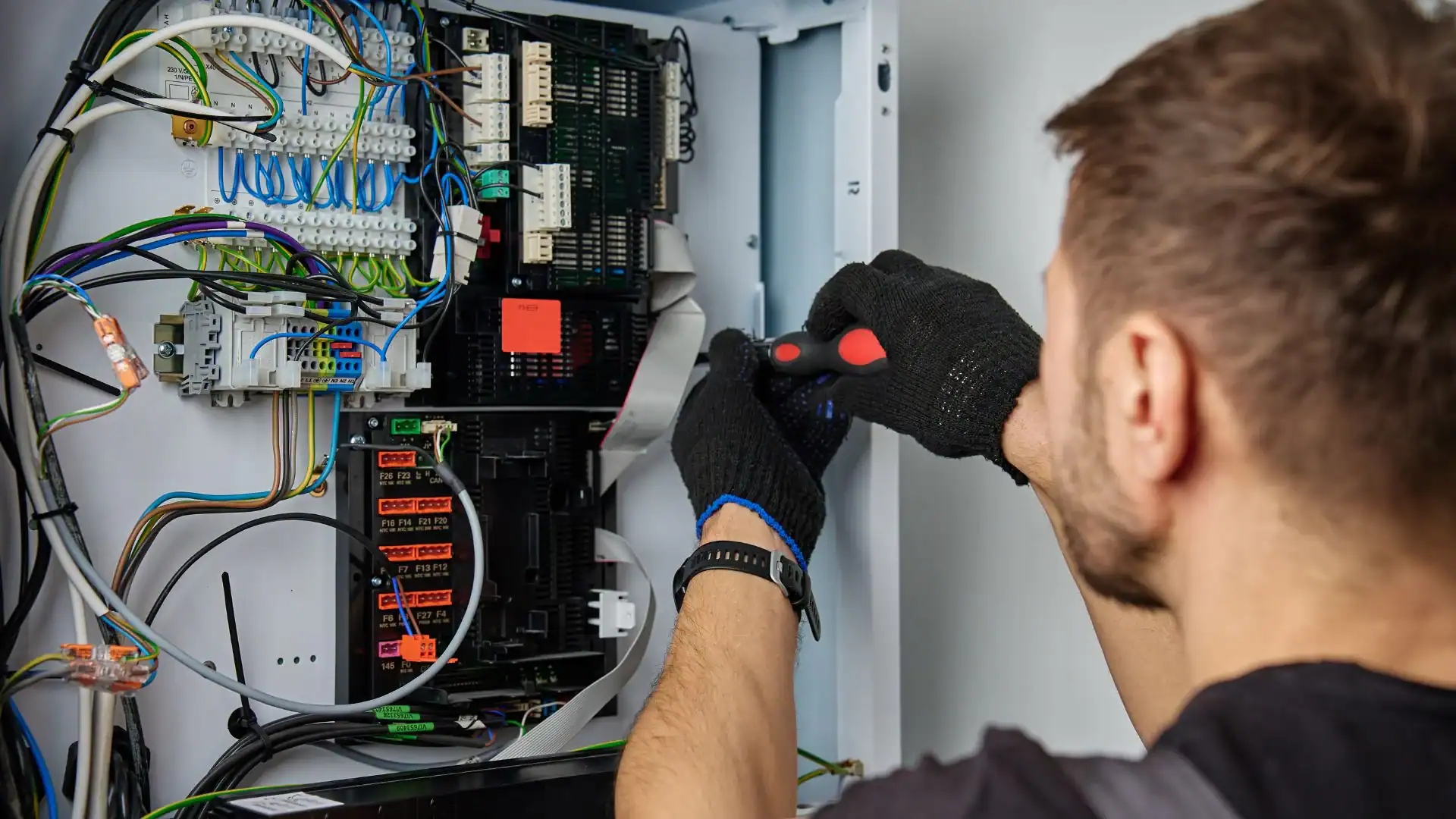
The installation requires a licensed electrician because it connects directly to your electrical panel. This isn’t a DIY project. But the installation itself typically takes one to two hours. The device mounts onto your panel and integrates with your home’s grounding system. Once it’s in, it works silently in the background, 24/7, protecting your home without any action required from you.
Most whole home surge protectors are Type 2 devices, which cost between $50 and $250 for the unit itself. Professional installation adds $100 to $200 in labor, putting total cost typically between $300 and $900 depending on your specific electrical setup. That’s a one-time investment that protects thousands of dollars worth of electronics and appliances. Compare that to replacing a fried HVAC control board ($500-$1,500), a new refrigerator ($1,000-$3,000), or a home theater system ($2,000+), and the math becomes pretty obvious.
North Carolina’s 2020 adoption of updated National Electrical Code now requires whole home surge protection in new construction. That tells you something about how essential this protection has become. If it’s required in new homes, why wouldn’t you want it in yours?
Power surges aren’t a matter of if, they’re a matter of when. Your home is experiencing small surges constantly from appliances cycling on and off. Larger surges from storms, power outages, or utility grid issues are inevitable over the years you’ll own your home. The question isn’t whether you’ll face surges—it’s whether you’ll be protected when they happen.
Plug-in surge protectors have their place for sensitive electronics like computers and entertainment systems. But they can’t protect your whole home, and they can’t stop the internal surges that happen every single day. Whole home surge protection installed at your electrical panel provides comprehensive coverage for everything in your house, from your HVAC system to your smart home devices to your kitchen appliances.
If you’re in Alamance County, Durham County, Chatham County, or Orange County, NC and want to protect your home from power surge damage, we can help. With over 35 years of electrical experience and more than 20 years serving local communities, we install whole home surge protection systems that give you real peace of mind. Your electronics are expensive. Your time is valuable. Protecting both is worth a conversation.
Article details:
Share:
Continue learning: