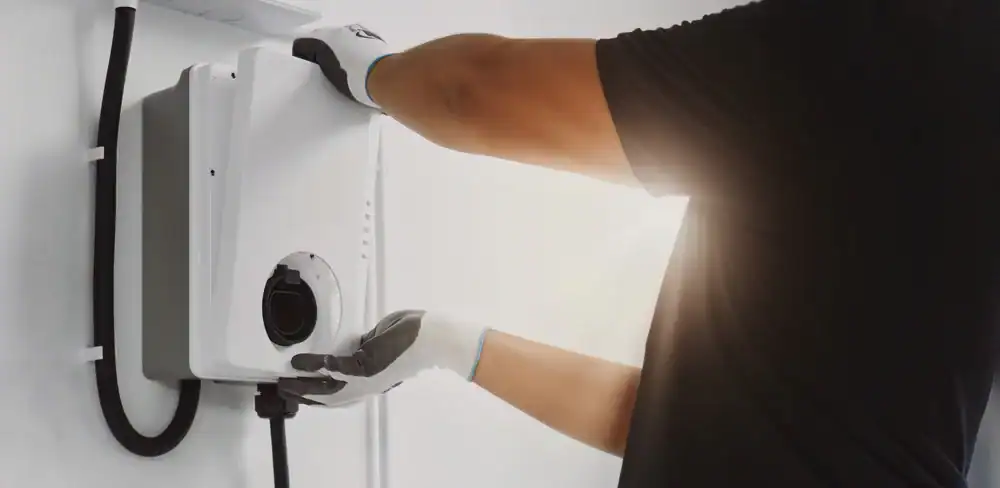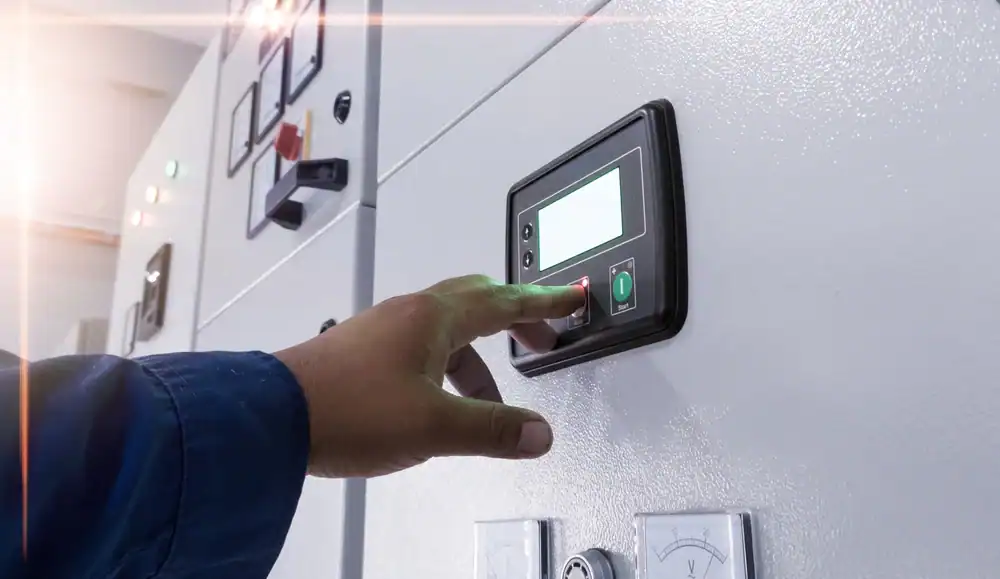
Panel problems don't wait for a convenient time. Here's what Alamance County homeowners need to know about electrical panel repair, diagnostics, and when to call.
Share:
Summary:
Something’s off with your electrical panel. Maybe a breaker tripped and won’t reset. Maybe you’ve noticed a burning smell you can’t quite place. Maybe the lights dim every time your HVAC kicks on, and you’ve been telling yourself it’s probably nothing.
It’s probably not nothing.
Electrical panel problems have a way of staying quiet until they don’t. And in Alamance County, where a large share of the housing stock was built in the late 1980s and early 1990s, a lot of those panels are now pushing 35 years old — right at the edge of their expected service life.
Here’s what you actually need to know: what the warning signs mean, how a proper diagnosis works, and when repair is the right call versus when something bigger is going on.
Most panel problems don’t announce themselves dramatically. They start small — a breaker that trips once, a light that flickers occasionally — and get written off as quirks of an older home. But these symptoms are usually telling you something real.
A breaker that trips repeatedly isn’t a reset problem. It’s a signal that something on that circuit is drawing more current than the breaker is rated for, or that the breaker itself is failing. Either way, resetting it without finding out why is just delaying the diagnosis.
A burning smell near your electrical panel is a different category entirely. That smell — often described as hot plastic or something singed — usually means a connection is overheating or insulation is starting to break down. That’s not a wait-and-see situation. It’s a call-right-now situation.
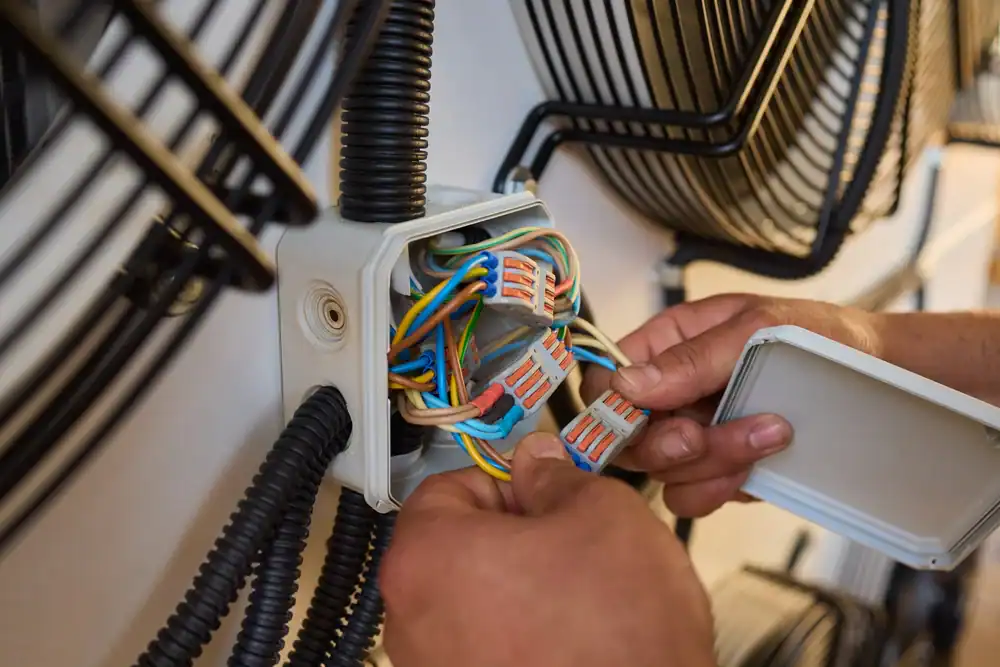
Your electrical panel — the breaker box on your wall — is the distribution point for every circuit in your home. Power comes in from the utility, passes through the main breaker, and gets routed out to individual circuits through smaller breakers. When everything is working correctly, you never think about it. When something fails, you feel it everywhere.
The most common problems we find inside residential panels across Alamance County fall into a few categories. Loose or corroded connections are near the top of the list — over time, the terminals where wires connect to breakers and bus bars can loosen from thermal cycling (the constant heating and cooling that happens as electricity flows through them). A loose connection creates resistance, resistance creates heat, and heat is how electrical fires start. This is exactly why a panel can look fine from the outside while actively developing a hazard inside.
Failing breakers are another common culprit. Breakers are mechanical devices with a finite lifespan. An older breaker may trip at the wrong threshold — or worse, fail to trip when it should, which defeats the entire purpose of having one. In homes with panels from the late 1980s or earlier throughout Alamance County, it’s not unusual to find breakers that are original to the house and have never been replaced.
We also see a lot of capacity problems in this area. Homes built with 100-amp service — which was standard before 1990 — weren’t designed for the electrical load of a modern household. Add a newer HVAC system, a second refrigerator, an EV charger, or a home office setup, and you’re asking a 35-year-old panel to handle loads it was never engineered for. The symptoms are usually flickering lights, tripping breakers on circuits that shouldn’t be overloaded, and a panel that runs noticeably warm to the touch.
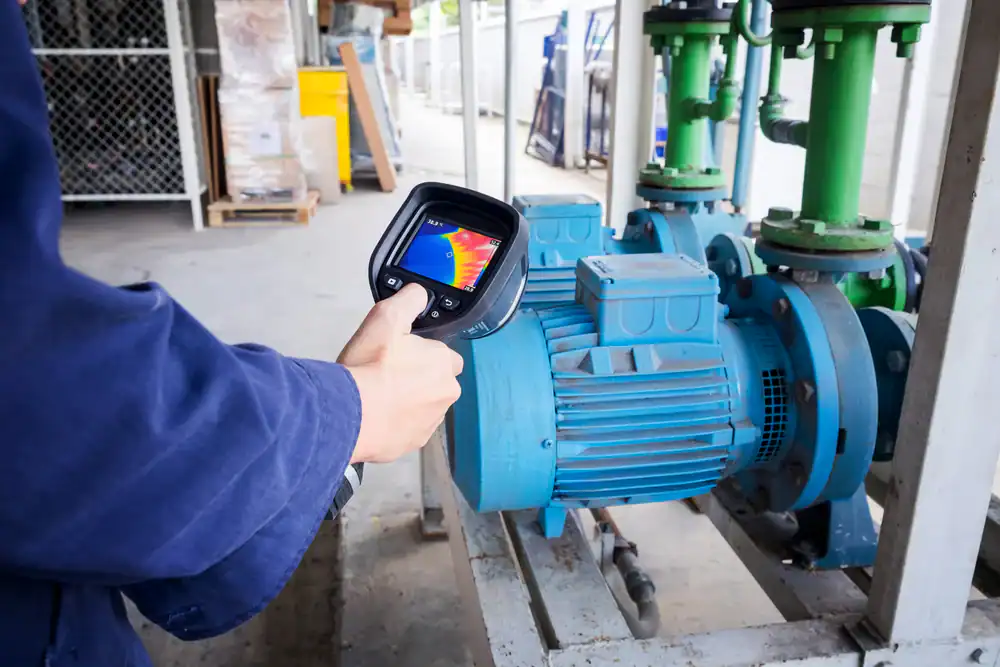
One diagnostic tool that changes what’s possible here is thermal imaging. A thermal camera can scan the inside of your panel and show us exactly where heat is building up — hot spots at connections, overloaded breakers, deteriorating bus bars — things that are completely invisible during a standard visual inspection. It’s the difference between guessing and knowing.
Here’s a scenario that comes up more than you’d think: a homeowner calls about a water heater that’s stopped producing hot water. They assume the unit itself is broken — a failed heating element, maybe, or a thermostat issue. Sometimes that’s exactly what it is. But often, the problem starts at the panel.
Electric water heaters run on dedicated 240-volt circuits connected directly to your breaker box. When that circuit’s breaker trips — and stays tripped, or keeps tripping — the water heater goes cold. If the breaker is tripping repeatedly, it’s usually because the heating element is drawing more current than it should (a sign the element is failing), because the breaker itself is worn out and tripping at the wrong threshold, or because there’s a deteriorating connection somewhere between the panel and the unit.
Replacing the water heater without diagnosing the panel issue means the new unit inherits the same problem. We’ve seen homeowners go through two water heaters before someone finally looked at the panel and found a breaker that hadn’t been functioning correctly for years.
This is a good example of why electrical diagnosis matters more than parts replacement. The symptom — no hot water — points at the appliance. The cause — a failing breaker or a deteriorating 240V connection — lives in the panel. If you’re only looking at one, you’re likely to miss the other.
In older homes across Alamance County, the wiring feeding dedicated appliance circuits like water heaters, dryers, and HVAC units has had decades to degrade. Connections loosen. Insulation becomes brittle. Breakers age past their reliable operating range. A thorough panel inspection looks at all of it — not just the breaker that tripped, but the condition of the wiring, the quality of the connections, and whether the circuit is properly sized for what it’s powering.
If your water heater has been unreliable and you haven’t had your panel looked at, that’s worth a conversation. The fix may be simpler — and cheaper — than a full appliance replacement.
Want live answers?
Connect with a Electrical Service Providers expert for fast, friendly support.
Some electrical problems can wait a few days for a scheduled appointment. Others can’t. Knowing the difference matters — both for your safety and for how urgently you make that call.
If you’re smelling something burning near your panel, seeing scorch marks or discoloration around breakers, hearing buzzing or crackling from the breaker box, or finding that a breaker won’t reset at all, those are emergency indicators. Don’t wait. Turn off the main breaker if you can do so safely, keep people away from the panel, and call for emergency electrical service.
Alamance County’s storm history makes this more relevant than it might be in other markets. With 11 hurricanes and multiple ice storm events on record, power surges and outages are a recurring reality here — not a hypothetical. Surge events stress aging connections and can push a panel that was borderline into active failure.
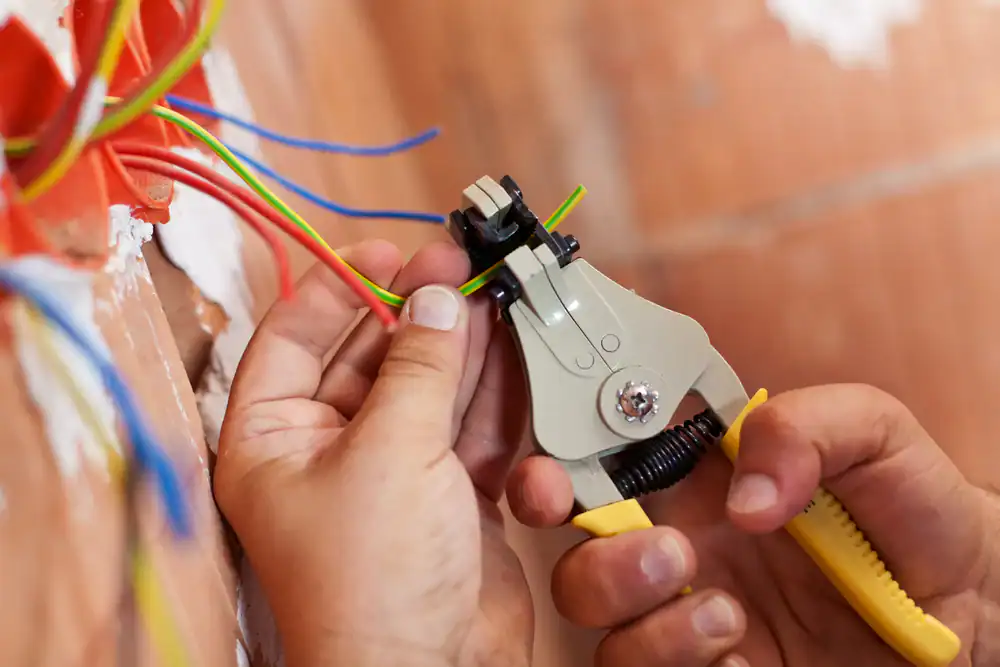
A proper panel diagnostic isn’t a glance and a quote. It’s a systematic process — and the difference between a thorough diagnosis and a rushed one is often the difference between a $250 repair and an unnecessary $3,500 replacement.
When we arrive at a home in Alamance County with a panel complaint, the first step is a full visual inspection of the panel interior. We’re looking at the condition of the wiring, the state of the bus bars, whether there’s any evidence of moisture intrusion, burn marks, corrosion, or discoloration — and whether the breakers are correctly sized for the circuits they’re protecting. A 20-amp breaker on a circuit that should be 15 amps, or vice versa, is a common finding in older panels where previous work was done without proper oversight.
From there, if we have any reason to suspect heat buildup — and in panels over 25 years old, there’s almost always reason to look — we use thermal imaging to scan the panel interior. This shows us exactly where heat is concentrating, which connections are running hotter than they should, and whether there are developing hot spots that aren’t yet visible to the naked eye. It’s a level of diagnostic precision that a standard inspection simply can’t match.
We also assess load. A panel’s amperage rating tells you its maximum capacity, but it doesn’t tell you whether the actual load distribution across circuits is balanced and appropriate. An overloaded circuit on one side of the panel while other circuits are underutilized is a common finding in homes where electrical work has been added piecemeal over the years.
Finally, we test the breakers themselves. A breaker that won’t trip under overload isn’t protecting anything — it’s just taking up space while creating a fire risk. Older breakers, particularly in panels from the late 1980s and early 1990s, can lose their trip sensitivity over time. Identifying and replacing those is one of the most straightforward — and most overlooked — repairs in residential electrical work.
Before any work starts, you’ll know exactly what we found, what we recommend, and what it costs. That price doesn’t change once we start. No surprises at the end of the job.
This is the question most homeowners are really asking when they search for panel repair: do I actually need a full replacement, or can this be fixed?
The honest answer is that it depends on what the diagnosis finds — and a good electrician should be able to tell you clearly, with evidence, which direction makes sense. Here’s how we think about it.
Repair is usually the right call when the problem is isolated. A single breaker that’s failing, a loose connection at a terminal, minor corrosion on a bus bar that can be cleaned and treated, or a wiring fault on one circuit — these are repair scenarios. They don’t require replacing the whole panel, and recommending otherwise would be overselling.
Replacement starts to make sense when the problems are systemic. If a panel is 30-plus years old and multiple breakers are showing signs of wear, if the capacity is genuinely insufficient for the home’s current load and there’s no practical way to add circuits without a new panel, or if the panel is a known problematic brand — Federal Pacific Stab-Lok and Zinsco panels are the most common examples, and both have documented safety issues that most insurers will flag — then replacement is the appropriate recommendation.
There’s also a middle path that often gets overlooked: adding a subpanel. If your main panel is in decent condition but you’re running out of circuit capacity — common in Alamance County homes where a 100-amp panel is being asked to support a modern household — a subpanel can add the capacity you need without replacing the entire main panel. It’s a cost-effective solution that a lot of homeowners don’t know is an option.
One thing worth knowing: in North Carolina, any significant panel work requires a permit and inspection through the county. This isn’t bureaucratic friction — it’s the mechanism that ensures the work is done correctly and that your homeowner’s insurance remains valid. We handle the permit process as part of the job. You don’t need to navigate the county building department on your own.
If you’re not sure which category your situation falls into, that’s exactly what a diagnostic visit is for. You don’t have to make that call before you call us — that’s our job.
If your panel is showing symptoms — tripping breakers, flickering lights, a burning smell, a water heater that keeps going cold — the right move is a professional diagnosis before the problem gets bigger or more expensive.
We’ve been doing this work in Alamance County since 2002. Andy Helton has been a licensed Master Electrician since 1989, and our team has seen just about every panel problem that shows up in homes and businesses throughout the area. We show up in stocked trucks, we tell you the price before we start, and we don’t leave until the job is done right.
When you call ESP Electrical Service Providers at 336-228-3300, you’ll talk to a real person — not a machine, not a scheduling app. If it’s urgent, tell us. We’ll treat it that way.
Article details:
Share:
Continue learning: