Most homeowners don't know what a real electrical inspection covers — until something goes wrong. Here's what actually gets checked, and why it matters.
Share:
Summary:
Most people assume that if the lights are on and nothing’s tripping, the electrical system is fine. That assumption is wrong — and in older homes across Burlington, Graham, and Mebane, it’s the kind of thinking that leads to surprises at the worst possible moment.
A home electrical inspection isn’t just a formality. It’s the only way to know what’s actually happening inside walls, behind panels, and under floors — before a buyer’s inspector finds it, before a circuit fails, or before something worse happens. Here’s what a real electrician inspection actually covers, and why each piece matters.
A home electrical inspection is a systematic evaluation of your home’s electrical system — not a visual scan, but an actual test of how things are working and whether they meet current code. We check your panel, your wiring, your outlets, your grounding, your protection devices, and more.
It’s worth distinguishing this from what a general home inspector does. Home inspectors are generalists. They’ll note that an outlet isn’t working or that a panel looks old, but they’re not testing circuits, verifying grounding, or identifying code violations with specific remediation plans. An electrician inspection is a different level of scrutiny entirely — and for older homes in Alamance County, that difference matters a great deal. If your system needs further troubleshooting, a professional electrical troubleshooting service can help identify underlying issues.
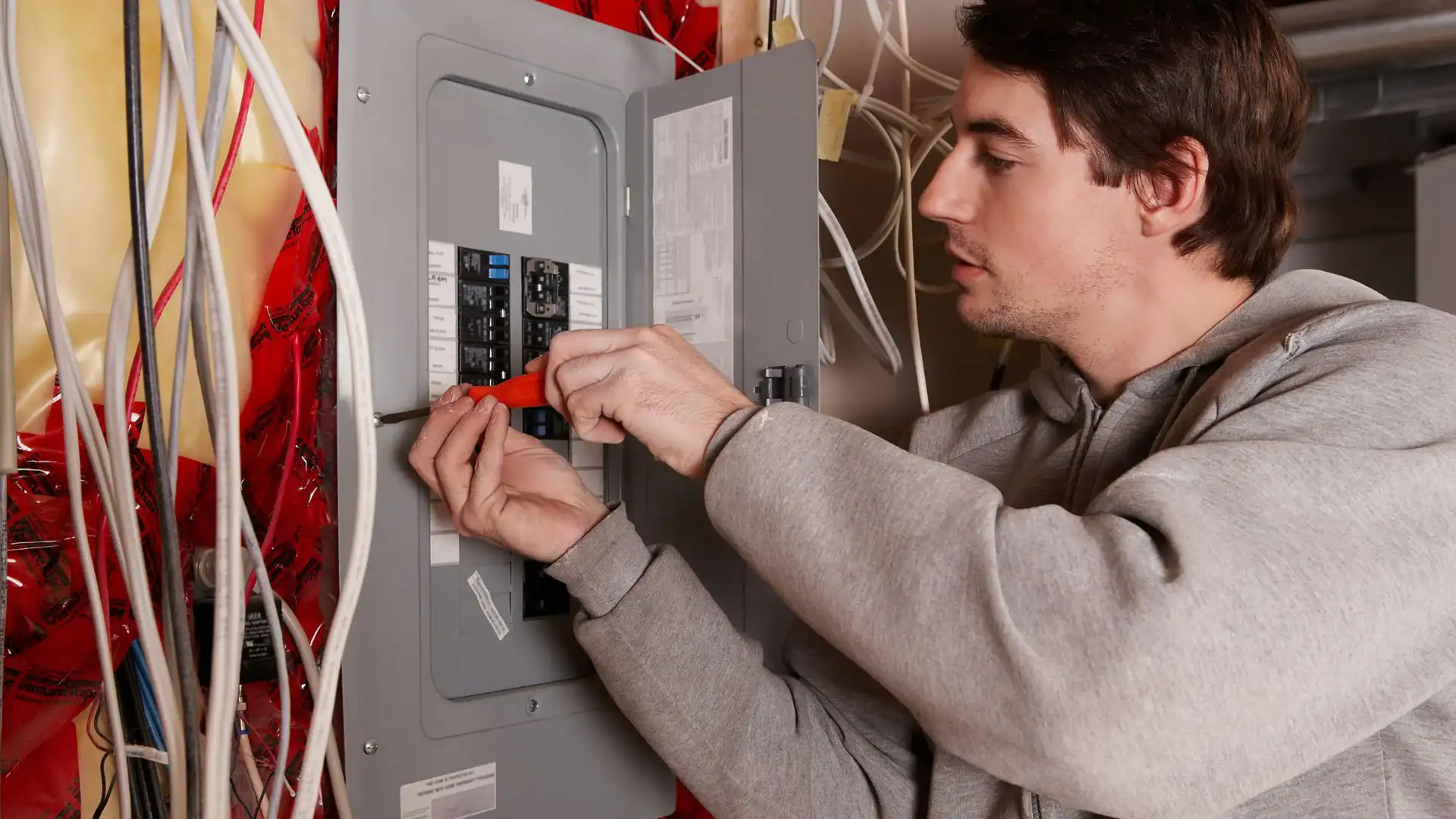
This is one of the most common points of confusion for homeowners, especially those going through a home sale. The home inspector checked the electrical — so why would you need an electrician to look at it too?
The short answer: home inspectors perform a non-invasive, visual assessment. They’re trained to identify obvious red flags, but they’re not licensed to test circuits, open panels beyond a basic visual check, or tell you whether your wiring meets current National Electrical Code requirements. They flag things. We diagnose them.
When a home inspector writes “GFCI protection absent in kitchen” or “evidence of double-tapped breaker,” those notes can feel alarming without context. Is it a minor fix or a major problem? What does it cost to address? Will it kill the deal? We can answer those questions with specifics — not estimates, not guesses.
For buyers purchasing older homes in Burlington’s established neighborhoods, or sellers preparing to list a home that hasn’t been updated in decades, this distinction is significant. A home inspector’s report can raise questions. Our inspection answers them.
There’s also the matter of what doesn’t show up on a home inspector’s report at all. Loose connections inside junction boxes, aluminum wiring that’s oxidized at the terminations, circuits that are overloaded but technically functional — these things don’t always produce visible symptoms. They don’t trip breakers. They don’t flicker lights. They just quietly create risk. A thorough electrician inspection, especially one that includes thermal imaging, can identify heat signatures at connections that are completely invisible to the naked eye. That’s a level of detail no general inspection reaches.
Alamance County has significant older housing stock. Burlington and Graham in particular have neighborhoods full of homes built between the 1940s and the early 1980s — and those homes carry electrical risks that newer construction simply doesn’t have.
Homes built before 1973 may contain aluminum wiring, which was widely used during that period when copper prices spiked. Aluminum wiring is associated with significantly elevated fire risk compared to copper because it oxidizes at connection points, creating resistance and heat. Many homeowners with aluminum wiring have no idea it’s there — it’s inside the walls, it works fine day to day, and it doesn’t announce itself until a connection fails.
Homes built before the 1940s may contain knob-and-tube wiring, which is a different problem entirely. Beyond the age and condition concerns, many homeowner’s insurance carriers consider knob-and-tube wiring uninsurable. That’s not a theoretical risk — it’s a practical obstacle that can affect your ability to get or maintain coverage.
Even homes built in the 1970s and 1980s may have panels and wiring that don’t meet current code requirements. The National Electrical Code has been updated significantly over the decades, particularly around GFCI and AFCI protection requirements. A home that was wired to code in 1978 isn’t necessarily code-compliant today — and while you’re not required to retroactively update everything, knowing what’s there helps you make informed decisions.
The humid climate in the Piedmont region adds another layer. Crawl spaces in Alamance County homes are prone to moisture, and moisture accelerates corrosion at electrical connections. It’s a slow process, but it’s one more reason why an inspection in this part of North Carolina isn’t the same as one in a drier climate.
Want live answers?
Connect with a Electrical Service Providers expert for fast, friendly support.
A thorough electrical inspection works through your home systematically — not just the obvious stuff, but the systems most homeowners never interact with directly. Here’s what actually gets evaluated and why each area matters.
The service panel is the starting point. We check the amperage rating, the condition and labeling of breakers, whether AFCI protection is present on required circuits, and signs of overheating, corrosion, or improper modifications like double-tapped breakers. The panel is the hub of your entire electrical system — problems there affect everything downstream.
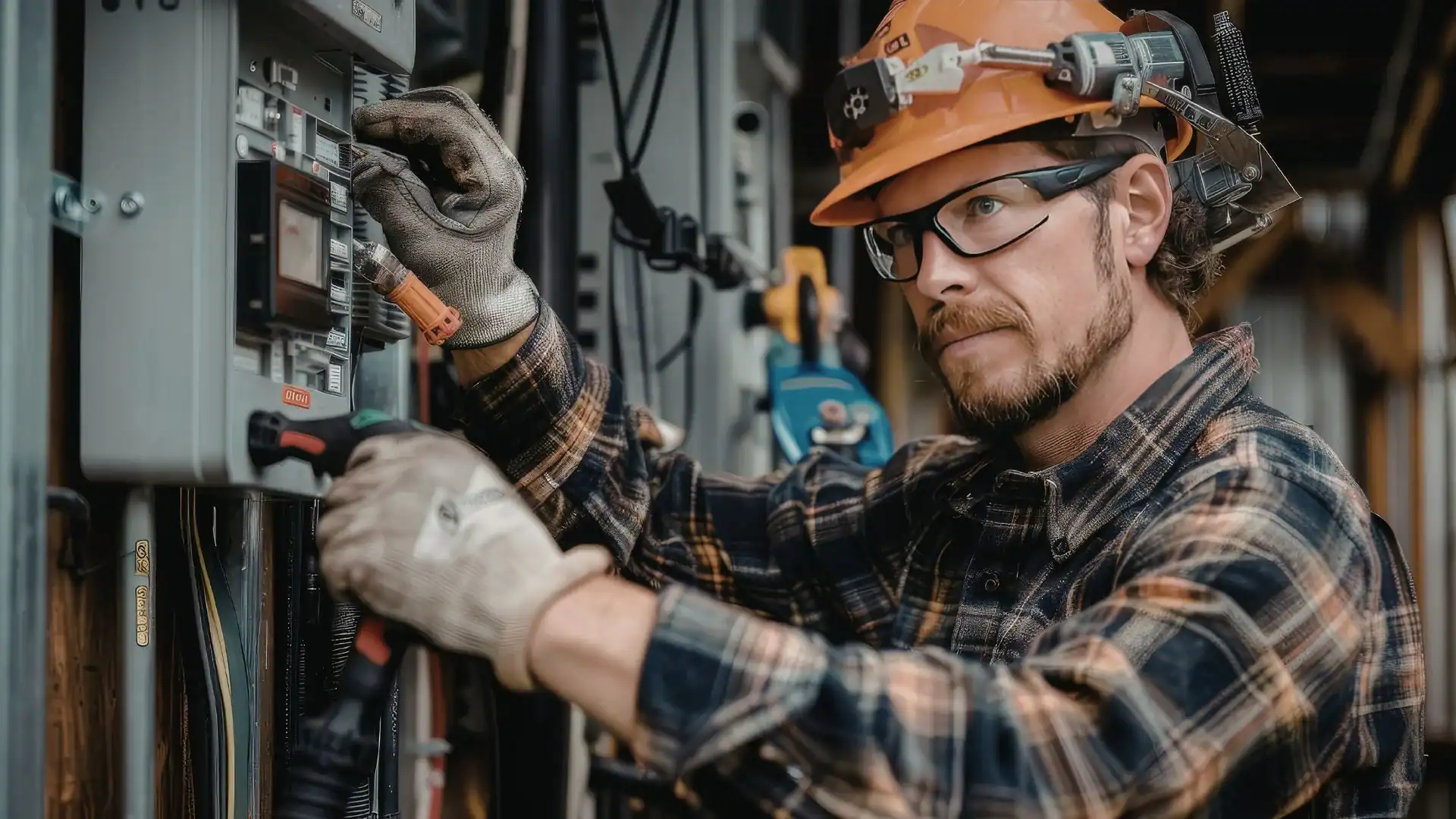
These two acronyms show up in nearly every home inspection report, and most homeowners don’t fully understand what they mean or why they matter.
GFCI stands for Ground Fault Circuit Interrupter. It’s the protection device — either a special outlet or a breaker — that detects when current is leaking to ground and shuts off power in a fraction of a second. The Consumer Product Safety Commission estimates that GFCI protection could prevent the majority of home electrocution deaths that occur each year. Current code requires GFCI protection in kitchens, bathrooms, garages, outdoor outlets, basements, crawl spaces, and anywhere within six feet of a water source. Many older homes across Alamance County have none of this — not because anything went wrong, but because it wasn’t required when the home was built.
AFCI stands for Arc Fault Circuit Interrupter. This is a different kind of protection that standard breakers can’t provide. Arc faults happen when electricity jumps across a gap — a loose connection, damaged wire insulation, a staple driven too tightly through a wire — and they’re one of the leading causes of electrical fires. A standard breaker won’t trip for an arc fault unless the current exceeds the breaker’s rating. An AFCI breaker detects the arc signature and shuts down the circuit before it becomes a fire. Current code requires AFCI protection in most bedroom and living area circuits. Older homes almost universally lack it.
During an inspection, we test every outlet in GFCI-required locations to verify the protection is working — not just present. An outlet can have a GFCI device installed and still fail to trip correctly. Testing is what confirms the protection is actually functioning. This is the kind of detail that separates a real inspection from a visual walkthrough.
Surge protection is another area that gets evaluated in a complete inspection, and it’s increasingly relevant as homes add EV chargers, smart home systems, and whole-home generators. A single lightning strike near a home on a summer afternoon — the kind of storm that rolls through the Alamance County area regularly — can send a voltage spike through every circuit in the house. Whole-home surge protection at the panel level is the first line of defense, and an inspection is the right time to assess whether what you have is adequate for how you’re using your home today.
Wiring is the part of the inspection that most homeowners can’t evaluate themselves, because most of it is inside walls. What we can assess is the wiring that’s accessible — in the attic, the crawl space, the basement, the garage, and at every outlet and fixture — and use that to build a picture of the system’s overall condition.
Grounding is one of the most commonly overlooked issues in older homes. Ungrounded outlets — the two-prong kind, or three-prong outlets that were retrofitted without actually running a ground wire — are a safety issue and a practical one. Many modern appliances and electronics rely on proper grounding for protection. We test outlets with equipment that verifies whether the grounding is real, not just assumed.
Thermal imaging takes this a step further. An infrared camera detects heat — and heat at an electrical connection means resistance, which means something isn’t right. A loose wire at a junction box, an overloaded circuit, a failing breaker — these all produce heat signatures before they produce visible symptoms. By the time you see scorch marks or smell something burning, the problem has already progressed. Thermal imaging catches it earlier, when the fix is straightforward rather than urgent.
This matters particularly in Alamance County homes with older wiring. Connections that were made decades ago can loosen over time. Wiring that’s been modified by previous owners — sometimes without permits, sometimes without proper technique — can have issues at termination points that won’t show up on a standard visual inspection. Thermal imaging is the tool that makes those invisible problems visible.
The inspection also covers exterior and service entrance components — the point where utility power enters your home — as well as smoke and carbon monoxide detector placement, ceiling fan support and wiring, and the general condition of outlets and switches throughout the home. It’s a complete picture of your electrical home, not a spot check.
When we complete electrical work that requires a permit in Alamance County, we pull the permit and coordinate the county inspection ourselves. You don’t have to navigate that process. The inspection is scheduled, the work is done to code, and it passes — that’s the standard we hold ourselves to, not an exception.
The honest answer is: before something forces you to. Before you list your home and a buyer’s inspector finds something you didn’t know about. Before a renovation opens up walls and reveals wiring that needs to be addressed. Before a storm season that puts your surge protection to the test.
If your home is more than 25 years old, if you’ve never had a licensed electrician evaluate the system, or if you’re buying or selling in the current Alamance County market, an inspection is a straightforward way to know what you’re dealing with — and to make decisions from a position of information rather than guesswork.
ESP Electrical Service Providers has been doing this work in Burlington, Graham, Mebane, and across Alamance County since 2002. If you have questions about what an inspection covers or want to schedule one, give us a call — a real person will answer.
Article details:
Share:
Continue learning: