You probably have surge protectors on your TV and computer. Here's what they're not covering — and why it matters more than you'd think.
Share:
Summary:
If you’ve got surge protectors on your TV and computer, you’re doing something right. But there’s a good chance you’re also carrying a false sense of security about the rest of your home. The refrigerator, the HVAC system, the dishwasher, the washing machine — none of those are plugged into your power strip. And in Alamance County, where Duke Energy grid fluctuations and NC Piedmont thunderstorms are a regular part of life, that gap matters. Here’s a straightforward look at what whole house surge protection actually does, how it differs from the strip behind your TV, and whether it makes sense for your home.
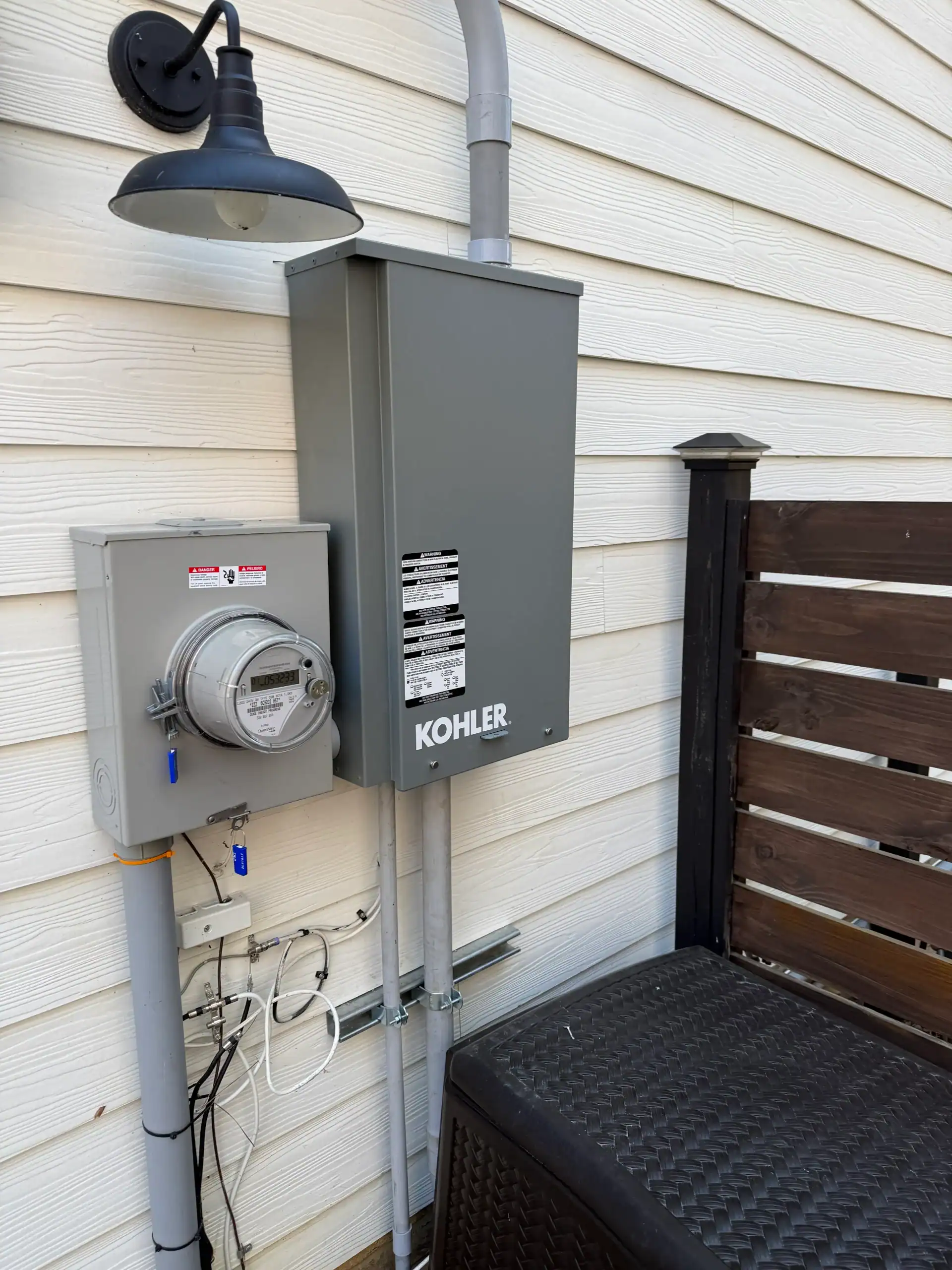
A whole house surge protector installs directly at your main electrical panel — the breaker box. From that position, it intercepts voltage spikes before they travel through any circuit in your home. Every outlet, every appliance, every hardwired device gets a layer of protection the moment the surge enters your electrical system.
A power strip works at the other end of that chain. It protects only the devices plugged directly into it, and only at that one outlet. Everything else in your home — the refrigerator, the HVAC system, the garage door opener, the dishwasher — sits completely outside its reach. That’s not a flaw in the power strip. It’s just not what power strips are designed to do.
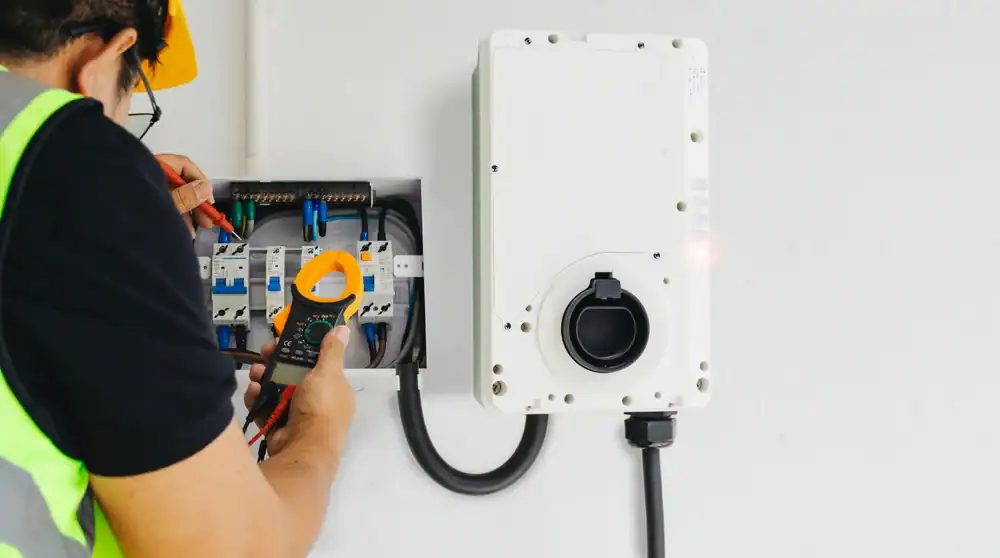
Here’s the part that surprises most people: roughly 80% of damaging power surges don’t come from lightning or the utility grid. They originate inside your own home.
Every time your HVAC system kicks on, your refrigerator cycles, or your washing machine switches loads, it creates a small voltage spike. Individually, none of these are dramatic. You won’t notice them. Your lights won’t flicker. But over months and years, these small, repeated surges work away at the circuit boards inside your appliances — gradually degrading them until something just stops working one day, seemingly out of nowhere.
When a refrigerator quits after three years, most homeowners blame the manufacturer. The more likely culprit is the cumulative effect of dozens of small internal surges that nobody ever saw coming. Schneider Electric describes this as “death by a thousand cuts” — an apt phrase for something that’s invisible until it isn’t.
This is exactly why the lightning angle, while real, isn’t the most urgent part of the story. Lightning is dramatic and relatively rare. Internal surges are quiet and happen constantly. A whole house surge protector addresses both. A power strip addresses neither — because your HVAC and refrigerator aren’t plugged into it.
The financial picture becomes clear pretty quickly. A professionally installed whole house surge protector in Alamance County costs $400 to $700. A new HVAC system runs $5,000 to $15,000. A replacement refrigerator is $1,000 to $3,000. A single surge event that damages two or three major appliances can easily exceed $10,000 in replacement costs. The protection costs less than one major appliance.
A whole house surge protector does protect against lightning — specifically, the surges that nearby lightning strikes send through the power lines connected to your home. When lightning hits a utility line or a transformer down the street, the resulting voltage spike travels along the grid and into your home’s electrical system. A panel-level surge protector intercepts that spike before it reaches your circuits. That’s real, meaningful protection, and it’s one of the main reasons the product exists.
What it cannot do is stop a direct lightning strike to your home or your electrical service entrance. No surge protector can. A direct strike carries energy that overwhelms any protective device. The good news is that direct strikes are rare. The far more common scenario — a nearby strike sending a surge through the lines — is exactly what whole house protection handles well.
In Alamance County, this matters more than it might in other parts of the country. North Carolina sees 40 to 50 thunderstorm days per year, and the Piedmont region, where Alamance County sits, is an active part of that pattern. Alamance County Emergency Management maintains a dedicated thunderstorm and lightning safety page specifically because this is a recurring local threat, not a hypothetical one. A tornado warning was issued for the county as recently as July 2026, with dangerous lightning cited as one of the storm threats.
There’s also a surge risk that many homeowners don’t think about at all: post-outage power restoration. When Duke Energy restores power after a storm outage, the voltage irregularities that occur during grid reconnection can be more damaging than the outage itself. Your home’s electrical system is most vulnerable in the moments power comes back on — and a whole house surge protector is standing guard at exactly that moment. A power strip isn’t.
Want live answers?
Connect with a Electrical Service Providers expert for fast, friendly support.
Installing a whole house surge protector isn’t a complicated job, but it’s not a DIY project either — at least not in North Carolina. State law requires a licensed electrician to perform this work because it involves live connections inside your main electrical panel. Improper installation can create fire hazards, damage your electrical system, or void your homeowner’s insurance coverage if something goes wrong later.
The installation itself typically takes one to two hours. A licensed electrician assesses the panel, confirms compatibility and available space, installs the device, and verifies it’s functioning correctly. Most quality devices include status indicator lights that show whether the unit is active and protecting your home.
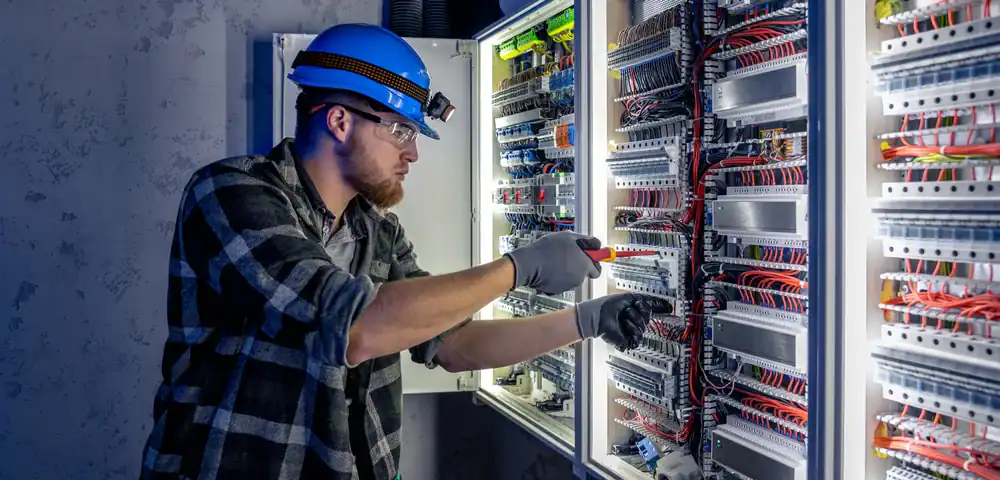
Before anything goes in, the panel needs to be evaluated. This is a step that matters more than most people realize, and it’s one we take seriously. Installing surge protection on top of an existing panel problem — an overloaded breaker, a grounding issue, a hot spot that’s been building quietly for years — doesn’t solve anything. It layers protection over a problem that still needs to be addressed.
At ESP Electrical Service Providers, we use thermal imaging before surge protection installations on older homes. Thermal imaging detects heat signatures inside the panel that aren’t visible to the naked eye — overloaded breakers, loose connections, and other issues that could undermine the installation or create a separate hazard down the road. It’s not a standard step in the industry. Most electricians skip it. We don’t, because we’ve been working in Alamance County homes since 2002 and we know what older panels in Burlington, Graham, and Haw River tend to look like.
Once the panel checks out, the device is hardwired in — typically connected to a dedicated breaker — and the status indicators are confirmed. You’ll know it’s working before we leave. The whole process, from panel check to cleanup, usually wraps up in a single visit. Our trucks are fully stocked, so there’s no waiting on parts or scheduling a second trip.
We also give you a flat-rate price before we start. That number doesn’t change when the job is done — not because we overlooked something, but because we’ve done enough of these to know what’s involved. No hourly billing surprises.
Yes — and this is actually an important nuance that most surge protection content glosses over.
Whole house protection and point-of-use protection (power strips with surge suppression) aren’t competing products. They’re two layers of the same strategy. Industry professionals call it layered surge protection, and the logic is straightforward: the whole house unit at the panel handles large external surges — nearby lightning, utility switching events, post-outage restoration spikes. The point-of-use strips at your outlets handle the smaller residual surges that pass through the panel-level device and could still affect sensitive electronics like computers, televisions, and gaming systems.
Think of it this way. The whole house protector is the first line of defense. It catches the big stuff. But some voltage irregularities are small enough to pass through and still cause damage to the most sensitive devices in your home. A quality surge-suppressing power strip at those specific outlets provides a second layer of protection exactly where it’s needed.
What changes when you have whole house protection isn’t that you stop using power strips — it’s that you stop relying on power strips as your only line of defense. Right now, if you only have strips, your refrigerator, HVAC, dishwasher, washing machine, and every other hardwired appliance in your home has zero surge protection. A whole house unit changes that immediately.
For Alamance County homes — especially the older housing stock in Burlington and Graham that was built during the mid-20th century textile and manufacturing era — this matters in a specific way. Those homes were wired for a fraction of the electrical load that a modern household demands. The gap between what the electrical system was designed for and what it’s now being asked to handle is wider than in newer construction. That gap creates more internal surge activity, more stress on circuit boards, and more reason to have protection at the panel level rather than just at individual outlets.
For most homeowners in Alamance County, the answer is straightforward once the math is on the table. You’re in Duke Energy territory, in a region that sees 40 to 50 thunderstorm days a year, with a housing stock that in many neighborhoods was never designed for today’s electronics load. The threat is real, it’s local, and it’s ongoing — not hypothetical.
A power strip protects what’s plugged into it. That’s genuinely useful for your computer and TV. But it leaves your refrigerator, your HVAC system, your washing machine, and every other hardwired appliance completely exposed. Whole house surge protection fills that gap for $400 to $700 installed — less than the cost of replacing a single major appliance.
If you want to know what your home’s panel looks like before making a decision, or if you’re ready to schedule an installation, ESP Electrical Service Providers has been doing this work in Alamance County since 2002. Give us a call and a real person will pick up.
Article details:
Share:
Continue learning: