Some electrical problems announce themselves loudly. Others are quiet — until they're not. Here's how to tell the difference before it becomes an emergency.
Share:
Summary:
You noticed something. Maybe it’s been happening for a while — a light that flickers when the AC kicks on, a breaker that needs resetting more than it should, an outlet that feels slightly warm when nothing’s plugged in. You haven’t called anyone yet because it doesn’t seem bad enough. Or maybe you’re not sure it’s bad at all.
That gap — between noticing a problem and deciding to act on it — is exactly where most electrical issues turn serious. This page is here to help you close it. Here are seven signs that your home is telling you something, and what each one actually means.
Burlington and Graham have a lot of older homes — mill-era houses and mid-century ranches that were wired decades before today’s electrical codes existed. Those systems weren’t built to handle the loads modern households put on them: multiple HVAC units, EV chargers, home offices, large appliances running simultaneously.
When an older system starts to strain, it doesn’t always fail dramatically. It gives you small, easy-to-dismiss signals first. The seven signs below are the ones we see most often when we’re called in for electrical repair work across Alamance County. Some feel minor. A few feel urgent the moment they happen. All of them are worth taking seriously.
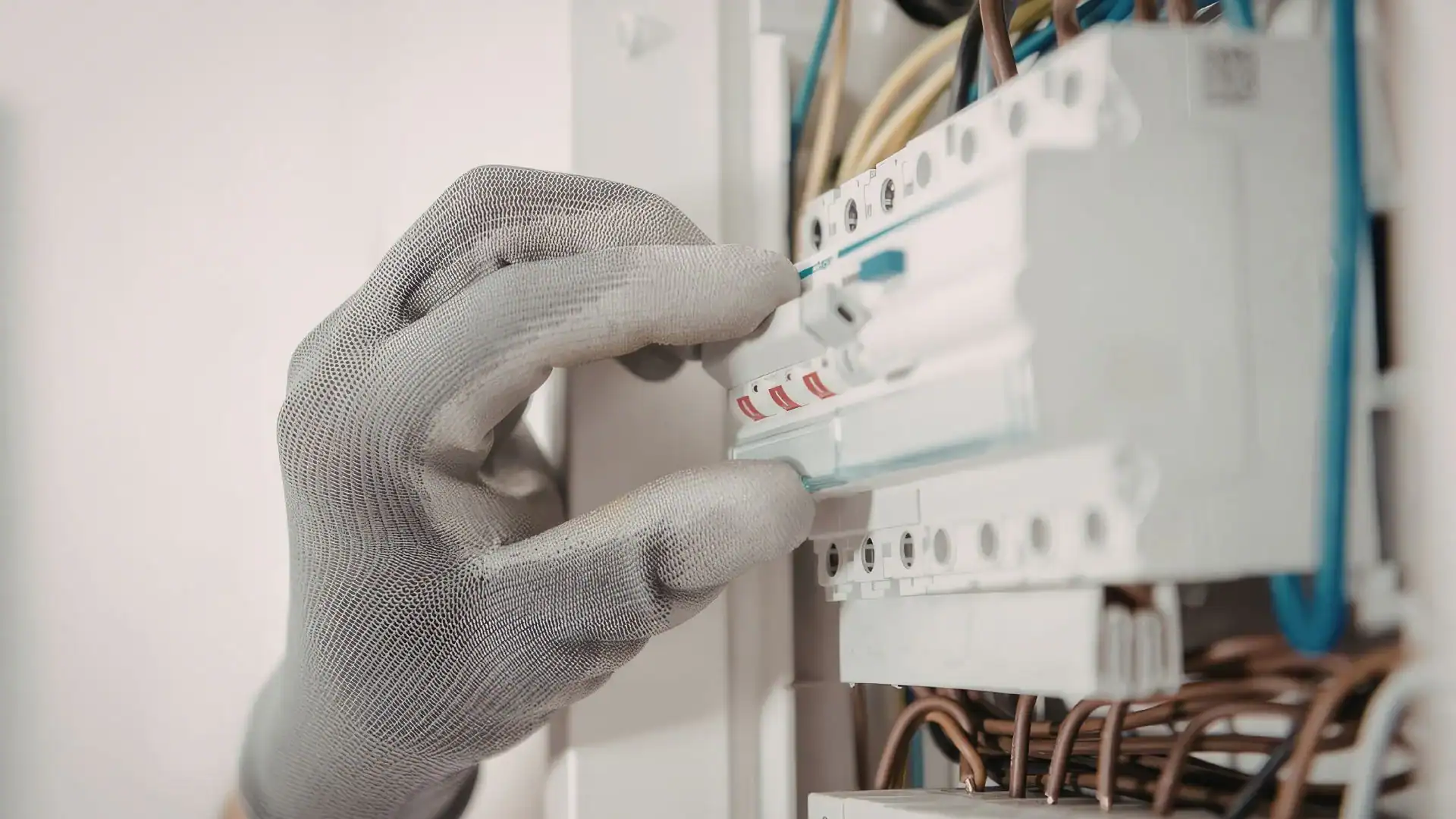
Flickering lights are probably the most common thing people brush off. A loose bulb, they think, or maybe a bad fixture. Sometimes that’s true. But when lights flicker specifically when your HVAC system kicks on, or when they dim across multiple rooms at once, that’s your electrical panel struggling to handle the load. It’s not the bulb. It’s the system behind it.
A breaker that trips occasionally is doing exactly what it’s supposed to do — protecting your circuit from too much current. But a breaker that trips repeatedly, especially on the same circuit, is signaling something that won’t resolve on its own. It could be an overloaded circuit, a failing breaker, a short somewhere in the wiring, or a ground fault. Resetting it every time isn’t a fix. It’s a delay.
Warm outlets and switches are the ones that concern us most. Outlets and switches should never feel warm to the touch — not a little, not occasionally, not just sometimes. Warmth means there’s excess resistance in the wiring, and resistance generates heat. That heat is what starts electrical fires. If you’ve touched an outlet or a switch and noticed it was warm, that’s not something to monitor. That’s something to address now.
Two more signs worth knowing: a burning smell near an outlet or panel, even if it comes and goes, and visible discoloration or scorch marks around an outlet or switch. Both mean heat has already built up enough to leave a mark. That’s past the warning stage.
Finally, if you have outlets that simply don’t work — no power, no response — and resetting the breaker doesn’t help, there’s likely a wiring issue or a failed connection somewhere in the circuit. Dead outlets in kitchens and bathrooms are often tied to a tripped GFCI outlet elsewhere in the room, and that’s a quick fix. But dead outlets in other areas of the home usually mean something more needs to be looked at.
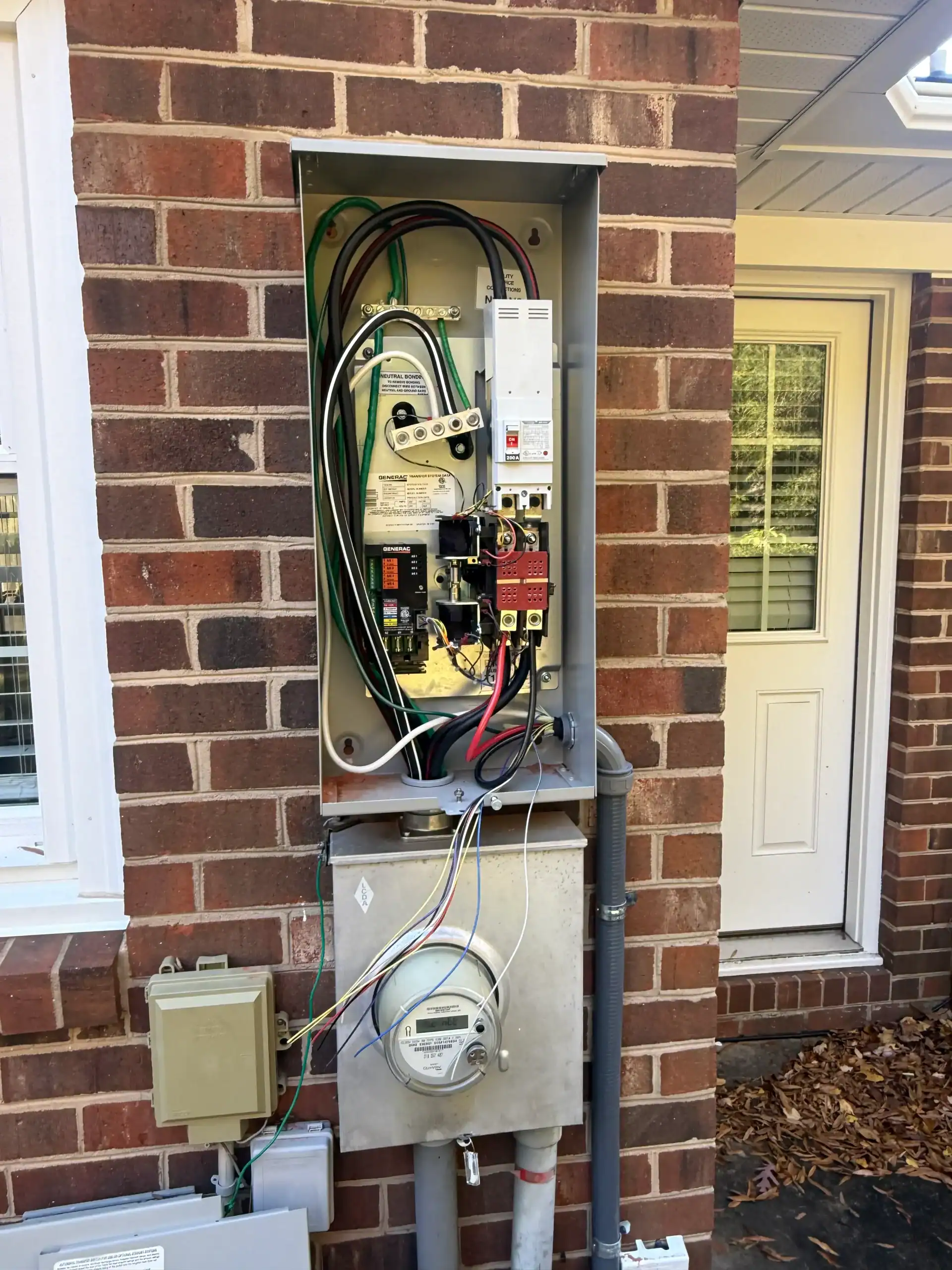
The panel is the part of your electrical system most people never think about until something goes wrong. In a lot of Alamance County homes — particularly those built before 1980 — the panel was sized for a household that used a fraction of today’s electrical load. A 100-amp panel that was adequate in 1965 is not adequate for a home with central air, a modern kitchen, and a home office running simultaneously.
Signs that the panel itself may be the issue include breakers that trip frequently across multiple circuits, a panel that feels warm or makes a buzzing or humming sound, breakers that won’t stay reset, or a panel that has run out of space and has circuits doubled up on a single breaker slot. Any of those is a reason to have us evaluate the panel — not just the individual circuit that’s causing trouble.
There’s also an older issue specific to homes built in the late 1960s and 1970s: aluminum branch circuit wiring. During that period, aluminum was used as a cheaper alternative to copper for wiring residential circuits. It’s not inherently dangerous, but it behaves differently than copper — it expands and contracts more with temperature changes, which can loosen connections over time. Loose connections generate heat. If your home was built during that era and hasn’t had its wiring evaluated, it’s worth knowing about.
We see this regularly in Burlington and Graham. Homes that have been well-maintained for decades can still have electrical systems that were never designed for how people live today. The panel isn’t broken — it’s just undersized. And undersized panels under heavy, sustained load are a fire risk that doesn’t always announce itself until it’s too late.
Want live answers?
Connect with a Electrical Service Providers expert for fast, friendly support.
One of the reasons people put off calling an electrician is that they don’t know what they’re getting into. Will this be a quick fix or a major project? Will the electrician find something that costs a fortune? Will they even call back?
Those are fair concerns. Here’s how we handle them. When you call ESP Electrical Service Providers, a real person answers — not a voicemail system, not an automated menu. You’ll know the cost before we start any work, because we use flat-rate pricing. No hourly billing, no wondering what the final number will be. And our trucks are fully stocked, which means most repairs are completed the same day.
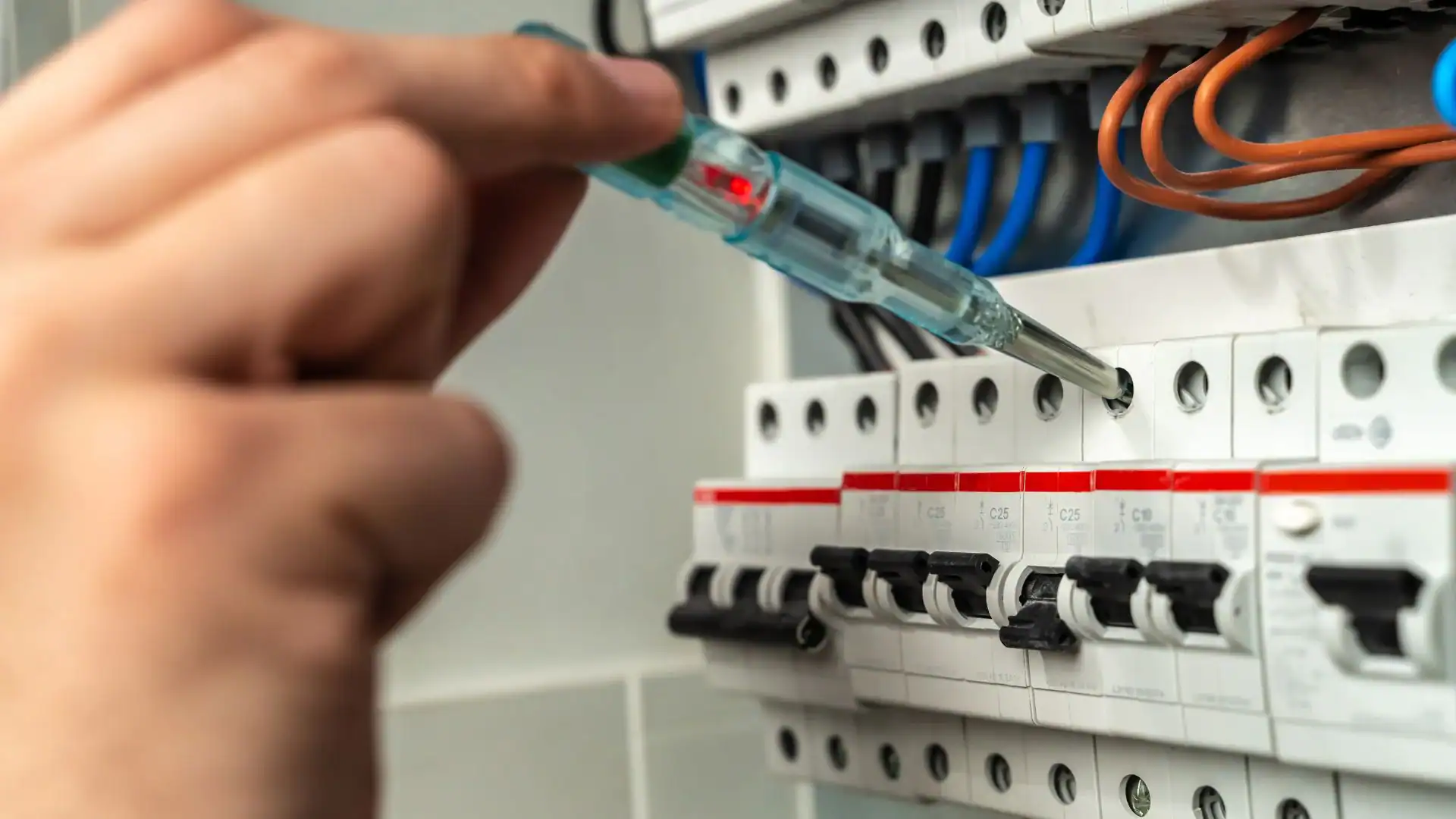
Diagnosis is the part of electrical repair that separates a good electrician from one who just replaces parts and hopes for the best. When we arrive, we’re not just looking at the symptom you called about — we’re tracing it back to its source. A flickering light might be a loose connection at the fixture, or it might be a failing circuit breaker two rooms away. The symptom points us toward the problem; the diagnosis tells us what’s actually causing it.
This matters because treating a symptom without finding the cause means the problem comes back. Customers who’ve dealt with electricians who “fixed it” only to have the same issue return a few months later know exactly what that experience feels like. We hear about it regularly. Our job is to find the actual problem, explain it to you clearly, and fix it in a way that passes inspection — because in North Carolina, permitted electrical work is inspected, and work that doesn’t meet code has to be corrected.
Andy Helton, who owns and operates ESP Electrical Service Providers, has held his Master Electrician license since 1989. That’s over 35 years of licensed electrical work in North Carolina — which means he’s seen what happens when problems are ignored, patched over, or repaired by someone who wasn’t qualified to do the work. We were built around the idea that existing homes, not new construction, deserve that level of expertise. A lot of electricians focus on builder work. We focus on the homes people are already living in.
One thing worth understanding about North Carolina specifically: all electrical work done for hire in this state must be performed by a licensed electrical contractor. Handymen cannot legally perform electrical work here. If you’ve had someone do electrical work in your home who wasn’t licensed, that work may not have been permitted or inspected — which creates liability issues if you ever sell the home or file an insurance claim related to electrical damage.
The question we hear most often is some version of: “Is this actually serious, or am I overreacting?” The honest answer is that the signs described on this page — warm outlets, repeated breaker trips, burning smells, flickering lights under load — are not things people overreact to. They’re the warning signs that electrical fires and system failures give you before they happen. If you’re asking whether something is serious, it’s worth a call.
A close second: “Can I just do this myself?” For very minor things — replacing an outlet cover, swapping a light fixture — homeowners in North Carolina can handle work on their own primary residence. But anything involving wiring, breakers, panels, or anything that requires opening up a wall or the panel box is a different situation. Beyond the safety risk, DIY electrical work that doesn’t meet code creates real problems at resale and can affect insurance coverage if there’s ever a claim. If you have to ask, call a licensed electrician.
People also ask about timing — specifically whether they need to act immediately or whether they can wait. That depends on the sign. A burning smell, sparks, or an outlet that’s hot to the touch are same-day situations. A breaker that trips occasionally or a light that flickers intermittently is something to address soon, but you don’t need to leave the house. If you’re unsure, call and describe what you’re seeing. We can help you figure out how urgent it is.
For homeowners in Burlington, Graham, Mebane, Elon, and the rest of Alamance County, the age of your home is relevant context. If your house was built before 1980, the electrical system was designed for a different era. That doesn’t mean it’s dangerous today — but it does mean it’s worth having someone who knows older wiring systems take a look, especially if you’ve added appliances, renovated, or noticed any of the signs above. The electrical demands on those homes have changed significantly since they were built, and the wiring hasn’t.
If something in your home’s electrical system has caught your attention — even once — it’s worth a conversation. The signs that matter most aren’t always dramatic. They’re the quiet, recurring ones that are easy to explain away until they’re not.
Electrical problems don’t fix themselves. They either stay the same or get worse, usually at the worst possible time. The homeowners who end up in the most difficult situations are almost never the ones who called too soon. They’re the ones who waited.
ESP Electrical Service Providers has been doing electrical repair work in Alamance County since 2002. We’re local, we’re licensed, and when you call, a real person picks up. If you’ve seen any of the signs described here, give us a call at 336-228-3300 — we’ll help you figure out what’s going on and what it takes to fix it right.
Article details:
Share:
Continue learning: