Backup Generator for Home: Selection & Installation
Not all generators are equal — and not all installers are either. Here's what Alamance County homeowners need to know before buying.
Share:
Summary:
If you’ve ever sat through a multi-day outage in Alamance County — no lights, no HVAC, no running water if you’re on a well — you already know why people stop putting this decision off. The question isn’t really whether a backup generator makes sense. It’s which type is right for your home, what installation actually involves, and how you avoid the mistakes that leave people frustrated or underprotected. This guide covers all of it, in plain language, so you can move forward with confidence instead of guesswork.
The first decision most homeowners face is also the most consequential: standby or portable? A portable generator is cheaper upfront, but the real-world experience of owning one — storing gasoline, running extension cords, starting it manually in the middle of a storm — tends to wear thin quickly. A standby generator sits permanently outside your home, connected directly to your electrical panel, and turns itself on within seconds of a power failure. You don’t have to do anything.
For homeowners in Burlington, Graham, Mebane, and the surrounding communities across Alamance County, that automatic response matters. Duke Energy serves most of the county through overhead distribution lines that are genuinely vulnerable to the severe thunderstorms, ice storms, and tropical storm remnants that move through the Piedmont Triad on a regular basis. When a storm knocks out power at 2 a.m., nobody wants to be pulling a generator out of the garage.

The gap between standby and portable generators isn’t just about price — it’s about what you’re actually protected from and how much effort that protection requires.
A portable generator typically runs on gasoline, which means you need to store it, rotate it, and treat it with fuel stabilizer so it doesn’t degrade between uses. When the power goes out, you have to physically set up the unit somewhere outside, start it, and run extension cords to the appliances you want to power. Hardwired systems — your HVAC, well pump, ceiling lights, and built-in appliances — can’t be reached with extension cords at all unless you’ve also had a manual transfer switch installed. And if the outage happens while you’re away from home, a portable generator does nothing.
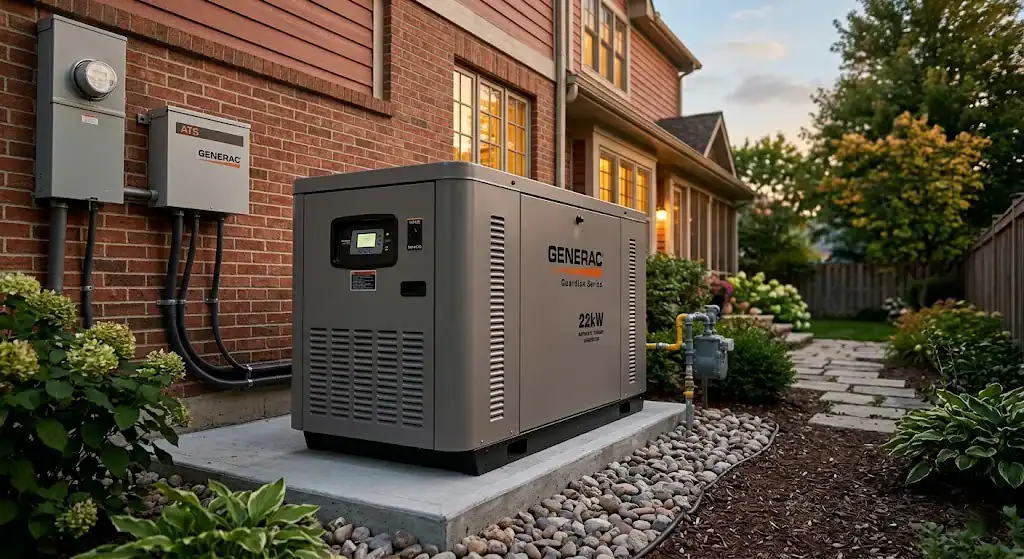
A standby generator changes the equation entirely. It’s permanently installed on a concrete pad outside your home, connected to your electrical panel through an automatic transfer switch. The moment utility power drops, the transfer switch isolates your home from the grid and signals the generator to start. Within roughly ten seconds, your lights are back on, your HVAC is running, and your refrigerator never stopped. The whole thing happens without you lifting a finger.
For households where someone depends on medical equipment — a CPAP machine, an oxygen concentrator, insulin that needs refrigeration — that ten-second response time isn’t a convenience feature. It’s the whole point. The same applies to anyone working remotely from home in Alamance County, where losing power means losing the ability to work, not just the ability to watch TV.
Sizing is the other piece of this conversation. A common misconception is that square footage tells you what generator you need. It doesn’t. A 2,500 square foot home heated and cooled with a gas furnace and gas water heater has a dramatically lower peak electrical demand than a 2,500 square foot all-electric home. What actually matters is the running and starting wattage of every circuit you want to cover — and that requires a real load calculation, not an estimate.
Fuel type is one of the most practical decisions in the selection process, and it’s heavily influenced by where your property sits within Alamance County.
Natural gas is the preferred option where it’s available. The supply is essentially unlimited — your generator draws directly from the utility line, so there’s no tank to fill and no risk of running out during an extended outage. Many neighborhoods in Burlington and Graham have natural gas service, making this the straightforward choice for homes in those areas.
But a significant portion of Alamance County — particularly in the more rural stretches between towns, and in communities that developed before natural gas infrastructure expanded — isn’t on a gas line at all. For those properties, propane is the right answer. A properly sized propane tank, sized to the generator’s full BTU demand, gives you the same automatic standby performance as natural gas. The main difference is that you’re managing a fuel supply rather than drawing from an infinite source, which means keeping the tank adequately filled before storm season and establishing a delivery relationship with a local propane supplier.
Dual-fuel generators, which can run on either natural gas or propane, exist as well — useful in specific situations, but not always necessary. What matters most is getting an honest assessment of what’s actually available at your address before you select a model, because the generator you choose has to match the fuel infrastructure you have. This is one of the reasons an in-home consultation with a licensed electrician who knows the local area is worth doing before you order anything.
Want live answers?
Connect with a Electrical Service Providers expert for fast, friendly support.
Once you’ve selected the right generator, installation is where the details either come together correctly or create problems you won’t discover until the middle of an outage. In North Carolina, connecting a generator to your home’s permanent wiring requires a licensed electrician — this isn’t a gray area. It’s also not a single permit situation. A standby generator installation typically requires both an electrical permit and a gas permit, plus inspections from the county.
We handle all of it. That means pulling permits with Alamance County (and Durham, Chatham, Orange, or Guilford County if your property falls there), coordinating inspections, managing the gas line work, and not closing out the job until the generator has completed its automated test cycles and you’re satisfied with how it runs.
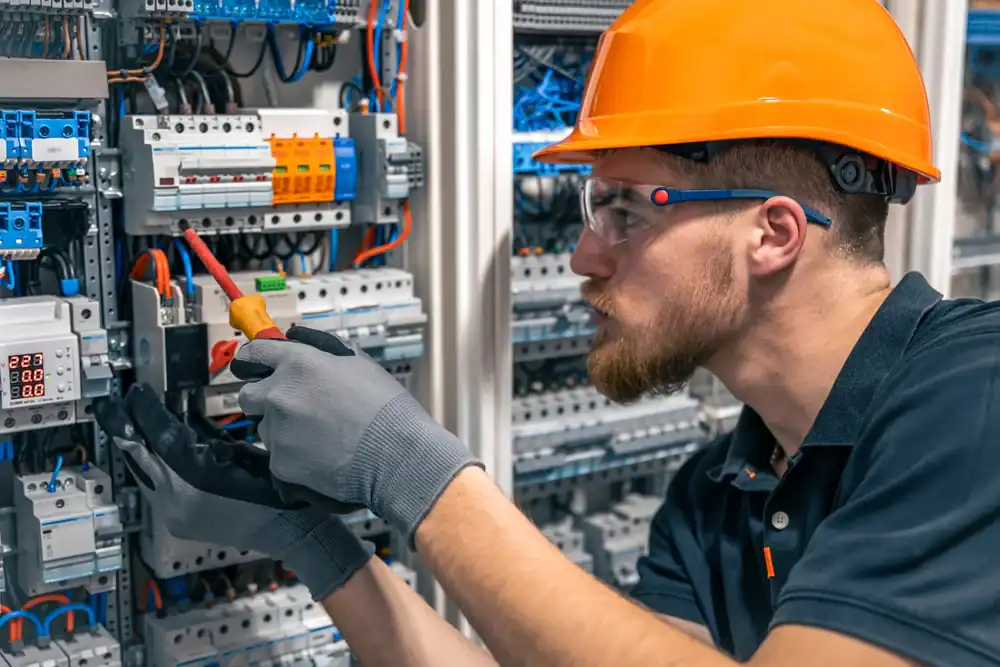
The automatic transfer switch is the component that makes a standby generator actually function as a standby generator. Without it, you have an engine sitting outside with no safe connection to your home’s electrical system.
The transfer switch installs adjacent to your main electrical panel and does two things simultaneously when utility power fails: it disconnects your home from the grid, and it signals the generator to start. That disconnection step is critical — it’s what prevents back-feeding, which is the dangerous condition where a generator sends power back into the utility lines while workers are trying to restore service. A properly installed, code-compliant transfer switch eliminates that risk entirely.
There are two main categories worth understanding. A whole-house automatic transfer switch covers every circuit in your home, meaning a generator sized to match your full electrical load will power everything — HVAC, kitchen appliances, all lighting, the well pump, and whatever else is on your panel. An essential-circuit transfer switch covers a selected subset of circuits — typically the ones that matter most, like the refrigerator, a few lights, the HVAC, and any medical equipment. This approach allows a smaller, less expensive generator to carry the critical loads without needing to power the entire house.
Which approach makes sense for your home depends on your budget, how you use the house during outages, and what your actual load calculation shows. There’s no universal right answer, but there is a right answer for your specific situation. A licensed electrician can walk you through the tradeoffs during an in-home assessment — before you’ve committed to a generator size or model — so you’re not retrofitting decisions later.
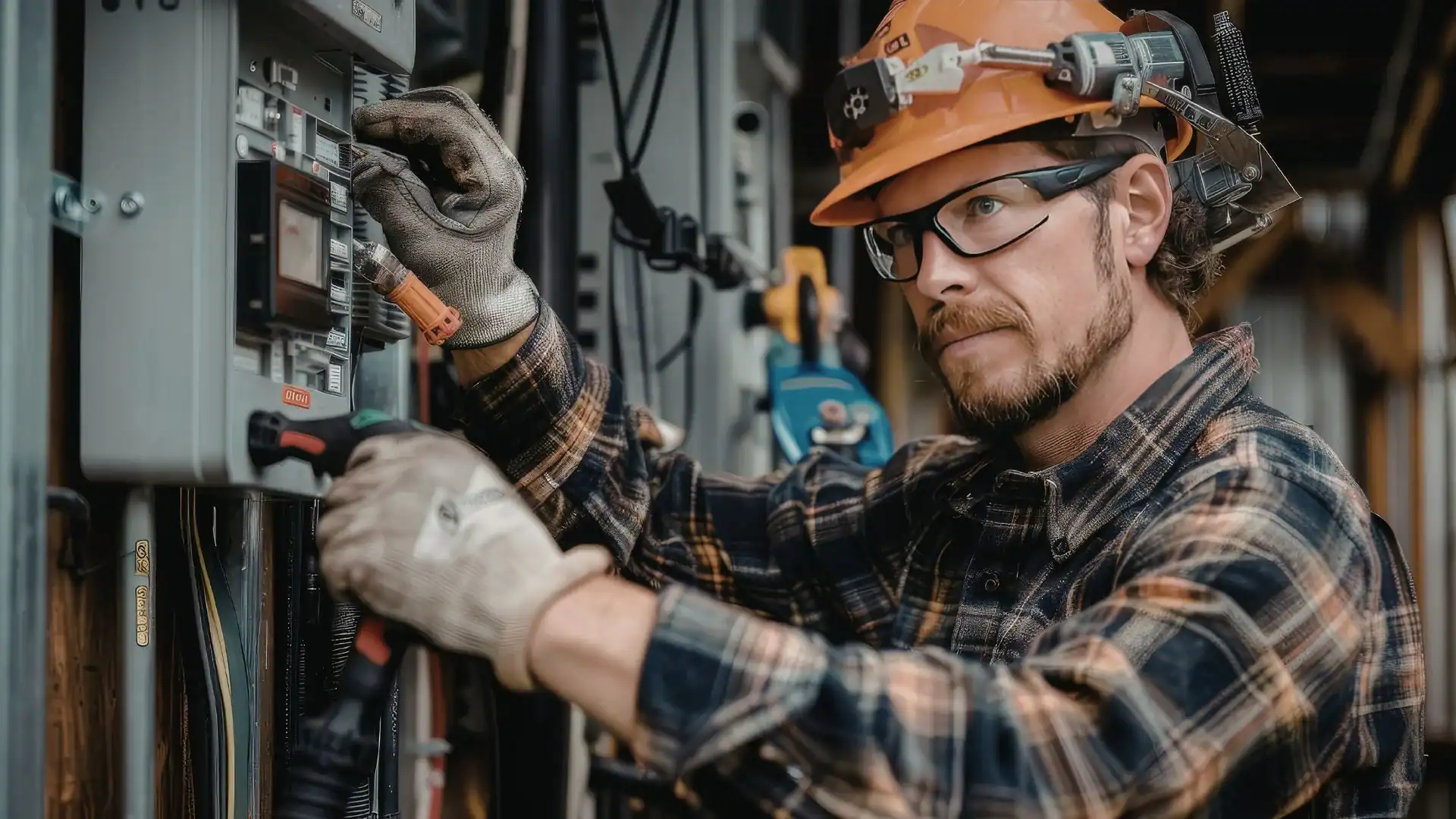
The installation itself involves mounting the transfer switch, making the panel connections, running conduit, and integrating the switch with the generator’s control system. All of this must meet NEC Article 702 requirements and pass inspection. When it’s done correctly, the whole system operates automatically, tests itself on a weekly schedule, and requires nothing from you until it’s actually needed.
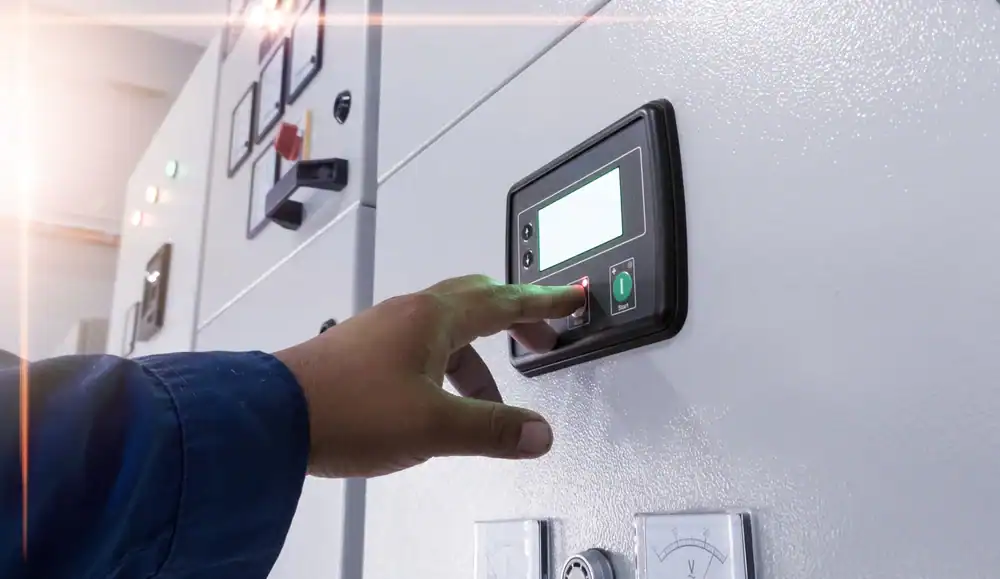
A standby generator is not a set-it-and-forget-it appliance. It’s a piece of mechanical equipment with an engine, and like any engine, it needs regular attention to stay reliable. The good news is that modern standby generators run automated weekly self-test cycles — the unit starts itself, runs under no load for a few minutes, and shuts back down. This keeps the engine lubricated and confirms that the electrical systems are functioning. You’ll hear it run, and that’s intentional.
What the self-test doesn’t do is replace annual professional maintenance. A proper annual service includes an oil and filter change, spark plug inspection, air filter service, battery check (the starting battery is a common failure point that often goes unnoticed until it’s needed), coolant inspection on liquid-cooled units, and a full operational test under load. It also includes a visual inspection of the transfer switch connections, the fuel line, and the generator’s physical condition — weathering, corrosion, and pest intrusion are all real issues for units that sit outside year-round in central NC’s climate.
Skipping maintenance is where most generator failures originate. The unit that hasn’t been serviced in three years will often start fine on its weekly self-test — and then fail to carry load during an actual outage, because the problem only surfaces under the stress of real demand. That’s the worst possible moment to discover a maintenance gap.
We offer service agreements specifically for this reason. A scheduled annual maintenance visit keeps your system in documented, tested condition and gives you a licensed technician who already knows your equipment when something does need attention. If your generator was installed by us, we know its history. If it wasn’t, we can still service it — we work on Generac, Kohler, and Eaton/Cutler-Hammer systems, and we carry parts on our trucks so most repairs don’t require a second visit.
For Alamance County homeowners, the timing of that annual service matters too. Getting it done in late winter or early spring — before the severe thunderstorm season ramps up and before the pre-hurricane-season rush begins — means you’re protected when the weather is most likely to test you. Waiting until June to schedule service means getting in line behind everyone else who had the same idea after the first big storm of the year.
The decision to install a home standby generator is really a decision about how much disruption you’re willing to absorb the next time a storm moves through Alamance County. Extended outages here are not hypothetical — they happen every year, and the homeowners who already have backup power in place are the ones who barely notice.
Getting the selection and installation right from the start means working with someone who does this regularly, pulls the required permits, handles the transfer switch and fuel line work, and is still reachable when you have a question six months later. That’s the part that matters most and gets glossed over most often.
If you’re ready to figure out what system makes sense for your home, reach out to us at (336) 228-3300. We’ve been doing this work in Burlington, Graham, Mebane, Elon, and the surrounding communities since 2002, and we’re straightforward about what you need — and what you don’t.
Article details:
Share:
Continue learning: