A standard checklist won't cut it in Alamance County. Here's what Burlington-area homes actually need before the next outage hits.
Share:
Summary:
If you’ve lived in Burlington or anywhere in Alamance County for more than a few years, you already know that “the power might be out for a couple hours” doesn’t always hold up. After Tropical Storm Helene in 2024 and the ice storms that roll through the Piedmont most winters, some households in this area went days without power — not hours. If you found this page because you’re finally putting together a real plan, that’s the right instinct. This guide is built specifically for homes in Alamance County, with the local risks, the local utility, and the local weather patterns in mind.
Most power outage preparedness advice online is written for a generic American household somewhere unspecified. It doesn’t account for the fact that Alamance County sits in a part of North Carolina where ice storms can knock out power for three to five days, where Duke Energy’s restoration timeline in rural areas west of Burlington — toward Haw River and Ossipee — tends to run longer than in the city proper, and where a summer thunderstorm can drop a tree on a line before you’ve finished your coffee.
FEMA’s baseline recommendation is a 72-hour supply kit — three days of food, water, and essentials. That’s a reasonable floor. But for Alamance County, planning for five to seven days is smarter. The 2023 American Housing Survey found that about 70% of households that experienced an outage said at least one of them lasted six hours or more. In this region, six hours is often just the beginning.
A solid emergency preparedness kit for power outage situations starts with water. The standard is one gallon per person per day — and that’s for drinking and basic sanitation only. For a household of four planning for five days, that’s twenty gallons. Store it in sealed, food-grade containers somewhere accessible, not in a corner of the garage behind the holiday decorations.
Food comes next. Non-perishable, shelf-stable items that don’t require cooking are the priority — canned goods, peanut butter, crackers, dried fruit, nuts. The USDA is clear that refrigerated food becomes unsafe after four hours without power. Frozen food in a full, unopened freezer stays safe for about 24 to 48 hours. Once those windows close, you’re throwing things out. Plan your kit around food that doesn’t depend on the fridge at all.
Beyond food and water, your power outage kit list should include a battery-powered or hand-crank NOAA weather radio so you can track storm updates when your phone dies. Flashlights with extra batteries — not candles as a primary light source — are essential. A well-stocked first aid kit, a manual can opener (consistently the most-forgotten item on every list), and enough cash to get through a few days matter more than people realize. ATMs and card readers go down when the grid does.
If anyone in your household takes prescription medications, especially refrigerated ones like insulin, that needs its own plan — more on that below. Keep important documents — insurance cards, IDs, medical records — in a waterproof bag or container. Charge your phones and portable battery banks before a storm, but don’t count on them lasting more than a day or two.
A basic power outage preparedness kit also includes a few comfort items that make a multi-day outage livable rather than miserable: extra blankets, a deck of cards, activities for kids if school’s out. When Alamance County schools go to remote learning during a winter storm and the power goes out anyway, you want options.
Generic power outage survival kit lists mention medications briefly, then move on. But for households with a family member on a CPAP machine, an oxygen concentrator, or insulin that needs refrigeration, a power outage isn’t an inconvenience — it’s a medical situation that needs a real plan before the lights go out.
If someone in your home depends on electrically powered medical equipment, contact your doctor and your equipment supplier before the next storm season to ask about battery backup options. Many CPAP machines have compatible battery packs designed for exactly this scenario. For refrigerated medications, the manufacturer’s guidance on temperature tolerance and storage time without power is worth knowing in advance — not the night the power goes out.
Cone Health is the major regional health system serving Alamance County, and their facilities maintain power through emergencies. But getting there during an ice storm or in the aftermath of a major storm isn’t always straightforward. Having a plan that doesn’t rely on leaving the house is the better starting point.
This is also worth thinking through for elderly family members or neighbors. Extreme heat during a summer outage and extreme cold during a winter one are both genuinely dangerous for older adults. If you have elderly parents at home, or you’re checking in on an elderly neighbor, a power outage that stretches past 24 hours in January or July is a situation that needs more than a flashlight and some canned soup. Emergency power outage supplies for households with vulnerable members need to account for temperature management — whether that’s extra blankets and hand warmers in winter or a battery-powered fan and cooling towels in summer.
Want live answers?
Connect with a Electrical Service Providers expert for fast, friendly support.
A well-stocked kit gets you through the first few days. But if you’ve been through a multi-day outage in Alamance County — and a lot of people have — you already know that a kit has a ceiling. The food runs out. The batteries die. The house gets cold enough that pipes are a concern.
At some point, the gap between “I have supplies” and “I have actual backup power” becomes very real. That gap is where a whole-house standby generator lives. It’s not the right fit for every household or every budget, but it’s worth understanding what it actually does — and what it does that no kit can replicate.
Winter outages in the NC Piedmont are a different animal than summer ones, and most generic checklists don’t reflect that. When an ice storm hits Burlington or the communities west of town — Haw River, Ossipee, Swepsonville — the damage to trees and power lines is more structurally severe than what a wind event causes. Restoration takes longer. And the risks inside the house are different.
Your winter power outage survival kit needs a few things the standard list leaves out. A quality sleeping bag rated for low temperatures matters if the house is going to get cold overnight. Hand warmers and extra wool blankets are inexpensive and worth having. A battery-powered carbon monoxide detector is non-negotiable — CO poisoning from improper use of heating alternatives kills people every winter, and it’s preventable.
The CO point is worth dwelling on. Portable generators should never be run inside the house, in the garage, or within 20 feet of any window, door, or vent. This is not a guideline people tend to argue with once they understand why — CO is odorless, colorless, and fast. If you’re using a portable generator during a winter outage, it goes outside, period. A battery-powered CO alarm gives you a warning layer if something goes wrong.
Your winter power outage supplies should also include pipe protection measures. In an extended cold-weather outage, interior temperatures can drop low enough to freeze pipes — especially in older Burlington homes, which make up a significant portion of the housing stock in Alamance County. Knowing where your main water shutoff is and keeping a few faucets trickling during extreme cold can prevent a much more expensive problem than the outage itself.
Power outage preparedness in winter also means thinking about your heating system. Most gas furnaces require electricity to run — the igniter, the blower, the thermostat. So even if you have natural gas service through Piedmont Natural Gas, which covers most of the Burlington area, your furnace won’t work without electricity. A portable propane heater rated for indoor use, with proper ventilation, can take the edge off in a pinch. But it’s a short-term measure, not a solution.
A portable generator is better than nothing, and for a short outage, it gets the job done. But it comes with a list of requirements that people underestimate until they’re standing in the rain at midnight trying to get it started. You need stored gasoline, which degrades over time and needs to be rotated. You need to set it up outside, run extension cords, and refuel it every several hours. You need to be home and functional when the power goes out. And you need to be careful about where you run it, for the reasons already covered.
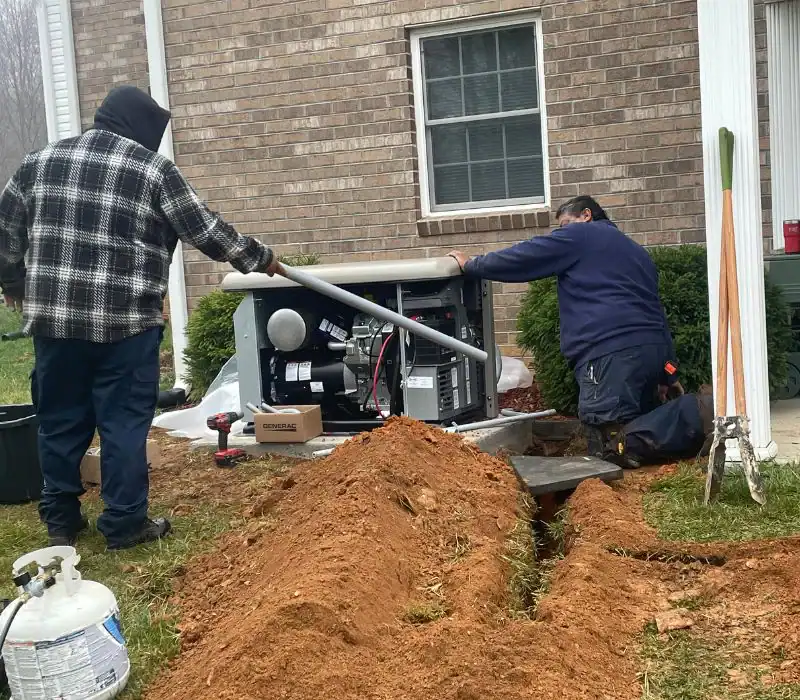
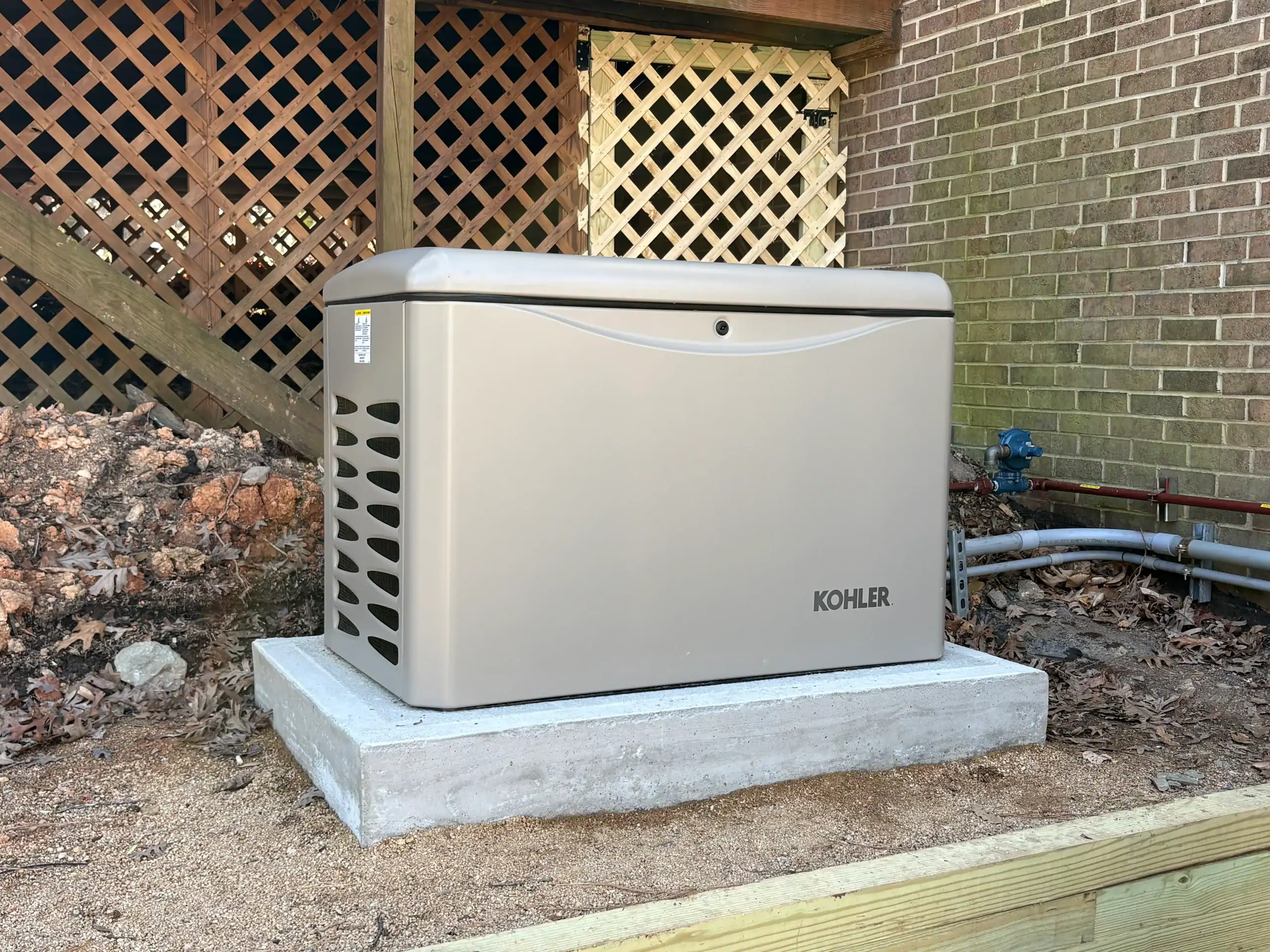
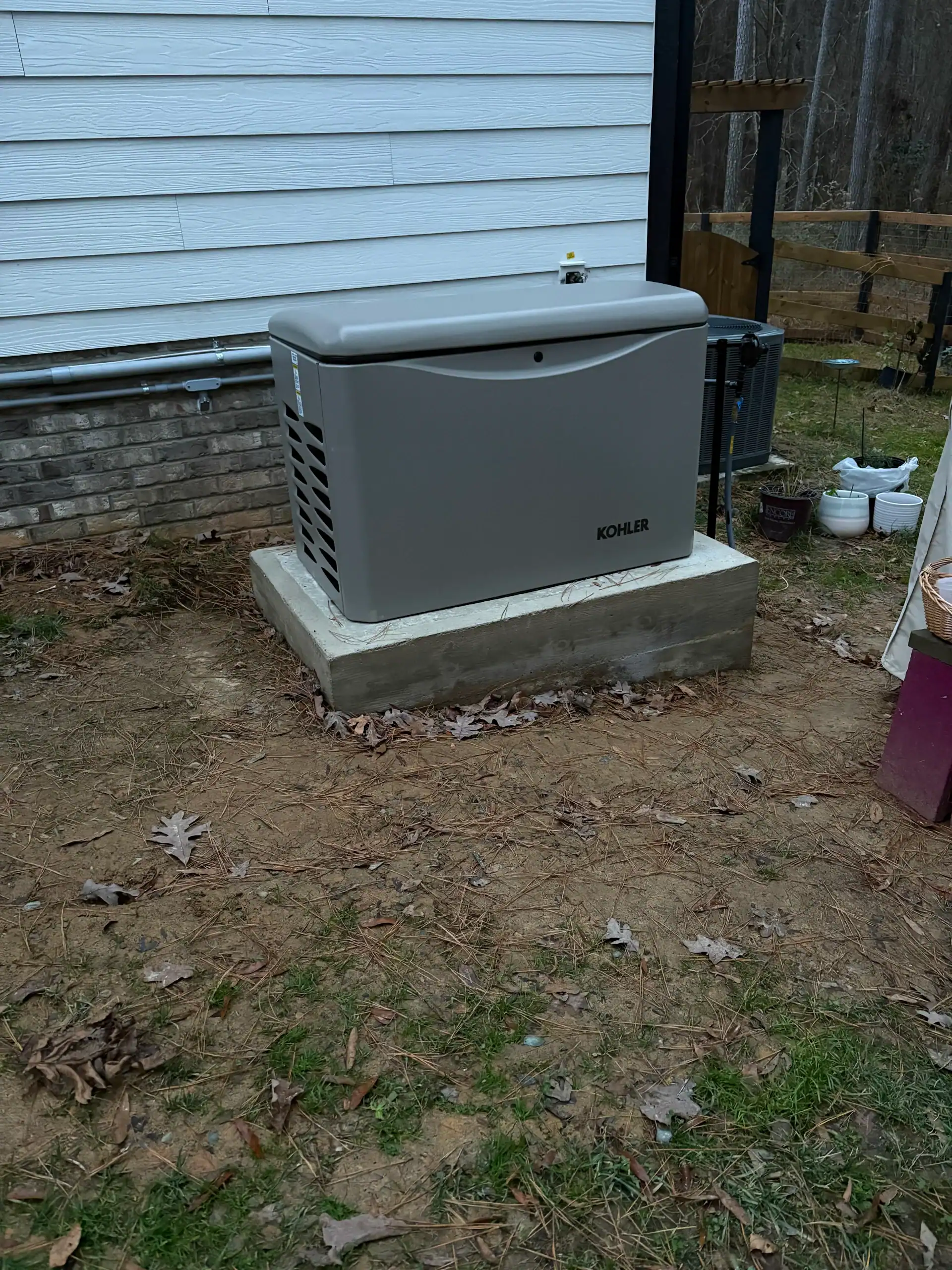
A whole-house standby generator works differently. It’s permanently installed outside the home, connected to your fuel source — natural gas from Piedmont Natural Gas for most Burlington-area homes, or propane for households in rural parts of Alamance County — and it starts automatically within seconds of detecting an outage. You don’t do anything. The lights come back on, the heat keeps running, the refrigerator stays cold, and the sump pump keeps working if it’s raining. When the grid comes back, the generator shuts itself off.
For households in rural western Alamance County where Duke Energy restoration timelines run longer, or for anyone with medical equipment that can’t tolerate an extended outage, the difference between a portable generator and a standby unit isn’t just convenience — it’s the difference between a plan that works and one that depends on everything going right at the wrong moment.
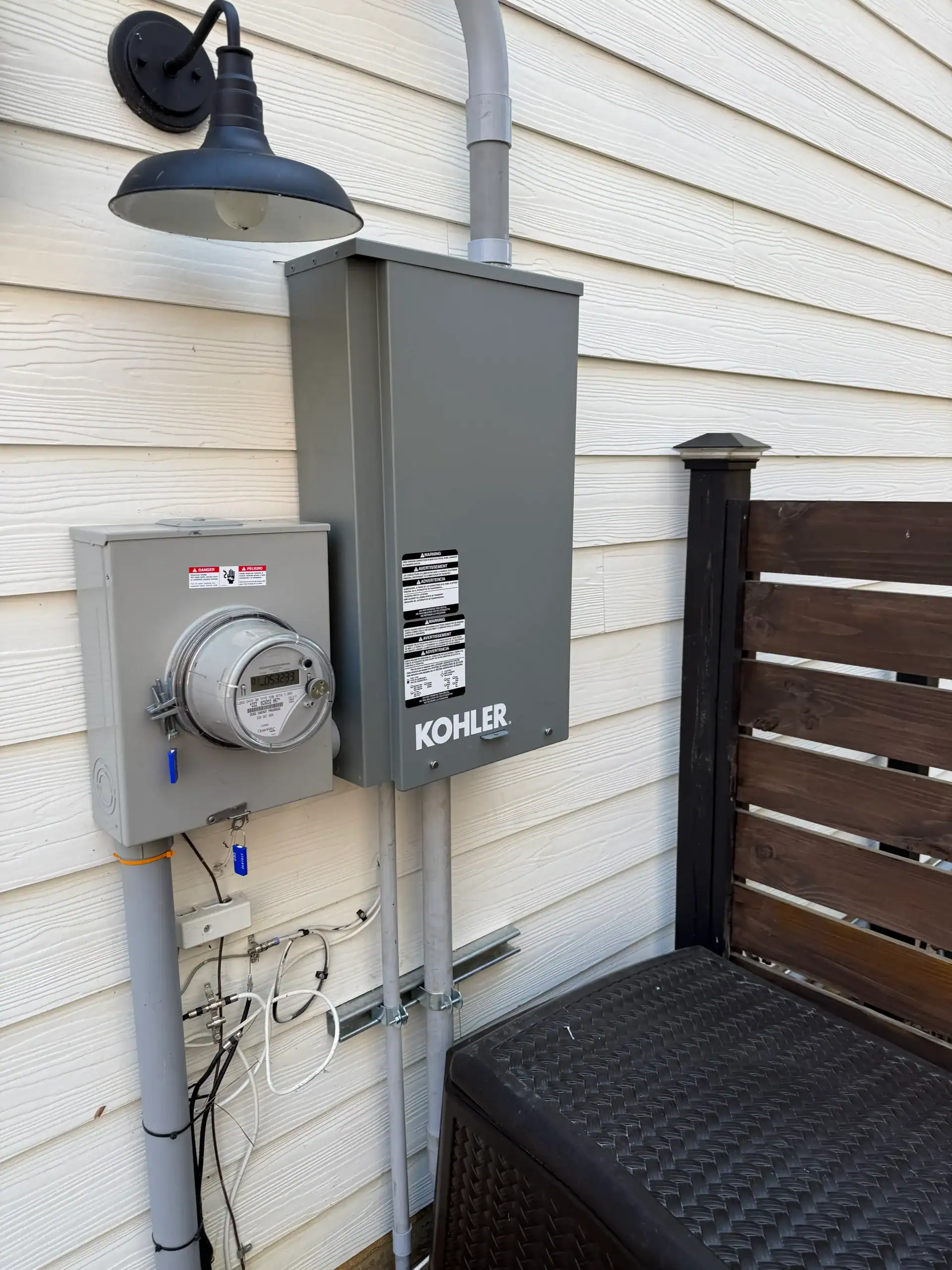
The installation process involves a load analysis to size the unit correctly for your home, a transfer switch installation at the panel, fuel line connection, pad placement, and permits — which are required in most NC jurisdictions. It’s not a DIY project, and it’s not something every electrician does well. Experience with standby generators specifically, not just general electrical work, matters.
We’re a Generac authorized dealer and have been handling generator installations and service in Alamance County since 2002. When the work is done, it passes inspection the first time — and you know the cost before we start, because we use flat-rate pricing.
Building a real power outage survival kit is the right first step, and it’s not complicated once you have a clear list calibrated to where you actually live. For Alamance County homes, that means planning for more than 72 hours, accounting for winter-specific risks, and making sure anyone with medical needs or vulnerable family members has a plan that goes beyond flashlights and bottled water.
The honest follow-up question, once the kit is ready, is whether a kit is really the ceiling of your preparedness. For a lot of Burlington-area homeowners — especially those who’ve already been through a multi-day outage — the answer is no.
If you’re ready to talk through what a standby generator would look like for your home, ESP Electrical Service Providers is a local call. We answer the phone — a real person, not a voicemail system — and we can walk you through what’s involved before you commit to anything.
Article details:
Share:
Continue learning: