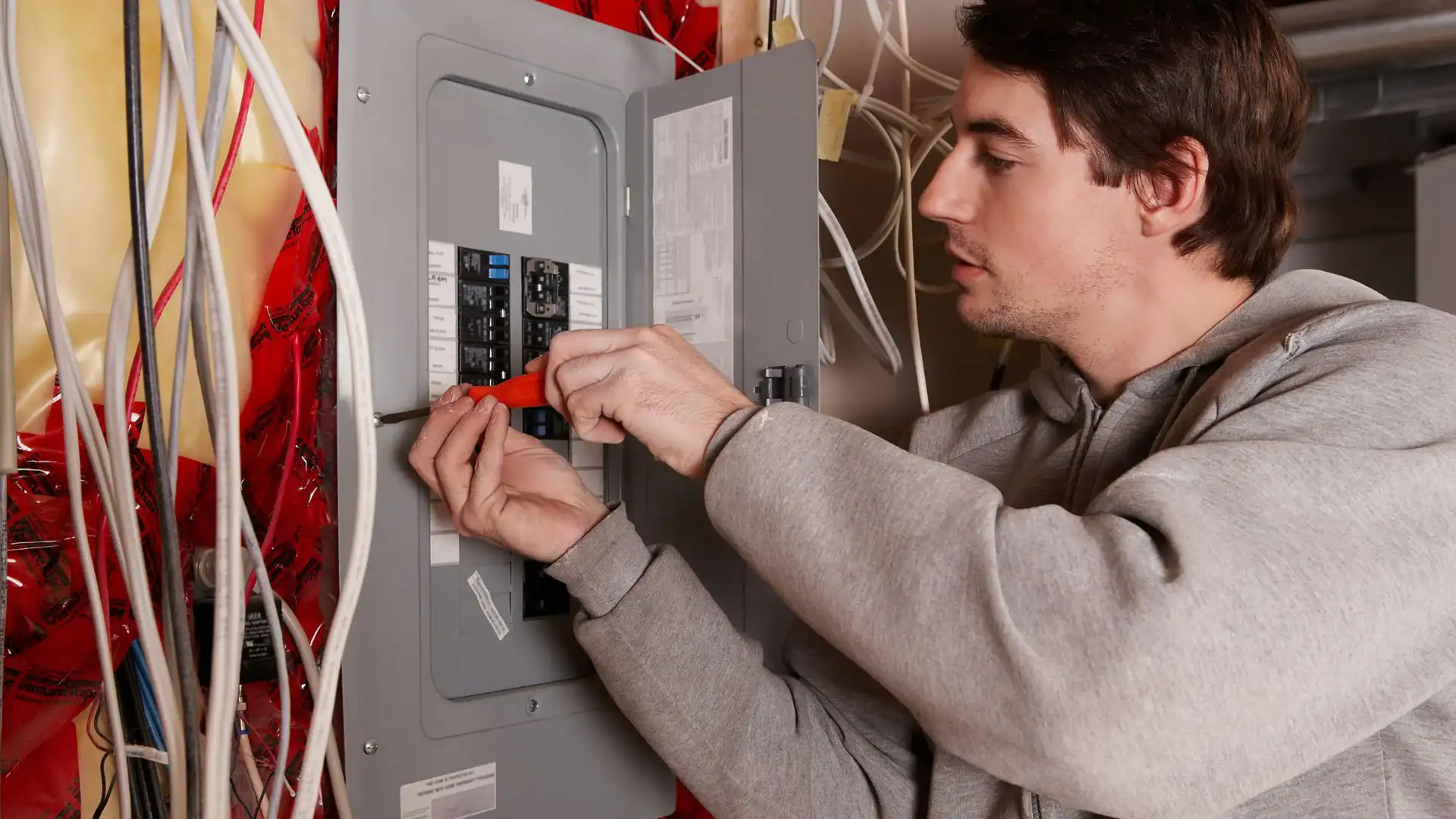
Not sure which generator fuel type is right for your home? Here's what actually matters before you decide — and what most comparison guides leave out.
Share:
Summary:
When the power goes out — and in Alamance County, it will — the difference between a natural gas generator and a diesel one isn’t just about fuel. It’s about how long you can run, whether the fuel is even available at your property, what the installation actually requires, and what you’re signing up for in terms of long-term maintenance. Most comparison guides give you a generic pros-and-cons list and call it a day. We’re going to walk through both fuel types honestly, cover how sizing fits into the decision, and give you the local context that actually matters here in Burlington, Mebane, Graham, and the surrounding area.
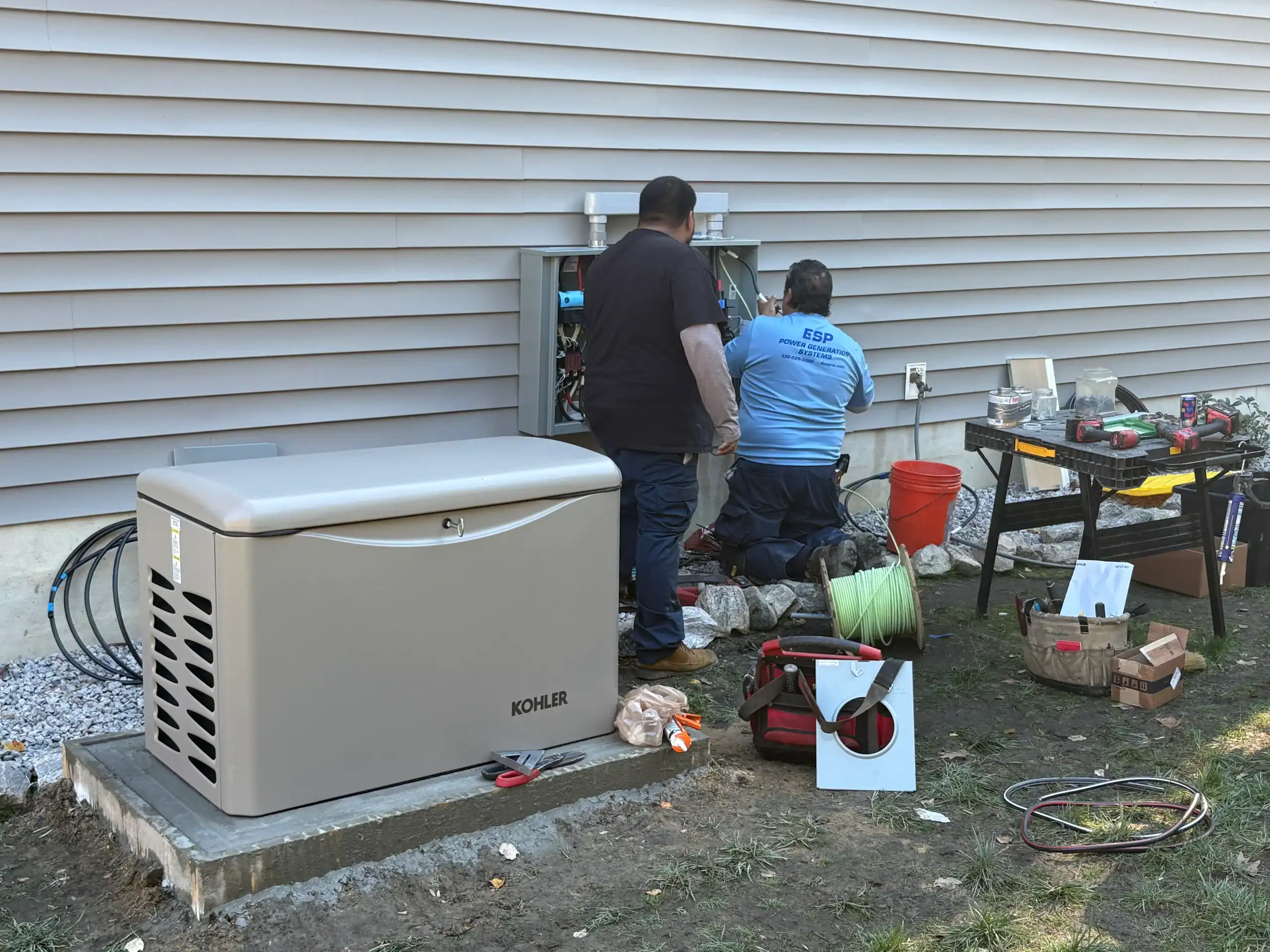
A natural gas standby generator connects directly to your home’s existing gas line, which means it draws fuel continuously without any storage, delivery, or refueling on your part. When the power goes out, the generator detects the outage and starts automatically — typically within seconds — through an automatic transfer switch (ATS). When utility power returns, it switches back and shuts itself down. You don’t have to do anything.
That automatic operation is the feature most homeowners care about most. If you’re away from home, if someone elderly or medically dependent lives there, or if a storm rolls through at 2 a.m., the system handles itself. Piedmont Natural Gas, which serves Burlington, Graham, Mebane, Elon, and Gibsonville, delivers that fuel through underground lines that are far more resilient to storm damage than the overhead power lines Duke Energy Progress maintains. Gas outages during weather events are rare — electrical outages are not.
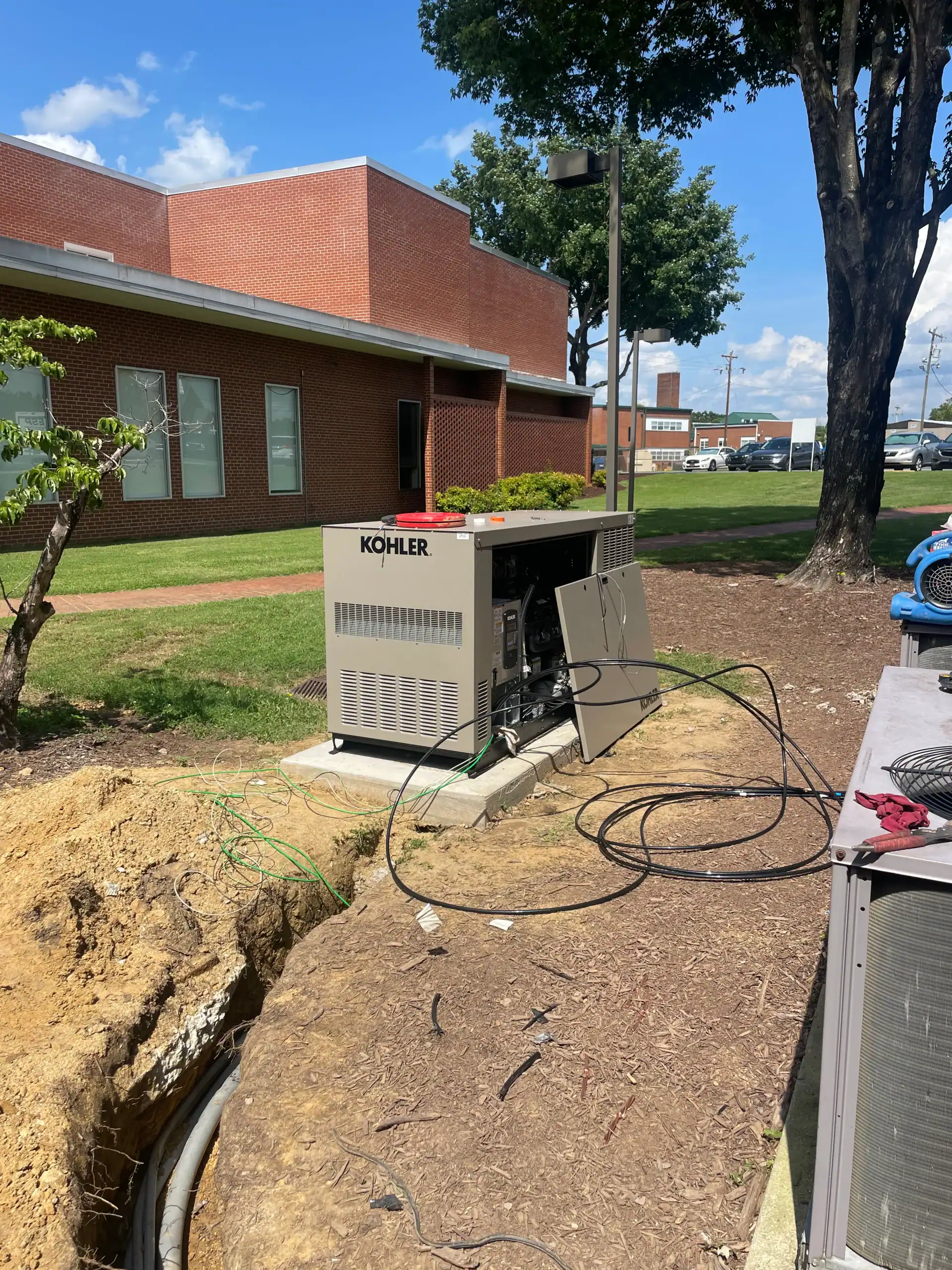
This is one of the first questions people ask, and the honest answer is: as long as the gas keeps flowing, the generator keeps running. There’s no tank to empty, no fuel delivery to schedule, and no degradation to worry about. For a multi-day outage — the kind Alamance County saw after Hurricane Florence in 2018 and again after Helene in 2024 — that matters enormously. Diesel and gasoline generators require active fuel management. Natural gas doesn’t.
The practical limitation is your gas meter and line capacity. A standby generator adds a significant BTU demand to your existing gas appliances, and if your meter isn’t sized to handle the combined load, you’ll need an upgrade before installation. This isn’t a dealbreaker, but it’s a step that requires a professional to assess — you can’t determine meter capacity by looking at it. When we do a pre-installation evaluation, that’s one of the first things we check. Getting this wrong means the generator may underperform or starve for fuel when you need it most.
Natural gas generators also require maintenance on a regular schedule — typically every 100 hours of operation or at least once a year, whichever comes first. That means oil changes, filter checks, and spark plug inspections. It’s not complicated, but it’s not optional either. A generator that hasn’t been serviced will let you down at the worst possible time. With proper maintenance, a natural gas standby unit has an average lifespan of 25 to 30 years — longer than most major appliances in your home.
One more thing worth knowing: natural gas burns cleaner than diesel. It produces fewer nitrogen oxides and particulates, which matters if you’re in a residential neighborhood in Burlington or Elon where a large diesel unit running for days would be noticeable to your neighbors. It’s a real-world consideration that often gets overlooked in fuel comparisons.
This question determines whether natural gas is even on the table for you. In the urbanized parts of Alamance County — Burlington, Graham, Mebane, Elon, Gibsonville — Piedmont Natural Gas service is generally available, and connecting a generator to an existing line is straightforward. The cost to add a dedicated gas line for a generator typically runs $600 to $1,200 depending on distance, materials, and permit requirements.
But if your property sits in the more rural parts of the county — the Snow Camp area, the Saxapahaw corridor, rural stretches west of Burlington — there may be no natural gas line access at all. In those cases, natural gas simply isn’t an option, and the conversation shifts to propane or diesel. We work across all of these communities, and we’ve seen plenty of situations where a homeowner assumed natural gas was available only to find out during the quote process that it wasn’t. Knowing your fuel options before you start shopping for a generator saves time and avoids disappointment.
If natural gas is available at your address, the next step is confirming that your existing meter and service line can support the added load. Most residential meters can be upgraded if needed, and your gas utility handles that side of the process. We coordinate with Piedmont Natural Gas directly on installations to make sure the fuel supply side is handled correctly before we ever connect the generator. That coordination is part of what we do — you don’t have to manage it yourself.
For homeowners who do have access, natural gas is typically the most convenient long-term fuel choice for a residential standby generator. The infrastructure is already there. The fuel cost per kilowatt-hour is generally lower than diesel. And the elimination of fuel storage, delivery logistics, and degradation concerns makes the day-to-day reality of owning a standby generator much simpler.
Want live answers?
Connect with a Electrical Service Providers expert for fast, friendly support.
Diesel gets a reputation as the industrial choice, and there’s truth to that — but it’s not the whole picture. For residential properties without natural gas access, or for homeowners who want complete independence from utility infrastructure, a diesel generator is a legitimate and capable option. Diesel fuel has roughly three times the energy density of natural gas per unit volume, which means a diesel generator produces more power per gallon and handles sudden load changes more effectively. Diesel units are also typically 20 to 40 percent more energy-efficient than comparable natural gas generators.
The trade-off is fuel management. Unlike natural gas, diesel requires on-site storage in a tank, and diesel fuel degrades over time — generally within six to twelve months without a fuel stabilizer additive. That means if your generator sits unused for a year and then a storm hits, you may be running on compromised fuel. Regular fuel testing and treatment is part of owning a diesel generator responsibly.
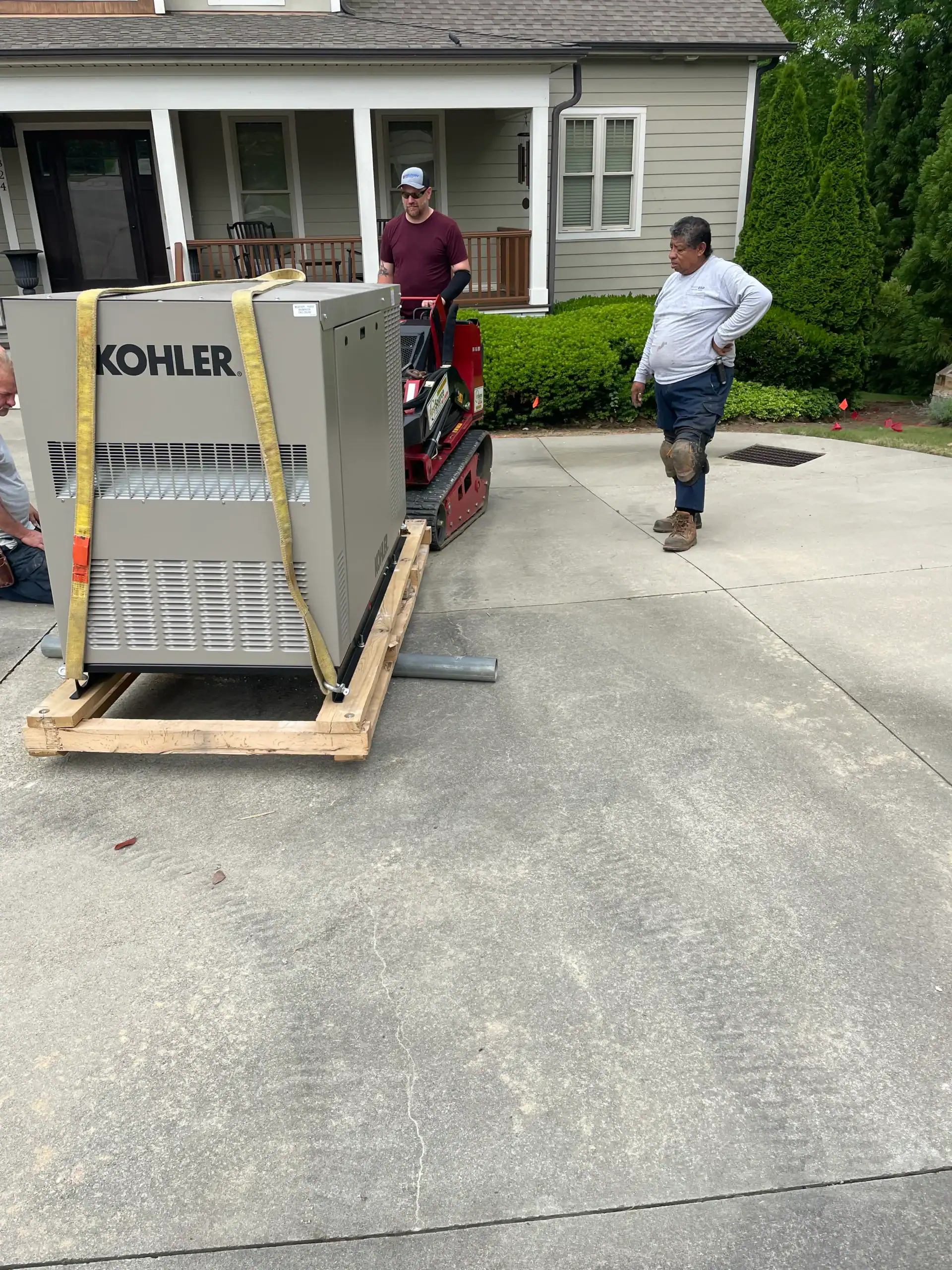
One of the biggest misconceptions about diesel generators is that they’re lower maintenance than natural gas units. In some ways that’s true — diesel engines can run for a very long time under the right conditions. But the fuel side of a diesel system requires active management that natural gas owners never have to think about.
Stored diesel degrades. Microbial growth can occur in tanks that sit idle, particularly in humid climates like North Carolina’s. Fuel filters clog. Water contamination is a real issue if the tank isn’t properly sealed and maintained. If you’re installing a diesel generator for home backup power and you go six months without a significant outage, you need to be running the generator periodically under load, testing the fuel, and treating it to prevent degradation. This isn’t difficult, but it’s a responsibility that comes with the territory.
There’s also the question of fuel availability during extended regional emergencies. After a major storm, gas stations run out of fuel quickly. If your tank runs dry during a prolonged outage and there’s no diesel available locally, you’re without power. That scenario is less likely with natural gas, where the underground distribution network typically stays functional even when surface infrastructure is compromised.
That said, for properties in rural Alamance County without gas line access, diesel is often the most practical choice available. And for homeowners who prioritize maximum fuel independence regardless of what the utility grid is doing, having a full diesel tank on-site is a form of resilience that natural gas can’t match. We install and service diesel generators across Alamance, Chatham, Orange, and Guilford counties — so whichever direction makes sense for your property, we can handle it.
Sizing a generator is where a lot of homeowners go wrong, and it’s one of the most important decisions in the whole process. Too small and you’re tripping breakers and starving motors. Too large and you’re paying for capacity you’ll never use — and in diesel units, running an oversized engine at low load can cause wet stacking, a condition where incomplete combustion leaves unburned fuel deposits in the exhaust system.
The basic formula for how to size a generator for a house starts with your running wattage — the total wattage of everything you want to power simultaneously — plus the starting wattage of the single largest motor or compressor in that group. Motors and compressors (HVAC units, well pumps, refrigerators) draw two to three times their running wattage at startup. Add those together, then multiply by at least 1.25 as a safety margin. That’s your minimum generator size.
For a 2,000 square foot home in Burlington or Mebane, a 16 to 18 kW natural gas standby unit is typically sufficient to cover the essentials — HVAC, refrigerator, lighting, outlets, and a few other circuits. Larger homes above 3,000 square feet, or homes with electric water heaters, large HVAC systems, or well pumps, generally need 22 to 30 kW to run comfortably without load-shedding.
Fuel type does influence sizing considerations in a practical way. Natural gas generators are sized based on the assumption of continuous fuel supply, so runtime is essentially unlimited and the sizing calculation focuses entirely on load. Diesel generators involve a finite fuel supply, which means some homeowners intentionally size up to reduce runtime hours and extend the interval between refuels. That’s a reasonable approach, but it needs to be balanced against the efficiency and wet-stacking concerns mentioned above.
The honest answer to how to size a home generator is that you need a professional load assessment. It’s not something you can reliably calculate from a list of appliances and a YouTube video. The calculation needs to account for your actual panel, your specific HVAC system’s startup draw, whether you have a well pump, and what circuits you want backed up. We do that assessment as part of the installation process — it’s not an add-on, it’s the starting point.
Natural gas and diesel are both capable, reliable options for home backup power — but they’re not interchangeable, and the right answer depends heavily on your specific property, your location within Alamance County, and what you’re trying to protect against. If you have natural gas service and want the simplest, most hands-off backup power experience, a natural gas standby generator is hard to beat. If you’re outside the gas service area or you want complete fuel independence, diesel deserves a serious look.
What doesn’t change regardless of fuel type is the importance of proper sizing, professional installation, and permit compliance. North Carolina requires permits for whole-home generator installations, and Alamance County has its own approval process through the county inspections department. We handle all of that — the permitting, the inspection coordination, the gas line connection, the transfer switch installation — so you’re not left navigating county offices on your own.
If you’re tired of being caught off guard when Duke Energy goes down, now is the time to have the conversation. Reach out to us at (336) 228-3300 and we’ll start with a real assessment of your home, your fuel options, and what it actually takes to keep your lights on.
Article details:
Share:
Continue learning: