If your Alamance County home was built before 1990, its electrical system was designed for a different era. Here's what a real inspection looks for — and what it means for you.
Share:
Summary:
You got a home inspection report back, and somewhere in the middle of it, there’s a line about “electrical concerns.” Or maybe you’re selling a house in Burlington or Graham and the buyer’s inspector flagged the panel. Or you’ve lived in your home for fifteen years and the breaker trips every time someone runs the microwave and the hair dryer at the same time. Whatever brought you here, the question underneath it is the same: how serious is this, and what do I actually need to do about it? That’s exactly what we’re going to walk through.
A general home inspector does a visual walkthrough. They’ll note what they can see — a panel that looks crowded, outlets that look old, wiring that’s visible in the attic. What they can’t do is open the panel and test it, run instruments on live circuits, or identify a loose connection that’s generating heat inside a junction box. That’s the gap.
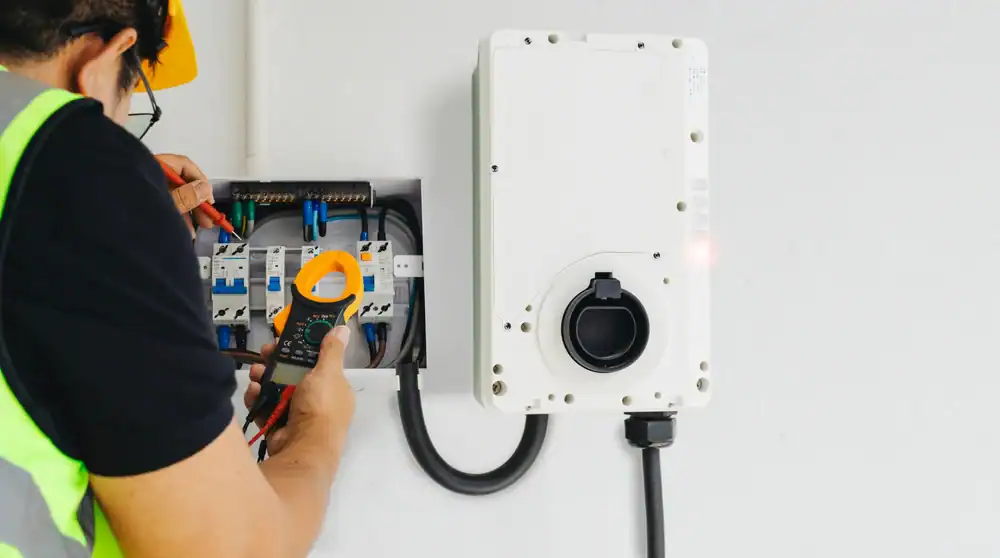
In Alamance County, where the median home was built in 1988, that gap matters significantly. Half the housing stock predates modern code requirements for GFCI protection, AFCI breakers, and adequate panel capacity. A licensed electrician’s inspection goes deeper. We’re testing circuits, not just looking at them. We’re checking grounding, polarity, and whether the panel is handling the load it’s being asked to carry. We’re looking at the things that cause fires before they cause fires.
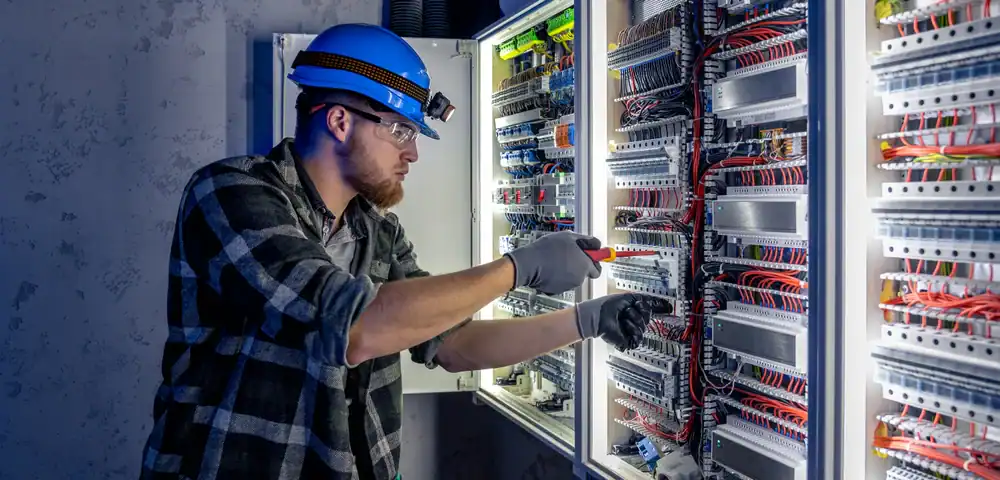
The inspection starts at the service panel — the brain of the system. We’re looking for double-tapped breakers, signs of heat or charring, improper bonding, undersized service, and any wiring that doesn’t belong. A 100-amp panel was the standard when most of Alamance County’s post-war neighborhoods were built. It was sized for a world without central air conditioning, home offices, EV chargers, or the kind of kitchen appliance load a modern household runs every day.
If the panel hasn’t been upgraded, it’s worth knowing exactly what it can and can’t handle. From there, we move through the home systematically. Outlets get tested for proper grounding and correct polarity. Two-prong outlets — common in homes built before the mid-1960s — indicate an ungrounded system, which is both a shock risk and a problem for insurance and appraisals.
We check every area that requires GFCI protection: bathrooms, kitchens, garages, outdoor circuits. The NEC didn’t require GFCI outlets in bathrooms until 1975, in kitchens until 1978, or in garages until 1978. If your home predates those requirements and no one has updated the outlets since, there’s a real gap there.
Wiring gets examined wherever it’s accessible — attic, crawlspace, basement. We’re looking for knob-and-tube wiring, cloth-sheathed cable, aluminum branch circuit wiring, and any DIY modifications that were done without a permit. In the mill villages around Haw River and Swepsonville, it’s not unusual to find homes with multiple generations of electrical work layered on top of each other — original wiring from the 1930s or 1940s, additions from the 1960s, and a subpanel added sometime in the 1990s, all coexisting in the same structure. Sorting out what’s safe, what’s marginal, and what needs attention is the actual job.
We also use thermal imaging. This is the part that separates a thorough electrician’s inspection from anything a general inspector can offer. Thermal imaging detects heat signatures at connections that look completely normal to the naked eye. A loose termination on an aluminum wire, a breaker running hotter than it should, a connection point that’s oxidizing inside a junction box — none of these produce visible symptoms until they produce a fire. The camera finds them first.
If your Alamance County home was built between roughly 1965 and 1979, there’s a meaningful chance it has aluminum branch circuit wiring. This era represents a significant portion of Alamance County’s housing stock, and aluminum wiring was standard practice during that period — it was cheaper than copper and widely used. The problem isn’t that aluminum wiring is inherently defective. The problem is that aluminum oxidizes at connection points over time, and that oxidation creates resistance, which creates heat.
When aluminum wiring is connected to outlets, switches, or fixtures that weren’t designed for it, the risk compounds. This doesn’t automatically mean the wiring has to be replaced. It does mean it needs to be assessed by someone who knows what to look for and what the remediation options actually are. We’ll identify whether the wiring is intact, whether the terminations are appropriate, and whether the system poses a current risk.
Knob-and-tube wiring is a different story. Found in homes built before roughly 1940 — and Alamance County has a notable share of pre-1940 housing, particularly in the older sections of Burlington, Graham, and the mill communities along the Haw River — knob-and-tube has no grounding conductor and uses insulation that becomes brittle over decades. It can still be functional in its original condition.
Where it becomes dangerous is when it’s been modified, spliced incorrectly, or buried under blown-in insulation during an energy efficiency upgrade. Insulation traps the heat that knob-and-tube wiring needs to dissipate. That combination is a fire risk. The inspection exists to tell you what’s actually there, in plain terms, so you can make an informed decision — whether that’s negotiating a repair credit before closing, scheduling remediation work, or simply knowing that the system is in better shape than you feared.
Want live answers?
Connect with a Electrical Service Providers expert for fast, friendly support.
The short answer: whenever you’re making a decision that depends on knowing the condition of the electrical system. That’s usually one of a few situations. You’re buying an older home in the area and the general inspection raised questions. You’re selling and want to get ahead of anything the buyer’s inspector might flag. You’re an existing homeowner who has never had anyone look at the panel since you moved in. Or your insurance company is asking for documentation before they’ll bind a policy on a home with older wiring.
Any of those is a valid reason. None of them requires an emergency.

Alamance County’s housing market has been drawing buyers from the Research Triangle for years — people priced out of Durham and Chapel Hill who are purchasing homes in Burlington, Graham, Mebane, and the surrounding communities. A lot of those buyers are inheriting electrical systems they’ve never seen before, in homes they didn’t grow up in, in a market where 64% of listings are existing homes rather than new construction.
The general home inspection is a starting point, not a conclusion. When the inspector writes “recommend further evaluation by a licensed electrician,” that’s not a formality — it’s an acknowledgment that what they can assess visually is limited. Our licensed electrician’s inspection is what fills in the picture.
What buyers often don’t realize is that the findings from an inspection aren’t automatically a deal-killer. They’re information. If the panel needs to be upgraded, that’s a negotiating point. If there are ungrounded outlets throughout the home, that’s a repair with a known scope and cost. If the inspector finds aluminum wiring, that’s a conversation about remediation options — not necessarily a reason to walk away from the house. The inspection gives you the facts. What you do with them is up to you.
For buyers in a time-sensitive transaction, speed matters. We complete most inspections in a single visit, and our trucks are stocked to handle follow-up work without scheduling a second trip for parts. When a closing is on the line, that kind of turnaround is worth something.
Not everyone getting an electrical inspection is in the middle of a real estate transaction. Many homeowners in Burlington, Elon, Graham, and the neighborhoods throughout Alamance County have simply lived in their homes for years — sometimes decades — without anyone ever looking at the electrical system professionally. The lights work. The breakers mostly hold. Nothing has caught fire. That’s a reasonable baseline, but it’s not the same as knowing the system is safe.
Certain things are worth paying attention to. Breakers that trip regularly under normal household loads. Outlets that feel warm to the touch or show discoloration around the face. A burning smell that comes and goes without an obvious source. Lights that flicker when an appliance kicks on. A panel that buzzes or hums. Any of these warrant a professional look — not because we want to alarm you, but because the alternative is finding out later in a way that’s harder to manage.
There’s also the load question. Homes in Alamance County’s older neighborhoods were wired for a much lighter electrical demand than what a modern household puts on the system. Central air conditioning alone draws more than most 1960s-era panels were designed to handle continuously. Add a home office, an EV charger in the garage, a second refrigerator, and the kind of kitchen appliance load that’s normal now, and a 100-amp panel is working well beyond its intended capacity — even if it hasn’t tripped yet.
An inspection gives you a clear picture of where things stand. Just an honest assessment of what the system can handle, what it can’t, and what — if anything — needs attention.
Electrical safety inspections aren’t complicated in concept — you want someone qualified to look at the system, tell you what they find, and give you a clear path forward. What makes the difference is who does it and how thoroughly they do it. In a county with the housing stock Alamance County has — older mill communities, post-war subdivisions, mid-century neighborhoods that have been added onto and modified for decades — that thoroughness matters more than it does in a newer market.
We’ve been doing this work in Alamance County since 2002. Andy Helton has been a licensed Master Electrician since 1989, longer than most of the homes we inspect have been updated. We give you a flat rate in writing before any work begins, and that price doesn’t change. The work passes inspection the first time.
If you have questions about what an inspection involves, what your home’s age means for the electrical system, or what to do with findings from a general home inspection, reach out to ESP Electrical Service Providers. Real people answer the phone.
Article details:
Share:
Continue learning: