Not sure whether natural gas or propane is right for your standby generator? Here's how to figure it out before you call anyone.
Share:
Summary:
Most homeowners in Alamance County don’t start thinking seriously about a standby generator until the power’s already been out for 36 hours. The food’s going bad, the house is heating up, and the portable generator in the garage is running extension cords to two rooms. That’s usually the moment the decision gets made.
If you’re in that headspace right now — or you’ve been there before and swore you’d do something about it — this is the guide to read first. We’ll walk through how standby generator installation actually works, how to choose between natural gas and propane, and what it takes to get a system sized and installed correctly here in Alamance County.
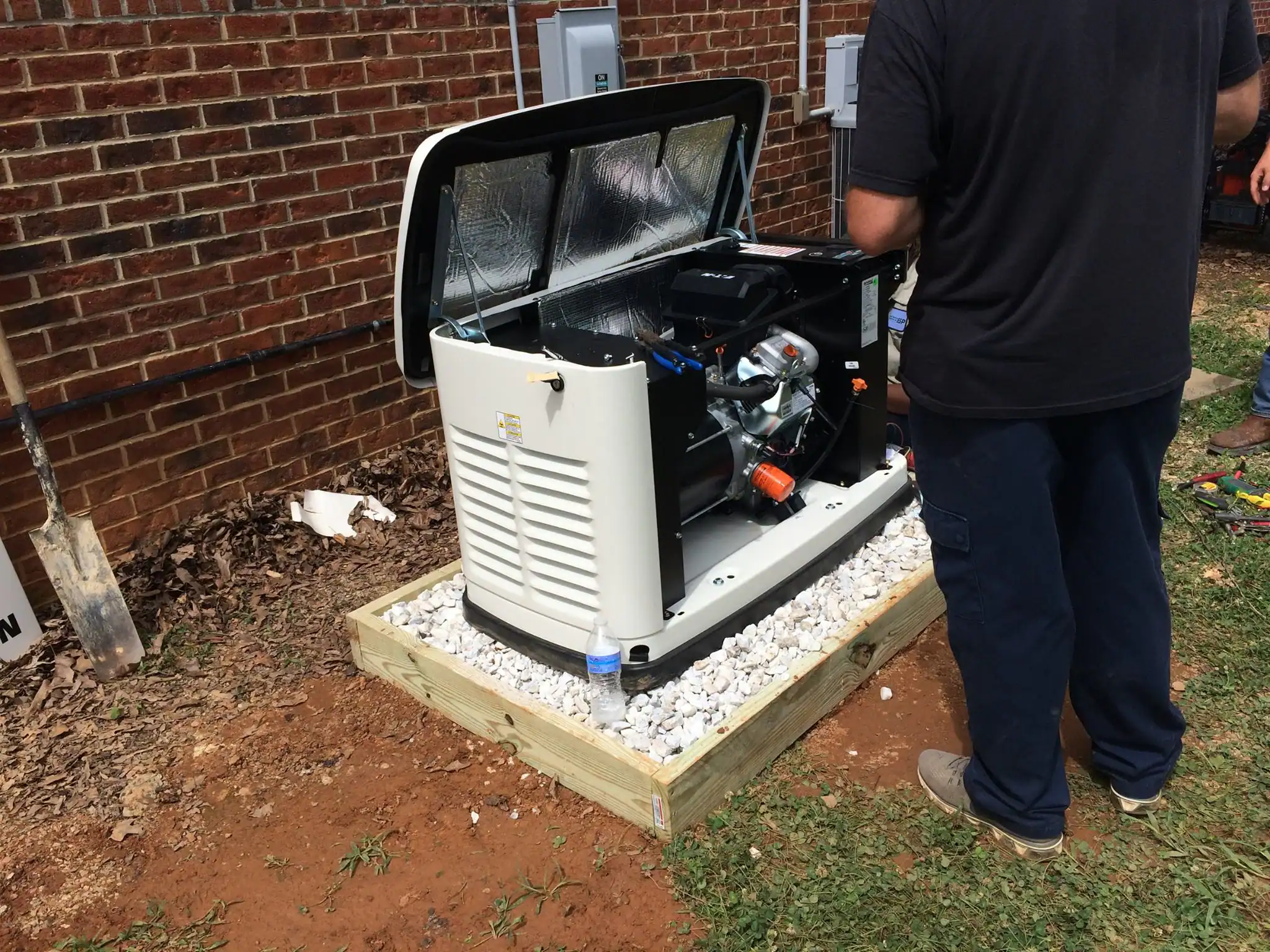
A whole home standby generator is a permanently installed unit that sits outside your house — similar in size to a central AC unit — and connects directly to your electrical panel and fuel supply. When Duke Energy’s grid goes down, the system detects the outage automatically and restores power to your home in roughly ten seconds. You don’t flip a switch. You don’t go outside in the rain. It just comes on.
We install Generac systems for good reason. They’re the dominant name in residential standby power, and as a Generac authorized dealer, we can install and service their systems with the manufacturer’s warranty intact. That matters when you’re putting this kind of money into a piece of equipment you expect to last.
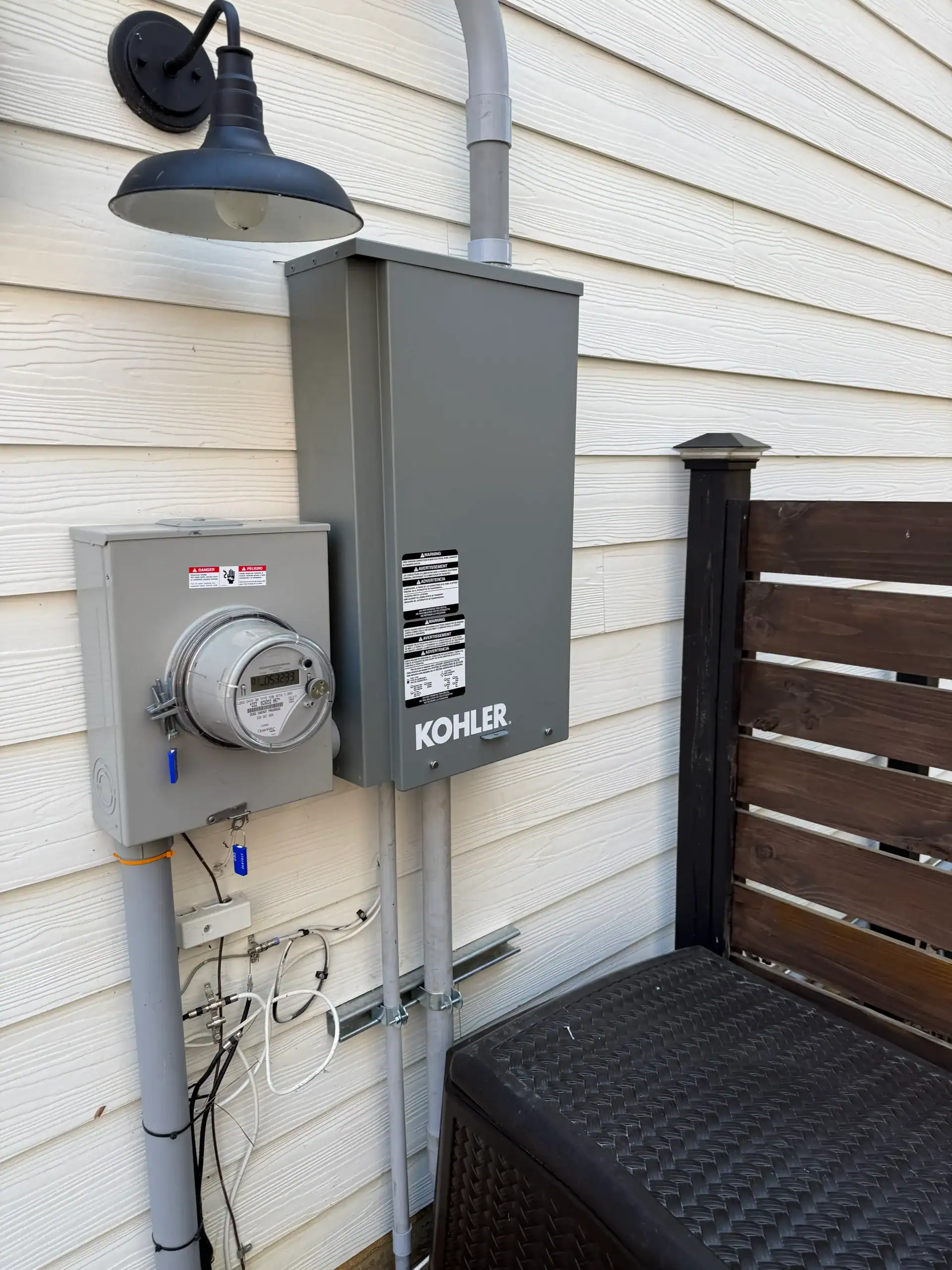
The system has three main components: the generator unit itself, an automatic transfer switch (ATS) that monitors your utility power and triggers the switchover, and a fuel connection — either a natural gas line or a propane tank. Getting those three things right is what a proper installation looks like.
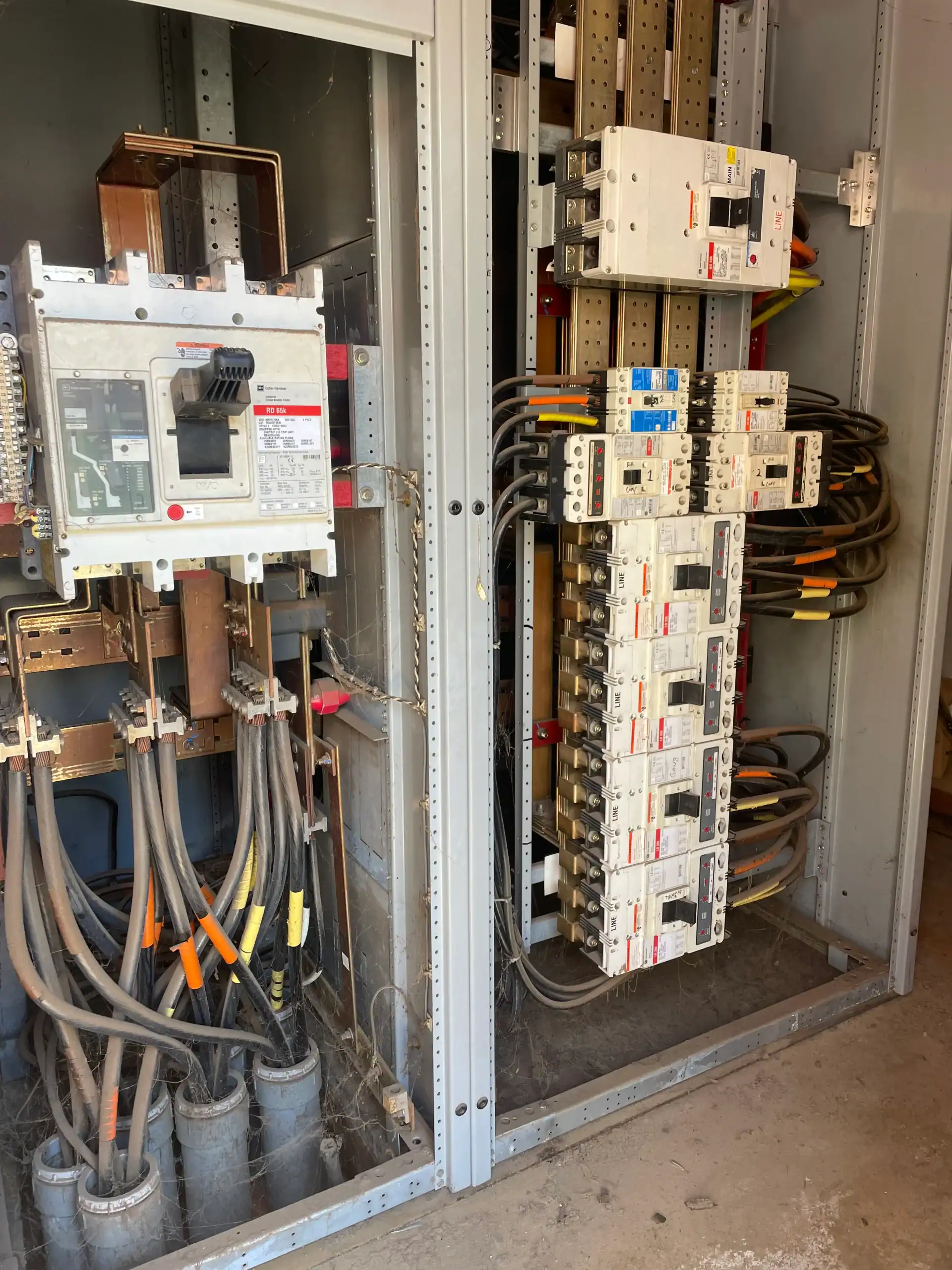
If your home in Burlington, Mebane, Graham, or Gibsonville is already connected to Piedmont Natural Gas, a natural gas standby generator is probably your most straightforward path. The generator ties directly into your existing gas line — no tank to install, no delivery schedule to manage, no storage to think about. As long as the gas utility is running, your generator has fuel.
That convenience is real. Natural gas generators tend to be slightly less expensive to operate than propane on a per-hour basis, and the fuel supply is theoretically unlimited during an outage. For most storm events in the NC Piedmont — ice storms, hurricane remnants, summer grid failures — the gas infrastructure stays intact even when the power lines don’t.
The installation process for a natural gas system involves pulling the required permits, setting a concrete pad for the unit, running the electrical connection to your panel, installing the automatic transfer switch, and coordinating the gas line tie-in. In North Carolina, this work must be performed by a licensed electrical contractor — not a handyman, not a general contractor, and definitely not a DIY project. Skipping the permit process can void your homeowner’s insurance, and that’s a risk that isn’t worth taking on a system designed to protect your home.
One thing worth knowing: natural gas lines can, in rare cases, be disrupted during significant infrastructure events. It’s uncommon in this region, but it’s a real consideration for homeowners who want their backup power to be fully independent of the utility grid.
The other honest limitation of natural gas is geography. Piedmont Natural Gas serves Burlington and Mebane, and Public Service Company of North Carolina covers parts of Mebane as well — but if you’re out in Snow Camp, Saxapahaw, Swepsonville, or the rural stretches of southern Alamance County, you may not have gas service at all. In that case, the natural gas conversation is a short one.
For homeowners off the natural gas grid — and a significant portion of Alamance County falls into that category — propane is the practical answer, not a compromise. A propane standby generator works the same way as a natural gas unit: it’s automatic, it’s permanent, and it connects to your home’s electrical panel through an automatic transfer switch. The difference is the fuel source. Instead of a utility line, you have an on-site tank, typically 500 to 1,000 gallons, installed on your property.
Propane has some genuine advantages that don’t get mentioned enough. It has a higher energy density than natural gas, meaning it contains more BTUs per unit volume — the generator gets more work out of each gallon. Propane also burns cleaner, which can extend the engine’s service life over time. And because the fuel is stored on your property, a propane system is completely independent of the utility infrastructure. If a storm takes down both the power lines and the gas mains, your propane generator keeps running.
The tradeoff is that propane is a finite supply. You have what’s in the tank, and when it’s gone, you need a delivery. For most outage events in this region — a few days to a week — a properly sized propane tank is more than sufficient. But if you’re in a situation where roads are impassable and deliveries are delayed, you’re managing a countdown.
Installation for a propane system involves everything a natural gas installation does — permits, pad, panel connection, transfer switch — plus the tank installation and the propane line running to the generator. The permitting and licensing requirements are the same. This is licensed electrical contractor work in North Carolina, full stop.
Propane is also often the more accessible option from a timing standpoint. In areas without gas service, there’s no utility coordination required — just the tank, the generator, and the electrical work. For rural properties along NC-62 or the back roads south of Burlington, that can actually simplify the installation process.
Want live answers?
Connect with a Electrical Service Providers expert for fast, friendly support.
A standby generator installation isn’t a one-afternoon job, but it’s also not the drawn-out ordeal some homeowners expect. The process starts with a site evaluation — we look at your home’s electrical panel, your fuel source, where the unit will be placed, and what loads you want the generator to cover. That assessment drives everything else.
From there, we handle the permits, coordinate the installation, and make sure the work passes inspection the first time. We’ve been doing this in Alamance County since 2002, and our trucks are stocked to handle most jobs without waiting on parts. The goal is to get your system installed, tested, and running without dragging the project out across multiple trips.
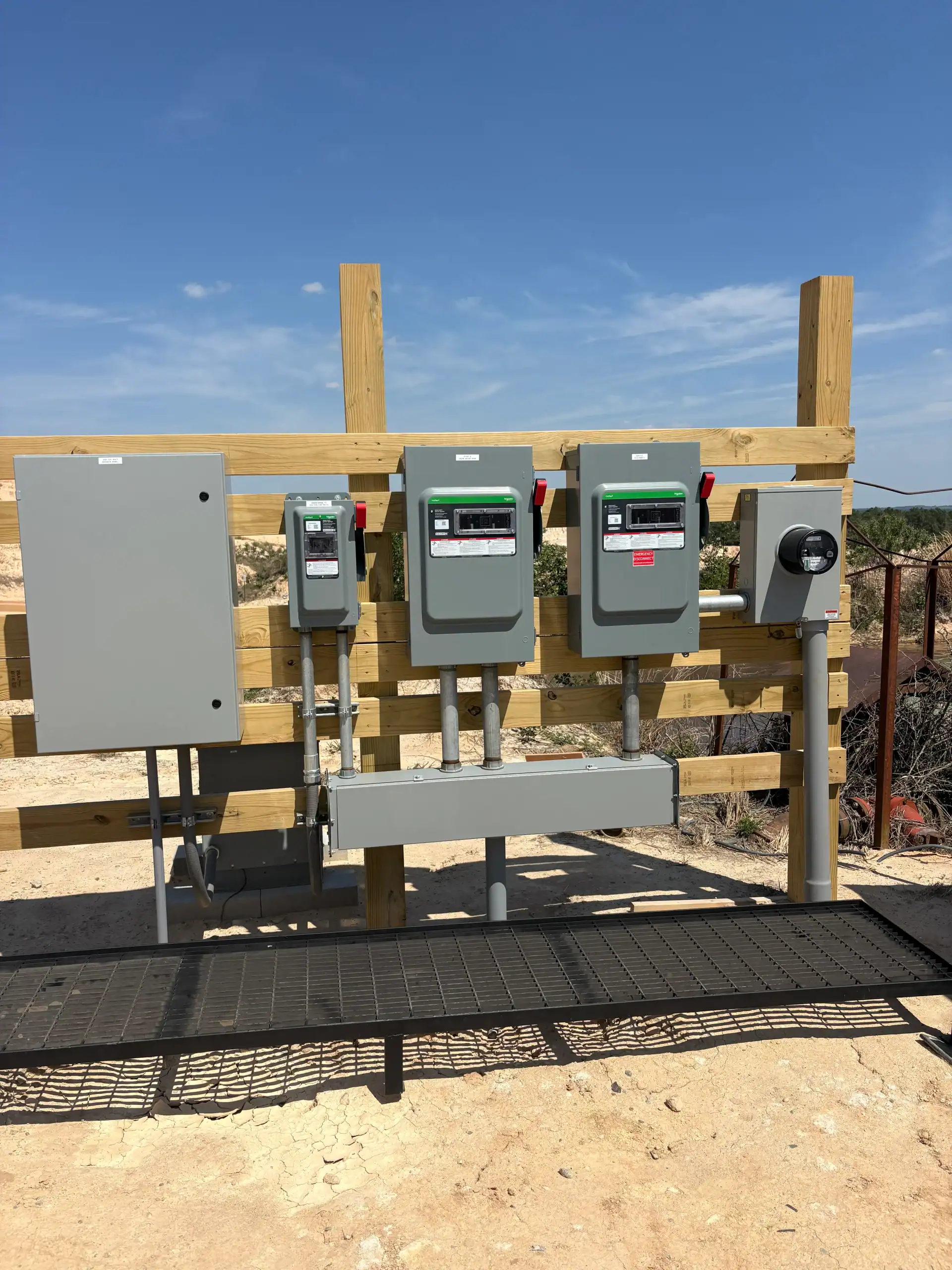
Sizing is where a lot of homeowners get stuck, and it’s one of the most common questions we hear. The right size depends on your home and what you want the generator to power.
Generator capacity is measured in kilowatts (kW). A smaller system in the 10–13kW range can handle essential circuits — lights, refrigerator, some outlets, a well pump if you have one. A 20–22kW system can run most of a modern home, including central air conditioning. If you want true whole-home coverage with no compromises, you may be looking at something larger, depending on your square footage and electrical load.
We determine the right size through a load calculation — a review of your home’s actual electrical demand. This isn’t guesswork. It’s a straightforward process that tells us exactly what the generator needs to carry, and it protects you from both undersizing (a system that trips under load) and oversizing (paying for capacity you’ll never use).
One thing that surprises some homeowners: well pumps, electric water heaters, and central AC units draw significantly more power at startup than they do while running. A generator sized only for steady-state loads can struggle when those appliances cycle on. That’s the kind of detail a proper load calculation catches before it becomes a problem in the middle of a storm.
For Alamance County homes — particularly older homes in Burlington and Graham with larger panels and aging wiring — we also take a close look at the panel itself before recommending a system. A generator is only as reliable as the electrical infrastructure it’s connected to, and we’d rather flag a panel issue upfront than after the system is installed.
Here’s something that doesn’t get said clearly enough: the worst time to schedule a standby generator installation is right after a major outage. That’s when every homeowner in the county is calling at the same time, and installation backlogs stretch out for weeks. The homeowners who got their systems installed before the storm hit are the ones who didn’t notice the outage lasted four days.
Alamance County sits squarely in the path of what the NC Piedmont gets every year — hurricane remnants tracking inland, ice storms that bring down lines for days, and summer heat events that push Duke Energy’s grid to its limits. The county experienced extended outages during Hurricane Florence in 2018 and again during the remnants of Hurricane Helene in 2024. Those weren’t once-in-a-generation events. They’re part of living here.
There’s also a segment of Alamance County residents for whom this isn’t really about comfort. Home oxygen concentrators, refrigerated medications, CPAP machines — for those households, a power outage is a medical situation. If that describes your home or someone in it, a standby generator that comes on automatically within ten seconds isn’t a luxury. It’s a necessity.
We’ve been licensed and working in this county since 2002. We hold our NC State Board of Examiners of Electrical Contractors license, we’re a Generac authorized dealer, and we were one of the first Level III service providers for Eaton/Cutler-Hammer generators in North Carolina. When you call us, a real person answers — not a voicemail system — and we can walk you through what your specific property and situation actually need.
Flat-rate pricing means you’ll know the exact cost before any work begins. No hourly billing, no charges added after the fact. And if financing makes the investment more manageable, we have options for that too.
The natural gas vs. propane question has a real answer for your property — it’s just not the same answer for everyone in Alamance County. If Piedmont Natural Gas runs to your address in Burlington or Mebane, natural gas is likely your cleanest path. If you’re further out in the county and off the gas grid, propane gives you everything a standby system needs, with the added benefit of fuel independence.
Either way, the process is the same: a site evaluation, a load calculation, the right permits, and an installation that passes inspection. That’s what a properly done standby generator installation looks like.
If you’re ready to stop thinking about this and actually do something about it, reach out to ESP Electrical Service Providers. We’re local, we’re licensed, and we’ve been doing this work in Alamance County long enough to know exactly what your home needs.
Article details:
Share:
Continue learning: