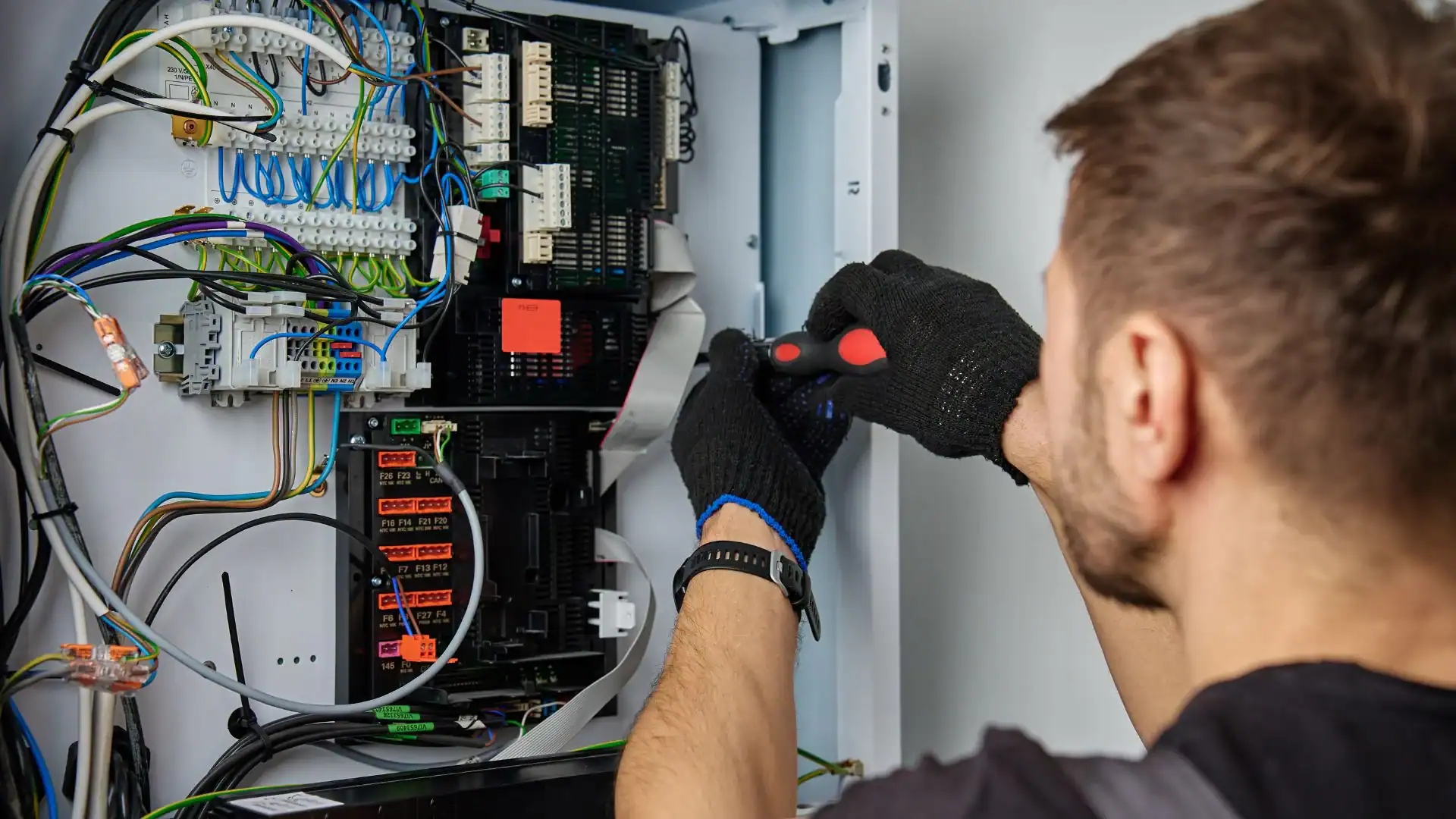
If your panel was flagged during a home inspection, this checklist explains exactly what a licensed electrician looks for — and what actually fails under NC electrical code.
Share:
Summary:
You got a home inspection report. Somewhere in the middle of it, there’s a line about the electrical panel — maybe it says “recommend evaluation by a licensed electrician,” or maybe it’s more specific. Either way, you’re now trying to figure out how serious this is, what it actually means, and what happens next.
That’s exactly what this page is for. We’ll walk through the most common things that fail an NC electrical panel inspection, explain what each one means in plain language, and help you understand the difference between a minor fix and something that needs real attention. If you’re in Alamance County, there’s some local context here that matters too.
A general home inspector can flag obvious problems — a missing cover, a panel that looks burnt, wires that are visibly overcrowded. What they can’t do is test circuits, verify GFCI and AFCI compliance, or use thermal imaging to find a failing breaker that looks completely normal from the outside. That’s our job as a licensed electrician, and the scope is considerably broader.
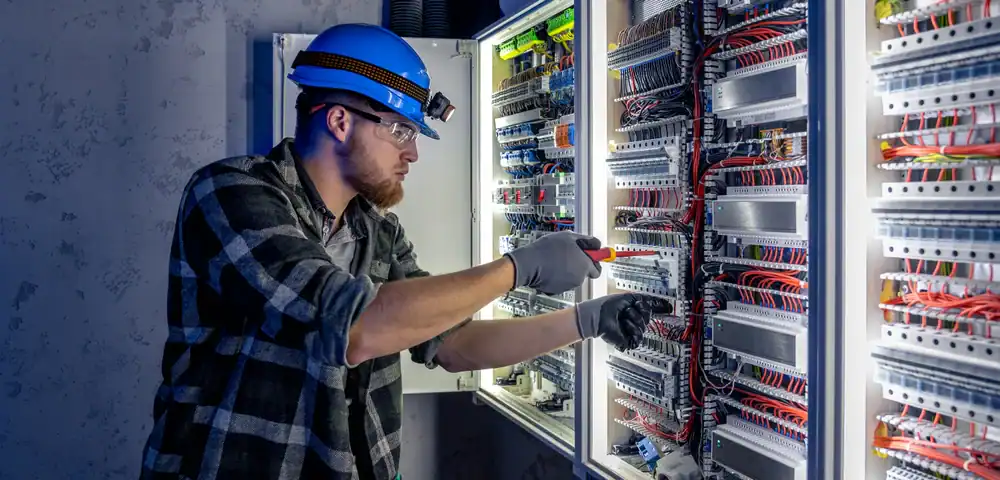
When we inspect a panel, we’re not just looking at it. We’re checking whether it meets current NC electrical code, whether it can safely handle the loads being asked of it, and whether there are signs of problems developing inside the enclosure that won’t show up until they cause a failure. The checklist below covers the items that come up most often — and most commonly result in a failed inspection.
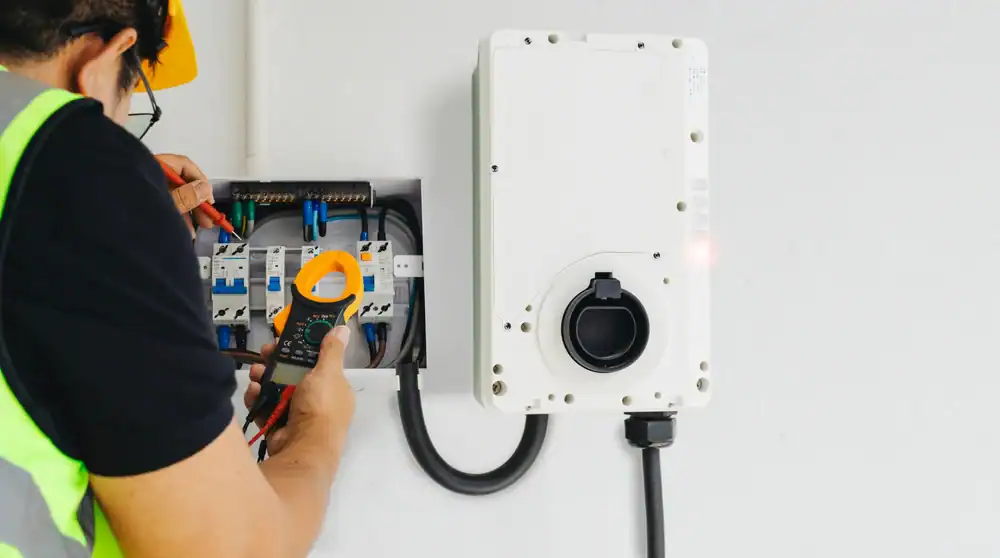
Double-tapped breakers are one of the most frequent findings we see in older Alamance County homes, and they’re worth understanding. A double-tap happens when two separate wires are connected to a single-pole breaker that was designed to handle only one. Most breakers aren’t rated for this configuration.
When two wires share a breaker that isn’t approved for it, the connection can arc and overheat — not immediately, not dramatically, but steadily over time. It’s a code violation under the National Electrical Code, and it’s the kind of thing that fails inspection every time.
Circuit labeling is another issue that sounds minor until it isn’t. NC electrical code requires that every circuit in the panel be clearly and accurately labeled. If a breaker is marked “kitchen” but actually controls three different rooms, or if half the breakers say “unknown,” that’s a problem — not just for inspection purposes, but for anyone who needs to cut power quickly in an emergency.
We’ve opened panels in Graham and Burlington where the labels hadn’t been updated in decades, and the original handwriting was barely legible. That’s not a cosmetic issue.
Working space clearance is something homeowners often don’t think about at all. The NEC requires at least 36 inches of clear space in front of the panel — no water heater, no shelving, no stored boxes. This isn’t arbitrary. It’s there so that an electrician or emergency responder can safely access and work on the panel without being in a confined or hazardous position.
If your panel is tucked behind something in a utility room or basement, that’s a clearance violation.
Box fill — meaning how many wires are inside the panel enclosure — is another common flag, particularly in homes that have had circuits added over the years by different people at different times. When the wiring becomes overcrowded, heat builds up and the risk of shorts increases. It’s especially common in older Alamance County homes where the original panel has been modified multiple times without a full upgrade.
If your home was built between roughly 1950 and 1990 and you’re in an older neighborhood in Burlington, Graham, or Haw River, there’s a real chance the panel was manufactured by Federal Pacific Electric or Zinsco. Both brands come up frequently in inspections of older Alamance County properties, and both have a documented problem that makes them worth taking seriously.
The specific failure mode is this: the breakers in these panels have a history of not tripping when they’re supposed to. A breaker’s entire job is to cut power when a circuit is overloaded — that’s what prevents wiring from overheating. When a breaker fails to trip, the circuit keeps running, the wiring keeps heating, and the risk of fire increases.
The panel can look completely normal from the outside. The breakers may have never given you any obvious trouble. That’s exactly what makes this failure mode difficult to detect without a proper inspection.
Insurance companies have become increasingly aware of this. Many carriers now flag FPE and Zinsco panels during underwriting, and some will decline to renew or issue a policy on a home that still has one. If you’ve received a notice from your insurer about your panel, or if you’re in the process of buying or selling a home where one of these panels was identified, that’s not something to wait on.
Thermal imaging is particularly useful here. We use it as part of our panel inspections because it can detect heat signatures inside the enclosure that indicate a problem developing — loose connections, failing breakers, overloaded circuits — before anything trips or burns. It’s not something most electricians in the Alamance County area offer, and it’s the difference between catching a problem early and finding out about it the hard way.
Want live answers?
Connect with a Electrical Service Providers expert for fast, friendly support.
North Carolina adopted the 2023 National Electrical Code with state-specific amendments, and it expanded several requirements that older homes don’t currently meet. That doesn’t mean every homeowner has to retrofit their entire house tomorrow — but it does mean that any new work, circuit extension, or panel upgrade will trigger compliance with current code. Understanding what those requirements are helps you know what to expect if your panel inspection leads to additional work.
The two areas that come up most often in existing homes are GFCI and AFCI protection. Both are safety technologies that have been required in new construction for years, but older homes were wired before those requirements existed — and most were never updated.
GFCI stands for ground-fault circuit interrupter. It’s the type of outlet with the test and reset buttons you see in bathrooms and kitchens — the ones designed to cut power almost instantly if they detect a ground fault, which is the kind of electrical irregularity that can cause a serious shock. Under NEC Article 210.8, as adopted in NC, GFCI protection is required in kitchens, bathrooms, garages, basements, laundry areas, outdoor receptacles, and within six feet of any sink.
The 2023 NEC expanded this further. GFCI protection is now required on all kitchen receptacles — not just the ones at countertop level. That’s a meaningful change for older homes, where kitchen wiring may only have GFCI protection on a portion of the outlets, or none at all.
In a home built in the 1960s or 1970s in Burlington or Graham, it’s common to find no GFCI protection anywhere in the house. That’s not because the original electrician did poor work — it’s because GFCI requirements have evolved significantly since those homes were built. The wiring was correct for its time. It’s just not compliant with current code, and any panel inspection or upgrade will surface this.
The practical implication is that if you’re getting a panel upgrade and the inspector finds GFCI deficiencies during the final inspection, those will need to be corrected before the work passes. We understand current NC code and identify those gaps during the inspection itself, not after the fact — which is part of why our work passes inspection the first time.
AFCI stands for arc-fault circuit interrupter. Where a GFCI protects against ground faults (the kind of shock hazard that happens near water), an AFCI protects against arc faults — the kind of electrical event that happens inside walls, inside wiring, or at loose connections, and that can ignite insulation or framing without tripping a standard breaker. Under current NC electrical code, AFCI protection is required on all bedroom circuits and most living area circuits when new work is done or circuits are extended.
This matters for panel inspections because AFCI breakers are panel-specific. A combination AFCI breaker verified for one manufacturer’s panel cannot be installed in a different brand’s enclosure and pass inspection. If you have a Zinsco or Federal Pacific panel that needs to be replaced, you can’t simply swap in new AFCI breakers — the panel itself has to go, and the replacement panel has to match the AFCI breakers being installed. This is a technical detail that trips up homeowners who are trying to understand why a panel upgrade costs what it does, and it’s worth knowing before you start getting quotes.
For homes in Alamance County that were built before the 1990s, AFCI protection is rarely present in any form. The wiring was done to the code of the era, which didn’t require it. When those homes get panel work done today, AFCI compliance becomes part of the scope — and that’s not a contractor trying to upsell you, it’s the NC Building Code Council’s current requirement.
It’s also worth noting that homes wired for 60-amp or 100-amp service — which is common in postwar ranch homes across Graham and Alamance — often can’t support the loads that modern households put on them. EV chargers, heat pumps, home offices, multiple large appliances: these are loads that a 100-amp panel wasn’t designed to handle. A panel inspection will assess whether your current service amperage is adequate, and if it’s not, that conversation needs to happen before you add anything new to the system.
If your panel was flagged — whether by a home inspector, an insurance company, or your own instinct that something isn’t right — the next step is a proper evaluation by a licensed electrician, not a general contractor and not a handyman. Panel work in NC requires a permit, and the work has to pass inspection by the local authority having jurisdiction. Any contractor who suggests skipping the permit is a red flag worth paying attention to.
What you want is someone who understands what Alamance County inspectors look for, who will give you a written price before any work starts, and whose work actually passes the first time — not someone who will finish the job and leave you to deal with a correction notice. The median home in this county was built in 1988. A lot of the housing in Burlington, Graham, and Haw River is considerably older than that. This is a market with specific electrical challenges, and it deserves an electrician who knows them.
We’ve been doing exactly this kind of work in Alamance County since 2002. If you have questions about what your panel inspection found — or if you’re ready to have someone take a real look — give us a call. A real person will answer.
Article details:
Share:
Continue learning: