Power outages are getting longer in Alamance County. Here's what homeowners should know before investing in a home battery backup system.
Share:
Summary:
Most people don’t start thinking seriously about backup power until they’ve already been without it for 24 hours. The fridge is warming up, the house is dark, and you’re realizing that “I’ll look into it after this storm” is exactly what you said last time. If that sounds familiar, you’re not alone — and you’re probably in the right place.
This guide is for Alamance County homeowners who want a straight answer: is a home battery backup system actually worth it, how does it work, and what does it take to get one installed the right way?
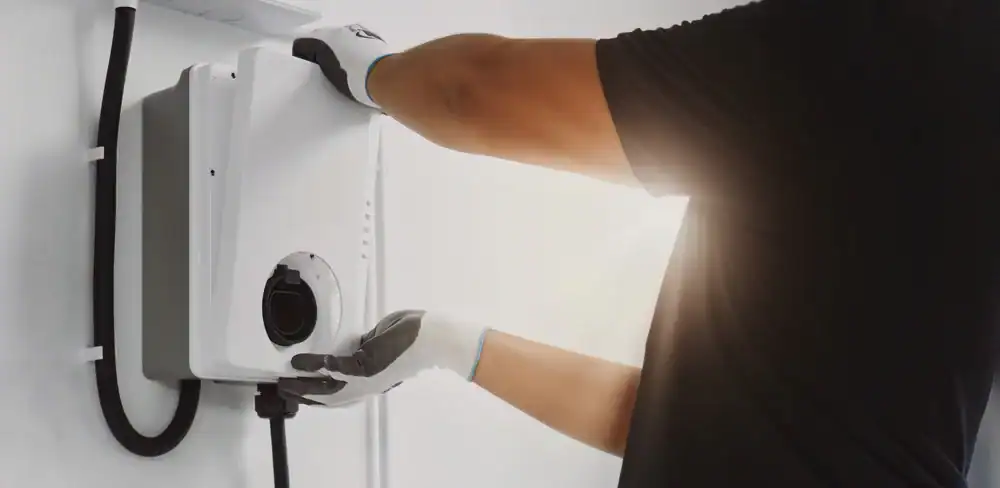
A home battery backup system is exactly what it sounds like — a large rechargeable battery installed in your home that kicks in automatically when the power goes out. It charges from your electrical panel during normal operation, stores that energy, and releases it when you need it most. No fuel, no fumes, no going outside in the rain to pull a cord.
The system connects to your home’s main electrical panel through what’s called a transfer switch. When the grid goes down, the transfer switch isolates your home from the utility line and routes power from the battery instead. The switchover happens in a fraction of a second — fast enough that most people don’t even notice it happened.
What it powers depends on how the system is configured. Some setups cover essential circuits only — your fridge, a few lights, your internet router, and any medical devices you rely on. Others are designed for whole-home coverage. The right setup depends on your home’s electrical load and how long you need it to last.

This is probably the most common misconception we run into, and it’s worth clearing up right away: no, you do not need solar panels to use a home battery backup system. Solar companies produce most of the content you’ll find online about battery storage, which is why it can feel like the two are inseparable. They’re not.
A battery backup system can charge directly from the grid — the same way your phone charges from the wall. During normal hours, it pulls energy from your utility service and stores it. When the power goes out, it uses what it has stored. Solar panels can extend that capability significantly, especially during multi-day outages, because they give the battery a way to recharge even when the grid is down. But they’re an addition, not a requirement.
For many homeowners in Burlington, Graham, and Mebane, a grid-charging battery system is exactly the right fit. You get automatic outage protection without the upfront complexity of a full solar installation. If you decide to add solar later, a well-installed battery system can be designed to accommodate that expansion.
The Duke Energy PowerPair program, which covers most of Alamance County, offers a rebate of up to $5,400 for qualifying battery storage systems — even without solar. Add a solar system to that and the rebate climbs to $9,000. On top of that, the federal Investment Tax Credit currently covers 30% of qualifying installation costs. Those two incentives together change the financial math considerably for Alamance County homeowners. The upfront cost is real, but it’s not as steep as most people assume once you account for what’s available right now.
This is the question we get most often from homeowners who’ve already decided they need backup power but aren’t sure which direction to go. Both options work. They just work differently, and the right choice depends on your priorities.
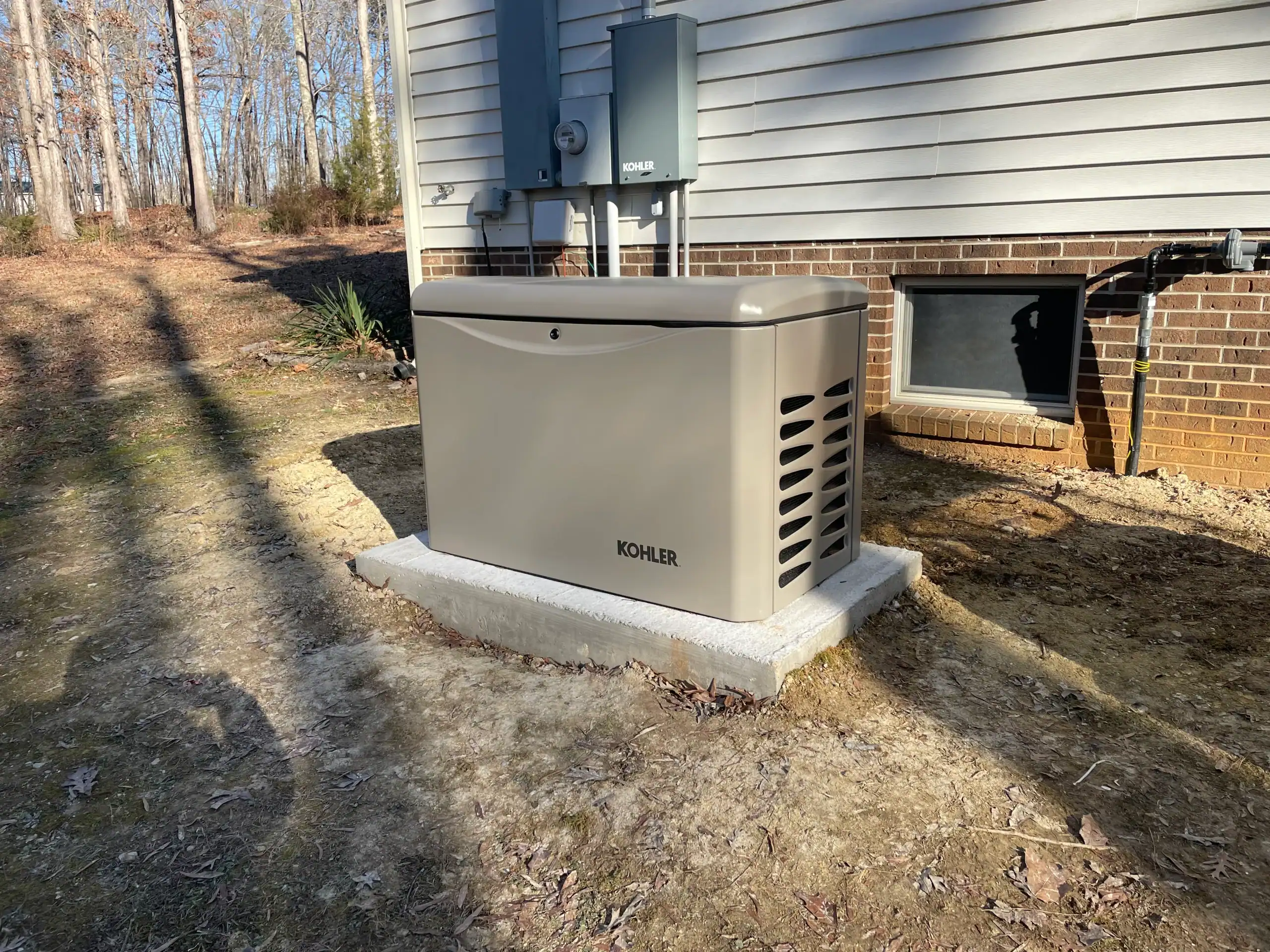
A standby generator runs on natural gas or propane. It starts automatically when the power goes out and can run for days as long as fuel is available. For extended outages — the kind that follow a major hurricane or a serious ice storm — a generator has a clear advantage in raw capacity. It can power a whole house, including central air conditioning, for as long as the fuel supply holds. We install standby generators throughout Alamance County, and for a lot of homeowners, that’s still the right call.
A battery backup system is quieter, requires no fuel, and needs very little maintenance between uses. There’s no combustion, no exhaust, and no weekly test cycles running at 7 a.m. on a Saturday. Modern lithium iron phosphate batteries are rated for 6,000 to 10,000 charge cycles — that’s roughly 15 to 20 years of real-world use. For shorter outages, which account for the vast majority of what Alamance County homeowners actually experience, a properly sized battery system handles the job cleanly and without any of the noise or upkeep.
Some homeowners want both — a battery for the frequent short outages and a generator as a backstop for the rare multi-day event. That’s a legitimate strategy. What matters is that whoever is advising you understands both options and isn’t steering you based on what they happen to sell. We install both, which means our job is to help you figure out what actually fits your home and your situation, not to push you toward one product over another.
Want live answers?
Connect with a Electrical Service Providers expert for fast, friendly support.
For homeowners who do have solar panels — or who are thinking about adding them — a solar battery backup system is worth understanding on its own terms. Solar generation paired with battery storage creates a fundamentally different situation than either one alone.
During a grid outage, a battery-only system is limited to whatever charge it had when the power went out. A solar-paired system can keep recharging the battery during daylight hours, which dramatically extends how long you can stay off the grid. Research from Lawrence Berkeley National Laboratory found that a 30 kWh system paired with solar can meet 92% of a home’s power load at day 10 of an outage. That’s not a short-term bridge — that’s genuine resilience.
The Duke Energy PowerPair program exists specifically to incentivize this combination for Alamance County homeowners, which is why the rebate jumps from $5,400 for battery-only to $9,000 for solar plus storage.
The short answer is: it depends on the system size and what you’re trying to run. A single 10 kWh battery — roughly the size of a standard residential storage unit — can power your home’s essential circuits for somewhere between 12 and 24 hours, assuming you’re not running central air conditioning continuously. That covers your refrigerator, lights, internet, phone charging, and critical medical devices through most of the outages Alamance County homeowners actually face.
Whole home battery backup — meaning the system covers your entire electrical load, including HVAC — requires significantly more capacity. That typically means either a larger battery bank, multiple units, or a solar-paired system that can recharge during the day. It’s a bigger installation and a bigger investment, but for households with specific needs, it’s the right answer.
The key is doing a proper load analysis before you size the system. We’ll look at your actual electrical panel, understand what circuits matter most to you, and help you make an informed decision about capacity. What we want to avoid is either undersizing a system that leaves you frustrated during a real outage, or oversizing it in a way that doesn’t make financial sense for your home.
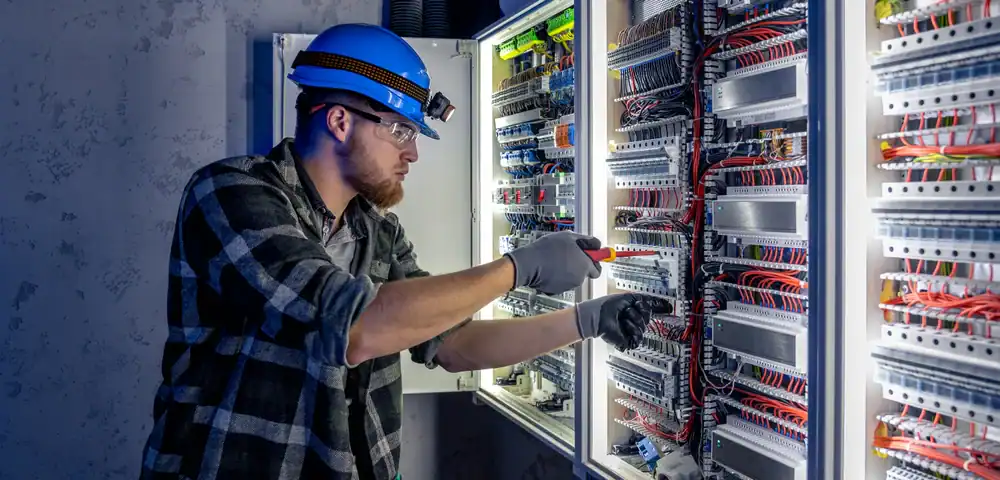
For older homes in Burlington, Graham, and Mebane — and there are plenty of them — there’s an additional consideration. Homes built before the 1990s often have electrical panels that weren’t designed for modern loads, let alone a battery backup system. A panel assessment is usually the first step, and if an upgrade is needed, it can often be combined with the battery installation in a single project. That’s the kind of work we specialize in: existing homes with real electrical histories, not new construction where everything starts fresh.
Installing a home battery backup system is not a DIY project. All connections to your home’s main electrical panel require a licensed electrician under North Carolina electrical code. DIY installation violates those codes and voids most manufacturer warranties. The permit and inspection process is also required — and it exists for good reason. A battery system that isn’t properly grounded or connected can create serious safety hazards.
The installation itself, when done by a qualified electrician, typically takes less than a day. The battery unit is mounted — usually in a garage or utility area — and connected to the panel through a transfer switch. The system is tested, the permit is filed, and the installation is inspected. That’s the process done correctly.
What matters is who’s doing it. Battery backup installation involves your home’s electrical panel, your utility interconnection, and in some cases your utility’s rebate program — Duke Energy’s PowerPair program, for example, requires installation through approved trade allies. Choosing a licensed electrician who understands both the electrical and the utility side of the process protects your rebate eligibility, your warranty, and your home.
We’ve been licensed electrical contractors in Alamance County since 2002. Our Master Electrician, Andy Helton, has held his license since 1989 — that’s over 35 years of licensed electrical experience. We’re licensed by the NC State Board of Examiners of Electrical Contractors, fully insured, and we handle permits as a standard part of every job. Our trucks are stocked to handle most installations same-day, and we use flat-rate pricing so you know exactly what you’re paying before any work begins. When you call us, a real person picks up — not an automated system.
We built ESP Electrical Service Providers around service work on existing homes, which is exactly what battery backup installation requires. Not every electrician has that background, and it shows when they get into an older panel and run into something unexpected.
For most homeowners in Burlington, Mebane, Graham, and the surrounding Alamance County area — yes, it’s worth a serious look. Power outages in the NC Piedmont are getting longer and more frequent. The financial incentives available right now, between Duke Energy’s PowerPair rebate and the federal tax credit, make the cost more manageable than most people expect. And the technology itself has matured to the point where a well-installed system is reliable, low-maintenance, and genuinely useful during the outages that matter.
The question isn’t really whether battery backup works. It does. The question is whether it’s the right fit for your home, your electrical system, and your situation — and that starts with a real conversation and a proper assessment, not a sales pitch.
If you’re ready to get a straight answer about what a battery backup system would actually look like for your home, reach out to ESP Electrical Service Providers. We’re local, we’re licensed, and we’ve been doing this kind of work in Alamance County for over two decades.
Article details:
Share:
Continue learning: