Choosing the best generator for your home comes down to more than brand names. Here's what actually matters — and what most buyers get wrong.
Share:
Summary:
Most people start thinking about a home generator right after a bad outage. The power’s been out for two days, the food in the fridge is a loss, and you’re wondering why you kept putting this off. That moment of frustration is real — and it’s exactly when the wrong decisions get made.
The truth is, choosing the best generator for your home takes a little more thought than picking the highest-rated model on a product review site. Brand matters, but so does sizing, fuel type, and — maybe most importantly — who installs it. Get any one of those wrong and you’ve spent a lot of money on something that might let you down when it counts. This guide will help you get it right.
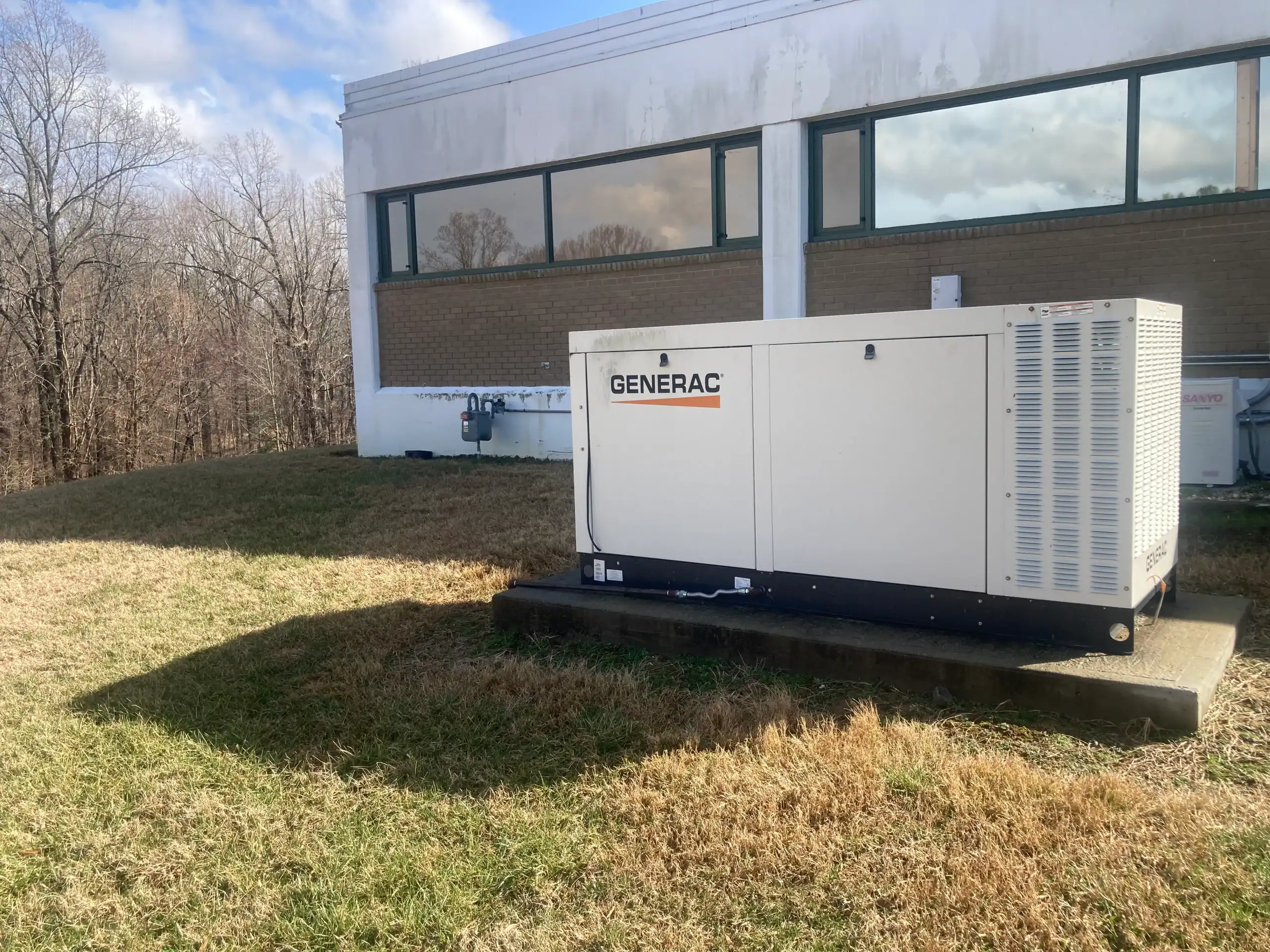
When most people research home generators, they end up comparing brand names without a clear way to evaluate what those names actually mean. Generac consistently ranks as the most trusted home generator brand in the U.S. — the 2024 Lifestory Research study gave them a Net Trust Quotient Score of 117.6, the highest among all major brands. That trust isn’t accidental. Generac holds the largest market share in residential standby generators and has built a reputation for reliable automatic operation and strong dealer support.
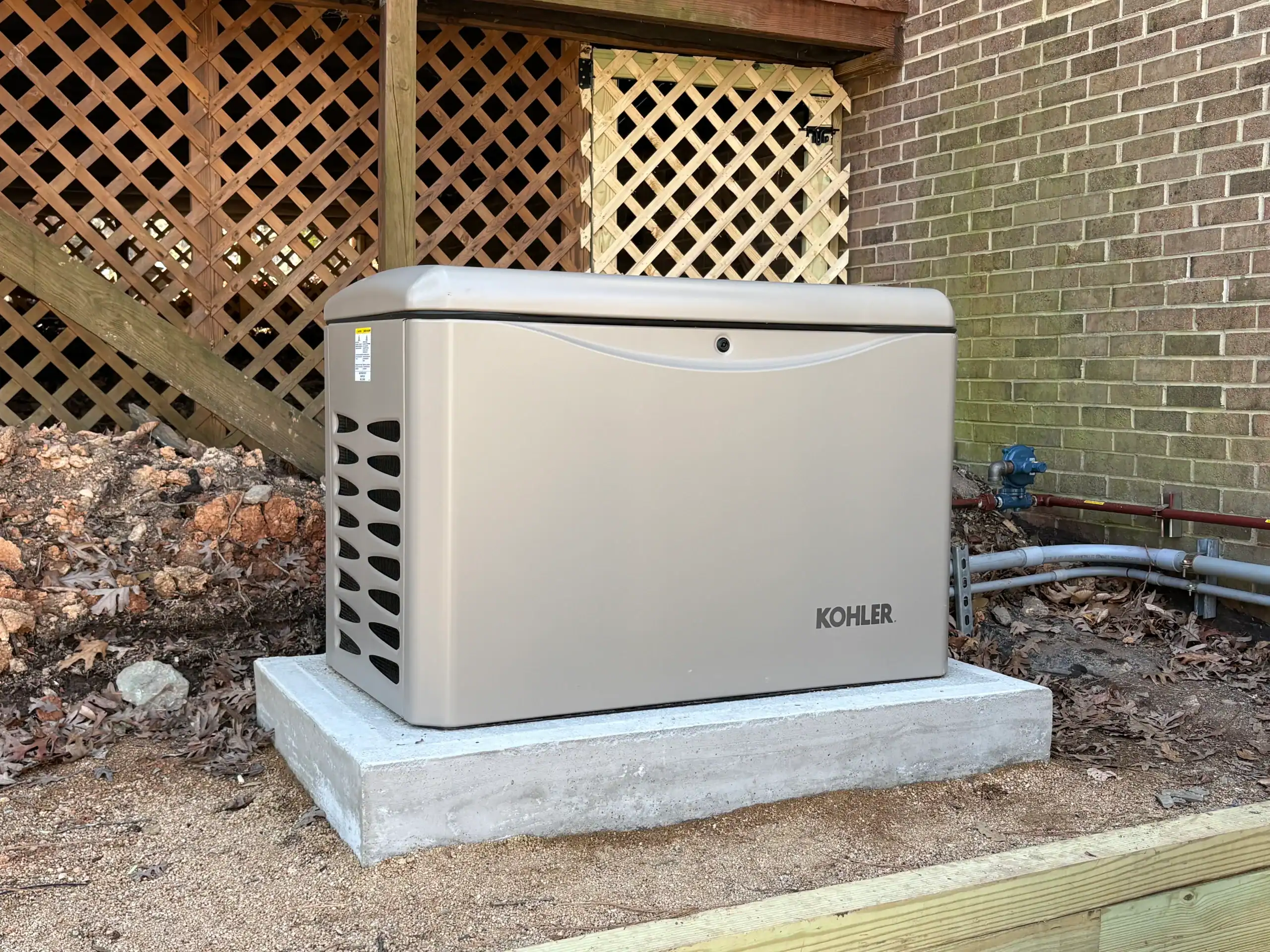
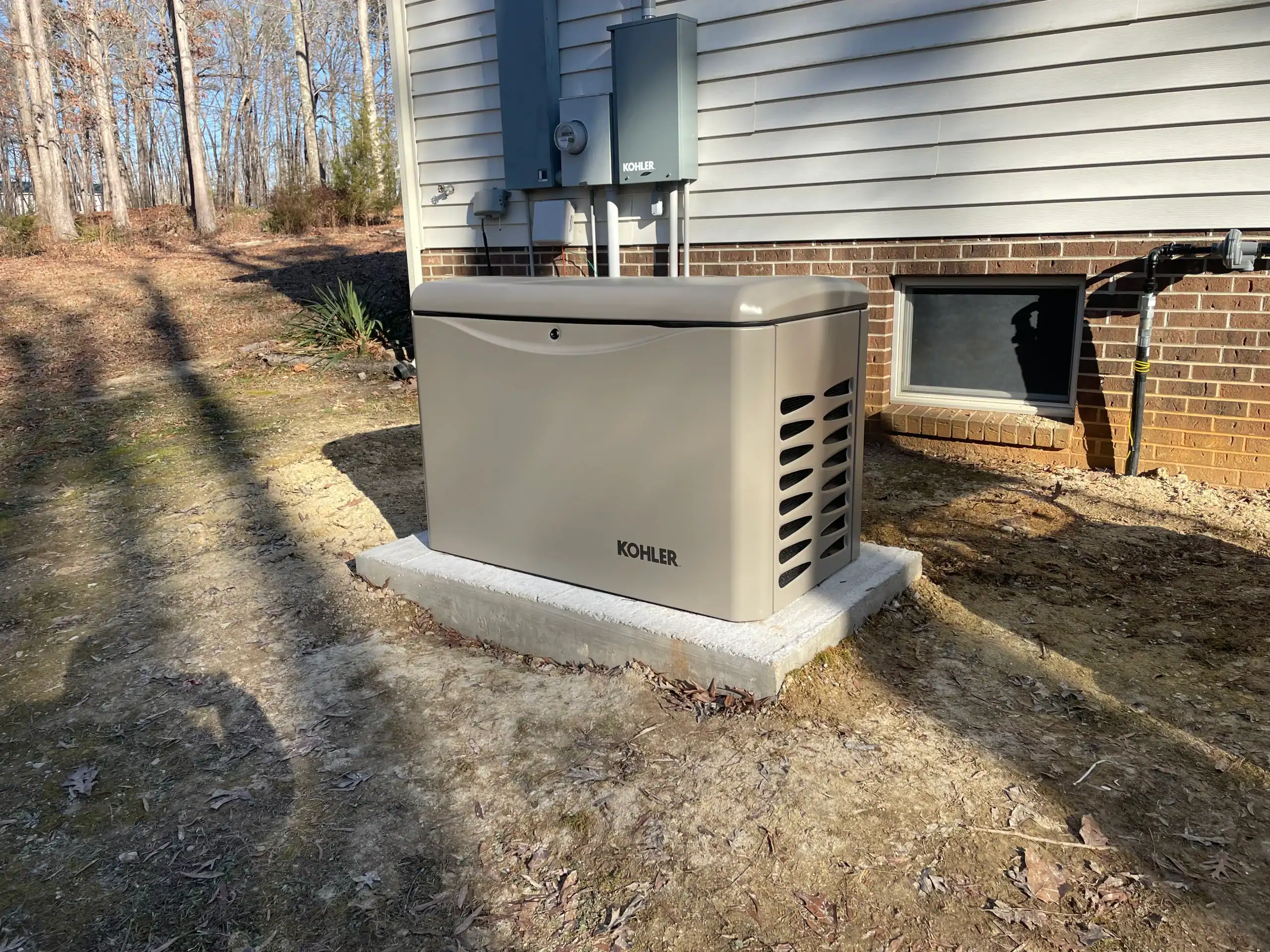
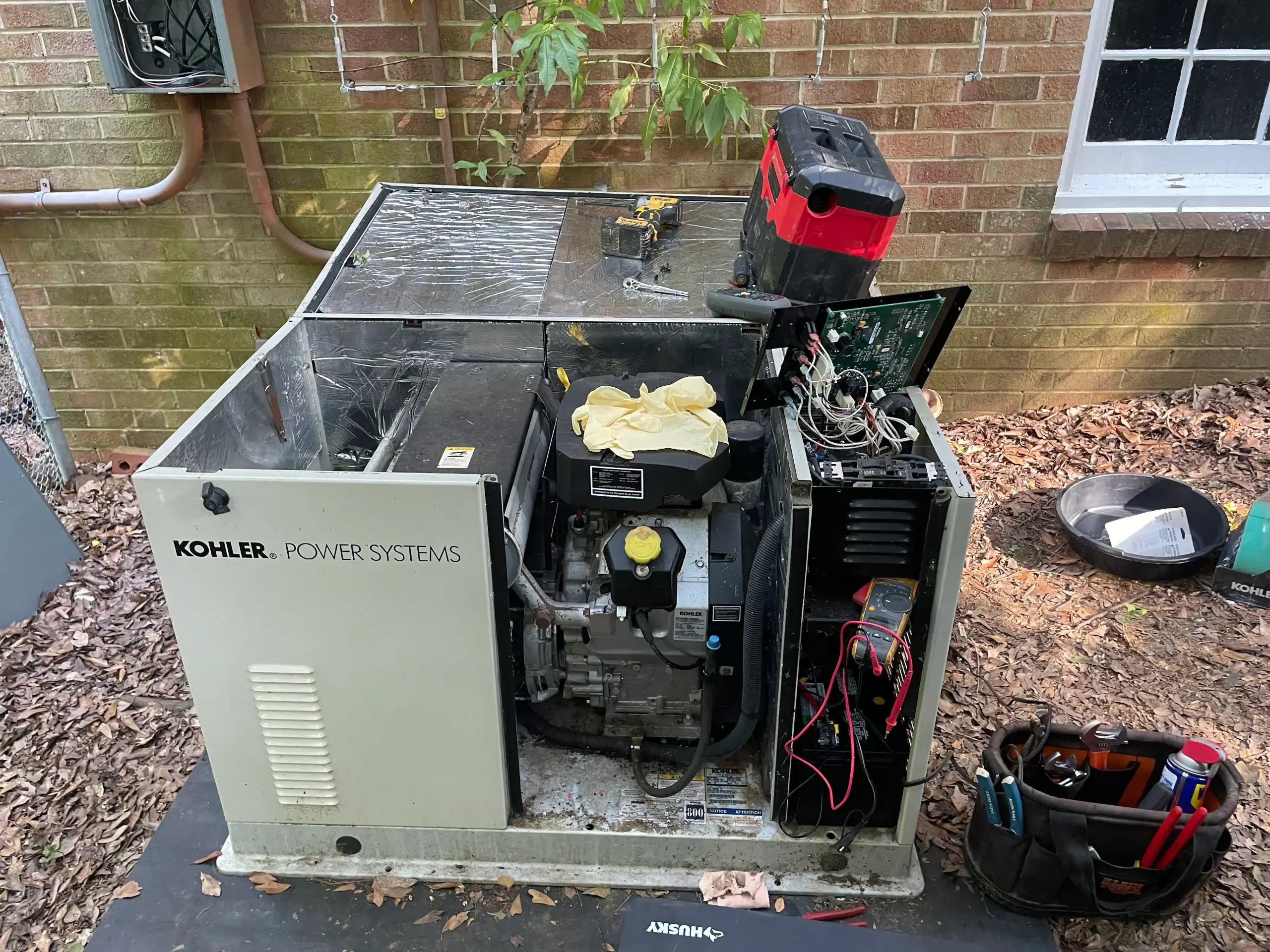
Kohler and Cummins are the other names worth knowing. Both are well-regarded, particularly for heavier-duty applications, and both carry premium price points to match. Briggs & Stratton and Champion round out the commonly considered options for buyers working with tighter budgets. Each brand has its strengths, but the brand comparison only gets you so far — what matters more is whether the unit is sized correctly for your home and installed by someone who knows what they’re doing.
This is the question that trips up a lot of buyers, and it’s worth being direct about it. Portable generators are cheaper upfront, but they come with significant limitations that most product listings don’t emphasize. You have to start them manually, which means going outside during a storm. They can’t be connected to your home’s electrical panel without a separate transfer switch. They produce carbon monoxide, so they have to stay well away from the house. And they run on gasoline, which means you’re either stockpiling fuel or hoping a gas station near you still has power.
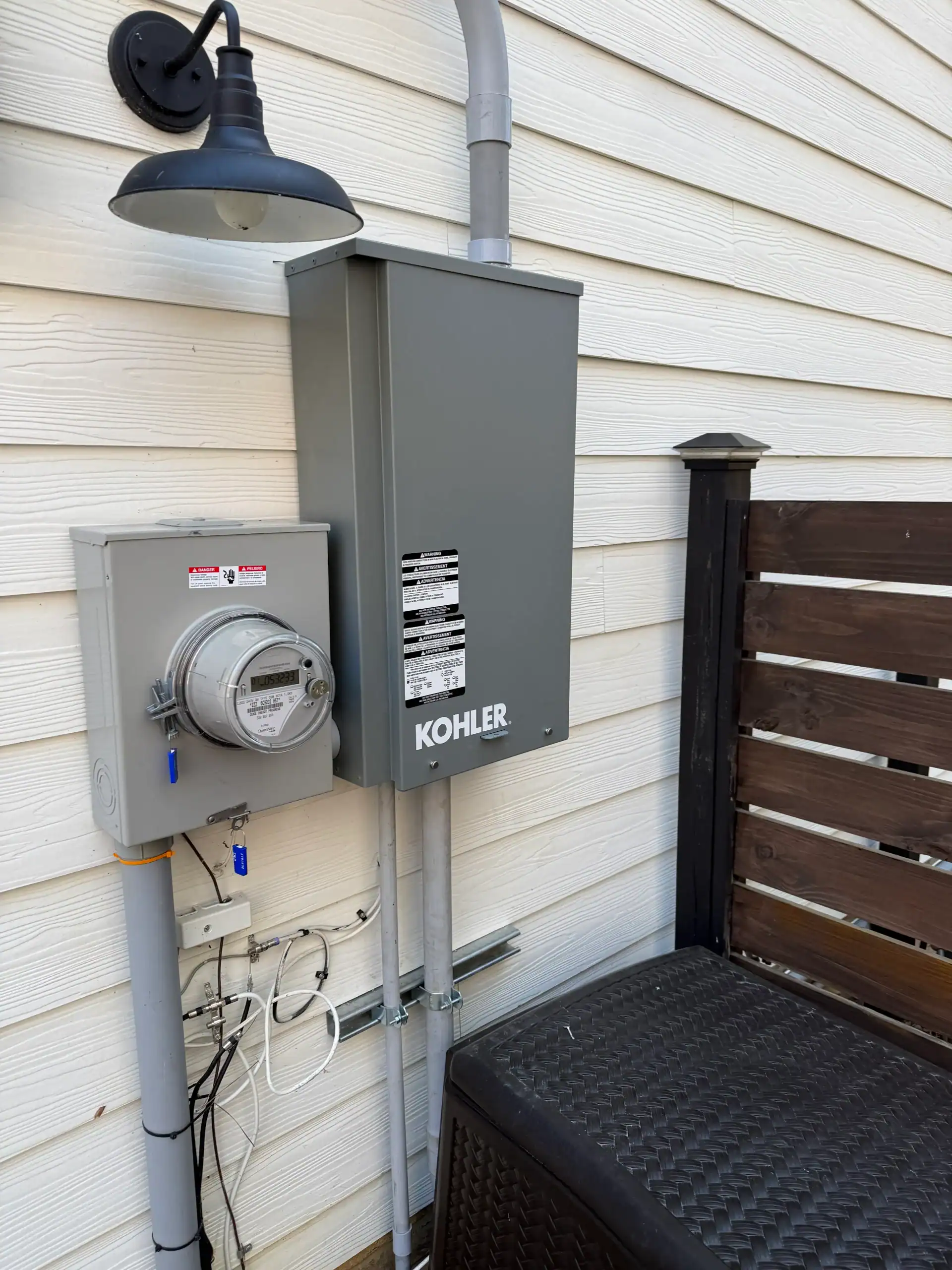
A whole-house standby generator solves all of that. It’s permanently installed outside your home, connected directly to your electrical panel through an automatic transfer switch, and it runs on natural gas or propane. When the power goes out — whether you’re home, asleep, or out of town — the generator detects the outage and restores power to your home within seconds. No manual startup. No extension cords. No running to the garage in the rain.
For Alamance County homeowners, that automatic operation is especially relevant. Duke Energy’s local distribution grid serves over 91,000 customer accounts across the county, and outages here don’t always come with warning. A severe thunderstorm can knock out power to nearly 9,000 customers at once. Ice storms — which hit the Piedmont more than people outside the region realize — can leave neighborhoods without power for three to seven days. And when a hurricane tracks inland from the coast, Burlington and the surrounding communities are squarely in its path. Hurricane Helene in September 2024 was the largest outage event tracked nationally that year, affecting nearly 5 million customers across multiple states, and North Carolina took a significant hit.
A standby generator doesn’t care what caused the outage. It just turns on. That’s the feature that makes it worth the investment for most homeowners who’ve been through one of those events and don’t want to go through it again.
Fuel type is one of the most practical decisions you’ll make when choosing a standby generator, and it’s largely determined by what’s already available at your home. If you have Piedmont Natural Gas service — which covers a significant portion of Alamance County, including much of Burlington, Mebane, and Elon — a natural gas generator is almost always the better choice. It draws directly from the same utility line that powers your stove and furnace, so there’s nothing to store, nothing to refill, and no risk of running out during a prolonged outage. Natural gas generators account for more than 48% of all standby units installed globally, and for good reason.
Propane is the right answer for homes without natural gas service — particularly in the more rural parts of Alamance County, including areas around Haw River, Green Level, and Altamahaw. Propane requires a storage tank on your property, and during an extended outage you’ll need to monitor your fuel level and arrange a refill if needed. It’s a workable solution, just one that takes a bit more planning.
One thing worth knowing: if you’re in a rural area of Alamance County and rely on a well pump for your water supply, the fuel type conversation becomes even more important. A power outage doesn’t just mean inconvenience — it means no running water at all. That’s a situation where a standby generator stops being a comfort upgrade and starts being a basic necessity. We’ve installed systems for many homeowners in exactly that situation, and the relief they feel after the first real outage test is something we hear about consistently.
Want live answers?
Connect with a Electrical Service Providers expert for fast, friendly support.
Generator sizing is the part of this process that most product review sites gloss over, and it’s where the most expensive mistakes happen. The instinct is to look at square footage and pick a number that sounds big enough. That’s not how it works. A 2,000-square-foot home with two AC units, an electric range, and a hot tub has a completely different power demand than a 2,000-square-foot home with gas appliances and a single AC unit.
The right approach is a load calculation — a methodical accounting of every major appliance and system in your home, including startup surge requirements, not just running wattage. A 3-ton central air conditioner draws roughly 10.5 kilowatts at startup alone. That single number eliminates a lot of “budget-friendly” generator options that look sufficient on paper. The general rule for air-cooled generators is that they should run at no more than 80% of rated capacity under sustained load — which means a 12kW generator is really a 9.6kW generator in practice.
A proper sizing assessment starts with your critical loads — the systems you absolutely cannot do without during an outage. For most Alamance County homeowners, that list includes heating and cooling, the refrigerator and freezer, lighting, and any medical equipment. From there, you add the loads you’d want to keep running: the water heater, the washer and dryer, home office equipment, and so on.
Once you have a running wattage total, you account for startup surge. Electric motors — the kind that run your AC compressor, well pump, and refrigerator — draw significantly more power at startup than they do while running. If your generator can’t handle that surge, it will trip off at the worst possible moment. This is why undersizing is such a common and costly mistake. The unit that seemed like a reasonable middle-ground option turns out to be inadequate the first time a summer storm knocks out power and your AC tries to kick on.
There’s also the question of what you want to protect versus what you can live without. A partial transfer switch covers selected circuits — your essential systems — while a whole-house transfer switch covers everything. The right answer depends on your home’s load profile and your budget, but it’s a decision that’s worth making deliberately rather than defaulting to whatever the installer suggests without understanding the tradeoffs.
We’ve been doing load assessments for Alamance County homeowners since 2002. The homes here vary widely — older bungalows in Burlington’s historic neighborhoods, newer construction out near Mebane, rural properties in Graham and Haw River with well pumps and outbuildings. Each one has a different power profile, and each one deserves a sizing recommendation based on its actual numbers, not a guess.
Here’s something most buying guides don’t tell you: the generator itself is only part of what you’re paying for. The installation is where the complexity lives, and it’s where the difference between a qualified contractor and an unqualified one becomes very apparent.
A proper standby generator installation in North Carolina involves pulling an electrical permit through the county, coordinating with your gas utility for the fuel line connection, pouring a concrete pad for the unit to sit on, installing and wiring the automatic transfer switch, and passing a final inspection before the job is considered complete. None of that is optional. NC law requires a licensed electrical contractor to pull the permit, and skipping the inspection process can void your homeowner’s insurance coverage if something goes wrong later.
The permit and inspection requirement is also why Generac’s factory authorization matters more than it might seem. Generac’s warranty requires installation by an authorized dealer. If a non-authorized installer puts in your generator — even if they do it competently — you may have no warranty coverage on a piece of equipment that cost several thousand dollars. We’re a Generac Authorized Factory Dealer, which means every installation we do is backed by the manufacturer from day one.
What that looks like in practice: we handle the permit, we coordinate with Duke Energy and Piedmont Natural Gas, we manage the inspection scheduling, and we don’t consider the job finished until the generator has completed its weekly test cycles and you’re satisfied with how everything is working. Our customers often tell us they didn’t even need to be home during the installation — we handle everything and walk them through the system when it’s done. That’s the standard we hold ourselves to on every job in Alamance County.
Andy Helton, our master electrician, has held his NC electrical contractor license since 1989. That’s 35 years of installations, inspections, and load calculations across Alamance County and the surrounding region. When he looks at your home’s electrical panel and fuel setup, he’s not estimating — he’s reading a situation he’s seen hundreds of times before.
The best generator for your home is the one that’s correctly sized for your actual power needs, fueled by whatever source is most reliable at your address, installed by a licensed contractor who pulls the permits and passes the inspection, and backed by a manufacturer warranty that’s actually valid. That’s a higher bar than most product review sites set, but it’s the right one.
Power outages in Alamance County aren’t a hypothetical. They happen during hurricane season, during ice storms, and sometimes on a clear Tuesday afternoon with no apparent cause. The homeowners who feel the best about their generator investment are the ones who made a deliberate decision — not a reactive one after the third bad outage.
If you’re ready to have a real conversation about what your home needs, ESP Electrical Service Providers is a local call away. We’ve been doing this work in Burlington and across Alamance County for over two decades, and we’re happy to start with a straightforward assessment — no pressure, no overselling.
Article details:
Share:
Continue learning: