Your generator runs a weekly self-test and seems fine — but that's not the same as being ready. Here's what proper diesel generator maintenance actually looks like.
Share:
Summary:
If you’ve had a standby generator for a while, you’ve probably watched it run its weekly self-test and assumed everything was fine. That’s a reasonable assumption — until the power goes out and the generator doesn’t start. The self-test doesn’t check oil condition, fuel quality, battery health, or whether the transfer switch will actually fire under load. It just confirms the engine turns over. Real generator readiness takes more than that, and understanding the right service intervals is the difference between a generator that performs and one that lets you down at the worst possible moment.
Diesel generators don’t follow a one-size-fits-all schedule. Service intervals depend on how often your unit runs, what it’s powering, and whether it’s a residential standby system or a commercial unit that operates under heavier, more frequent load. That said, there are widely accepted benchmarks that apply across the board.
For most residential standby generators in Alamance County, the oil and filter should be changed every 100 to 200 hours of run time, or at least once a year — whichever comes first. Fuel filters typically need replacement around every 500 hours. A complete preventive inspection, covering everything from belts and hoses to coolant levels and electrical connections, should happen every six months or every 400 hours. And a full load bank test — which actually verifies your generator can handle real electrical demand — should be part of every annual service.
A proper maintenance checklist goes well beyond the oil change most people think of when they hear “generator service.” Here’s what a thorough annual service actually covers — and why each item matters.
Oil and filter replacement is the foundation. Diesel engine oil breaks down over time and loses its ability to protect internal components, even if the generator only ran a handful of hours. Skipping this is one of the fastest ways to shorten the engine’s life. Alongside the oil change, the fuel filter needs to be inspected and replaced on schedule. Diesel fuel that sits in a tank for six to twelve months can develop microbial growth and water contamination — and a clogged or contaminated fuel system is one of the leading causes of generator failure during an actual outage.
Battery inspection is another step that gets overlooked more than it should. A generator battery that sits on a float charger for months without being tested can appear healthy and still fail at startup. We test battery voltage, check the terminals for corrosion, and replace the battery when it’s no longer holding an adequate charge. The coolant system also needs attention — low or degraded coolant leads to overheating, and that’s a repair that costs significantly more than a routine coolant service.
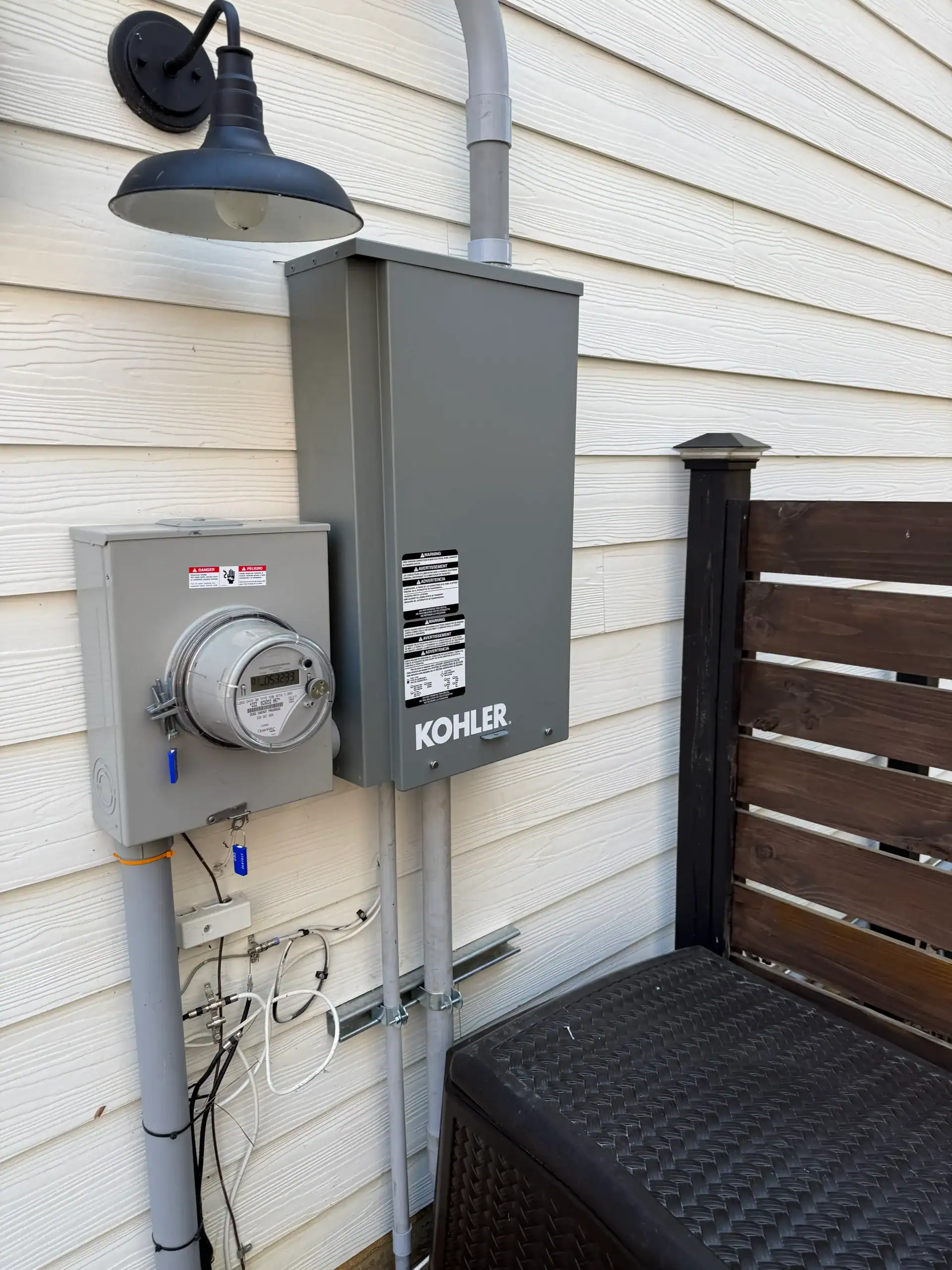
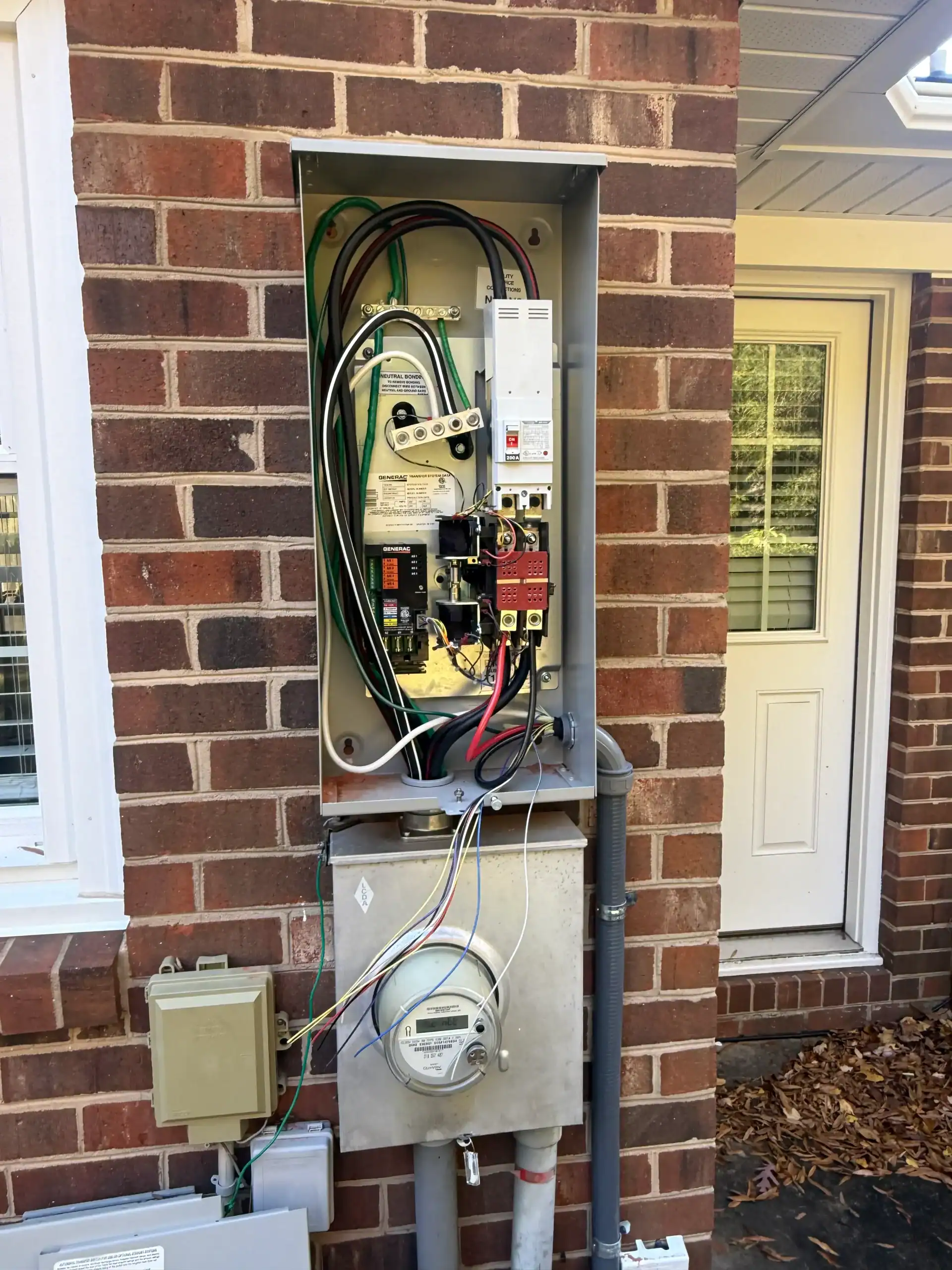
The transfer switch test is arguably the most important item on the list. This is the component that detects a power outage and switches your home or business over to generator power automatically. If it fails, your generator could be running perfectly and your property still goes dark. We test the transfer switch under real conditions during every maintenance visit. Finally, a full load bank test puts the generator under artificial electrical load to confirm it can handle actual demand — and for diesel units, this also prevents wet stacking, which is what happens when an engine runs for extended periods without sufficient load and unburned fuel accumulates in the exhaust system.
For commercial and industrial operators in Alamance County, NFPA 110 adds a compliance layer on top of all of this. That standard requires monthly run tests of at least 30 minutes under load, annual load bank testing, and a full system test every three years. It also requires documented maintenance records that are available for inspection. If your facility falls under NFPA 110 — healthcare, municipal, telecommunications, assisted living — this isn’t optional.
Alamance County residents know what a serious storm looks like. Tropical Storm Chantal pushed the Haw River to 32.5 feet — just four inches below the all-time record set by Hurricane Fran back in 1996. Burlington’s airport recorded 5.75 inches of rain in a single day, the highest total since records began at that site. Saxapahaw was effectively cut off. That kind of event doesn’t give you time to call a technician and wait for a service appointment.
When a storm like that hits and the Duke Energy grid goes down, generator technicians across the region are flooded with calls. Wait times stretch from days to weeks. If your generator fails during that window, you’re waiting in the dark — and if you have medical equipment, a sump pump protecting a finished basement, or refrigerated medication, that’s not a minor inconvenience.
The cost argument for preventive maintenance is straightforward. Research from the U.S. Department of Energy puts the savings at roughly five dollars recovered for every one dollar spent on preventive maintenance. Reactive repairs — the kind you need after a failure — cost three to five times more than the scheduled service that would have prevented the problem. A fuel filter replacement runs around $150. A full fuel system rehabilitation on a neglected diesel generator can exceed $12,000. Those numbers aren’t hypothetical. They’re what happens when maintenance gets deferred long enough.
The other thing worth understanding is that most generator failures happen during actual outages, not during weekly self-tests. The self-test cycle is brief, unloaded, and doesn’t replicate real operating conditions. A generator can pass every self-test for years and still fail the first time it’s asked to carry a real load. That’s not a design flaw — it’s just the reality of what a short, unloaded test cycle does and doesn’t check.
Want live answers?
Connect with a Electrical Service Providers expert for fast, friendly support.
When we come out for a generator maintenance visit, we’re not just running through a generic checklist. We’re looking at your specific unit, your fuel condition, your battery health, and the condition of every component that could prevent your generator from starting when it needs to.
Our annual maintenance service includes oil and filter changes, battery testing and replacement where needed, spark plug inspection, coolant level and condition checks, fuel system inspection, belt and hose evaluation, transfer switch testing, and a full system load test. Every visit is documented, which matters both for warranty compliance and for building a maintenance history that helps us catch developing problems before they become failures.
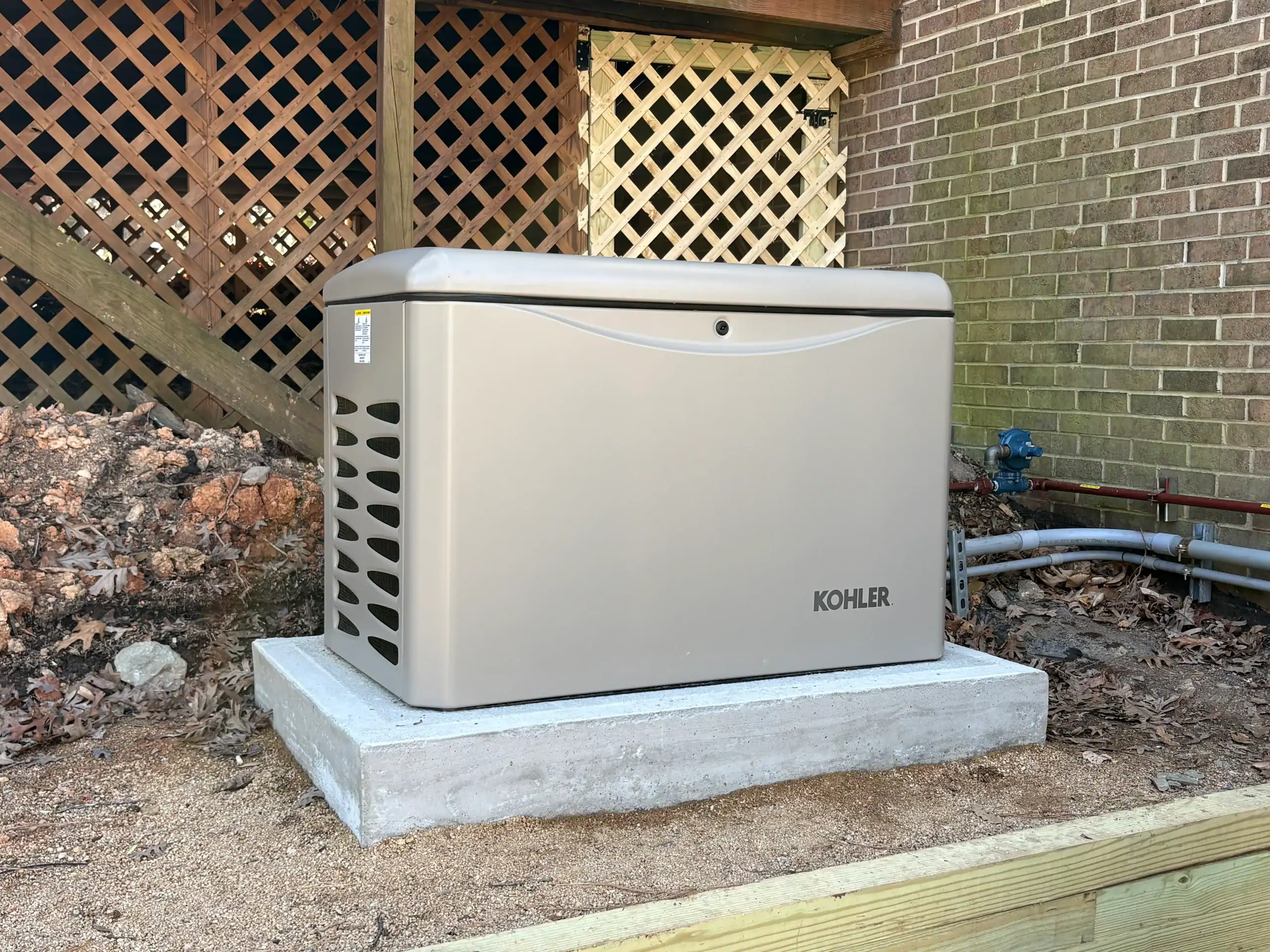
Generator sizing comes up constantly during maintenance conversations, especially when a homeowner realizes their current unit isn’t covering everything they assumed it would. Getting the size right matters whether you’re buying a new system or evaluating whether your existing generator is appropriately matched to your property’s needs.
For most homes, the question is whether you want essential circuit coverage or whole-house coverage. Essential circuits — refrigerator, a few lights, the sump pump, and maybe one HVAC zone — typically require somewhere between 7 and 12 kilowatts depending on the home’s size and what’s being powered. Whole-house coverage for a larger home, where you want to run central air conditioning, the electric range, and everything else without interruption, can push the requirement to 20 kilowatts or more.
For commercial and industrial properties in Alamance County, the calculation gets more involved. You’re accounting for HVAC loads, lighting, equipment startup draws, and in some cases, NFPA 110 requirements that dictate how long the system must sustain power and at what capacity. A facility that houses medical equipment or refrigerated inventory has different requirements than a standard office building.
The honest answer is that sizing a generator correctly requires a load assessment — a review of your actual electrical usage and the circuits you need covered. We do this as part of our generator installation and consultation process. It’s not a complicated conversation, but it’s one worth having before you commit to a system, because an undersized generator that trips under load is nearly as problematic as having no generator at all. If you’re unsure whether your current system is appropriately sized, that’s something we can evaluate during a service visit.
Alamance County sits in what’s sometimes called the ice belt of North Carolina — the stretch of Piedmont where winter storms tend to produce freezing rain more than snow. Ice accumulation on power lines causes outages that can last three to seven days, and those outages hit when temperatures are already dropping. That’s a different kind of pressure on your generator than a summer thunderstorm, and it’s worth thinking about your maintenance calendar with both seasons in mind.
Before hurricane season — which runs June through November — is the right time to confirm your generator has had its annual service, your fuel is fresh or has been treated, and your battery is holding charge. Diesel fuel that’s been sitting since the previous winter without treatment is a liability heading into storm season. We recommend scheduling your annual service in the spring so you’re covered heading into the highest-risk months.
Before winter, the focus shifts to coolant condition and battery performance. Cold temperatures accelerate battery degradation, and a battery that held adequate voltage through the summer may not have enough reserve capacity to start a cold engine in January. Coolant that hasn’t been serviced in two or more years may not be providing adequate freeze protection either. These are straightforward checks, but they’re the kind of thing that gets missed when a generator has been running its weekly self-test without any professional attention.
We also recommend that commercial operators in Alamance County — assisted living facilities, telecommunications sites, grocery stores — review their fuel storage levels heading into both storm seasons. NFPA 110 Level 1 systems require enough on-site fuel to sustain 96 hours of operation. That’s not a guideline; it’s a compliance requirement, and it’s one that’s easy to overlook until an inspector asks for documentation.
If you have a service agreement with us, seasonal checks are built into your schedule and we reach out to coordinate timing. If you don’t, this is a good time to think about whether that structure makes sense for your situation — particularly if your generator is protecting critical equipment or serving a property where an extended outage would cause real damage.
A standby generator is only as reliable as the maintenance behind it. The service intervals aren’t arbitrary — they exist because components degrade on a calendar schedule whether the generator runs frequently or not. Oil breaks down, fuel goes stale, batteries lose capacity, and transfer switches need to be tested under real conditions to confirm they’ll work when you actually need them.
If you’re not sure when your generator was last serviced, or if it’s been more than a year since anyone looked at the fuel, the battery, or the transfer switch, that’s worth addressing before the next storm season. Waiting until something fails — and then trying to get a technician out during a post-storm surge — is a much harder position to be in.
We’ve been doing this work in Alamance County since 2002. If you want to talk through your generator’s maintenance history or schedule a service visit, call us at 336-228-3300.
Article details:
Share:
Continue learning: