Your power's out. But is it Duke Energy's problem or something inside your own home? Here's how to tell — and what to do either way.
Share:
Summary:
The power goes out. Your first move is probably the Duke Energy outage map — and that makes sense. But what if the map shows nothing? What if only part of your house went dark while your neighbor’s porch light is still on? That’s where things get confusing fast, and it’s a situation we see constantly here in Alamance County.
Not every outage is Duke Energy’s problem, and not every call to the utility gets you closer to the answer. Understanding the difference between a utility outage and an internal electrical issue can save you hours of frustration — and sometimes a lot worse.
The Duke Energy outage map is the right first stop when your power goes out. You can search your address directly, and the map updates roughly every 15 minutes — so if a crew has just been dispatched or a new outage has been reported in your area, it may take a few minutes to show up.
What the map won’t tell you is whether the problem is on your side of the meter. Duke Energy’s responsibility ends at the point where their service line connects to your home. Everything from the meter base inward — your service entrance, your panel, your circuits — is yours to manage and maintain.
If the outage map shows no reported problems in Alamance County and you still don’t have power, that’s a signal worth paying attention to. It often means the problem is inside your home.
It depends heavily on what caused the outage. For a localized event — a single fallen tree on a distribution line, a blown transformer — most outages in the area resolve within two to four hours. Duke Energy typically provides an estimated time of restoration (ETR) on the outage map, though that estimate can shift as crews assess the damage on the ground.
Larger storm events are a different story. North Carolina has one of the worst outage records in the country. According to U.S. Energy Information Administration data, in 2018 — the year Hurricanes Florence and Michael both struck NC — the average annual power interruption duration per customer climbed to nearly 30 hours, the highest in the nation that year. Even in a normal year, the national average sits around 5.5 to 6 hours of total outage time per customer annually. North Carolina regularly exceeds that.
Alamance County specifically has been hit hard in documented events. A storm knocked out power to more than 6,000 customers along the Guilford/Alamance County line. A separate event left around 2,000 customers in Mebane and Haw River without power after trees fell on equipment. Another storm took out power for more than 3,100 customers in northern Alamance County. Burlington was specifically named in a NC Utilities Commission report on a major ice storm that affected 425,000 customers across the Greensboro–Winston-Salem–Durham–Burlington–Chapel Hill corridor.
Ice storms, in particular, are brutal for this region. When ice accumulates on tree branches and those branches come down on distribution lines, restoration can stretch from hours into days. During Winter Storm Fern in January 2026, the hardest-hit customers in the Southeast went more than six days without power. That’s not a hypothetical — it’s what this part of the state has already lived through.
This is one of the most frustrating situations a homeowner can land in. Duke Energy marks your address as restored. You call them. They say the power is on at your meter. But your house is still dark — or at least part of it is.
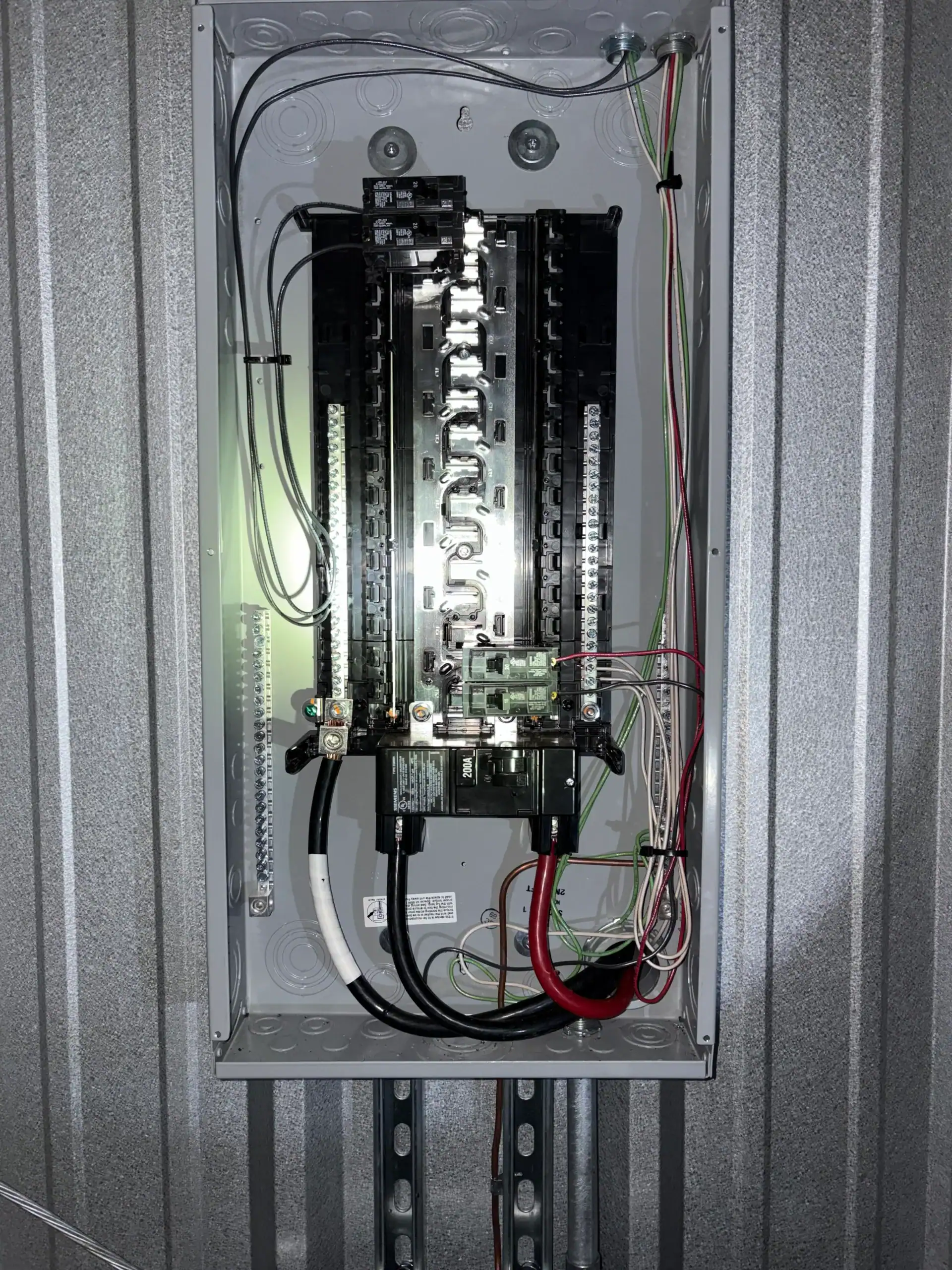
Here’s what’s usually happening: Duke Energy is correct. The power is on at your meter. The problem is between the meter and your lights. That could mean a tripped breaker, a blown fuse, a failing panel, or a loose neutral connection — any of which can cut power to part or all of your home without showing up anywhere on Duke Energy’s system.
A partial outage is the clearest sign of an internal electrical problem. If your kitchen has power but your bedrooms don’t, or your upstairs is dark while the downstairs is fine, that’s almost certainly a circuit issue — not a utility problem. The same goes for flickering lights, outlets that work intermittently, or a panel that hums or buzzes.
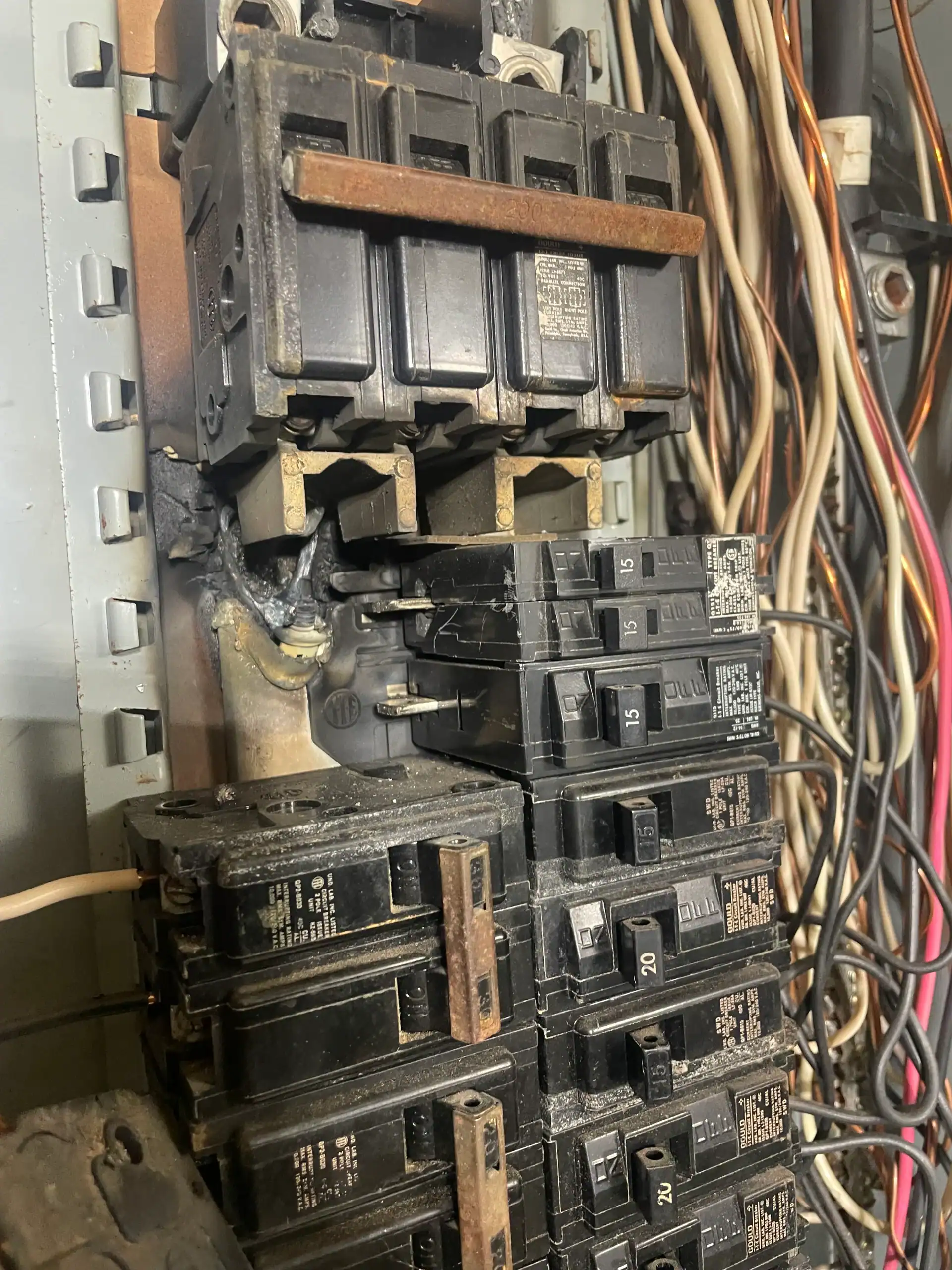
A buzzing panel is not just annoying; it can indicate loose wiring, a failing breaker, or internal arcing — all of which are fire risks that need immediate attention from a licensed electrician, not a call to Duke Energy. Inconsistent voltage — the kind that happens when a partial outage or a failing neutral connection lets some power through but not the right amount — can also quietly damage appliances, HVAC systems, and sensitive electronics. By the time you notice something isn’t working right, the damage may already be done.
If the Duke Energy map shows your power restored but something still isn’t right, stop waiting for a utility crew. The problem is likely inside your home, and that’s where a licensed electrician needs to look.
Want live answers?
Connect with a Electrical Service Providers expert for fast, friendly support.
North Carolina’s outage history isn’t just bad luck — it’s geography. The state sits in the path of Atlantic hurricanes, Piedmont ice storms, and summer thunderstorms that can drop trees on power lines faster than crews can clear them. Alamance County, positioned between the Triad and the Triangle, gets a share of all of it.
What that means practically is that if you live in Burlington, Graham, Mebane, Haw River, or anywhere in between, losing power is not a rare event. It’s a recurring part of life here. The question isn’t really whether it will happen again — it’s whether you’ll be ready when it does, and whether you’ll know what to do when the problem turns out to be inside your own walls.
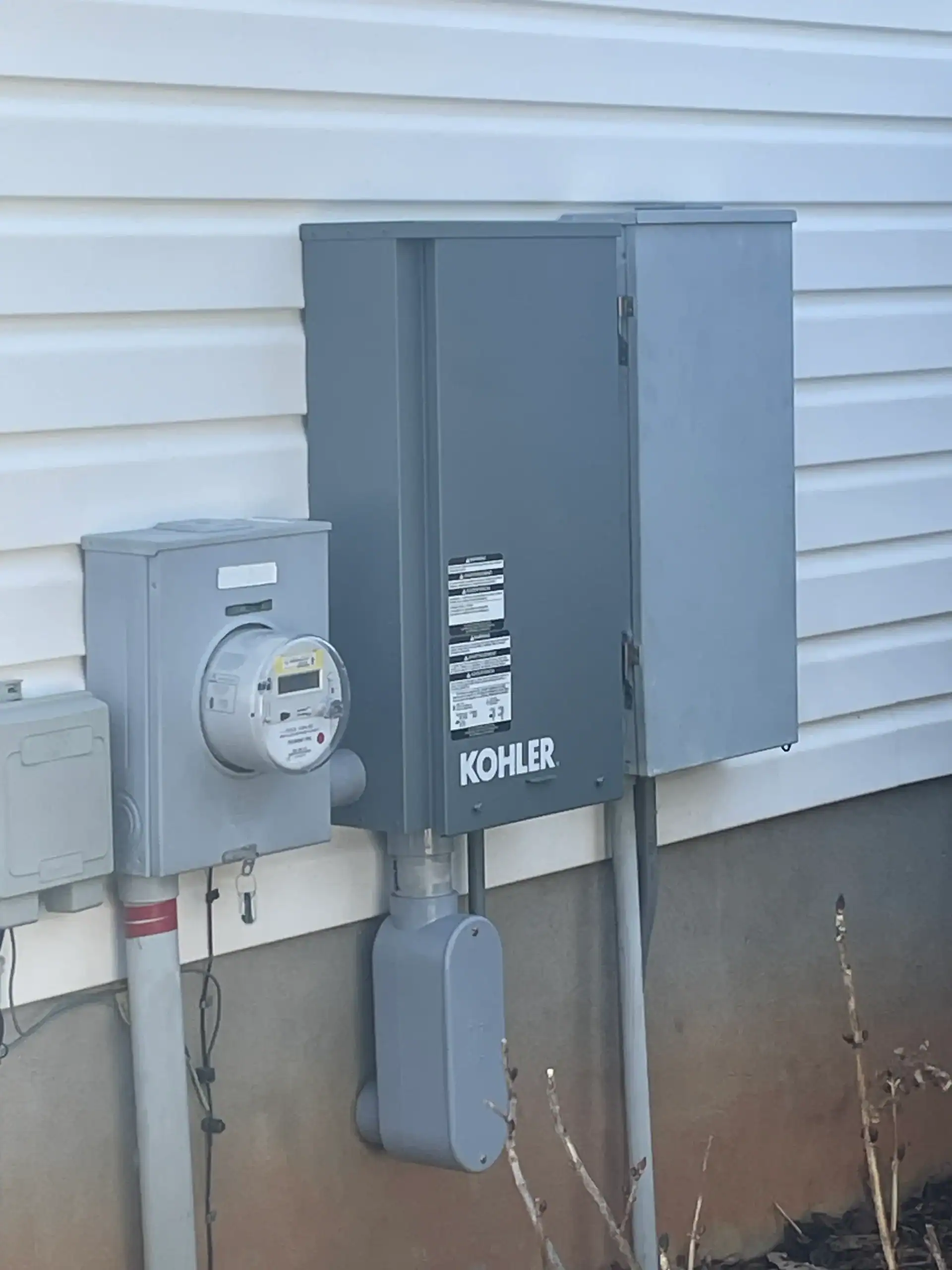
Duke Energy is responsible for the service line that runs from the street to your meter. Once power crosses that meter, it’s yours to manage. That boundary matters more than most homeowners realize, and it becomes especially important when something goes wrong.
If your entire neighborhood is dark and the outage map confirms a reported outage in your area, you’re dealing with a utility problem. Wait it out, report the outage if it hasn’t been reported, and let Duke Energy’s crews do their job. There’s nothing an electrician can do about a downed distribution line.
But if your neighbors have power and you don’t — or if only part of your house is affected — the odds shift significantly toward an internal problem. A tripped circuit breaker is the most common cause of localized power loss, and it’s something you can check yourself. Find your breaker panel, look for any breaker that’s in the middle position rather than fully on or fully off, and reset it by switching it fully off before flipping it back on.
If it trips again immediately, stop — there’s a reason it’s tripping, and forcing it is dangerous. Beyond a tripped breaker, the causes get more complex. A failing service entrance, a corroded neutral connection, an overloaded panel that can’t handle modern electrical demand — these are problems that don’t announce themselves clearly.
Older homes in Burlington and Graham, many built during the textile-industry era, frequently have 60-amp or 100-amp panels that were never designed for the loads a modern household puts on them. If your home is in that category and you’re experiencing repeated partial outages or tripped breakers, the panel itself may be the root cause.
Duke Energy’s own guidance makes clear that they cannot assume responsibility for losses caused by outages — including food spoilage or damage to appliances. That’s not a criticism of the utility; it’s just the reality of how the system works. Protecting what’s inside your home from the effects of outages and power fluctuations is on the homeowner’s side of the equation.
Most people breathe a sigh of relief when the lights come back on and move on with their day. That’s understandable. But the restoration of power doesn’t always mean everything is fine — and for homeowners in Alamance County who’ve been through a significant outage, there are a few things worth checking before assuming all is well.
Voltage fluctuations during an outage event — and especially during the restoration — can stress electronics, appliances, and HVAC equipment in ways that aren’t immediately visible. A refrigerator compressor that took a hit during a surge may still run for weeks before failing. A panel that was already struggling before the outage may now be one heavy load away from a real problem.
If you’ve experienced repeated outages, partial power loss, flickering lights, or a panel that runs warm or makes noise, a post-outage electrical inspection is worth scheduling. Thermal imaging — a diagnostic tool that detects heat signatures from overloaded circuits, loose connections, and failing components — can identify problems that aren’t visible to the naked eye, often before they become dangerous.
This is also the moment when a lot of Alamance County homeowners start seriously thinking about a generator. It’s easy to push that decision off when life is back to normal. But the homeowners who’ve already been through multiple multi-day outages — in Mebane, in Haw River, along the northern Alamance County corridors that Duke Energy’s crews sometimes reach last — tend to wish they hadn’t waited.
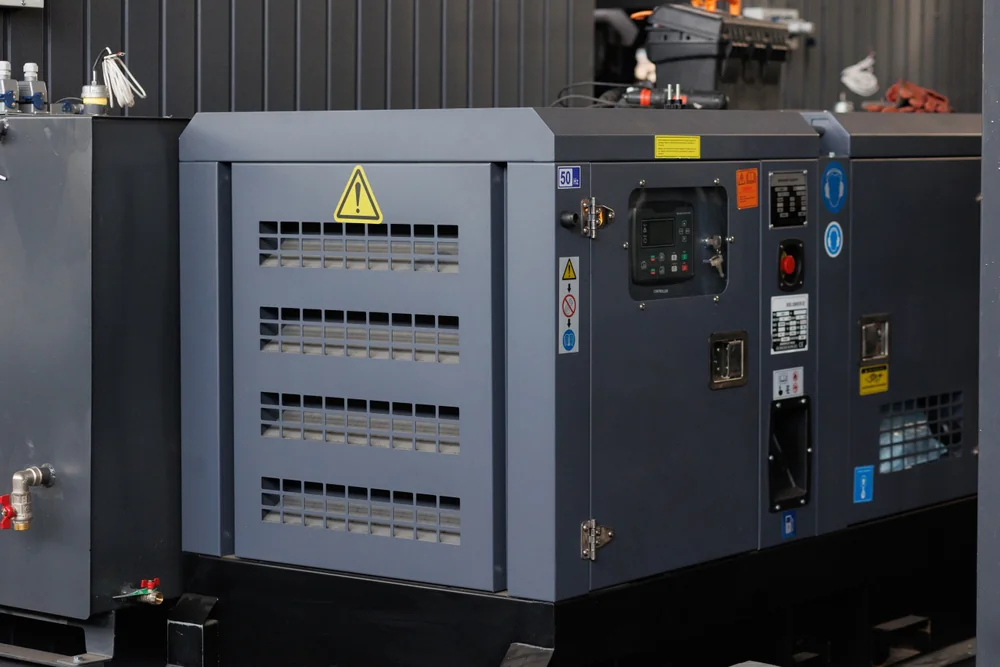
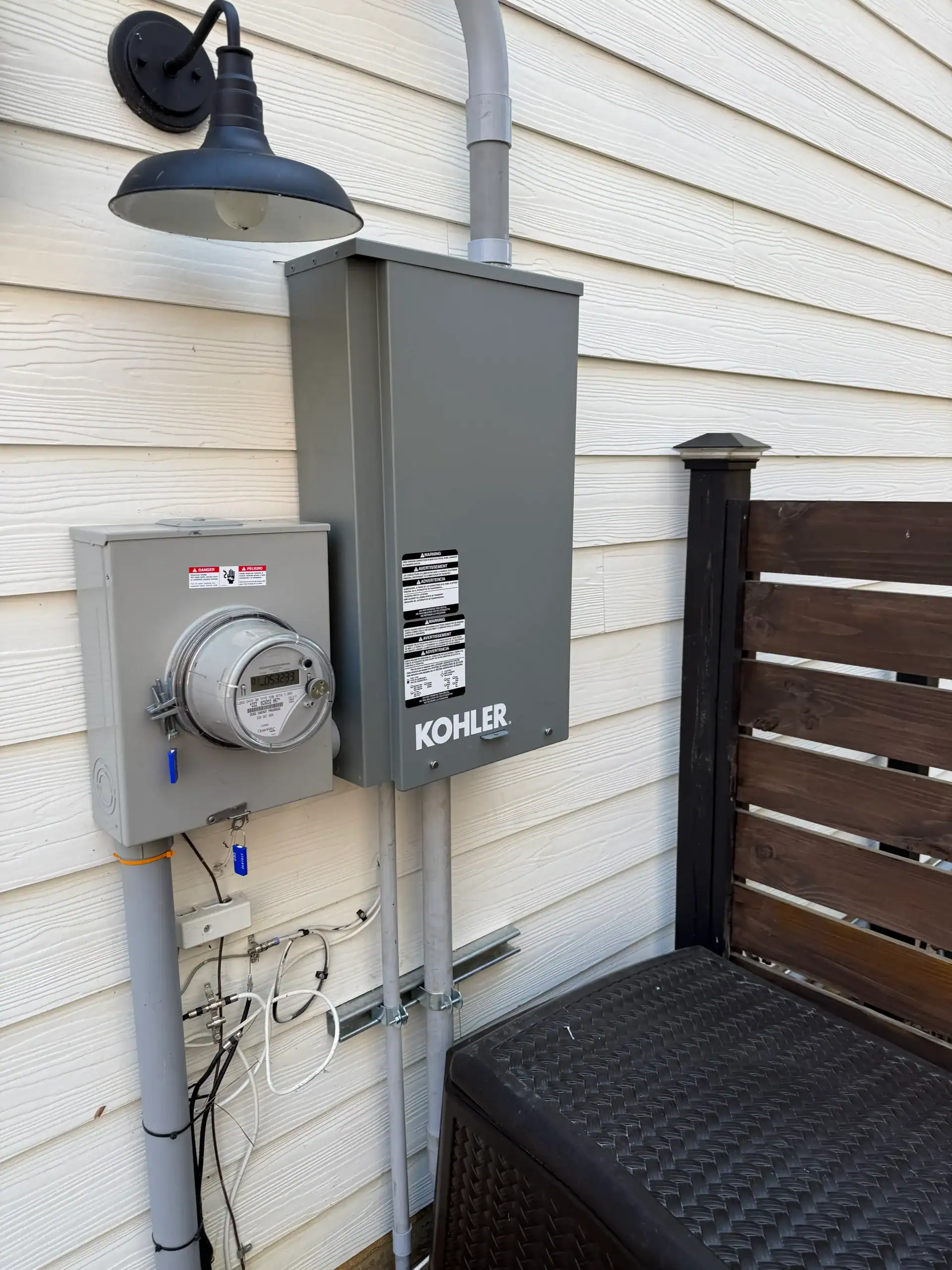
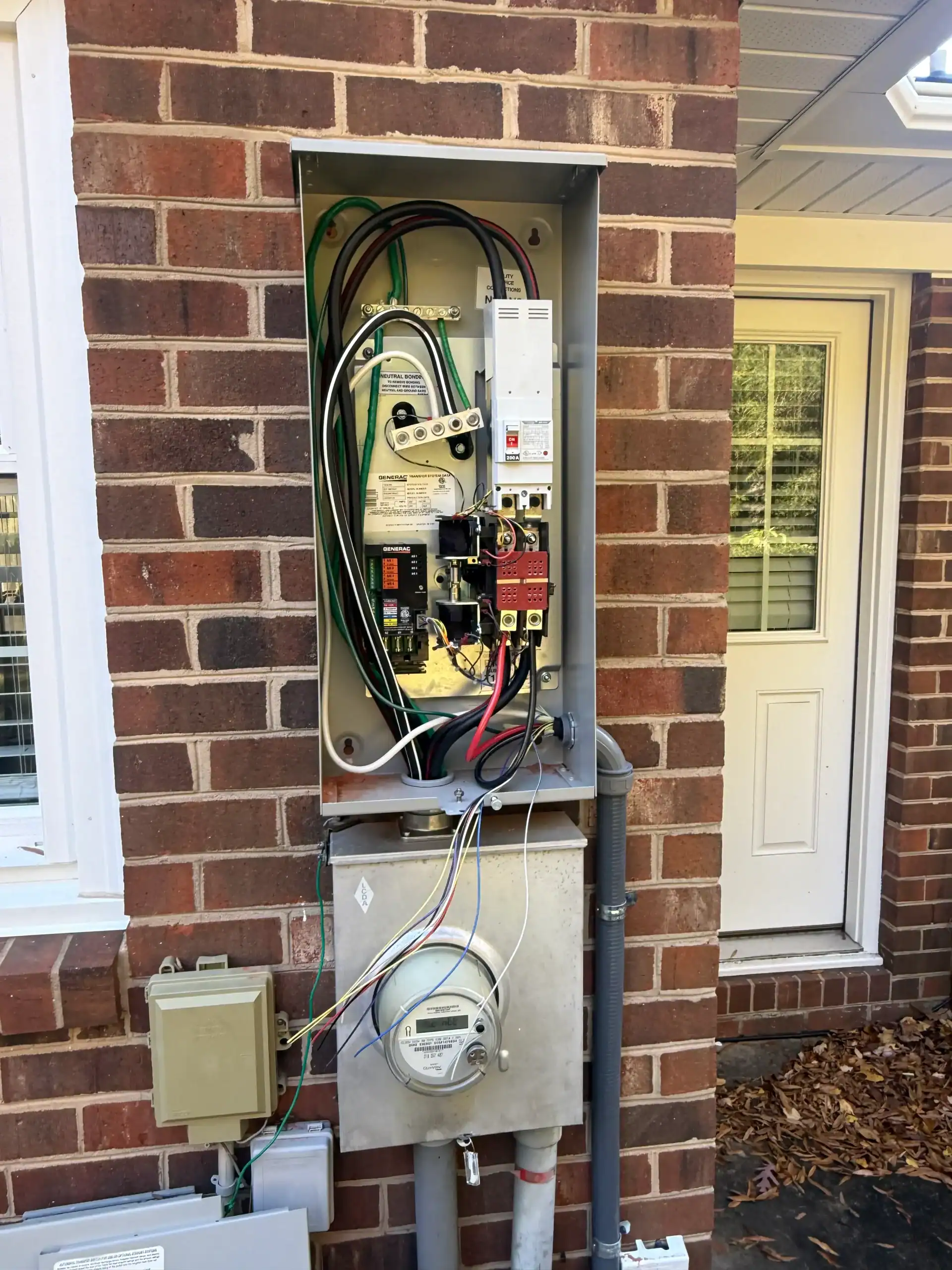
A properly installed standby generator with a transfer switch keeps your home running when the grid goes down, and it doesn’t require you to do anything. It starts automatically. Generator installation isn’t a simple plug-and-play job. It requires permits, a licensed electrician, and — if you want the installation done right and the manufacturer’s warranty to remain valid — someone with the proper brand certifications. Cutting corners here creates real safety risks and can void coverage you’ve paid for.
If the outage map confirms a problem in your area, Duke Energy is the right call. But if the map shows nothing, if only part of your house is affected, or if the power is technically back on but something still isn’t right — that’s when you need a licensed electrician, not a utility crew.
Alamance County’s older housing stock, its documented storm history, and its vulnerability to both ice events and summer heat all make electrical maintenance more important here than in newer markets. Problems that might sit quietly in a newer home can surface quickly in a house that’s been carrying more load than its panel was designed for.
If you’re not sure what you’re dealing with, that’s exactly what we’re here to help you figure out. We’ve been working in Alamance County since 2002 — and we answer the phone when you call.
Article details:
Share:
Continue learning: