Most homeowners don't know what an electrical inspection actually covers. Here's a plain-language breakdown of what gets checked, room by room, and why it matters for homes and businesses across Alamance County.
Share:
Summary:
Working lights don’t mean a safe electrical system. That’s the part most homeowners miss. Behind the walls of older homes throughout Alamance County — in Burlington, Graham, and Mebane — there’s wiring that was installed decades before modern safety codes existed. Aluminum branch wiring, undersized panels still running on 60-amp service, kitchens with zero ground fault protection. None of it trips a breaker. None of it gives you a warning. A licensed electrical inspection is how you find out what’s actually going on before something forces the issue. Here’s a plain-language look at what that process covers and why it matters for homes and businesses across Alamance County.
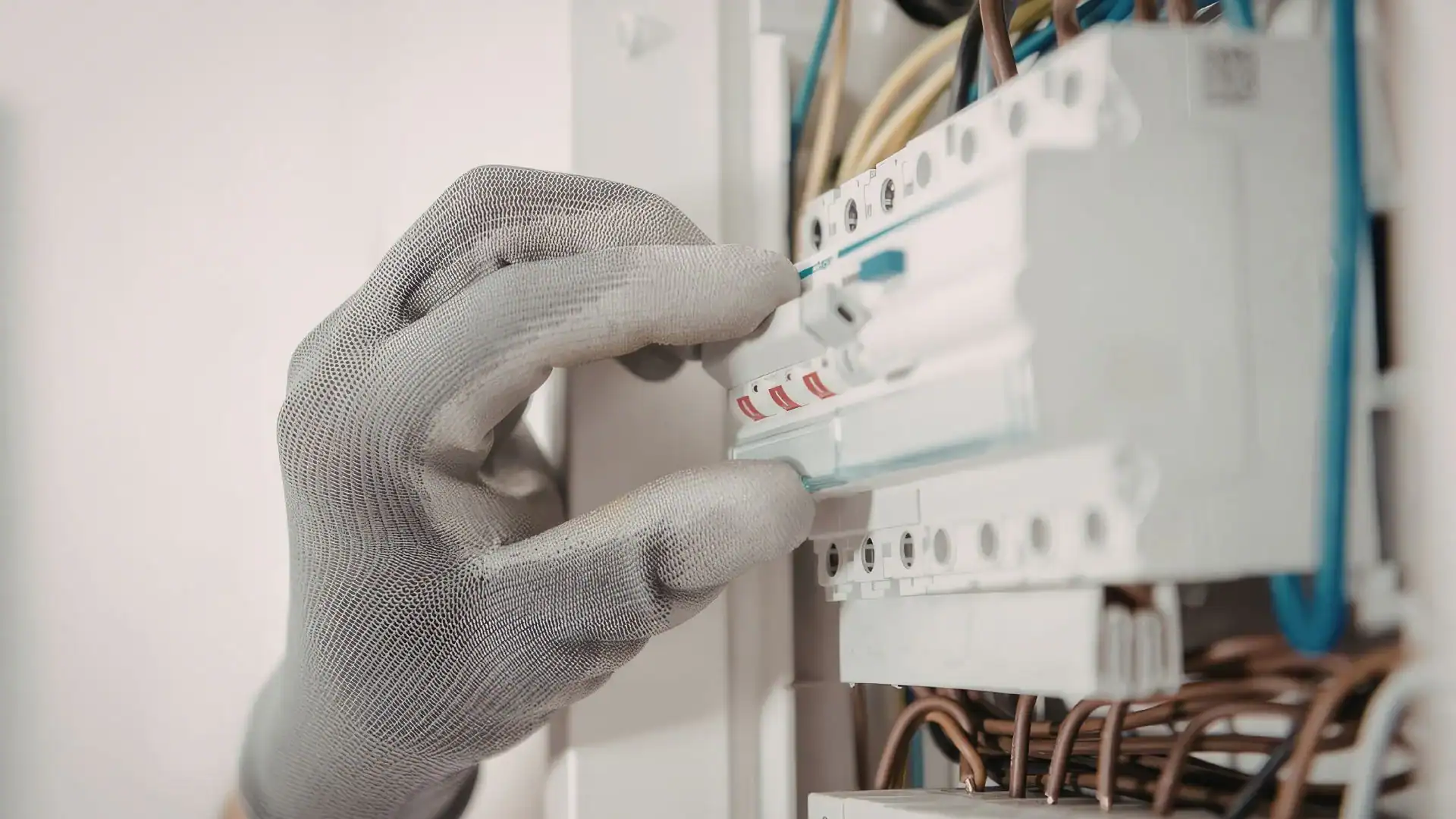
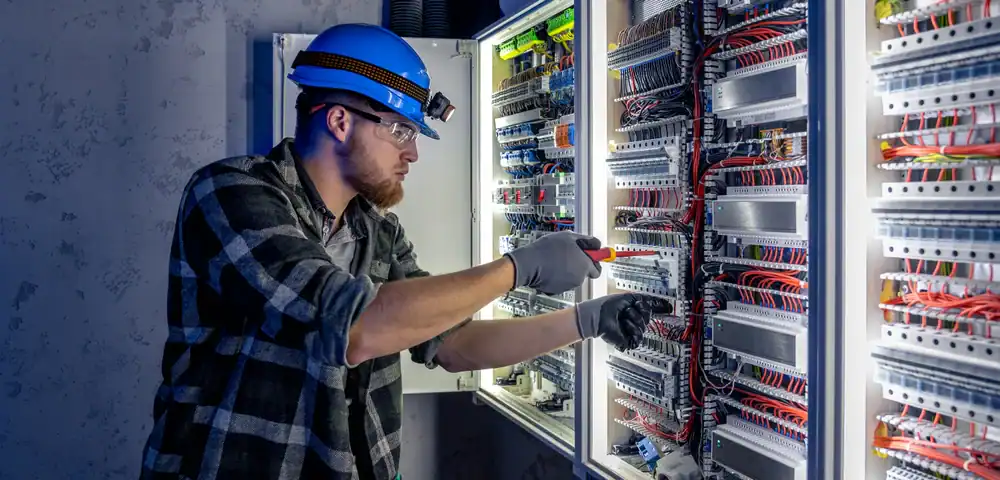
An electrical inspection isn’t a visual once-over. A licensed electrician removes the panel cover, tests every outlet, checks wiring gauge against breaker sizing, and verifies that safety devices are actually functioning — not just present. It’s a working system test, not a walk-through.
The inspection also looks at things most homeowners have never thought about: whether your dryer is on a dedicated 240-volt circuit, whether your kitchen has the minimum two countertop receptacle circuits the National Electrical Code requires, whether your garage outlets have weatherproof covers. These aren’t technicalities. They’re the difference between a system that’s safe and one that’s waiting for the wrong moment.
In North Carolina, this work is governed by the 2023 NEC edition with state-specific amendments, enforced by local Electrical Inspection Departments operating under NCDOI authority. When we pull a permit and complete the work, a local inspector verifies it meets those standards. That’s the process — and it’s why the electrician you hire determines whether you pass or fail.

The service panel is where most inspections start, and for good reason. It’s the nerve center of the entire electrical system, and what’s inside the cover tells you a lot about what’s been done — and what’s been ignored.
When we open a panel, we’re looking at whether the main breaker is appropriately sized for the home’s load, whether circuit breakers are securely seated, whether wires are the correct gauge for the breakers they’re connected to, and whether the panel is properly labeled. Missing or inaccurate labels aren’t just inconvenient — they’re a safety hazard. If someone needs to cut power quickly in an emergency and the panel is a mess of handwritten guesses, that’s a real problem.
We also look for signs of double-tapping, which is when two wires are connected to a single breaker that’s only rated for one. It’s one of the most common violations we find in older homes throughout Alamance County, and it’s a fire risk. Panels in homes built in the 1950s and 1960s — and there are a lot of them in Graham, Burlington, and across the county — were often sized for a fraction of the electrical load a modern household puts on them. A 60-amp panel in a home running central air, an electric range, and a washer and dryer is being asked to do a job it was never designed for.
One thing worth understanding about NC code: if you upgrade your panel, that inspection covers the new equipment only. Pre-existing branch circuits throughout the house are not automatically brought into compliance. Many homeowners assume a panel upgrade solves their code problems across the board. It doesn’t. The branch wiring in the walls stays exactly as it was unless it’s explicitly included in the scope of work.
Once the panel is checked, the inspection moves through the house. Each room has its own set of code requirements, and each one gets tested — not just looked at.
In the kitchen, we’re verifying at least two dedicated countertop receptacle circuits, ground fault circuit interrupter (GFCI) protection within six feet of the sink, and dedicated circuits for large appliances like the refrigerator and dishwasher. GFCI outlets are the ones with the small test and reset buttons — they’re designed to cut power instantly if they detect a ground fault, which is exactly the kind of protection you want near water. We test them to confirm they actually trip under unsafe conditions, not just that they’re installed.
Bathrooms require GFCI protection, dedicated 20-amp circuits, and moisture-resistant lighting fixtures. The laundry room needs separate circuits for the washer and dryer, with the dryer on a dedicated 240-volt line. Living areas and bedrooms are checked for outlet spacing — NEC requires outlets no more than 12 feet apart along any wall — and for arc fault circuit interrupter (AFCI) protection, which guards against the kind of electrical arcing that can ignite insulation inside a wall long before you’d ever see or smell anything.
Garages and outdoor areas get GFCI protection and weatherproof outlet covers. We also check smoke and carbon monoxide detectors — their location, whether they’re hardwired or battery-only, and whether they’re functional. A smoke detector mounted in the wrong spot or a CO detector that hasn’t been tested in years isn’t protecting anyone.
For homes with older wiring — particularly aluminum branch wiring common in homes built between roughly 1965 and 1973 — we’re also looking at connection points. Aluminum wiring expands and contracts at a different rate than the copper devices it’s often connected to, which loosens connections over time and creates a fire risk. It’s not something that shows up on the surface. It’s exactly what an inspection is designed to find.
Want live answers?
Connect with a Electrical Service Providers expert for fast, friendly support.
Commercial electrical inspections cover a broader scope than residential ones, and the stakes are higher. A code violation in a commercial building can mean a failed occupancy inspection, a denied insurance claim, or a shutdown — none of which a business can afford.
We work with commercial clients across Alamance County, including the growing corridor between Burlington and Mebane where commercial development has accelerated in recent years. The inspection process for commercial properties includes distribution panels, emergency lighting systems, load balancing across circuits, dedicated circuits for commercial equipment, and compliance with occupancy-specific code requirements that don’t apply to residential properties.
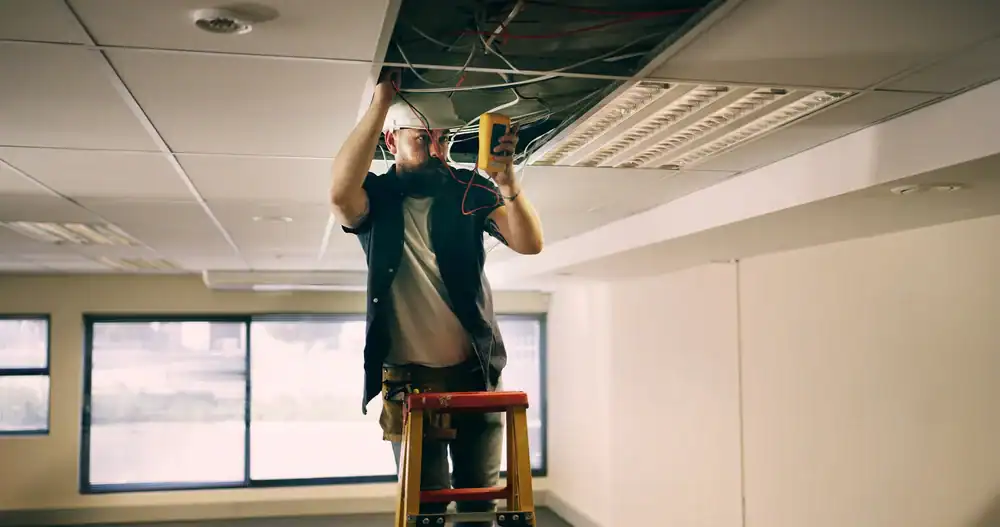
North Carolina has multiple electrical contractor license classifications, and they’re not equivalent. A Master Electrician has passed a comprehensive exam and has documented experience at the highest level of the trade. Not every licensed electrician in the state holds a Master Electrician license.
Andy Helton, who founded ESP Electrical Service Providers in 2002, has held his Master Electrician license since 1989. That’s over 35 years of licensed electrical experience — most of it on existing properties, not new construction. That distinction matters more than it sounds. New construction work is relatively straightforward: you’re wiring a clean structure to current code. Existing properties are a different problem. The wiring has history. There are layers of previous work, code changes that happened after the home was built, and modifications that may or may not have been permitted. Diagnosing and correcting those systems takes a different kind of experience.
Under North Carolina General Statute 87-43.1, no electrical work requiring a permit can begin without a licensed contractor pulling that permit. The local Electrical Inspection Department verifies license status before issuing permits. When you hire someone who suggests skipping the permit, you’re not saving money — you’re creating liability. Unpermitted electrical work can void your homeowner’s insurance coverage for related claims and becomes a problem you’ll have to disclose when you sell the home.
We pull permits when required and coordinate with local building officials across Alamance County — in Graham, Burlington, Mebane, and surrounding areas. The work goes on record. It gets inspected. And it passes.
Commercial and industrial projects often involve electrical subcontractors working under a general contractor. The subcontractor is the one doing the actual electrical work, pulling the permits, and ultimately responsible for whether that work passes inspection. That’s the person whose credentials matter most, and they’re often the last person the building owner thinks to verify.
Before any electrical subcontractor starts work on your project, confirm their license through the NC State Board of Examiners of Electrical Contractors. The license should be current, and the classification should match the scope of the work. A residential-only license doesn’t cover commercial electrical work. A contractor who can’t be verified through the State Board is a contractor you shouldn’t hire.
We function as electrical subcontractors for commercial and industrial projects across our service area — Alamance, Durham, Orange, and Chatham County. General contractors who work with us know the permits get pulled, the work gets done to code, and it passes inspection the first time. That’s not a claim we make lightly. It’s the standard we’ve held since 2002, and it’s the reason contractors bring us back.
If your home is more than 25 years old, you’re buying or selling a property, you’ve recently added a high-draw appliance, or your insurance company is asking for a report, an electrical inspection isn’t something to put off. The problems it finds don’t get smaller with time.
Alamance County has a lot of older housing stock — 1950s ranches in Graham, mid-century homes throughout Burlington, properties that have changed hands multiple times without anyone ever looking at the wiring. Those homes deserve the same level of attention as a newer build, and in some cases they need more of it.
If you have questions about what an inspection covers, what a finding means, or what the next step looks like, ESP Electrical Service Providers is a real phone call away — no voicemail loops, no automated systems. We’ve been doing this work across Alamance County since 2002, and we give you a flat-rate price in writing before anything starts.
Article details:
Share:
Continue learning: