Breaker acting up? Before you spend thousands, find out whether your panel actually needs repair or replacement — and how to tell the difference.
Share:
Summary:
Most people searching this topic aren’t curious — they’re worried. A breaker keeps tripping, a home inspector circled something on a report, or an insurance company is asking questions. And now you’re trying to figure out if you’re looking at a $250 fix or a $3,000 project before you call anyone.
That’s a smart instinct. Understanding the difference between a panel repair and a full replacement — and knowing which one your situation actually calls for — puts you in a much better position before any contractor shows up at your door. Here’s what that decision actually looks like.
Not every panel problem is a panel problem. Sometimes the issue is a single faulty breaker — one that trips repeatedly under normal load or simply won’t hold its position. In those cases, swapping out the breaker is a straightforward repair, and it doesn’t require replacing the entire panel. Individual breaker replacements typically run between $150 and $300, depending on the type and amperage.
Repair also makes sense when the panel itself is structurally sound, relatively recent, and the issue is isolated — a loose connection, minor corrosion on a terminal, or a wiring problem at the service entrance rather than inside the panel itself. If the panel was upgraded within the last 15 to 20 years and is from a reputable manufacturer, there’s a good chance the right answer is a targeted repair, not a full replacement.
The key distinction is whether the problem is contained or systemic. One bad breaker in an otherwise healthy panel is a repair. A panel that’s failing in multiple ways — or that was built with a design flaw — is a different conversation entirely.
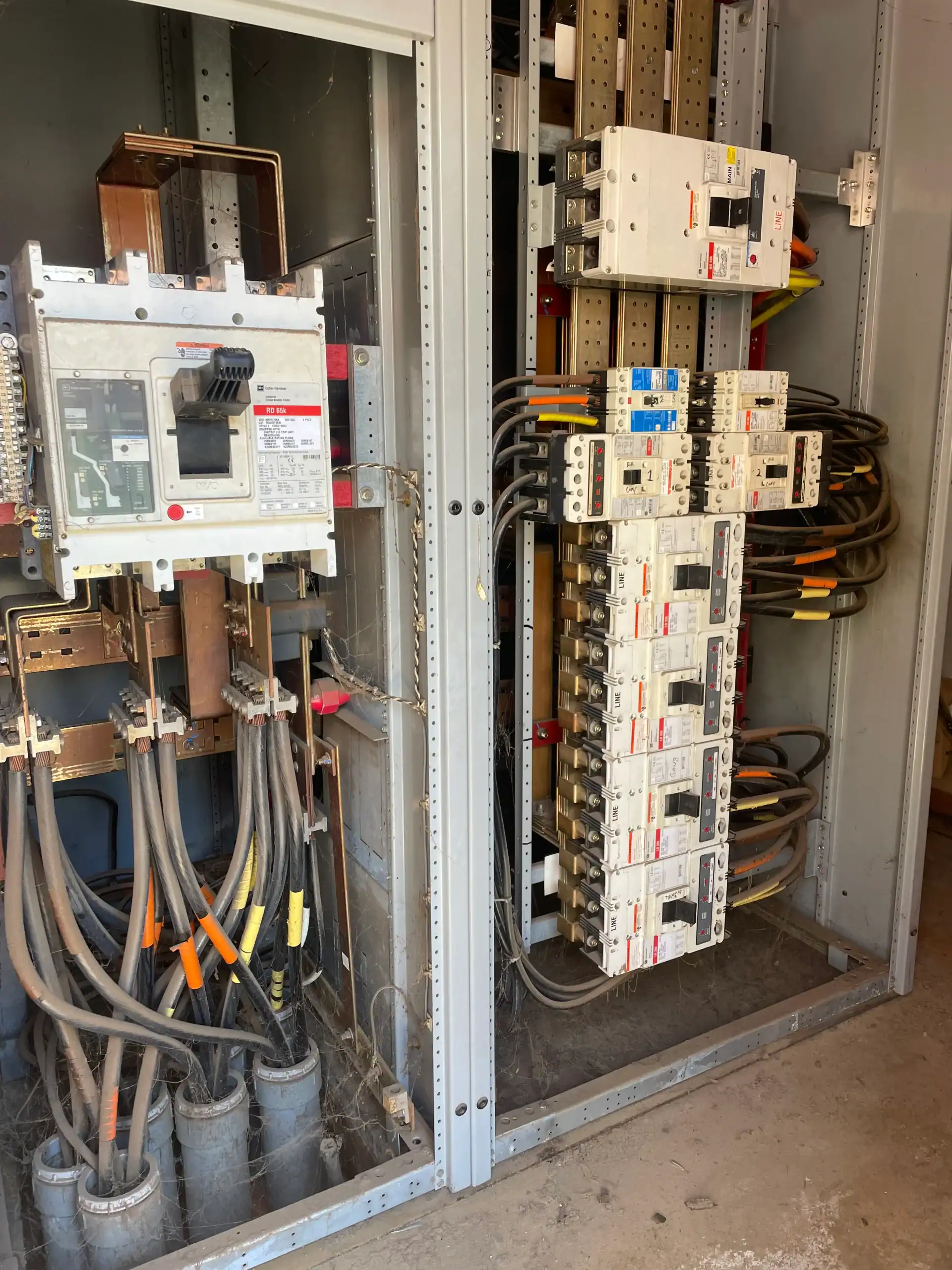
There are specific conditions where repair simply isn’t the right answer, no matter how appealing the lower price tag looks in the short term. Age is the first one. Electrical panels are generally built to last 25 to 40 years, and circuit breakers themselves have a similar lifespan under normal conditions. If your panel is pushing 30 or 40 years old, a repair might fix today’s symptom without addressing the underlying reality that the equipment is at the end of its useful life.
Physical warning signs matter too. A panel that feels warm to the touch, produces a burning smell, makes a buzzing or humming sound, or shows visible scorching around the breakers is not a repair candidate — those are signs of arcing, which is a fire hazard. The same goes for breakers that trip frequently across multiple circuits, or that feel warm even when they haven’t tripped. These aren’t isolated component failures. They’re signs the panel itself is struggling.
Capacity is another driver. A lot of Alamance County homes — particularly in Burlington’s older neighborhoods and the mill-town communities along the Haw River corridor — were built when 100-amp service was the standard. That was fine for the appliances of that era. It’s not fine for a household running central HVAC, a home office, a modern kitchen, and potentially an EV charger. When a panel can’t support the electrical load you’re actually putting on it, adding circuits or upgrading amperage from 100 to 200 amps requires a panel replacement, not a repair.
Finally, if the panel is full — no open slots for new circuits — and you need to add capacity, you’re looking at either a sub-panel installation or a full replacement, depending on how much total amperage you’re working with. A sub-panel can be a legitimate middle-ground option when the main panel has adequate total amperage but no room to grow.
If your home in Alamance County was built anywhere between the 1950s and the late 1980s — which covers a significant portion of Burlington’s established neighborhoods, Graham’s older residential areas, and homes throughout the county — there’s a real chance your panel is a Federal Pacific Stab-Lok. And if it is, the repair vs. replacement question has a clear answer: it needs to be replaced.
Federal Pacific panels weren’t recalled in the traditional sense, which is part of why so many of them are still in homes today. Estimates suggest around 28 million remain installed across the United States. But the absence of a formal recall doesn’t mean they’re safe. Independent forensic testing found that Federal Pacific Stab-Lok breakers fail to trip — meaning they don’t interrupt an overloaded circuit the way they’re supposed to — at rates between 25% and 60%. The U.S. Consumer Product Safety Commission opened an investigation in 1983 and later clarified that it closed without making any determination as to the safety of these breakers.
The failure mode is what makes these panels particularly dangerous. A breaker that trips is doing its job — it’s protecting your wiring from overheating. A breaker that silently fails to trip allows wires to overheat without any warning. Research has linked Federal Pacific panels to an estimated 2,800 fires, 13 deaths, and $40 million in property damage annually. A New Jersey class action lawsuit resulted in a court finding that the manufacturer knowingly distributed breakers that hadn’t been properly tested to UL standards, and UL ultimately retracted its certification of these panels.
You can’t fix a Federal Pacific panel by replacing the breakers. Aftermarket breakers don’t resolve the fundamental design issues with the panel itself, and a panel still carrying the Federal Pacific label will be flagged by home inspectors and may still trigger insurance problems. North Carolina insurance carriers and home inspectors routinely flag these panels — sometimes requiring replacement as a condition of coverage or as a condition of a real estate sale. If you’re in an older Alamance County home and you’re not sure what brand your panel is, it’s worth finding out before your insurer does.
Want live answers?
Connect with a Electrical Service Providers expert for fast, friendly support.
The fear most homeowners have when they search this topic is that a contractor will show up and recommend the most expensive option regardless of what’s actually needed. That’s a legitimate concern. But the criteria for replacement aren’t arbitrary — they’re rooted in safety, code compliance, and the physical reality of what a panel can and can’t do.
Replacement is the right call when the panel is old enough that its components are at end-of-life, when it’s a known problematic brand like Federal Pacific or Zinsco, when it’s showing active signs of arcing or heat damage, when it can’t support the home’s current electrical load, or when it’s a fuse box rather than a circuit breaker panel. These aren’t upsell scenarios — they’re conditions where repair doesn’t address the actual problem.
If none of those apply, repair is often the right answer. We’ll tell you which one you’re dealing with.
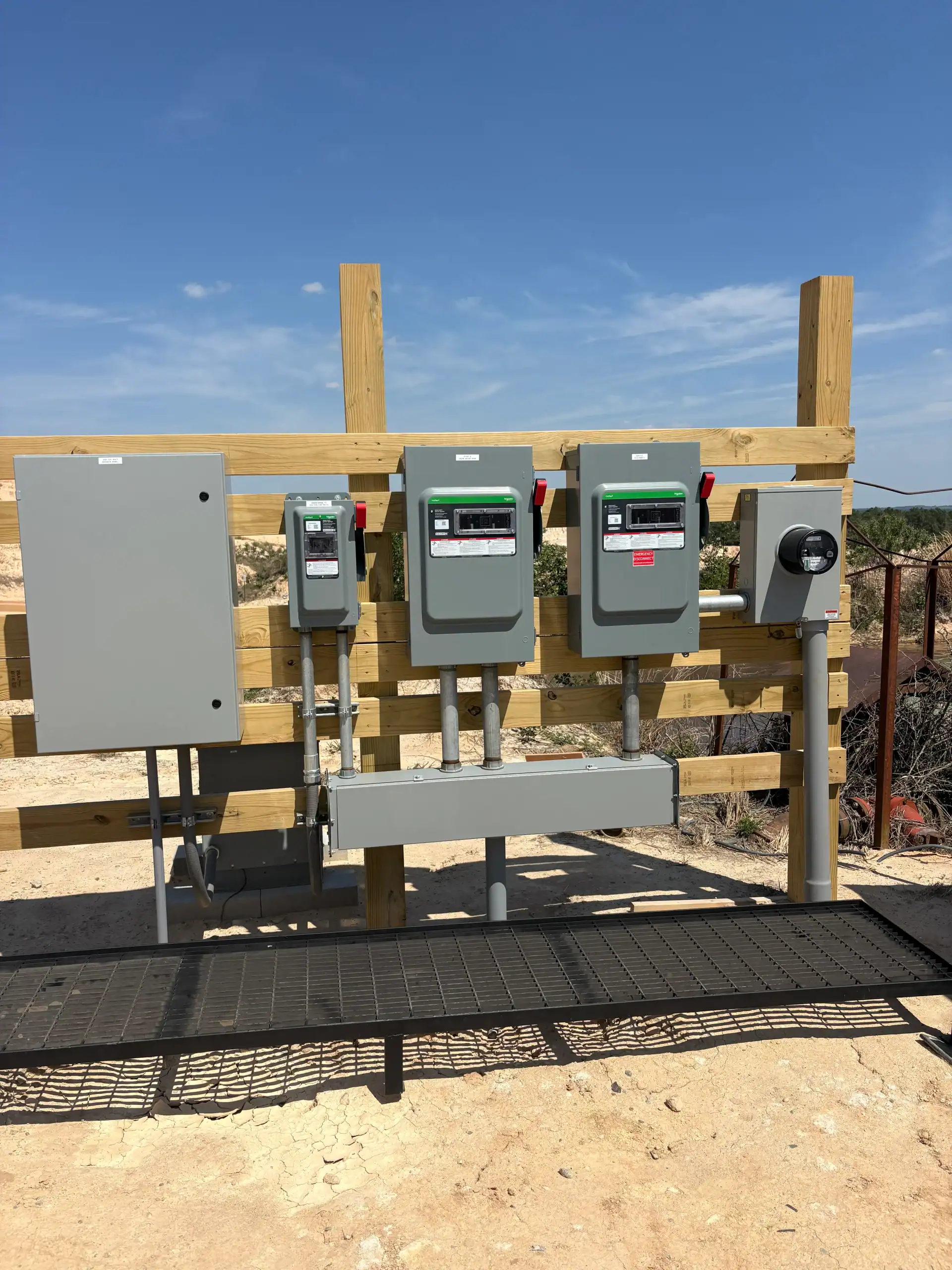
Understanding what goes into a panel replacement helps put the cost and timeline in perspective. It’s not a quick swap. The process starts with coordinating a utility disconnect — the power company needs to cut service to the home so the main panel can be safely removed. From there, the old panel comes out, all the existing circuits are inspected and properly labeled, and a new panel is installed and connected.
A residential panel replacement typically takes four to eight hours, depending on the size of the home, the number of circuits, and whether any wiring issues are discovered along the way. The panel upgrade cost ranges from $500 to $4,500 depending on amperage and complexity. A 200-amp panel — the current standard for most modern homes — costs more than a 100-amp replacement, and homes with more circuits or older wiring conditions may require additional work.
In North Carolina, panel work requires a permit and a passing inspection. This isn’t optional, and it’s not a formality. Work done without a permit can void your homeowner’s insurance, create complications when you sell the home, and leave you with no recourse if something goes wrong. We pull the permit, schedule the inspection, and ensure the work meets NC code. That’s not a bureaucratic detail — it’s the difference between work that protects you and work that doesn’t.
When replacement is necessary, the panel brands that matter are the ones with strong safety records and readily available parts. Square D, Cutler-Hammer, and General Electric are the standards in quality residential and commercial panel work — not budget alternatives or discontinued brands that create their own long-term problems.
**Do I need a permit to replace my electrical panel in North Carolina?** Yes. Panel replacement in NC requires a permit issued by the local building authority and a passing inspection from a state-approved inspector. Only a licensed electrical contractor — someone licensed by the NC State Board of Examiners of Electrical Contractors — can legally pull that permit and perform the work. If a contractor offers to skip the permit to save you money, that’s not a savings — it’s a liability.
**My breaker keeps tripping. Does that mean I need a new panel?** Not necessarily. A single breaker that trips repeatedly is often a sign of a failing breaker, not a failing panel. We can test the breaker and the circuit load to determine whether the issue is isolated. If it’s just the breaker, a replacement runs between $150 and $300. If the same breaker is tripping because the circuit is genuinely overloaded — because the home’s total amperage can’t support what you’re running — that’s a different issue and may point toward a panel upgrade.
**How do I know if I have a Federal Pacific panel?** The panel cover will typically say “Federal Pacific Electric” or “Stab-Lok.” If your Alamance County home was built between the 1950s and the late 1980s and you’ve never had the panel replaced, it’s worth opening the cover and checking. The county has a significant amount of housing stock from that era — the mill-town neighborhoods, the older sections of Burlington near downtown, homes along US-70 — and a meaningful percentage of those homes still have original panels.
**Can I just add a sub-panel instead of replacing my main panel?** Sometimes. If your main panel has adequate total amperage but has run out of open slots, a sub-panel can handle the additional circuits without requiring a full main panel replacement. But if the main panel itself is old, damaged, or undersized, adding a sub-panel doesn’t fix the underlying problem — it just delays it. The right answer depends on the specific condition of your existing equipment.
**Does a new electrical panel increase home value?** It can, but that’s not usually the reason to do it. A new panel passes inspection, satisfies insurance requirements, and removes a red flag that would otherwise show up on a buyer’s home inspection report. In a market like Alamance County — where home sales are active and buyers coming from the Triangle area are often bringing their own inspectors — a flagged panel can stall or kill a deal. The value is less about appraisal numbers and more about removing friction.
The repair vs. replacement decision doesn’t have to be a guessing game, and it shouldn’t require you to take a contractor’s word for it without understanding the reasoning. The criteria are real, they’re specific, and a licensed electrician who knows what they’re doing will walk you through them — not steer you toward the most expensive option by default.
If your panel needs a breaker swap, that’s what we’ll tell you. If it needs a full replacement because it’s a Federal Pacific, because it’s at end-of-life, or because your home’s electrical demand has outgrown it, we’ll explain exactly why. We’ve been doing this work in Alamance County since 2002, and flat-rate pricing means you’ll know the cost before we start — not after.
If you have questions about your panel or want an honest assessment, ESP Electrical Service Providers is available to help. Real people answer our phones, and we carry the parts to handle most jobs the same day.
Article details:
Share:
Continue learning: