Tripping breakers, an aging home, a new EV charger — there are real reasons to upgrade your panel. And some that aren't. Here's how to know the difference.
Share:
Summary:
Your breaker tripped again. Or maybe you’re adding an EV charger and someone mentioned you might need a panel upgrade first. Or your home inspector flagged something and now you’re not sure what it means or what it’ll cost.
Whatever brought you here, you’re probably trying to figure out one thing: do I actually need this, or is someone trying to sell me something?
That’s a fair question. Electrical work is hard to evaluate from the outside, and the range of advice out there — from neighbors, YouTube, and competing electricians — doesn’t make it easier. Here’s a straightforward look at what’s really going on inside that gray box on your wall, and when it’s time to do something about it.
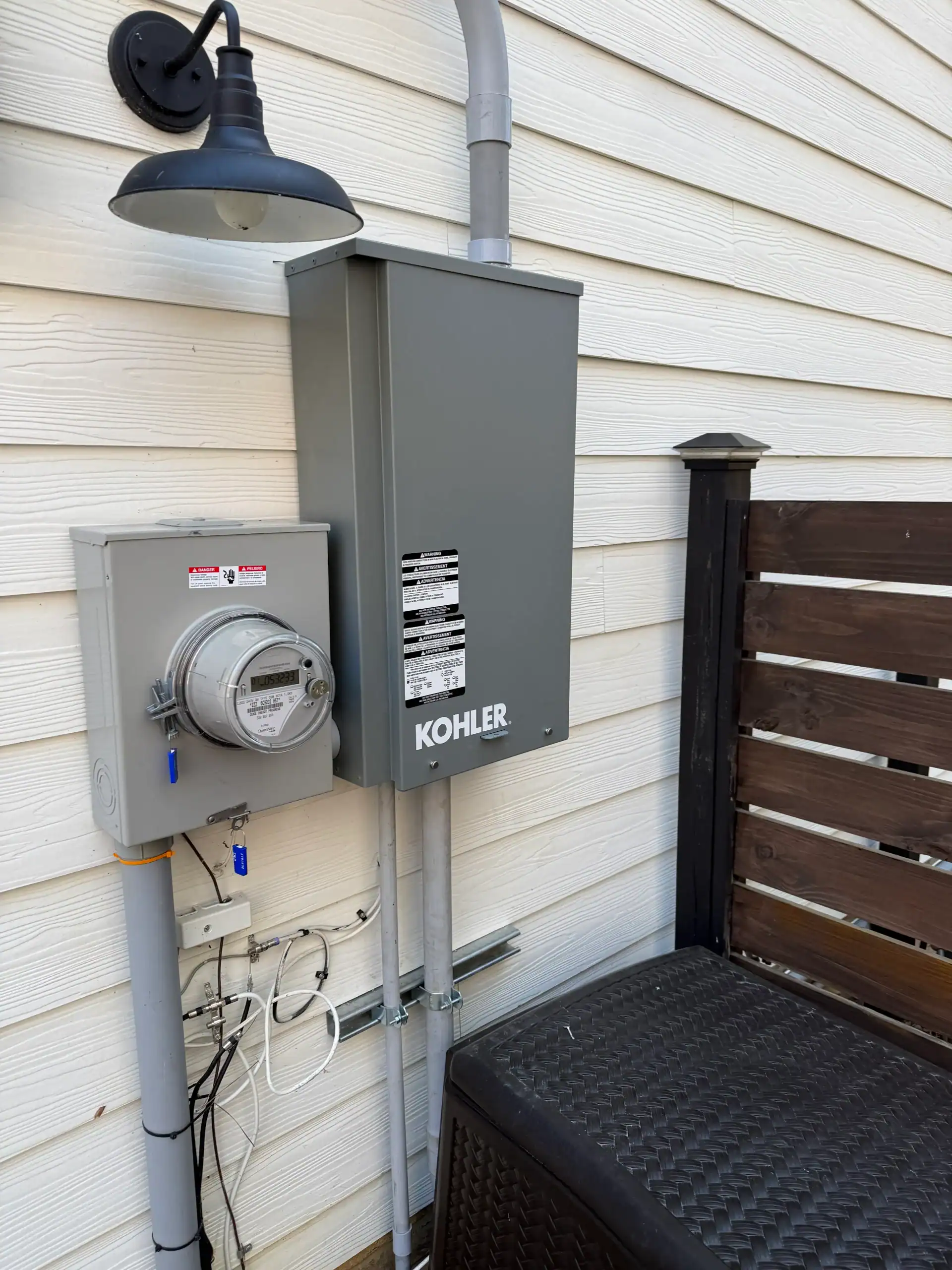
The electrical panel is the hub that distributes power from the utility line to every circuit in your home. When it’s working, you never think about it. When it’s not, the signs are usually hard to ignore — but they’re also easy to misread.
Breakers that trip regularly are the most common complaint. The instinct is to blame the panel, but a tripping breaker isn’t always a panel problem. It can mean a single circuit is overloaded, a breaker has worn out and needs to be replaced, or yes — the panel as a whole is undersized for what you’re asking it to do. Those are three very different fixes with very different price tags.
Other signs that point more directly to the panel itself: you notice a burning smell near the box, the panel feels warm to the touch, lights flicker when you run the dishwasher or dryer, or you’ve run out of breaker slots and can’t add a new circuit. If your home was built before 1980 and still has its original panel, that’s worth paying attention to regardless of symptoms — some panel brands from that era have documented safety issues that go beyond just being undersized.
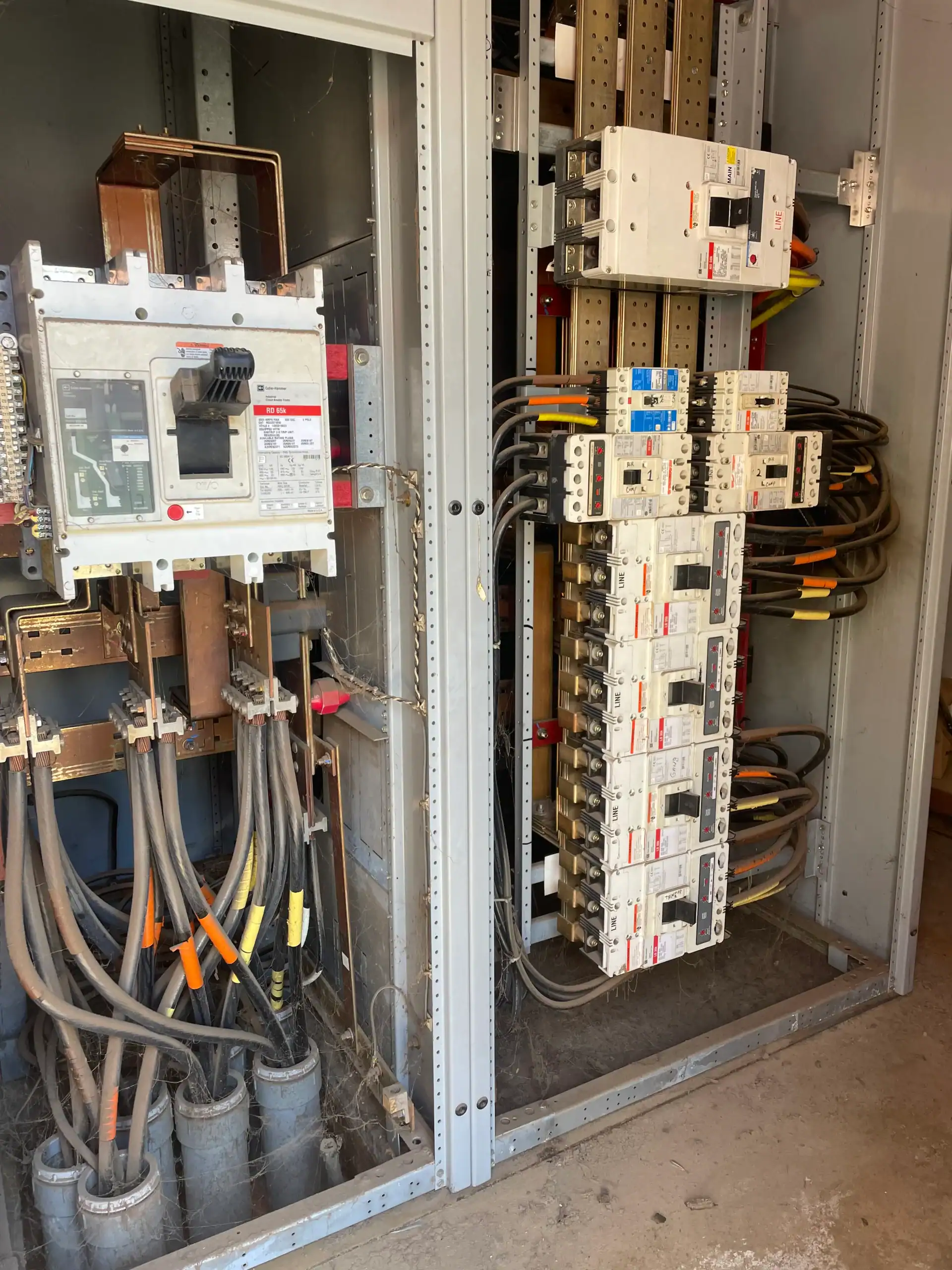
The median home in Alamance County was built around 1988, which puts the average local house at roughly 37 years old. That’s right in the window where electrical panels start to become a legitimate concern — not because they automatically fail at a certain age, but because they were designed for a world that looked very different.
A panel installed in 1988 was sized for the appliances of that era: a refrigerator, a washer and dryer, maybe a window AC unit. It wasn’t built for a modern kitchen with a double oven and an induction cooktop, a home office running multiple monitors, and a Level 2 EV charger in the garage drawing 50 amps on its own. The panel didn’t get worse — your home’s electrical demands just grew past what it was designed to handle.
In the mill-era neighborhoods of Burlington and Graham — homes built in the 1940s, 50s, and 60s to house textile workers — you’ll sometimes find original 60-amp panels, aluminum branch circuit wiring, or panel brands that the U.S. Consumer Product Safety Commission has flagged for documented failure modes. Federal Pacific Electric Stab-Lok panels and Zinsco panels are the two most commonly cited. If your Alamance County home is pre-1980 and you’ve never had the panel inspected, that’s a reasonable first step before anything else.
For homes in Mebane and Elon — the county’s faster-growing eastern corridor — the picture is different. These are often 2000s-era builds with 100-amp panels that are technically functional but increasingly tight as homeowners add EV chargers, upgrade to heat pump HVAC systems, or finish basements and add square footage. The panel isn’t failing. It’s just running out of headroom.
Understanding which situation you’re actually in changes what you need. An honest electrician will tell you the difference rather than defaulting to the most expensive option.
Most conversations about panel upgrades center on moving from 100 amps to 200 amps, and for the majority of Alamance County homeowners, that’s the relevant decision. But there’s a growing subset of situations where 200 amps still isn’t enough — and where a 400-amp panel becomes the right answer.
A 400-amp service is typically appropriate for larger homes with multiple HVAC systems running simultaneously, properties that combine residential and light commercial loads, or homeowners who are going all-in on electrification — think multiple EV chargers, whole-home battery backup, solar, and a heat pump water heater all on the same service. If you’re building out a detached workshop or garage with its own significant electrical load, that’s another scenario where the math starts to favor a 400-amp service.
It’s worth being clear about what a 400-amp service actually involves. It’s not just a bigger panel — it requires coordination with your utility company to upgrade the service entrance conductors and the meter base. That’s a more involved project than a standard panel swap, and it needs to be permitted and inspected just like any other service upgrade in North Carolina. The permit isn’t optional, and any electrician who suggests otherwise is a red flag.
For most single-family homes in Alamance County, 200-amp service is sufficient and appropriate. The 400-amp conversation becomes relevant when you have specific, high-load plans for the property — not just because it sounds like more capacity is better. A proper load calculation, done before any work is recommended, is how a qualified electrician determines what you actually need. That calculation takes into account every circuit in your home, your appliance loads, and what you’re planning to add — and it should happen before anyone quotes you a price.
Want live answers?
Connect with a Electrical Service Providers expert for fast, friendly support.
Understanding the process helps you evaluate the quotes you’re getting — and spot the ones that are cutting corners.
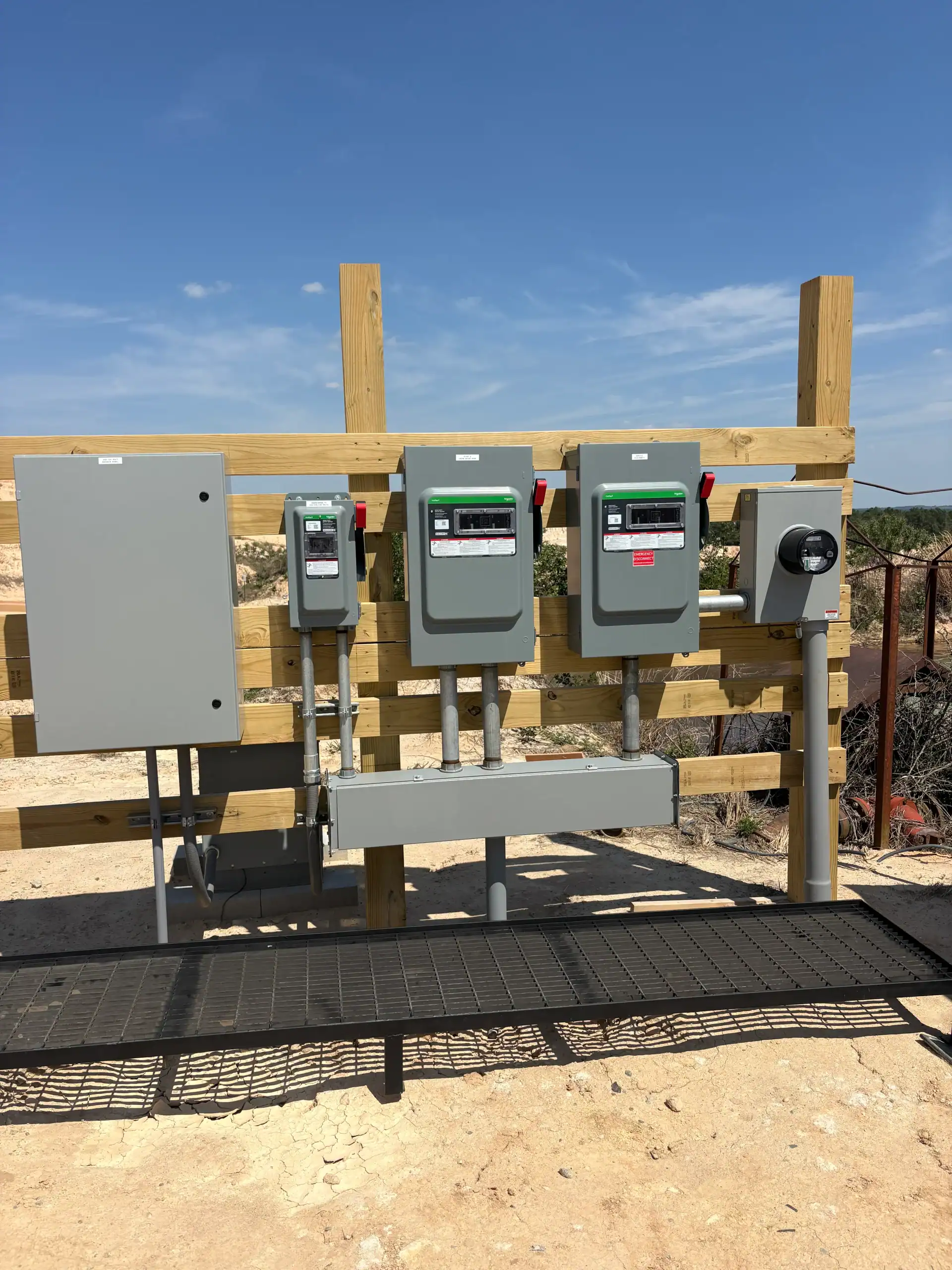
A panel replacement in North Carolina isn’t just a swap. We pull a permit from the local inspection authority before work begins. The utility company gets notified and disconnects the meter. The old panel comes out, the new one goes in, circuits are reconnected, grounding and bonding are verified, and the panel is labeled. Then a local inspector comes out, reviews the work, and signs off. Only after a passed final inspection does the utility reconnect your power.
That’s the legitimate process. Any version that skips the permit or the inspection isn’t just cutting corners — it’s illegal in NC, and it creates a real problem when you go to sell your home.
This is one of the most common misconceptions worth clearing up, because it affects what you’re actually buying when you hire someone for a panel upgrade.
In North Carolina, a panel replacement triggers an inspection of the new equipment — the panel itself, the service entrance, the grounding, and the bonding. It does not automatically bring your existing branch circuits into compliance with current code. The wiring that runs to your outlets, switches, and fixtures is inspected against the code that was in effect when it was originally installed, not today’s code. So if your Alamance County home has wiring that was legal in 1965, a panel upgrade doesn’t change that.
This matters for a few reasons. First, it means a panel upgrade is not a whole-house electrical renovation. If an inspector or electrician tells you that you need to rewire the whole house as part of a panel upgrade, make sure you understand why — that may be legitimate based on what they find, but it’s not automatically required. Second, it means that if you have specific safety concerns about your wiring — aluminum branch circuits, which were common in 1960s and 70s construction and present a fire risk at connection points — those need to be addressed as a separate scope of work, not assumed to be covered by the panel job.
The cleaner way to think about it: a panel upgrade addresses the panel. If there are other electrical issues in the home, we’ll identify them and give you options — but the panel job and the branch circuit work are separate conversations with separate scopes and separate costs. Getting those clearly defined in writing before work starts is how you avoid surprises.
This is the question most homeowners are actually trying to answer when they start researching panel upgrades, and it’s also the one that gets the least honest treatment online. Most guides either publish national averages without any local context or avoid the question entirely.
Here’s what the national data shows: a 100-amp to 200-amp upgrade typically runs between $1,300 and $3,000 for most homes, with the range influenced by factors like how accessible the panel is, whether the service entrance conductors need to be replaced, whether the meter base needs updating, and how many circuits need to be reconnected. More complex projects — older homes with non-standard configurations, homes that need a service entrance upgrade, or properties where the utility coordination is more involved — can run higher.
What actually affects your specific cost in Alamance County comes down to a few things: the age and condition of your existing panel and service entrance, whether your home has aluminum branch circuit wiring that needs attention at the connection points, whether you’re upgrading service size (100 to 200 amps) or simply replacing a failed panel at the same amperage, and whether there’s any utility-side work required at the meter.
The honest answer is that a flat-rate price can only be given after we’ve actually looked at your panel, your service entrance, and your home’s specific configuration. National averages give you a ballpark — they don’t tell you what your job costs. When we give you a price, it’s in writing and it doesn’t change, even if we run into something we didn’t anticipate. That’s our standard practice.
One thing that’s worth knowing specifically about NC: the permit and inspection process is not optional, and it’s also not a hidden add-on. It’s part of the job. If you’re comparing quotes and one is significantly lower than the others, it’s worth asking directly whether a permit is being pulled. A job done without a permit isn’t just a legal issue — it’s a liability that follows the home, and it will surface when you sell.
Most homeowners don’t need to become electrical experts. They just need someone who will look at their specific situation and tell them the truth — whether that’s “you need a full upgrade,” “you need a new breaker,” or “your panel is fine, here’s what’s actually causing the problem.”
That’s been our approach since we started ESP Electrical Service Providers in 2002, specifically to serve existing homes and businesses in Alamance County and the surrounding area. Not new construction — existing properties, with all the quirks and history that comes with them. We’ve worked on 1950s ranch homes in Burlington and Graham, newer builds in Mebane and Elon, and the approach is the same either way: look at what’s actually there, tell you what it needs, give you a written price before we touch anything, and do the work so it passes inspection the first time.
If you’re trying to figure out whether your panel is the problem — or just want a straight answer about what an upgrade would involve for your home in Alamance County — give us a call. A real person will pick up.
Article details:
Share:
Continue learning: