Something's wrong with your power and you're not sure what to do next. Here's a clear, calm guide to handling an electrical emergency the right way.
Share:
Summary:
You didn’t plan for this. Maybe the lights went out in half the house, or you caught a faint burning smell near an outlet, or a breaker tripped and won’t reset no matter what you do. Whatever it is, you’re not browsing — you’re dealing with something right now, and you need a straight answer.
This page gives you exactly that. We’ll walk through what the most common electrical emergencies actually look like, what you should do immediately, and how to know when it’s time to stop troubleshooting and call someone. If you’re in Alamance County, NC and need help today, we’re here — but first, let’s make sure you understand what you’re dealing with.
Not every electrical hiccup is a crisis, but some of them absolutely are — and the tricky part is that the dangerous ones don’t always announce themselves with sparks and smoke.
A burning smell near an outlet or panel, a breaker that trips repeatedly, outlets that stop working for no clear reason, flickering lights throughout the house, or any visible scorching or discoloration around a switch or receptacle — these are all signs that something is wrong inside your wiring, and waiting is rarely the right call.
The situations that can wait are things like a single dead outlet in a room where the GFCI hasn’t been reset, or a light fixture that stopped working after a bulb burned out. Everything else deserves a closer look from someone who knows what they’re looking at.
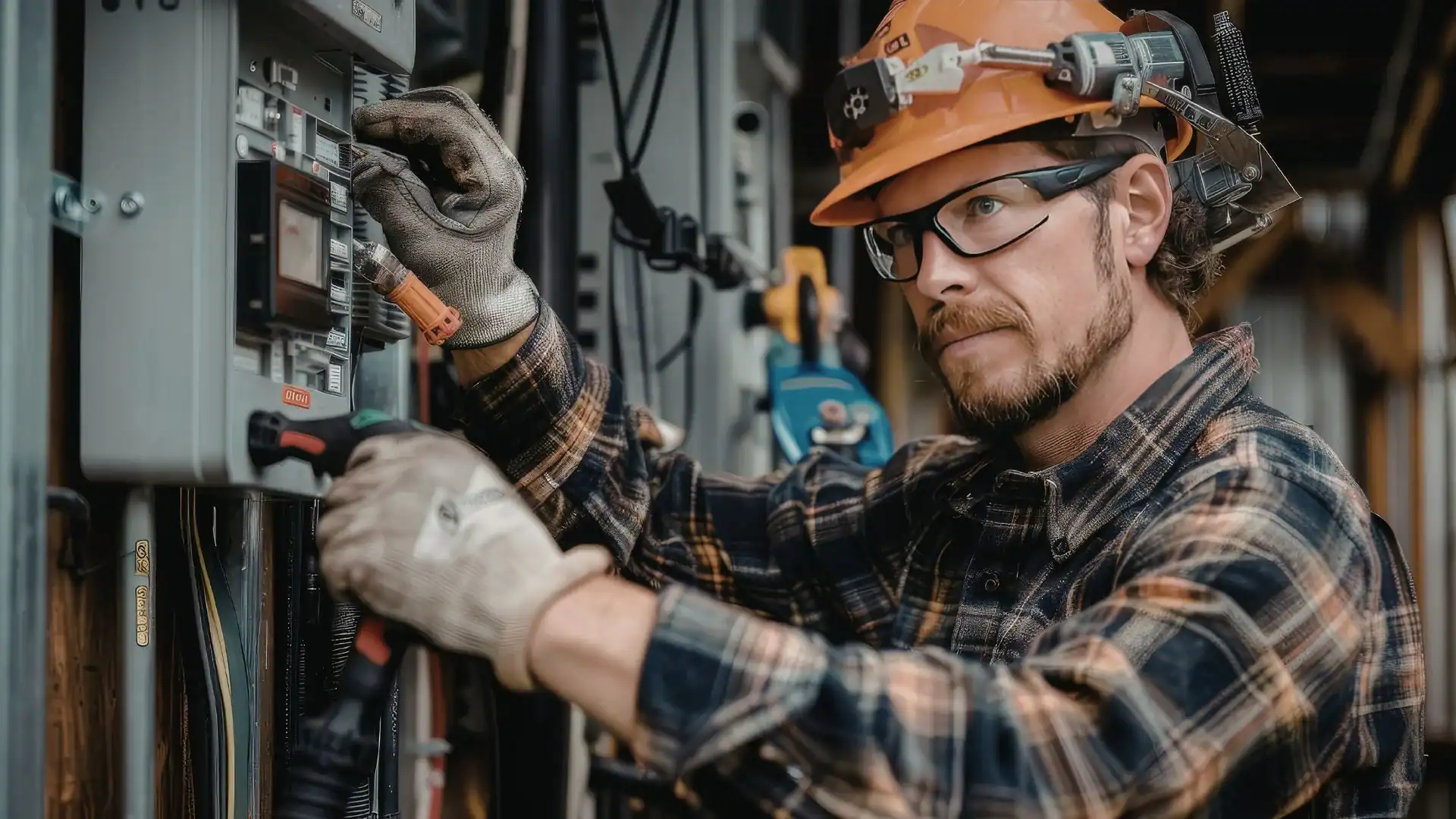
This is one of the most common calls we get, and it’s also one of the most misunderstood situations a homeowner can face. When power goes out in part of your home — say, one room, one side of the house, or just a few outlets — most people assume it’s the utility company’s problem. Sometimes it is. But a lot of the time, it isn’t.
A partial outage that affects only certain rooms or circuits is almost never a Duke Energy issue. It’s usually a tripped GFCI outlet that’s cut power to several downstream receptacles, a breaker that tripped internally but didn’t flip all the way to the “off” position (making it look fine when it’s not), or a loose or failing connection somewhere in the wiring. None of these are visible from the street, and none of them will show up when you call the utility to report an outage.
Here’s a quick way to think through it: if your neighbors have power and you don’t, call the utility. If your neighbors have power and only part of your house is dark, start by checking every GFCI outlet in the affected area — these are the outlets with the small “test” and “reset” buttons, usually found in bathrooms, kitchens, garages, and exterior locations. Press reset firmly and see if that restores power. If it does, great. If it doesn’t, or if the GFCI trips again immediately, that’s a sign of a wiring fault that needs professional diagnosis.
What you should not do is start pulling outlet covers or poking around the panel yourself. Homes throughout Alamance County, NC — including Burlington, Graham, and surrounding areas — include a significant share of housing built in the 1950s through 1970s. Older wiring in those homes can behave unpredictably. Aluminum wiring was common in mid-century construction and requires specific expertise to work with safely. If your home is more than 40 years old and you’re having unexplained electrical issues, that context matters.
If you smell something burning near an electrical outlet, switch, or your panel, treat it as an emergency until proven otherwise. This is not a situation where you wait to see if it goes away. Electrical fires that start inside walls can smolder for a long time before producing visible smoke — by the time you see flames, the fire has already been working for a while.
The smell itself is usually caused by insulation on wiring that’s overheating, a connection that’s arcing (creating small sparks inside the wall), or a component inside an outlet or switch that’s failing. None of these are visible from the outside, and none of them are safe to ignore.
What to do: if the smell is coming from a specific outlet, stop using it immediately. Don’t plug anything into it, and don’t try to remove the cover plate to look inside. If the smell is coming from your electrical panel, don’t touch the panel at all. If the smell is strong, you see any discoloration or scorching, or the smell is accompanied by a buzzing or crackling sound, leave the house and call 911 before you call an electrician. Your safety comes first.
Once the immediate danger is addressed, the next step is a professional inspection to find the source. This isn’t a job for a YouTube tutorial. Electrical fires cause an estimated 24,200 residential fires in the US each year, resulting in hundreds of deaths and over a billion dollars in property damage — and a significant number of those fires start exactly like this: a smell that got ignored, a connection that kept arcing, a problem that seemed small until it wasn’t.
We carry fully stocked trucks and can typically diagnose and resolve these issues in a single visit, without waiting on parts or scheduling a return trip. If you’re in Alamance County, NC and you’re smelling something you can’t explain, call us.
Want live answers?
Connect with a Electrical Service Providers expert for fast, friendly support.
One of the biggest reasons people delay calling an electrician during an emergency is the fear of what the call will cost — especially after hours. That fear is understandable, but it’s also the reason small problems become expensive ones.
We use flat-rate pricing on every job, which means you know the exact cost before any work begins. There’s no hourly billing, no surprise charges when the job takes longer than expected, and no after-hours multiplier that makes you regret picking up the phone. The price we quote is the price you pay.
When you call us, a real person answers. Not a voicemail system, not a call center routing you through a menu. Someone who can actually help you figure out what’s going on and get a technician to your home.
A lot of companies claim 24-hour availability. What that actually means varies widely. For some, it means leaving a message that someone will return in the morning. For others, it means an on-call technician who may or may not have the parts to fix your specific problem.
When we say we offer 24 hr electrical services, here’s what that looks like in practice: you call, a real person answers, and we dispatch a technician with a fully stocked truck. Our trucks carry the parts and tools needed to handle most residential electrical repairs in a single visit. That matters because the alternative — a technician who has to leave to get parts and come back the next day — isn’t really emergency service. It’s a delayed appointment with extra steps.
For homeowners in Alamance County, NC, this is especially relevant during the stretch of the year when the weather turns. Summer thunderstorms, tropical storm remnants pushing up from the coast, and the ice storms that hit the Burlington and Graham area every few winters — all of these create surges in emergency electrical calls. Power surges from lightning can damage wiring, outlets, and panels in ways that aren’t immediately obvious. A surge protector at the outlet level doesn’t protect your panel or the wiring inside your walls. If you’ve had a significant weather event and something in your home’s electrical system seems off afterward, that’s worth a call.
Andy Helton, our Master Electrician, has been licensed since 1989 — which means he’s seen every variation of storm-related electrical damage this region produces. That kind of local, hands-on experience is the reason our work passes inspection the first time, every time.
Resetting a tripped breaker once is reasonable. Resetting it three times in the same afternoon is a sign that something else is going on, and that something else deserves attention before it becomes a fire hazard.
Breakers trip for a reason. They’re designed to cut power when a circuit is drawing more current than it can safely handle. When a breaker trips repeatedly, it usually means one of three things: the circuit is genuinely overloaded (too many devices drawing too much power from a single circuit), there’s a short circuit somewhere in the wiring or a connected device, or the breaker itself is failing. The first scenario has a simple fix. The second and third require a licensed electrician.
Here’s a practical way to think about it: if you reset the breaker and it holds as long as you’re not running the dishwasher and the microwave at the same time, you may just have an overloaded circuit — common in older Alamance County, NC homes that were wired before modern kitchens required 20-amp dedicated circuits for appliances. That’s a manageable situation, though it’s still worth having someone look at it. If the breaker trips regardless of what you’re running, or if it trips immediately after you reset it, stop resetting it and call us.
Repeatedly resetting a breaker that’s responding to a short or a failing connection isn’t just ineffective — it’s hard on the breaker itself, and breakers that are forced to trip and reset repeatedly can degrade faster. A breaker that fails to trip when it should is no longer protecting your home. At that point, you don’t have an inconvenient electrical issue anymore. You have a fire risk.
General residential electrical repairs typically range from $150 to $500 depending on what’s involved, and panel-related work ranges more widely from there. But the cost of a service call is a fraction of what water damage, smoke damage, or a structure fire costs — and we’ve seen what happens when people wait too long.
If something feels wrong with your home’s electrical system, trust that instinct. Burning smells, repeated breaker trips, partial outages that don’t trace back to the utility, flickering lights, or anything that sparks — these aren’t things to monitor and revisit next week. They’re things to address today.
We’ve been serving homeowners and businesses in Alamance County, NC since 2002, and we built ESP Electrical Service Providers specifically to be here when situations like these come up — not just during business hours, but whenever you need us. Flat-rate pricing, real people answering the phone, and trucks stocked to handle most jobs in a single visit.
If you’re dealing with an electrical emergency right now, or something that’s been bothering you and you’re not sure whether it’s serious, reach out to us. We’ll help you figure out what you’re dealing with and get it handled.
Article details:
Share:
Continue learning: