If your Alamance County home was built before 1980, the wiring probably wasn't designed for what you're asking it to do today. Here's what that actually means.
Share:
Summary:
Alamance County’s median home was built in 1978. That’s not ancient, but it’s old enough that a lot of those homes are running on electrical systems that were never designed for a Level 2 EV charger, a heat pump, or a modern kitchen. Most of the time, the wiring just quietly does its job — until it doesn’t. Maybe your breakers are tripping more than they used to. Maybe a home inspector flagged something. Maybe you’re trying to add a circuit and someone told you the wiring won’t support it. Whatever brought you here, the good news is that old wiring doesn’t automatically mean tear-everything-out. It means you need a clear picture of what you actually have — and what your real options are.
The answer depends almost entirely on when your home was built. Alamance County’s housing stock spans several distinct wiring eras, and each one comes with its own set of characteristics and risks. Knowing which one you’re dealing with changes everything about how you approach the problem.
Older neighborhoods throughout the county — particularly homes in the 27215 ZIP code built in the 1960s, and the established sections of Graham and Mebane — tend to show up with one of three wiring types: knob-and-tube, aluminum branch-circuit wiring, or cloth-insulated copper. Each is different. Each requires a different response.

Knob-and-tube wiring was standard in homes built before the 1950s, which accounts for roughly 14 percent of Alamance County’s housing stock. It uses ceramic knobs to hold wires in place and ceramic tubes where wires pass through framing — and it runs just two wires, a black hot and a white neutral, with no ground wire at all.
The insulation on knob-and-tube wiring is rubber, and rubber doesn’t last forever. In a home that’s 70 or 80 years old, that insulation is often brittle, cracked, or missing in spots — particularly in attics and crawl spaces where temperature swings are most extreme. That’s where the real hazard lives. Not in the wiring concept itself, but in the condition of the insulation after decades of heat cycling.
There’s another issue that’s specific to how older homes get updated over time. Knob-and-tube wiring was designed to dissipate heat into open air. When someone adds blown-in insulation to an attic — which is extremely common in energy-efficiency upgrades — that insulation surrounds the wiring and traps heat. That’s a combination that building codes now prohibit for exactly this reason, and it’s something inspectors flag immediately.
Knob-and-tube wiring also can’t be grounded without replacing it. That matters for modern electronics, GFCI protection in kitchens and bathrooms, and any circuit that requires a three-prong outlet. You can install GFCI outlets on an ungrounded circuit, which provides shock protection, but it doesn’t fix the underlying wiring condition or add capacity. It’s a workaround, not a solution.
This is the one that catches people off guard. When most homeowners think about dangerous old wiring, they picture something visibly deteriorated. Aluminum branch-circuit wiring often looks fine. The problem isn’t what you can see — it’s what’s happening at every connection point behind your outlets and switches.
Aluminum expands and contracts with heat more aggressively than copper. Over time, that movement loosens connections at termination points — the places where wires connect to outlets, switches, and fixtures. Loose connections create resistance. Resistance creates heat. That heat is what causes fires, and it can build up over years before anything visible happens.
The Consumer Product Safety Commission has studied this extensively. Their research found that a home with aluminum branch circuits installed before 1973 is 55 times more likely to reach fire hazard conditions than a home wired with copper. That’s not a rounding error. That’s a meaningful difference in risk — and it applies to a significant number of homes throughout Alamance County, where 1960s ranch homes are common.
The CPSC recognizes three legitimate approaches to aluminum wiring remediation. The first is complete rewiring with copper, which eliminates the issue entirely. The second is COPALUM crimp connectors installed at every termination point — a specialized repair that requires a trained electrician with the right tool. The third is AlumiConn set-screw connectors, which can be installed at each outlet, switch, and fixture connection. One thing that is not an acceptable fix: pigtailing with standard wire nuts. It’s a common patch, but it doesn’t hold up over time and the CPSC does not recognize it as a safe remediation method.
If your home was built between 1965 and 1973, there’s a real possibility it has aluminum branch-circuit wiring. A proper assessment will confirm it — and from there, you can make a decision based on what the home actually needs, not on worst-case assumptions.
Want live answers?
Connect with a Electrical Service Providers expert for fast, friendly support.
One of the most common misconceptions about old home wiring is that discovering a problem automatically means rewiring the entire house. That’s sometimes true — but not always. The right scope of work depends on what type of wiring you have, what condition it’s in, and what you’re trying to accomplish.
We’ve been working on existing homes in Alamance County since 2002, and the answer is almost never one-size-fits-all. Some homes need targeted remediation at connection points. Some need specific circuits added or upgraded. Some need a panel upgrade to handle modern loads. And some genuinely do need a full rewire — but that determination should come after an honest assessment, not before one.
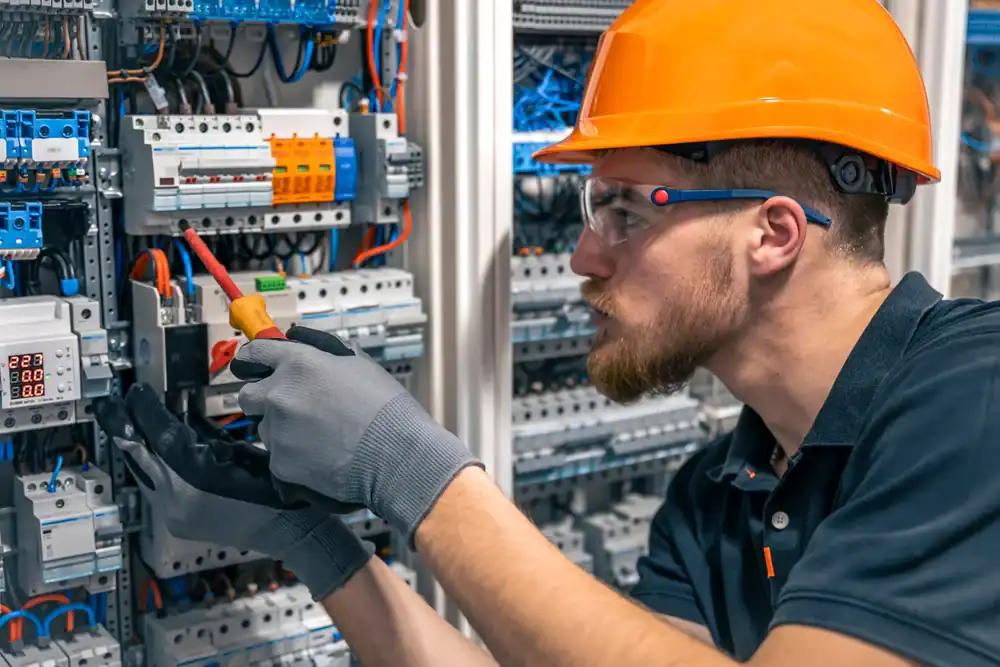
Not every electrician has the same experience with existing homes. A contractor who primarily does new construction is working in a completely different environment — open framing, no existing systems to work around, no need to diagnose what’s already there. Older homes require a different set of skills, and it’s worth asking about that directly when you’re evaluating who to call.
In North Carolina, electrical contractors are licensed through the NC State Board of Examiners of Electrical Contractors (NCBEEC). There are three license tiers — Limited, Intermediate, and Unlimited — and the Unlimited license has no restrictions on project value or voltage. Beyond the contractor license, a Master Electrician designation reflects a higher level of demonstrated competency in the trade. Andy Helton, who founded ESP Electrical Service Providers in 2002, has held a Master Electrician license since 1989. That’s more than 35 years of licensed electrical experience, most of it focused on existing residential and commercial properties rather than new construction.
When you’re talking to a wiring contractor about an older home, a few things matter beyond credentials. Does the contractor pull permits? In Alamance County, electrical work requires a permit and a local inspection — work done without one isn’t legally documented and can create real problems when you sell the home. Does the contractor give you a price before starting, or do they bill by the hour and let the total accumulate? We use flat-rate pricing, which means you know the cost before anyone touches a wire. You approve it, then the work begins. That’s not how most electrical companies operate, but it’s the only way we’ve ever done it.
It also matters whether the contractor specializes in existing properties. We built ESP Electrical Service Providers specifically around service work on homes and businesses that were already built — not new construction projects. That focus shapes how we approach every job, from the diagnostic process to the way we fish wiring through finished walls with minimal disruption.
**Will rewiring my house require tearing out all my walls?**
Not necessarily, and often not at all. Experienced electricians can fish new wiring through existing walls and ceilings — especially in homes with accessible attic space or a crawl space, which describes a large percentage of the ranch-style homes built throughout Alamance County in the 1960s and 1970s. The scope of wall access depends on the specific layout of your home and what work is being done, but a full gut-and-rebuild is rarely required for rewiring an existing home.
**My home inspector flagged the wiring. Do I have to rewire everything before I can sell?**
This is one of the most common situations we see in Alamance County, and the answer is almost always more nuanced than the inspection report makes it sound. An inspector’s job is to identify and document conditions — not to prescribe the remedy or determine what’s negotiable between buyer and seller. What you actually need to do depends on what was flagged, what type of wiring is involved, and what the buyer’s lender requires. In some cases, targeted remediation addresses the concern entirely. In others, a panel upgrade resolves the capacity issue. A proper assessment gives you a clear answer before you agree to anything in a negotiation.
**Can my old wiring handle an EV charger or a new heat pump?**
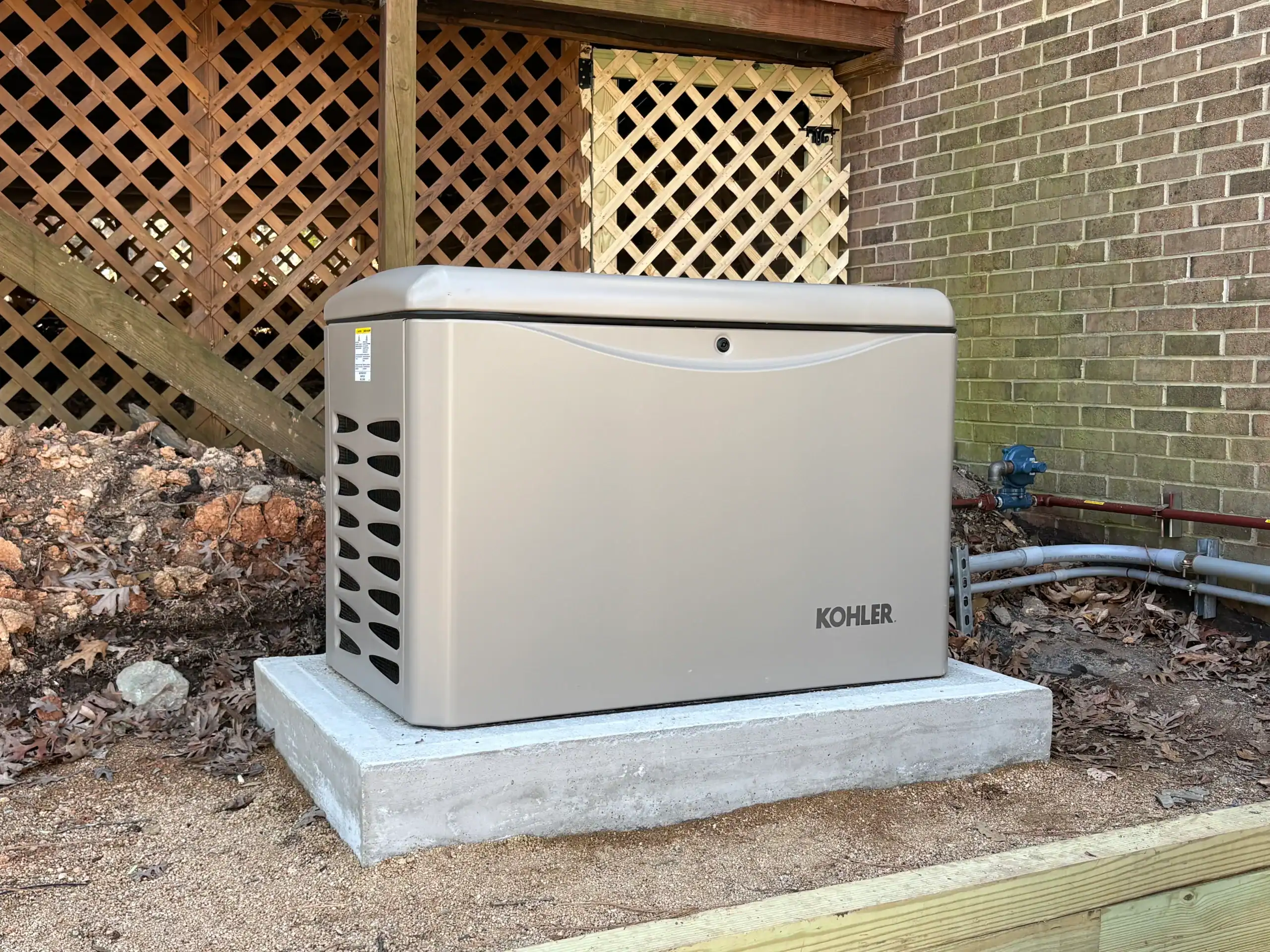
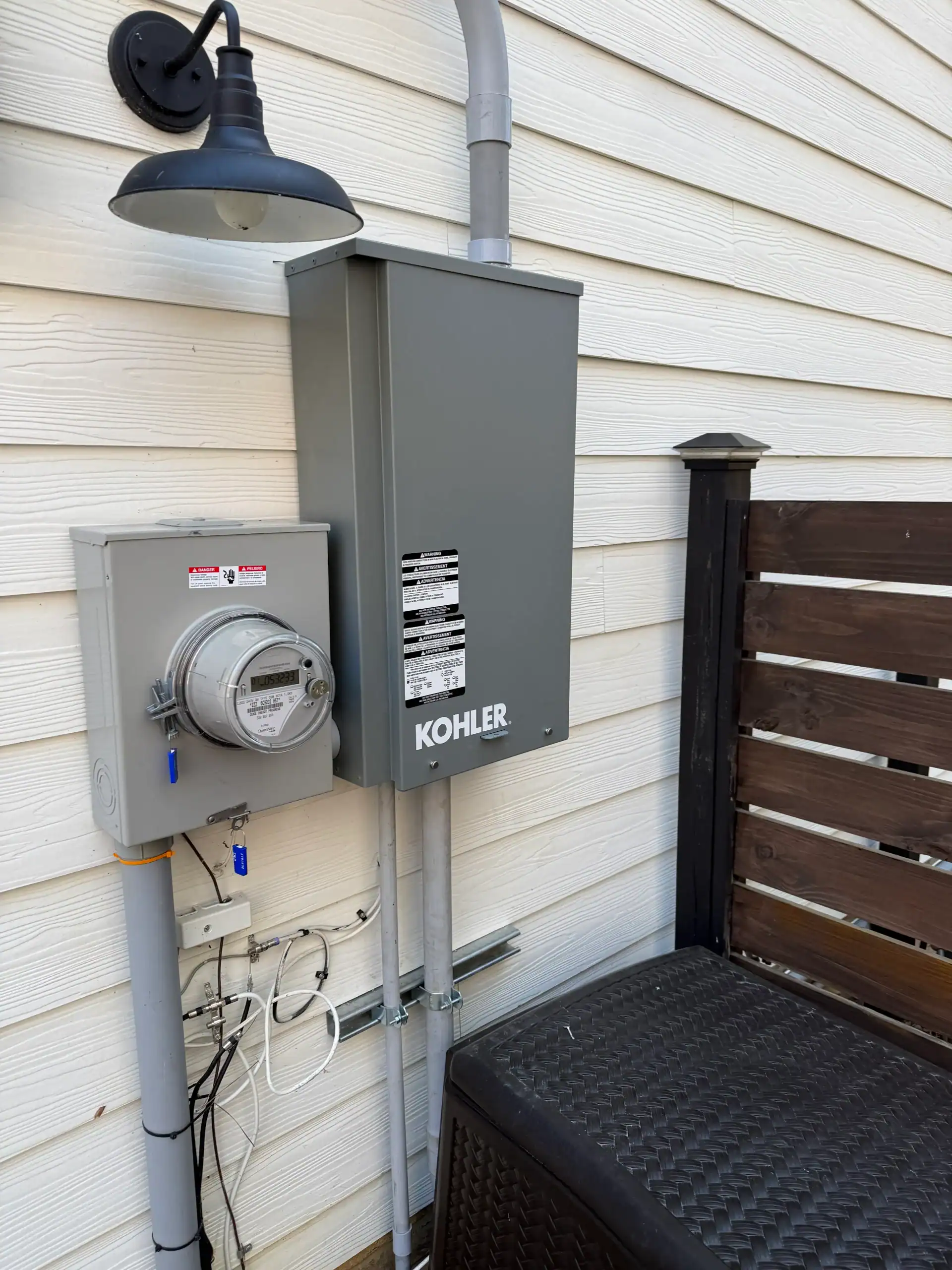
Possibly, but it depends on your panel capacity and the condition of your existing circuits. Many Alamance County homes built before the 1990s were wired for 60- to 100-amp service — which was reasonable at the time but falls short of what a modern home with an EV charger, heat pump, and multiple large appliances requires. Adding a 240V, 80-amp EV charger circuit to a home with a 100-amp panel and aging wiring isn’t just a wiring question — it’s a capacity question. We’ve done exactly this type of work throughout the county, and the right starting point is always an honest look at what the panel can support before any circuit work begins.
**Will my homeowner’s insurance be affected by old wiring?**
Some insurers do surcharge or decline policies on homes with knob-and-tube or aluminum branch-circuit wiring. If you’ve received notice from your insurance company, that’s a real deadline — not a vague future concern. An assessment that documents the current condition and any remediation we’ve completed can help clarify the situation with your carrier.
Old wiring doesn’t have to be a crisis. But it does deserve a clear-eyed look from someone who actually knows what they’re looking at — and who will tell you what the home needs without padding the scope.
Alamance County’s housing stock is aging. A lot of homes throughout the county are approaching or past the 50-year mark, and the electrical systems in those homes were built for a different era of power demand. That doesn’t make them dangerous by default. It makes them worth understanding.
If you have questions about what’s in your home, what it means, and what your options actually are, ESP Electrical Service Providers is a real phone call away — answered by a real person, not a voicemail system. We’ve been doing this work in Alamance County since 2002, and we’ll give you a straight answer before we give you a price.
Article details:
Share:
Continue learning: