A standard electrical inspection only shows what's visible. Thermal imaging shows what's quietly overheating inside your walls, panel, and connections — before it becomes a real problem.
Share:
Summary:
Most people assume that if their breakers aren’t tripping and the lights are on, their electrical system is fine. That assumption is understandable — and it’s also how a lot of electrical fires start. The problems that cause the most damage are rarely the ones you can see. They’re inside sealed panels, behind finished walls, and inside connections that look completely normal from the outside. Thermal imaging is the only inspection tool that can find them without cutting into anything. Here’s what it actually detects, how it works, and what you should know before scheduling one.
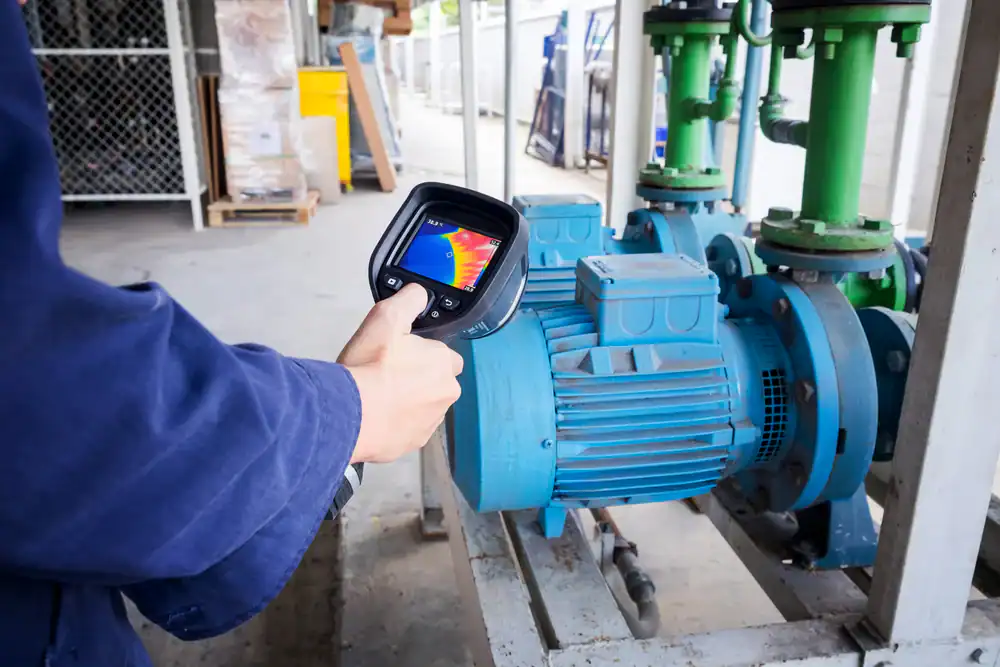
An infrared electrical inspection uses a thermal camera to read the surface temperature of electrical components while they’re energized and under load. Every component in your electrical system — breakers, connections, wiring, panels — generates some amount of heat when current flows through it. When something is wrong, it generates more heat than it should.
The thermal camera picks up those temperature differences and displays them visually, so a trained electrician can see exactly where the problem is and how serious it is. What makes this useful is that the camera doesn’t need to touch anything, open anything, or shut anything down. The inspection happens while your system is running normally. That’s not just convenient — it’s actually necessary, because electrical problems only show up under load.

The short answer is: heat that shouldn’t be there. But that covers a lot of ground, so it’s worth being specific about what thermal imaging finds that a standard visual inspection simply cannot.
Loose connections are one of the most common findings. When a wire connection is even slightly loose inside a panel or junction box, resistance increases at that point. More resistance means more heat. A connection that looks perfectly fine from the outside can be running at temperatures that are dangerous to the surrounding insulation — and the only way to know is with a thermal camera. Nearly 25% of electrical failures trace back to faulty connections exactly like these.
Overloaded circuits show up clearly in thermal imaging because the wiring and breakers serving those circuits run hotter than the others. In older homes especially, circuits that were originally designed for a handful of outlets are now carrying the load of modern appliances, smart devices, and HVAC equipment they were never meant to handle. The thermal camera makes that imbalance visible.
Failing breakers are another common find. A breaker that’s beginning to fail internally will often run significantly hotter than the breakers next to it. This is the kind of problem that can go undetected for years during standard inspections because the breaker still trips when it’s supposed to — it just happens to be running at a temperature that indicates it’s on its way out.
Deteriorating insulation, corroded connections, and imbalanced loads across three-phase systems in commercial settings are also detectable. In industrial environments, thermal imaging is also used to evaluate motor windings, transformer performance, and switchgear — all of which can show signs of degradation long before they produce a visible symptom or a fault.
The common thread through all of these is that they’re invisible to the naked eye and undetectable through standard voltage testing. They exist in the space between “everything looks fine” and “something just failed.”
A standard electrical inspection — whether it’s part of a home purchase or a routine safety check — covers what’s visible and accessible. An inspector will look at your panel, check whether breakers are labeled correctly, test outlets for proper wiring, and verify that the visible components are in reasonable condition. That’s a legitimate and useful process. It’s just not the same thing as thermal imaging.
The distinction matters because the most dangerous electrical problems are the ones that don’t produce obvious symptoms. A loose lug connection inside a breaker box doesn’t make a sound. It doesn’t cause the lights to flicker. It doesn’t trip a breaker. It just generates heat — steadily, silently — until the insulation around it degrades enough to allow arcing, or until the heat builds to the point where surrounding materials ignite.
By the time that process produces a visible symptom, the problem has usually been developing for months or years. This is why the “I already had it inspected” response doesn’t quite apply when thermal imaging comes up. A visual inspection and a thermal scan are testing different things. One confirms what’s visible. The other confirms what’s generating heat inside sealed components. Both are valid; they’re just not interchangeable.
It’s also worth noting that thermal imaging results require interpretation by someone who understands electrical systems, not just someone who knows how to operate a camera. Some components run warm by design. A breaker running a few degrees above ambient isn’t necessarily a concern. A breaker running 80 degrees above the ones next to it is a different story. Knowing the difference — and knowing what to do about it — is the electrical expertise part of the equation, not the camera part.
Want live answers?
Connect with a Electrical Service Providers expert for fast, friendly support.
Alamance County has a lot of older housing stock — mill-era homes in Haw River, postwar ranch houses spread across Graham and Burlington, and neighborhoods built in the 1960s and 1970s that were wired for a completely different era of electrical demand. Those homes now carry the load of central air conditioning, multiple refrigerators, large-screen televisions, EV chargers, and smart home devices. The electrical systems underneath all of that were not designed for it.
That combination — aging infrastructure meeting modern load — is exactly where thermal imaging finds the most. It’s a combination that describes a significant portion of the homes we work in across Alamance County.
If your home was built before 1980, there’s a reasonable chance its electrical panel was sized for a load that looks nothing like what you’re running through it today. That’s not an accusation — it’s just math. A 100-amp panel that was adequate for a 1965 home in Burlington or Graham was designed around the appliances and devices of that era. Central air conditioning alone changes the load calculation significantly, and that’s before you add anything else.
Aluminum wiring is another factor in many of the older homes across Alamance County. Aluminum was commonly used in residential wiring during the late 1960s and 1970s as a cost-saving alternative to copper. The problem is that aluminum expands and contracts more than copper as it heats and cools, which causes connections to loosen over time. Loose aluminum connections are a known fire hazard, and thermal imaging is one of the most effective ways to identify which connections have deteriorated to the point of concern.
We’ve done thermal imaging inspections in older neighborhoods throughout Alamance County where the panel looked fine visually — no obvious corrosion, breakers all labeled, no tripped circuits — and the thermal camera found multiple connections running at temperatures well above what’s safe for the surrounding insulation. The homeowner had no idea. There was no symptom to notice. That’s the point.
For anyone buying an older home in Alamance County, or anyone who’s lived in one for years without ever having a thermal scan done, it’s a straightforward way to get a clear picture of what’s actually happening inside your electrical system — not just what’s visible on the surface.
One of the most common questions we get is what a thermal imaging inspection actually involves and what it costs. On the process side: we schedule inspections during normal operating hours, when your electrical system is running under real-world load. This matters because thermal imaging only produces reliable results when equipment is operating at 40% or more of its typical load. An inspection done on idle or lightly loaded equipment is unlikely to surface the problems that show up under normal demand.
During the inspection, we scan your panel, connections, outlets, and any other components relevant to your situation using a calibrated thermal camera. For residential properties, the process typically takes between 30 minutes and an hour and a half depending on the size of the home and the scope of the inspection. Commercial and industrial inspections vary based on how much equipment needs to be covered.
After the inspection, you get a clear explanation of what we found — what’s running at normal temperatures, what’s showing elevated heat, and what, if anything, needs to be addressed. If something does need to be fixed, we can handle that as well. That’s an important distinction: a home inspector who offers thermal imaging can tell you a problem exists, but they can’t fix it. We can do both, which means you’re not coordinating between two contractors or waiting on a second estimate.
We use flat-rate pricing, which means you know the cost before we start — not after. No hourly billing, no surprises when the invoice arrives. If you want to know what a thermal imaging inspection would cost for your specific property in Alamance County, the best step is to call us directly. We’ll give you a straight answer.
For commercial and industrial facilities in Alamance County, it’s also worth knowing that NFPA 70B — the national standard for electrical equipment maintenance — was updated in 2023 to make annual infrared inspections mandatory for all energized electrical equipment, not just recommended. If your facility hasn’t had one, that’s a compliance issue worth addressing sooner rather than later. Some insurance carriers are also beginning to require documented inspection records as part of annual policy renewals.
For most homes and businesses in Alamance County, the honest answer is yes — especially if the property is more than 20 or 30 years old, carries a heavy modern electrical load, or has never had a thermal scan done. The inspection is non-invasive, requires no downtime, and produces a clear picture of what’s happening inside your electrical system that no other inspection method can match.
The problems thermal imaging finds are the ones that don’t give you a warning. They build quietly over time, and the first visible symptom is sometimes the worst-case scenario. Finding a loose connection or a failing breaker early is a straightforward fix. Finding it after it’s caused a fire is not.
If you’re in Burlington, Graham, Mebane, Haw River, or anywhere else in Alamance County, NC and want to know what’s actually going on inside your electrical system, reach out to us at ESP Electrical Service Providers. We’ll give you a straight answer on what the inspection involves, what it costs, and whether it makes sense for your situation.
Article details:
Share:
Continue learning: