From hardware to installation to the Duke Energy rebate most homeowners miss — here's what a home EV charger actually costs in Alamance County, NC.
Share:
Summary:
You just bought an EV — or you’re about to — and now you’re realizing that the cord that came in the box charges at roughly the speed of watching paint dry. A full charge can take 40 hours or more on a standard 120V outlet. So you start looking into a proper home charger, and suddenly you’re staring at cost estimates that range from $500 to $5,000 depending on which website you land on. That range tells you almost nothing useful.
This guide cuts through that. We’ll walk you through what a Level 2 home charger actually costs in Alamance County, how the Duke Energy Charger Prep Credit can offset a significant chunk of that, and what the public charging situation in the area really looks like for daily drivers.
The cord that came with your EV is a Level 1 charger. It plugs into a standard 120V outlet and adds about 3 to 5 miles of range per hour. For most people driving 30 to 40 miles a day, that math barely works — and one long day or a missed overnight charge and you’re scrambling.
A Level 2 charger runs on a dedicated 240V circuit, the same kind of circuit your dryer uses. It delivers 20 to 35 miles of range per hour, meaning most EVs are fully charged in 4 to 10 hours overnight. That’s the real-world standard for home charging, and it’s what most EV owners end up installing within the first few months of ownership.
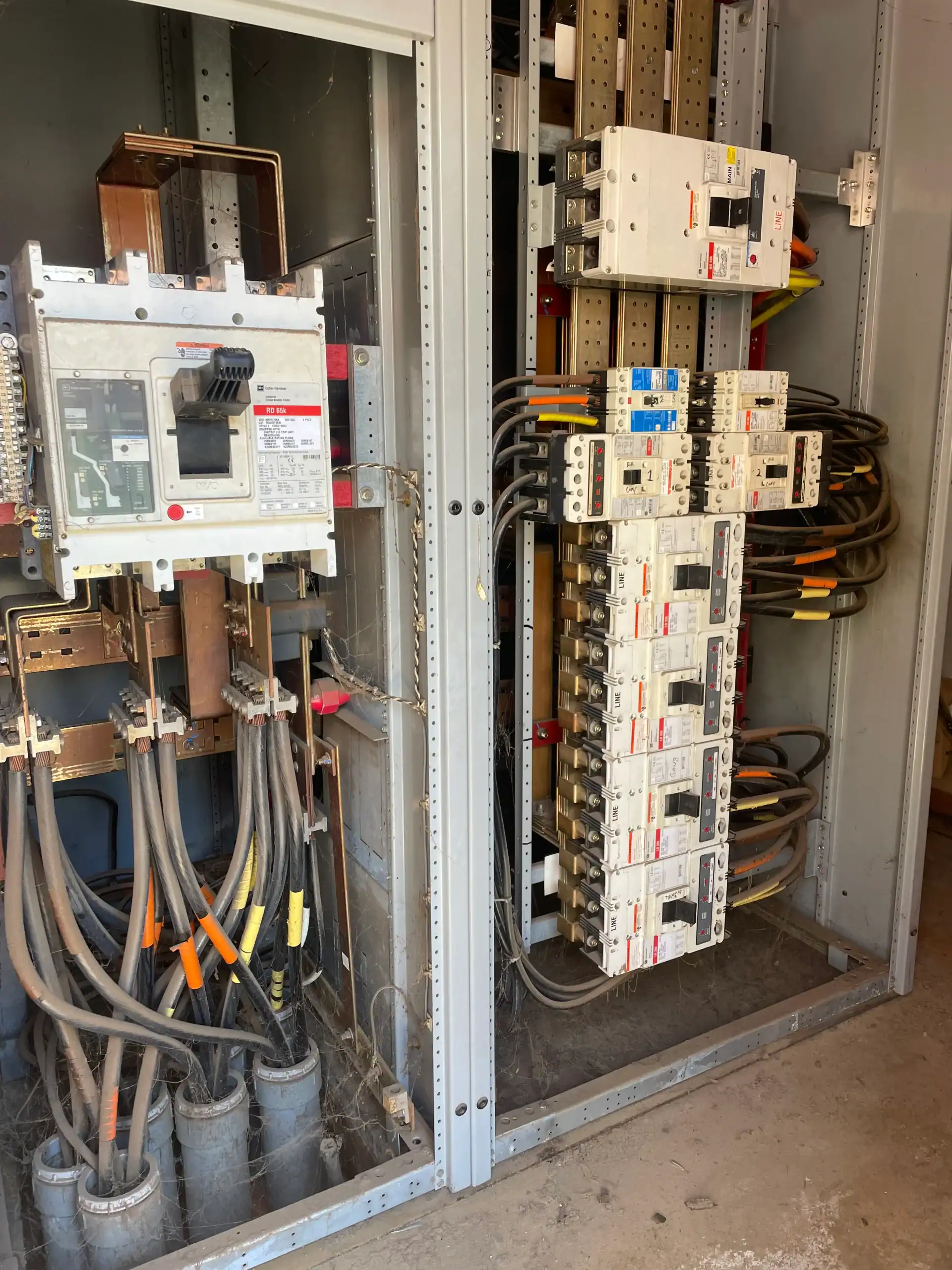
The wide cost range you see online — $800 to $3,200 or more — isn’t random. It reflects the fact that every home is different. The total cost of a Level 2 home charger installation has a few distinct components, and understanding them separately makes the whole picture a lot clearer.
The charger hardware itself runs $400 to $1,200 for most residential models. Basic 32-amp units sit at the lower end. Wi-Fi-enabled smart chargers with higher amperage — the kind that let you schedule charging during Duke Energy’s off-peak rate windows — run $800 to $1,200. Popular brands include ChargePoint, Wallbox, JuiceBox, and the Tesla Wall Connector.
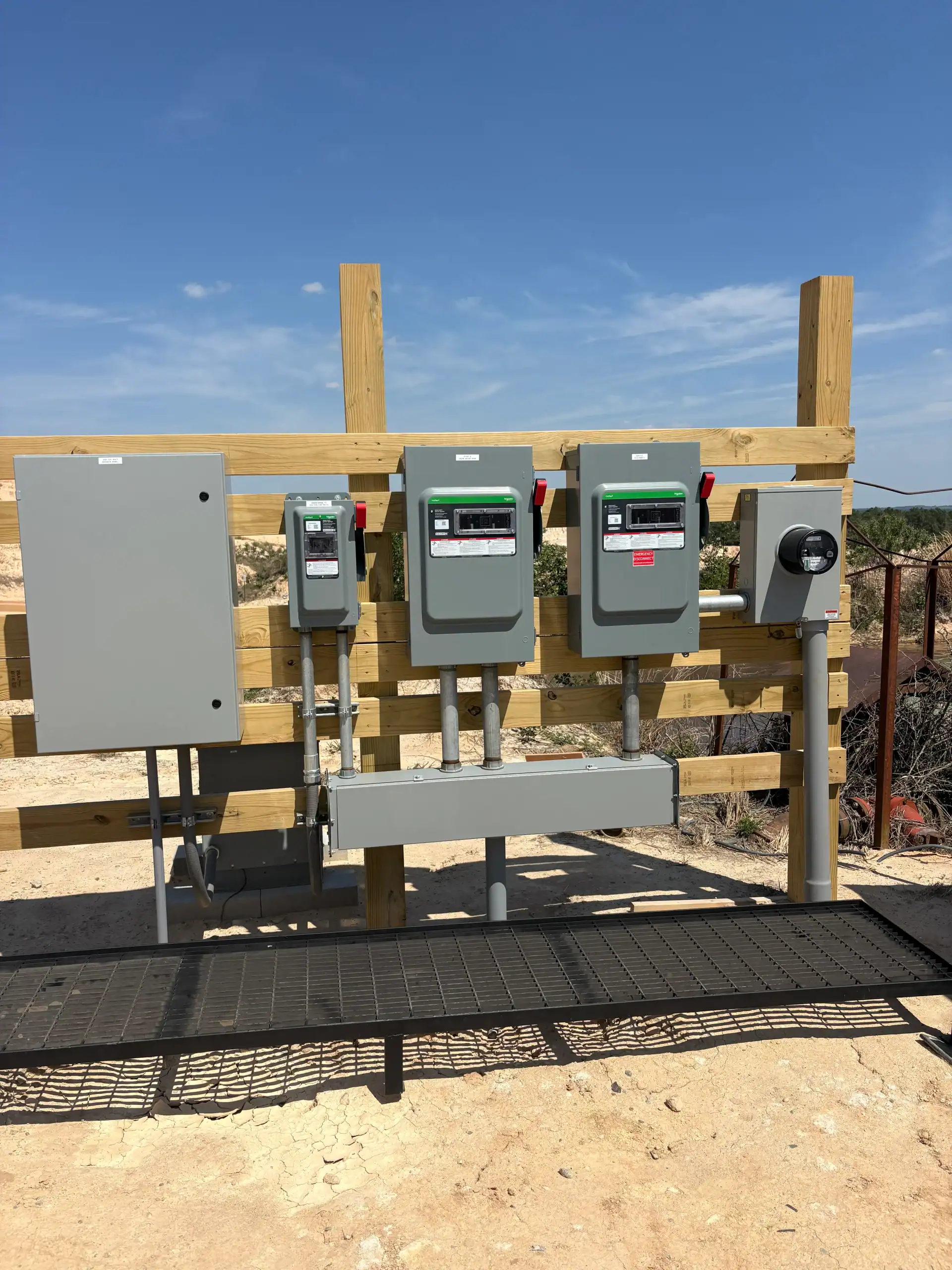
Then there’s the electrical work. Installing a dedicated 240V circuit — the wiring, conduit, breaker, and mounting — typically runs $500 to $1,500 in labor and materials for a standard single-family home. The simpler the run from your panel to your garage, the lower that number. The longer or more complex the path, the higher.
The variable that makes people nervous is the panel. If your existing electrical panel doesn’t have the capacity to support a new 40 or 50-amp circuit, it needs to be upgraded before the charger can be installed. That adds $1,500 to $3,500 to the project. The good news is that many homes — especially those with panels updated in the last 20 years — don’t need an upgrade at all. A licensed electrician performs a load calculation to determine this before any work begins. You don’t have to guess.
Finally, there’s the permit. In North Carolina, installing a new 240V circuit requires an electrical permit and inspection. This isn’t optional, and it’s not bureaucratic red tape for its own sake. It’s what ensures the work is done to code, that your homeowner’s insurance remains valid, and that you don’t run into title issues when you eventually sell the home. NC Gen. Stat. § 87-43 requires that this work be performed by or under the direct supervision of a licensed electrical contractor. A qualified electrician handles the permit as part of the job.
Add it all together — hardware, labor, permit — and most Alamance County homeowners are looking at $1,200 to $3,000 before any incentives. Now let’s talk about the incentive that changes that math considerably.
If you’re a Duke Energy residential customer in Alamance County, NC — which covers Burlington, Graham, Mebane, and Elon — you may qualify for up to $1,133 through Duke Energy’s Charger Prep Credit program. This is a real, currently active incentive, and it’s one that a surprising number of homeowners never find out about.
Here’s what it covers: the electrical prep work needed to support a Level 2 charger. That means wiring, conduit, outlet installation, panel upgrades, and required permits. What it does not cover is the charger hardware itself. But given that the hardware is often the smaller part of the total cost, this credit can offset a substantial portion of what you’d otherwise pay out of pocket.
There are two ways to receive it. The first is the customer credit path: you hire a licensed electrician, pay for the work yourself, submit the paid invoice to Duke Energy, and receive a check. The second is the contractor credit path: you work with a Duke Energy-approved contractor who applies the credit directly to your final bill, so you never pay that portion upfront. Either way, the work must be performed by a licensed electrician and properly permitted.
One important detail: applications must be submitted within 120 days of the final invoice date or the approved permit date, whichever is later. If you’ve already had electrical prep work done recently, you may still be within that window — worth checking.
It’s also worth noting that the federal Alternative Fuel Vehicle Refueling Property Credit — the 30C tax credit that used to cover 30% of hardware and installation costs — expired on June 30, 2026. It is no longer available for new installations. The Duke Energy credit is the primary incentive in play for North Carolina homeowners right now.
Want live answers?
Connect with a Electrical Service Providers expert for fast, friendly support.
Some EV owners tell themselves they’ll just use public charging and skip the home installation cost. In markets with dense public charging infrastructure, that’s at least a debatable position. In Alamance County, it’s a harder case to make.
The county’s most notable public charging option is the Tesla Destination Charger station at Alamance Community College on Jimmie Kerr Road in Graham — six chargers, available 24/7 at $0.30 per kilowatt-hour. That’s a useful resource, but it’s one location. For daily drivers commuting along I-40 or I-85 — the two main interstate corridors running through the area — building a charging routine around a single public station adds unpredictability to every day.
North Carolina’s EV adoption numbers tell a clear story. The state added nearly 240,000 new electric and plug-in hybrid vehicles between 2020 and 2024. In 2024 alone, NC surpassed 100,000 EV registrations — hitting Governor Cooper’s 2025 goal two years ahead of schedule. Nearly 20% of all EVs currently registered in North Carolina were purchased in 2024.
Alamance County sits at an interesting intersection of this trend. The county borders Chatham County to the southeast, where VinFast is building a major EV manufacturing facility in Moncure — a project expected to bring 7,500 jobs to the region. To the west, Randolph County is home to a $14 billion Toyota battery plant near Greensboro. The regional economy is shifting toward electric vehicles in a meaningful way, and the people moving into and around Burlington are increasingly EV owners.
Meanwhile, public charging infrastructure in North Carolina has grown — from about 1,400 ports in 2019 to just under 4,000 by 2024 — but it hasn’t kept pace with the number of EVs on the road. That gap is felt most acutely in counties like Alamance, where options outside the Tesla station at Alamance Community College are limited. Home charging isn’t a luxury for most EV owners here. It’s the practical solution.
There’s also the cost angle. Charging at home — especially during Duke Energy’s off-peak rate windows overnight — costs significantly less per mile than paying at a public station. Over the life of the vehicle, that difference adds up. And a home EV charger is a recognized home improvement that buyers specifically look for when shopping for a house. It’s not a sunk cost.
The questions we hear most often before an installation follow a pretty consistent pattern. Here are the ones that come up again and again, answered honestly.
**Do I need a panel upgrade?** Not necessarily. Many homes can support a Level 2 charger without any panel work. The only way to know for sure is a load calculation performed by a licensed electrician before work begins. We do this as part of the assessment process — you get a straight answer before any commitment.
**How long does installation take?** Most residential EV charger installations in Alamance County are completed in a single visit. Our trucks are fully stocked, which means we’re not making supply runs or scheduling a second trip for parts. For homeowners in Burlington, Graham, Mebane, and surrounding areas, that typically means one day of work from start to finish.
**Who handles the permit?** We do. Pulling the permit, coordinating the inspection, and meeting North Carolina electrical code requirements is part of the job. You don’t have to navigate Alamance County’s permitting process on your own or figure out what the 2023 NEC amendments require for a dedicated EV circuit.
**Can I install it myself to save money?** Under North Carolina law, a new 240V circuit requires a licensed electrical contractor. Beyond the legal requirement, unpermitted electrical work can void your homeowner’s insurance — on a $40,000 or $50,000 vehicle plugged into that circuit — and create complications when you sell the home. The Duke Energy Charger Prep Credit, which covers up to $1,133 of the electrical work, makes the licensed route significantly more affordable than it might first appear.
**What charger should I buy?** That depends on your vehicle, your daily mileage, and whether you want smart-charging features. We’re happy to talk through the options before you purchase anything so you’re not buying hardware that doesn’t match what your circuit can support.
The national cost guides aren’t wrong — they’re just not built for your driveway in Burlington or your garage in Graham. The actual number depends on your panel, your home’s layout, and whether you’re a Duke Energy customer who qualifies for the Charger Prep Credit. For most Alamance County homeowners, the out-of-pocket cost after that credit is considerably more manageable than the headline ranges suggest.
What matters most is getting a real quote from a licensed electrician who will give you a flat price before the work starts — not an estimate that grows once someone’s inside your walls. You should know exactly what you’re paying before a single wire is run.
If you’re ready to stop guessing and get a straight answer, ESP Electrical Service Providers has been doing this work in Alamance County since 2002. Give us a call and talk to a real person — no phone trees, no runaround.
Article details:
Share:
Continue learning: