Wondering what a Level 2 EV charger installation actually costs in Burlington, Mebane, Graham, or elsewhere in Alamance County? Here's what the numbers look like in 2026 — and what drives them up or down.
Share:
Summary:
You searched “EV charger installation cost,” got numbers ranging from $500 to $5,000, and now you’re more confused than when you started. That’s not a you problem — that’s just how unhelpful most of these guides are.
The truth is, the range is wide because the variables are real. Panel capacity, distance from the panel, whether you need a permit — all of it affects the final number. But for most homeowners across Alamance County, the cost lands in a much narrower window than the internet makes it seem.
Here’s what you actually need to know before you call an electrician.
According to Qmerit’s 2026 installation data, the cost to install a Level 2 home EV charger runs between $749 and $2,500, with an average around $1,700. Most homeowners in Alamance County end up somewhere in the $1,200–$3,000 range once you factor in hardware, labor, and permits. The low end applies to straightforward installs — panel has capacity, the garage is close, no surprises. The high end comes into play when the panel needs work or the wiring run is long.
What you won’t find on most of these cost guides is any acknowledgment that your specific home matters more than any national average. A newer home in Mebane with 200-amp service is a very different project than a 1960s mill-era house in downtown Burlington with a 100-amp panel. Same charger, potentially very different price.
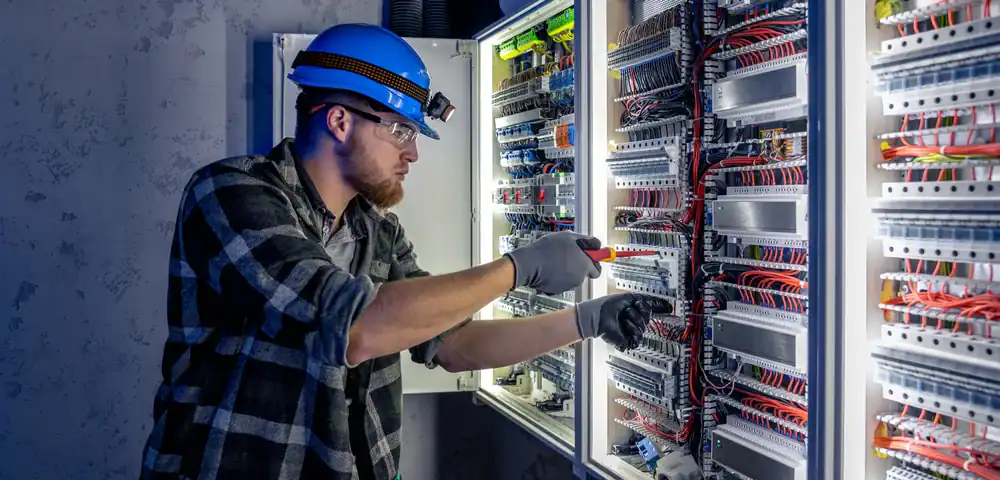
The two factors that move the price most are how much capacity your electrical panel has and how far the new circuit needs to run from the panel to where the charger will be mounted. Everything else — permit fees, hardware choice, labor time — plays a supporting role.
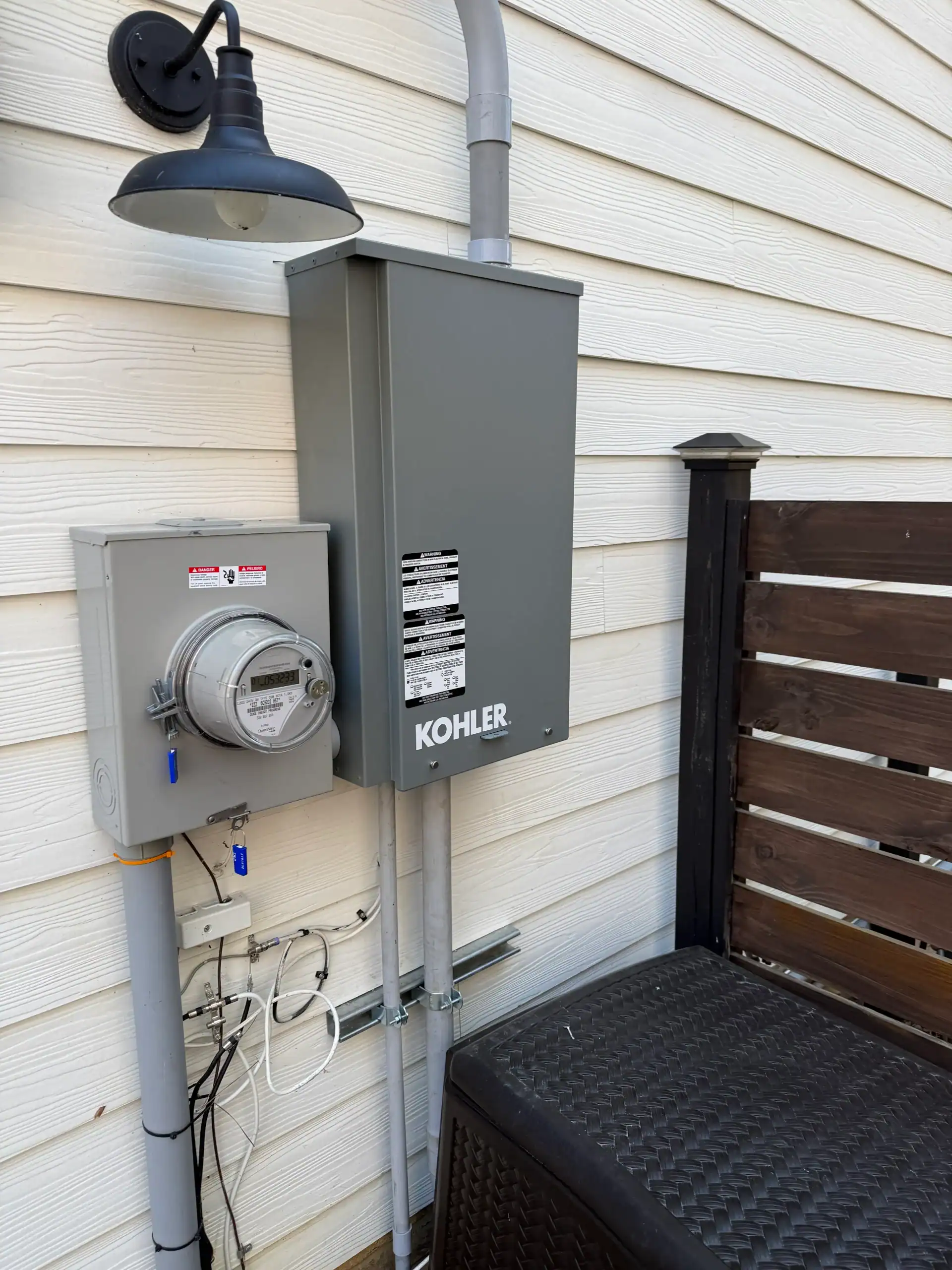
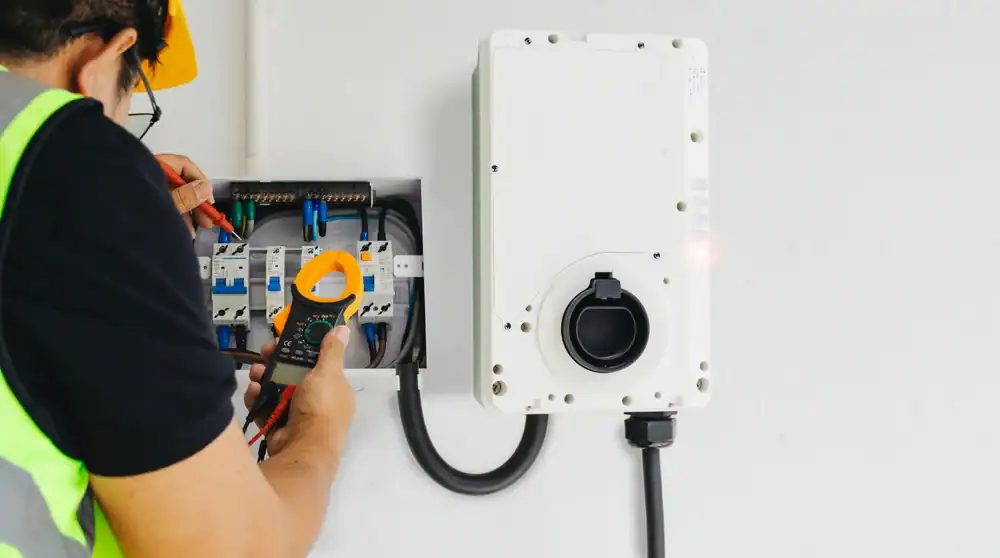
If your home has 200-amp electrical service with available breaker slots, there’s a good chance you’re looking at a straightforward dedicated circuit installation. We run a new 240V circuit, install the proper breaker, mount the charger, pull a permit, and pass inspection. That kind of job typically wraps up in two to five hours and comes in at the lower end of the cost range.
If your panel is at capacity or you’re still on 100-amp service — which is common in older Alamance County neighborhoods, particularly around downtown Burlington and Graham, built during the textile industry era — a panel upgrade may be necessary before the charger can be safely installed. That adds meaningful cost: panel upgrades for residential installations generally run $800 to $2,500, and a full service upgrade can reach $1,500 to $4,500 depending on the scope. It’s not a small line item, which is exactly why an honest in-person assessment matters before anyone quotes you a number.
The distance from your panel to the charger location also matters more than most people realize. A charger mounted on the wall directly adjacent to your panel requires far less wire and conduit than one on the opposite side of a detached garage. Longer runs cost more — not dramatically, but enough to affect the final price.
Permit fees in North Carolina add to the total as well. Nationally, permits for EV charger installations average around $297, though the range runs from $45 to $720 depending on the jurisdiction. In Alamance County, pulling the permit is a non-negotiable step — a Level 2 charger installation requires an electrical permit and a post-installation inspection under NC law. Any electrician who suggests skipping that step is not someone you want working on your home.
This is the question that stalls more EV charger projects than anything else. Homeowners assume the worst, put off making the call, and keep limping along on Level 1 charging — which adds only 3 to 5 miles of range per hour. If you’re commuting from Burlington to Durham or the Research Triangle via I-40, that’s a 35-to-45-mile trip each way. Level 1 charging cannot reliably keep up with that kind of daily mileage.
The only way to know whether your panel needs an upgrade is an in-person load calculation by a licensed electrician. There’s no shortcut. A Master Electrician looks at your current panel, calculates the available capacity under NEC 220.82, and tells you plainly whether you need a new circuit only or whether the panel itself needs attention first. That assessment is the foundation of any honest quote.
Here’s what’s worth knowing before you panic: a lot of homes don’t need a panel upgrade. If your home has 200-amp service and a few open breaker slots, you’re likely in good shape. The homes that run into trouble are the ones still on 100-amp service — and Alamance County has plenty of those, particularly in Burlington’s older neighborhoods and parts of Graham where the housing stock dates back to the mid-twentieth century. It’s not a dealbreaker, but it’s a real cost factor that a good electrician will surface upfront rather than after the work has started.
That’s the value of flat-rate pricing done honestly. We give you a firm price before any work begins — not an estimate that balloons once we’re already on-site. If the panel needs work, we tell you that before you commit to anything. No surprises.
Want live answers?
Connect with a Electrical Service Providers expert for fast, friendly support.
When people talk about home EV charger installation, they almost always mean Level 2 — a 240V dedicated circuit that charges at 20 to 60 miles of range per hour, depending on the charger and the vehicle. That’s the practical choice for anyone who drives regularly. Level 1 charging from a standard 120V outlet is fine if you’re adding fewer than 30 or 40 miles a day. Most people aren’t.
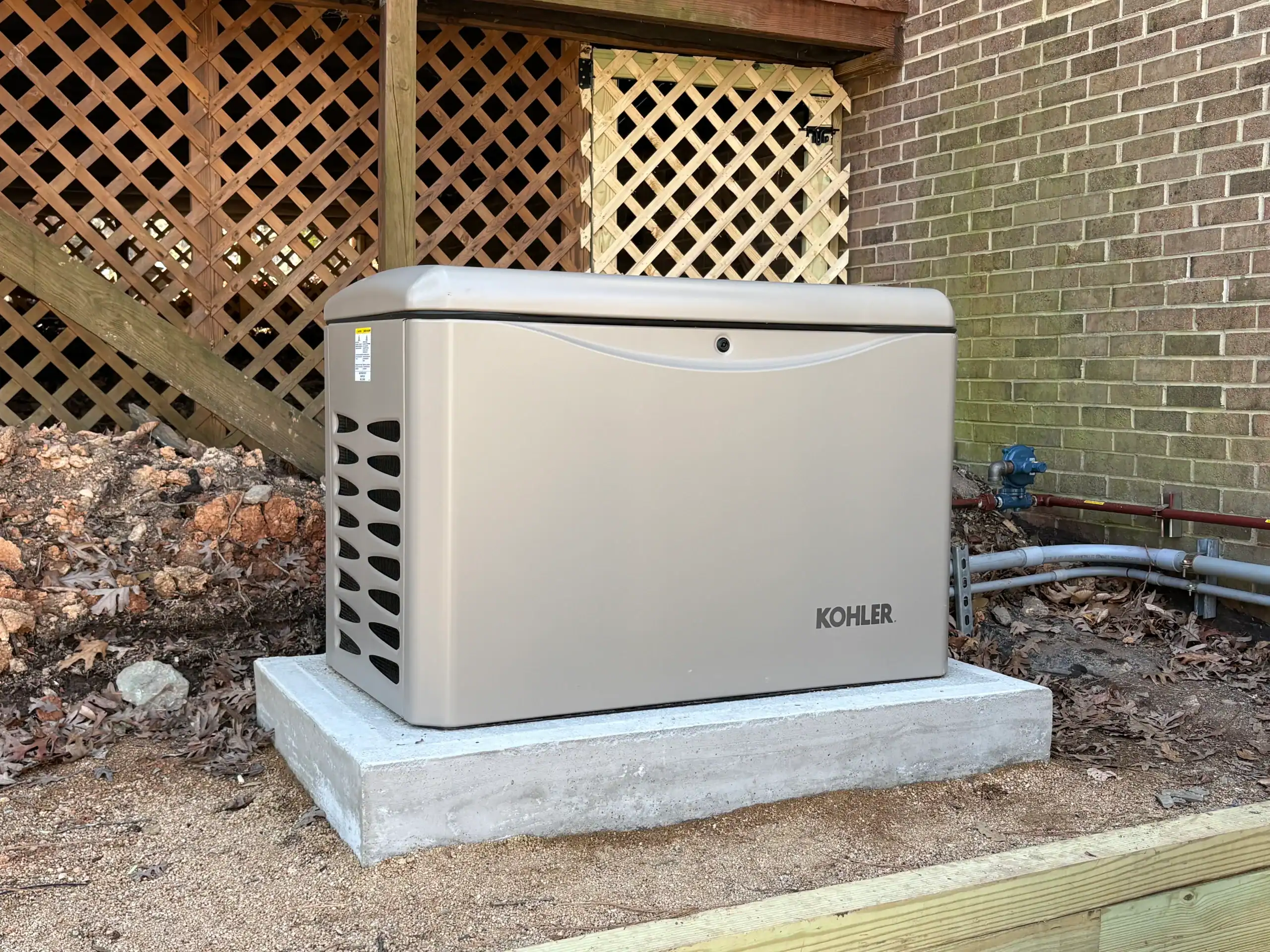
The home electric car charger cost breaks down into three main buckets: the hardware itself, the electrical installation labor and materials, and the permit. The charger hardware varies by brand and amperage — popular options like ChargePoint, Wallbox, and JuiceBox run anywhere from $200 to $700 at retail. Installation labor and materials are the larger piece of the equation, and that’s where the in-person assessment makes the difference between a number that’s real and one that’s just a guess.

It’s worth understanding what you’re paying for, because “install a charger” undersells what a proper installation actually involves. A licensed electrician starts with a panel inspection and load calculation — confirming the panel can support the new circuit without exceeding safe capacity. From there, we size the wire and breaker correctly for the charger’s amperage. NEC Article 625 requires the circuit to be sized at 125% of the charger’s continuous load, which means a 32-amp charger needs a 40-amp breaker minimum. Using undersized wire or the wrong breaker isn’t just a code violation — it’s a fire hazard.
We then run the new circuit from the panel to the charger location, install the outlet or hardwire the unit depending on the charger type, mount everything securely, and pull the permit before any of this happens. After the work is done, a local inspector verifies it. That inspection is your independent confirmation that the work was done correctly — it’s not a formality.
In North Carolina, this process is governed by NC Gen. Stat. § 87-43, which requires a licensed contractor for new 240V circuits. This isn’t bureaucratic fine print. Unlicensed installation voids your homeowner’s insurance if something goes wrong, and some vehicle manufacturers have warranty implications tied to how the charging equipment was installed. The permit and inspection exist to protect you, and a licensed electrician who knows what they’re doing will handle all of it without you having to think about it.
We’ve been serving Alamance County since 2002. We know the local permit process, we know the inspectors, and we know the housing stock — from newer construction near the I-40 and I-85 interchange in Mebane to the older homes closer to downtown Burlington and Graham. That context matters when we’re walking through your garage and figuring out the most practical path for the circuit run.
Yes — but the window is closing. The Section 30C Alternative Fuel Vehicle Refueling Property Credit covers 30% of your equipment and installation costs, up to $1,000 for residential installations. On a $1,700 project, that’s a real reduction in what you actually pay out of pocket.
The deadline is June 30, 2026. After that date, the credit is no longer available for most residential installations under the terms of the One Big Beautiful Bill enacted July 4, 2025. There are eligibility nuances — specifically around census tract classifications for non-urban or lower-income areas — so it’s worth verifying your address through the DOE’s 30C locator before assuming you qualify or don’t qualify.
The point is: if you’ve been sitting on this decision, the tax credit is a concrete reason to move sooner rather than later. A $1,000 reduction doesn’t come back once the deadline passes.
Beyond the federal credit, Duke Energy serves most of Alamance County and has active EV programs that may include rebates for home charger installation. The combination of the federal credit and a utility rebate can meaningfully reduce the home electric car charger cost — sometimes enough to bring a standard installation well under $1,000 in total out-of-pocket cost after incentives. We can help walk you through the paperwork for both when we’re on-site.
One more thing worth mentioning: if you own a Tesla, the Wall Connector hardware runs about $475 directly from Tesla. For most homes in Alamance County, the all-in installation cost — hardware plus labor plus permit — lands between $900 and $1,800. Complex installs with panel upgrades or long wiring runs can push higher, but that’s the realistic range for a straightforward Tesla Wall Connector installation.
Here’s the short version: most homeowners across Alamance County pay between $1,200 and $3,000 for a professionally installed Level 2 EV charger, with the average closer to $1,700. Homes with 200-amp service and available panel capacity come in at the lower end. Older homes that need panel work come in higher. The only way to know where your home falls is an honest in-person assessment — not a number pulled from a website.
What you should never do is hire someone who skips the permit, gives you a verbal-only quote, or can’t show you a valid NC electrical contractor license. The savings aren’t real — they just show up later as failed inspections, voided insurance, or worse.
If you want a firm price before anyone picks up a tool, that’s exactly how we work. ESP Electrical Service Providers has been serving Alamance County since 2002, and we give you a flat-rate quote upfront — no hourly billing, no surprises when the invoice arrives. Give us a call and we’ll tell you exactly what your installation will cost before we start.
Article details:
Share:
Continue learning: