Getting a Level 2 charger installed at home is simpler than most people expect — once you know what actually happens from start to finish.
Share:
Summary:
You bought the EV. Now you’re realizing the cord that came with it adds about four miles of range per hour — which means you’d need to plug in for twelve hours just to recover a typical day of driving. That’s not a charging solution. That’s a waiting game.
A Level 2 home charger fixes that entirely. But before you can plug in and wake up to a full battery, there’s an installation process to understand. It’s not complicated, but it does involve your electrical panel, a permit, and a licensed electrician. Here’s what that process actually looks like — and what to watch out for along the way.
The process starts before anyone touches a wire. We assess your electrical panel first — not a quick glance, but a real load calculation that accounts for your HVAC system, major appliances, and everything else already drawing power from your home. That calculation determines whether your current service can support a dedicated 240-volt circuit for a Level 2 charger, or whether something needs to change first.
From there, we pull a permit with the local building department, install the dedicated circuit and breaker, mount the charger, and schedule the inspection. Once the inspector signs off, you’re done. The whole thing — for a straightforward installation — typically takes a single day.
This is the question that makes most homeowners nervous, and it’s worth addressing directly: you might need a panel upgrade, and you might not. There’s no way to know until someone actually runs the numbers.
A lot of older homes in Burlington, Mebane, Graham, and across Alamance County — particularly anything built before 1990 — were wired with 100-amp service. That was plenty for the appliances of that era. Add a central HVAC system, an electric water heater, and now a Level 2 EV charger pulling continuous power for several hours, and a 100-amp panel can run out of headroom fast.
The load calculation tells you where you stand. If your panel has capacity, we install the dedicated circuit and move on. If it doesn’t, you’re looking at a service upgrade to 200-amp service before the charger can be safely installed. That’s a larger job, but it’s also not a bad outcome — a 200-amp panel doesn’t just support your EV charger, it prepares your home for anything else you add down the road, whether that’s solar panels, a second vehicle, or other high-draw upgrades.
One thing worth knowing: the National Electrical Code classifies EV chargers as a “continuous load,” meaning the circuit has to be sized at 125% of the charger’s output. A 48-amp charger, for example, requires a 60-amp circuit. This is exactly the kind of detail that separates a properly installed charger from one that trips breakers constantly — and it’s why the load calculation matters as much as it does.
Don’t assume your panel is fine, and don’t assume it isn’t. Let the assessment tell you.
Yes — in almost every case. Installing a Level 2 EV charger means adding a new 240-volt dedicated circuit and making changes to your home’s electrical system. That’s a permitted electrical job under North Carolina law, full stop.
North Carolina General Statute 87-43 requires that permitted electrical work be performed by — or under the direct supervision of — a licensed electrical contractor. This isn’t a technicality. It’s the law, and it exists because unpermitted electrical work creates real problems that don’t always show up immediately.
Here’s what can happen when the permit gets skipped: the work doesn’t get inspected, which means no one verifies it was done correctly. If a wiring problem causes a fire months later, your homeowner’s insurance may deny the claim entirely because the work was never permitted or inspected. And when you eventually go to sell your home, unpermitted electrical work has a way of surfacing during the buyer’s inspection — at the worst possible time, when you have the least leverage to deal with it.
The permit process in Alamance County is straightforward when a licensed electrician handles it. We pull the permit before work begins, complete the installation to code, and coordinate the inspection. The goal is simple: the work passes the first time, no callbacks, no surprises. That’s just how the job is supposed to be done.
If you’ve gotten a quote from someone who didn’t mention permits, that’s worth asking about before you move forward.
Want live answers?
Connect with a Electrical Service Providers expert for fast, friendly support.
The honest answer to “how much does this cost?” is: it depends on your home’s electrical situation. Most homeowners in Alamance County pay somewhere between $1,200 and $3,000 for a professionally installed Level 2 charger, before any rebates or incentives. Simple installs — where the panel has capacity, the garage is close to the panel, and no major work is needed — tend to land toward the lower end. Jobs that require a panel upgrade or a long wiring run will cost more.
A proper site assessment answers that question quickly, so you know exactly what you’re working with before any commitment.
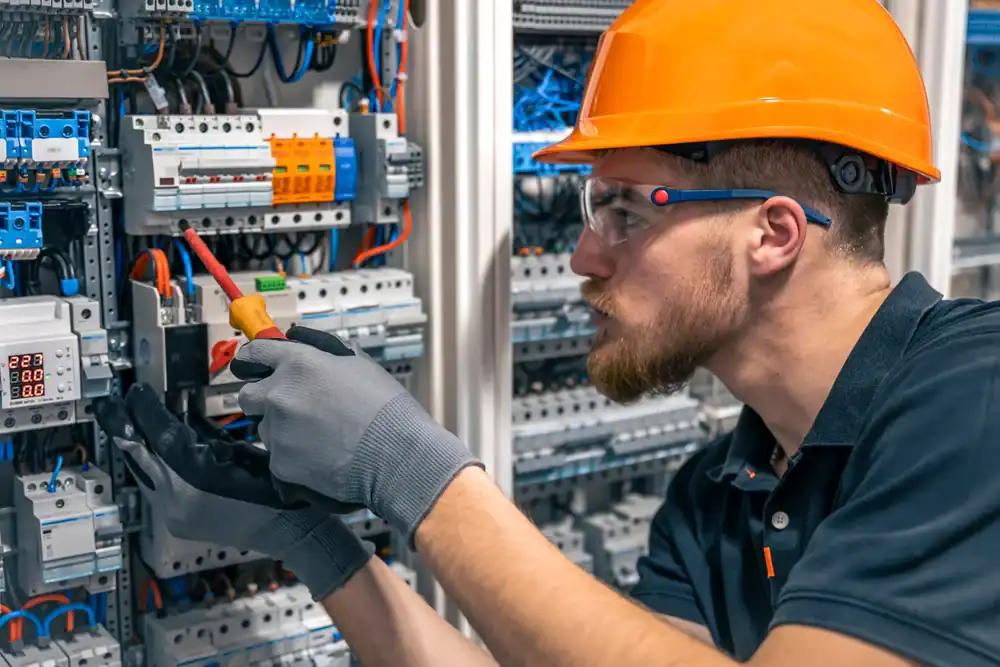
The total cost has two parts: the charger hardware itself, and the installation labor and materials. It helps to understand both separately.
The charger unit — the box that mounts on your wall — typically runs between $400 and $1,200 depending on the brand, amperage rating, and features. A basic 32-amp hardwired unit is on the lower end. A Wi-Fi-enabled 48-amp smart charger with scheduling features and app connectivity sits higher. Common brands include ChargePoint, JuiceBox, Grizzl-E, and the Tesla Wall Connector, which works with non-Tesla vehicles via an adapter. Every major EV on the market uses the J1772 connector standard for Level 2 charging, so compatibility is rarely an issue.
Installation labor and materials — the dedicated circuit, breaker, conduit, wiring, and permit fees — make up the rest of the total cost. If the job is straightforward, you’re looking at a single day of work and one visit. We arrive with fully stocked trucks, which means we’re not making a parts run in the middle of your job or scheduling a second visit because something wasn’t on the truck.
If a panel upgrade is needed, that adds to the total. A service upgrade from 100-amp to 200-amp service typically runs $1,500 to $3,000, depending on the scope. It’s a significant additional cost, but it’s also a one-time investment that adds real capacity to your home for everything that comes after.
We use flat-rate pricing, which means you’ll know the full cost before we start. No hourly billing, no “we found something extra” surprises midway through. The number we give you is the number on the invoice.
There’s a meaningful rebate available to Alamance County homeowners right now that most people haven’t heard about, and it’s worth understanding before you schedule anything.
Duke Energy Progress — the utility that serves Alamance County — offers the Charger Prep Credit. For a charger installed on a new dedicated circuit, eligible residential customers can receive up to $1,000 back. For a wall-mounted charger on an existing circuit, the credit is up to $500. The process works by reimbursement: you hire a licensed electrician, pay for the installation, and then submit the paid invoice to Duke Energy to claim the credit.
That’s a real reduction in out-of-pocket cost, and it applies directly to customers in Burlington, Mebane, Graham, and throughout Alamance County. It doesn’t require any special application before the work begins — just a paid invoice from a licensed contractor and documentation of the installed charger.
On the federal side, the Alternative Fuel Vehicle Refueling Property Credit — which had covered 30% of home charger installation costs up to $1,000 — expired on June 30, 2026, and is no longer available for installations completed after that date. There is still a federal Energy Efficient Home Improvement Tax Credit that covers up to 30% of electrical panel upgrade costs, capped at $600, for qualifying upgrades completed through December 31, 2025. Tax situations vary, so it’s worth confirming current program details with a tax professional and with Duke Energy directly before assuming what applies to your specific installation.
Between the Duke Energy rebate and any applicable tax credits, the net cost of getting a Level 2 charger installed can be meaningfully lower than the sticker price suggests. We stay current on available programs and can walk you through what’s likely to apply to your situation when you call.
EV charger installation isn’t complicated when you work with someone who handles it every day. The process is straightforward: assess the panel, pull the permit, run the circuit, install the charger, pass the inspection. One visit. A flat-rate price you agree to before work starts. No surprises.
For Alamance County homeowners — especially those commuting toward Durham, Chapel Hill, or the Triangle along I-40 or I-85 — a Level 2 charger at home changes how you use your car entirely. You stop thinking about charging. You just drive.
If you’re ready to move forward, or you just want to know whether your panel can handle it, reach out to ESP Electrical Service Providers. A real person answers the phone — not a voicemail system, not an automated menu. We’ve been serving Burlington and Alamance County since 2002, and we’ll give you a straight answer.
Article details:
Share:
Continue learning: