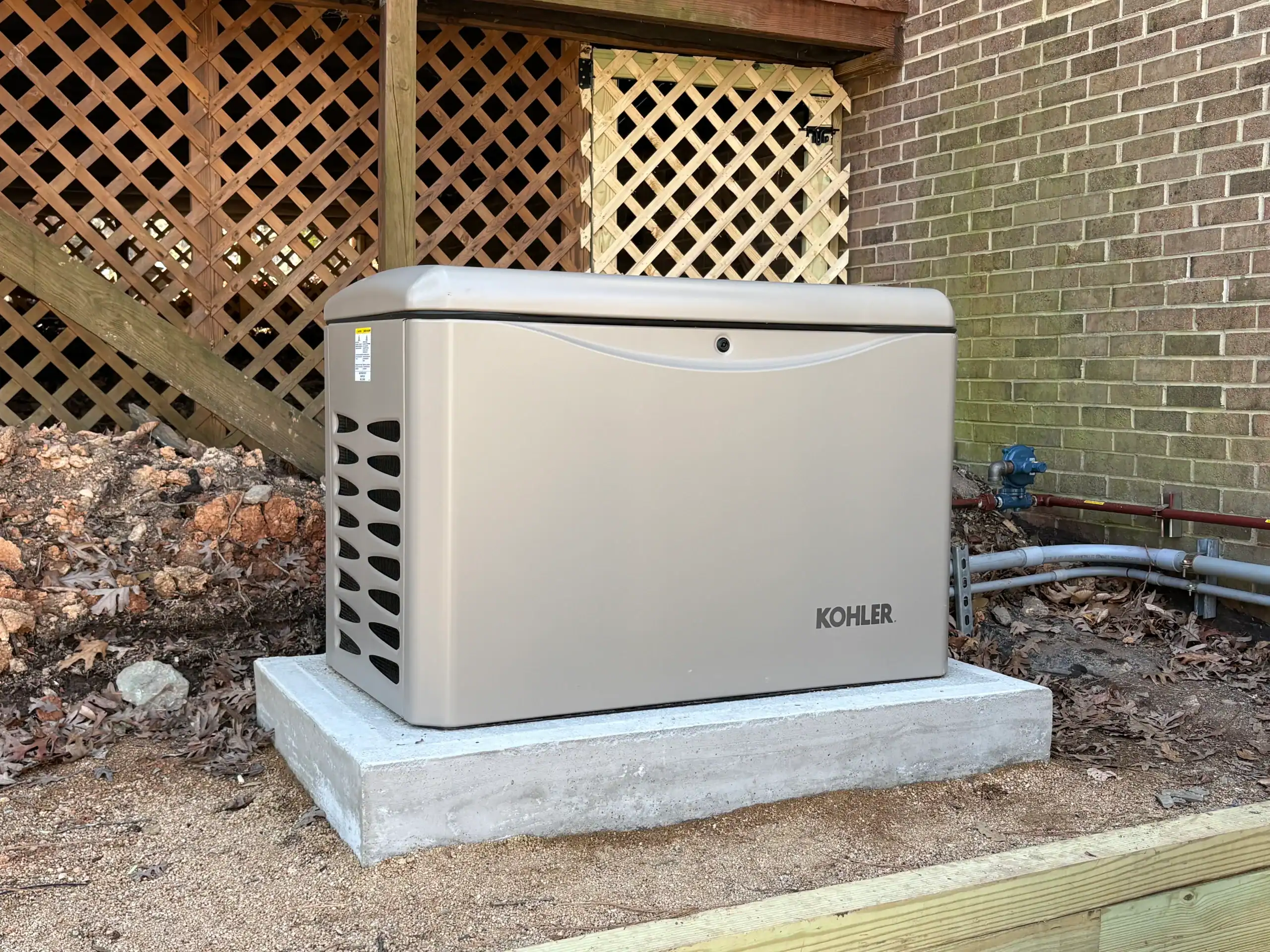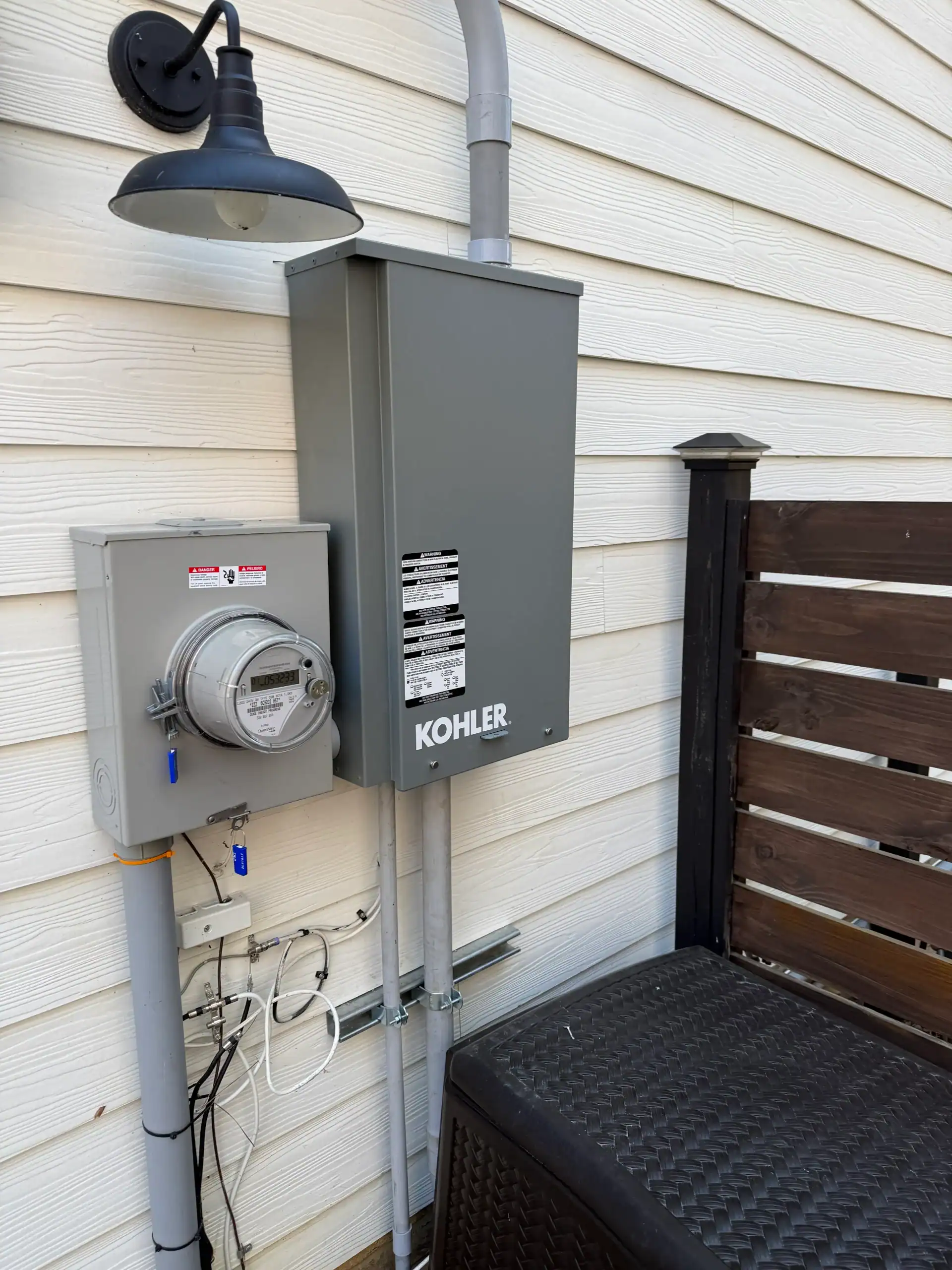
Choosing the wrong generator size is an expensive mistake. Here's what central NC homeowners need to know before they buy.
Share:
Summary:
If you’ve already decided you want a Generac standby generator, you’re ahead of most people. The harder question — and the one that actually determines whether the thing works when you need it — is what size to buy. Too small and it trips when your heat pump tries to kick on. Too large and you’ve spent money on capacity your home will never use.
The good news is that sizing a Generac Guardian Series generator isn’t guesswork. There’s a real process behind it, and once you understand it, the right answer becomes a lot clearer. Here’s what you need to know before you call anyone.
The Generac Guardian Series covers homes up to around 4,000 square feet with air-cooled units ranging from 10 kW to 26 kW. The newer Next Generation lineup extends that up to 28 kW. For most homes in central North Carolina, the right size falls somewhere between 10 kW and 24 kW — but that range is wide enough that landing in the wrong spot is easy if you’re not doing the math.
The calculation starts with your loads. You add up the running wattage of everything you want to keep on during an outage, then you account for starting wattage — the surge a motor-driven appliance needs to kick on, which is typically two to three times the running figure. After you have that total, Generac recommends adding about 20% buffer on top for flexibility and safety. That’s your target generator size.
This is the detail that catches a lot of homeowners off guard, and it matters more here than almost anywhere else. Central North Carolina — from Burlington and Greensboro through Durham, Chapel Hill, and Pittsboro — runs primarily on heat pumps. Unlike gas furnaces, heat pumps have high starting wattage requirements, often anywhere from 3,500 to 7,500 watts just to start the compressor. That surge happens every time the system cycles on.
A 10 kW or 12 kW generator might handle your refrigerator, lights, sump pump, and furnace just fine. But if your home has a heat pump and you’re sitting through a five-day outage in August with temperatures in the mid-90s, a unit that can’t start your HVAC compressor isn’t really solving your problem. You’ll be hot, frustrated, and wondering why you spent the money.
For homes with a standard central heat pump, most load calculations in this region point toward a 16 kW to 22 kW unit as the practical sweet spot — enough to run the HVAC system without straining the generator. Larger homes with two HVAC zones, or homes where you want to run everything including an electric dryer or EV charger, may need to look at 24 kW or above.
The only way to know for certain is a proper load analysis of your specific home. Square footage is a starting point, not an answer. Two 2,500-square-foot homes on the same street in Mebane can have completely different generator requirements depending on how they’re wired, what appliances they run, and whether one has a finished basement with a separate HVAC zone.
Here’s something most generator dealers don’t mention upfront: when a Generac standby generator runs on natural gas, its rated output drops slightly compared to propane. The 14 kW Guardian, for example, outputs closer to 13 kW on natural gas because of the lower BTU content of the fuel. It’s not a dealbreaker, but it’s a real factor in sizing — especially if your calculation lands right at the edge of a model’s rated capacity.
For homes in Chatham County, western Alamance County, and parts of rural Orange County, this conversation is particularly relevant. Many properties in those areas aren’t on natural gas at all — they run on propane tanks, which actually gives you slightly higher output at the same rated kW. If your home is on a well and a propane tank, your generator setup looks different than a home in downtown Durham or Greensboro that has municipal water and a natural gas line at the meter.
Speaking of gas lines: the existing gas line at your home may or may not be adequate to supply a whole-home generator. Depending on the distance from your meter to the generator pad and the diameter of the existing line, a new or upgraded gas run may be part of the installation. This is one of the factors that drives variation in installation cost, and it’s something we assess before you commit to a unit size.
Fuel type also affects what you can do during an extended outage. Natural gas supplies are generally continuous — you don’t have to worry about running out during a multi-week event the way you would with a propane tank. Propane gives you more flexibility on location but requires monitoring your tank level. Both work well; the right choice depends on what’s already at your property and how your home is configured.
Want live answers?
Connect with a Electrical Service Providers expert for fast, friendly support.
Buying the right generator is step one. Getting it installed correctly is where the real variation happens. In North Carolina, generator installations require a permit — and that permit exists for good reason. A licensed electrician needs to connect the transfer switch to your panel, size the conductors correctly, and make sure the system is wired in a way that passes inspection. Skipping the permit isn’t just a code violation; it can create complications when you sell your home.
A proper installation includes the generator pad, the transfer switch, the gas line connection, the electrical work, and a load test before the job is considered done. That last part matters more than most people realize. Testing under actual load — not just running the unit at idle — is how you confirm the system will perform when a storm rolls through at 2 a.m.
Installed costs across Alamance, Durham, Orange, Chatham, and Guilford counties vary based on the unit size, the site conditions, and what the installation actually includes. For a 10 kW to 12 kW Generac with an automatic transfer switch, total installed cost commonly runs from $4,500 to $9,500. A 22 kW air-cooled unit — the most common choice for homes in the 2,500 to 4,000 square foot range — typically runs between $8,200 and $12,500 installed. A 24 kW unit generally falls in the $9,000 to $13,000 range.
If you’ve gotten quotes and they span a wide range, that’s not unusual. The range of final costs for essentially the same 22 kW Generac model can run from $7,200 to $14,900 depending on site conditions, gas line requirements, conduit routing, and what’s actually included in the quote. The lowest number doesn’t always mean the same job. If a quote doesn’t mention the transfer switch, the concrete pad, the gas line, or the permit, those costs are likely waiting for you later.
What you want is a flat-rate quote that covers everything — equipment, labor, transfer switch, gas line, pad, and permit — before any work starts. That’s the only way to compare quotes fairly and avoid surprises when the bill comes.
Permit costs in NC typically run between $50 and $345 depending on the jurisdiction. Transfer switch installation alone in the NC market runs between roughly $1,178 and $1,571 for most residential applications. These are line items that should be visible in your quote, not buried or omitted.
After Hurricane Florence in 2018 and Hurricane Helene in 2024, generator installers across Alamance, Durham, Orange, Chatham, and Guilford counties were booked weeks out. Equipment supply tightened. Homeowners who waited until the lights went out were calling in a panic and often settling for whoever could get there fastest — not whoever was most qualified.
That’s the worst time to make a $10,000 decision. The installer who shows up in a rush after a storm event may not pull permits, may not size the transfer switch correctly, and almost certainly won’t do a proper load test before they leave. You won’t know there’s a problem until the next outage — when the generator trips, fails to start, or runs your lights but can’t handle the HVAC.
The better approach is to install before the rush. Get a load analysis done on your home, choose the right size unit, and have the installation completed by a licensed electrician who will pull the permit, coordinate the inspection, and test the system under load before calling it done.
In rural areas like Chatham County and western Alamance County, where Duke Energy’s restoration crews often prioritize urban areas first, outages can stretch for days. A properly sized and installed standby generator isn’t a luxury in those areas — it’s genuinely useful infrastructure, especially for households on well water that lose running water the moment the grid goes down.
For work-from-home professionals in Durham and Chapel Hill — and there are a lot of them — a power outage isn’t just an inconvenience. It’s lost productivity, missed deadlines, and the kind of disruption that makes a whole-home generator feel less like a purchase and more like a business decision. Getting the right size and a clean installation means the system actually does what it’s supposed to do when you need it.
The Generac Guardian Series is a proven system. But the generator itself is only as good as the sizing and installation behind it. Get the load calculation wrong and the unit underperforms. Skip the permit and you’ve created a problem that follows the house. Choose an installer who doesn’t test under load and you won’t know what you’ve got until the power goes out.
The right process — load analysis, proper sizing, permitted installation, and a real load test before handoff — is what separates a generator that works from one that just sits there looking like it should.
If you’re in Alamance, Durham, Orange, Chatham, or Guilford County and you’re ready to have that conversation, we’ve been installing Generac systems since 2002 and are an authorized Generac dealer with factory-certified installers on staff. Reach out and let’s figure out the right size for your home before the next storm makes the decision for you.
Article details:
Share:
Continue learning: