Choosing the wrong generator size is a costly mistake. Here's how to get it right before the next outage catches you off-prepared.
Share:
Summary:
If you’ve ever sat in a dark house listening to a storm roll through Burlington while your refrigerator full of groceries slowly warms up, you already know why you’re here. The question isn’t whether you need backup power — it’s which kind, and how much. Get the sizing wrong and you’ll either have a generator that can’t keep up when it matters most, or one that cost thousands more than your situation required. Neither is a good outcome. This page walks you through how generator sizing actually works, what separates a standby system from a portable backup, and how to figure out what your home genuinely needs.
The most common mistake homeowners make is treating generator sizing like a square footage problem. It isn’t. Two houses the same size can have wildly different power demands depending on whether they use gas or electric appliances, whether they have a well pump, and what kind of HVAC system is running.
The real starting point is your load — meaning the combined wattage of everything you want to power during an outage. From there, you build up to a generator that can handle it without being pushed to its limits every time the compressor kicks on.

A proper load calculation starts with two numbers for every appliance you care about: running watts and starting watts. Running watts is what a device draws once it’s up and going. Starting watts — sometimes called surge watts — is the spike it pulls in the first few seconds when the motor kicks on. For things like air conditioners, well pumps, and refrigerators, that surge can be two to three times the running wattage. If your generator can’t handle the surge, the appliance won’t start, and in some cases you can damage both the equipment and the generator itself.
Here’s how the math tends to work in practice. A central air conditioning system might draw 3,500 running watts but surge to 7,000 or more at startup. Add a refrigerator (700 running, 2,200 surge), a well pump (1,000 running, 2,500 surge), lights, a microwave, phone chargers, and a few other basics, and you’re looking at a running load somewhere in the 6,000–9,000 watt range with a peak surge demand that could push well past 12,000 watts. That’s why most whole-home standby systems for a mid-sized house in the 1,500–2,500 square foot range land between 14 and 20 kilowatts.
The safety margin matters too. Most generator sizing guidelines recommend sizing up by 20 to 25 percent beyond your calculated load. Generators perform best — and last longest — when they’re running at 50 to 80 percent of their rated capacity. A unit that’s constantly maxed out wears faster and is more likely to trip or shut down under a surge. Sizing with a buffer built in isn’t overkill; it’s just how the math is supposed to work.
If your home has electric heat, an electric water heater, or you’re planning to add an EV charger down the road, those factors need to be in the calculation now — not after the generator is already installed and undersized for what you actually need.
The sizing methodology changes depending on which type of system you’re looking at, and it’s worth understanding the difference before you start running numbers.
A portable generator is sized around a short list of essentials — the things you absolutely need to keep running for a day or two. You’re not trying to power the whole house. You’re trying to keep the refrigerator cold, run a box fan, charge your phone, and maybe power a lamp or two. For that kind of limited coverage, a 5,000 to 8,000 watt portable unit might be enough. But there are real trade-offs. You have to set it up manually, keep it fueled with gasoline that may be hard to find after a major storm, run extension cords to whatever you’re powering, and make sure it’s positioned safely outside — away from windows and doors — to prevent carbon monoxide from entering the home. It’s a workable short-term solution for brief outages, but it’s not a whole-home answer.
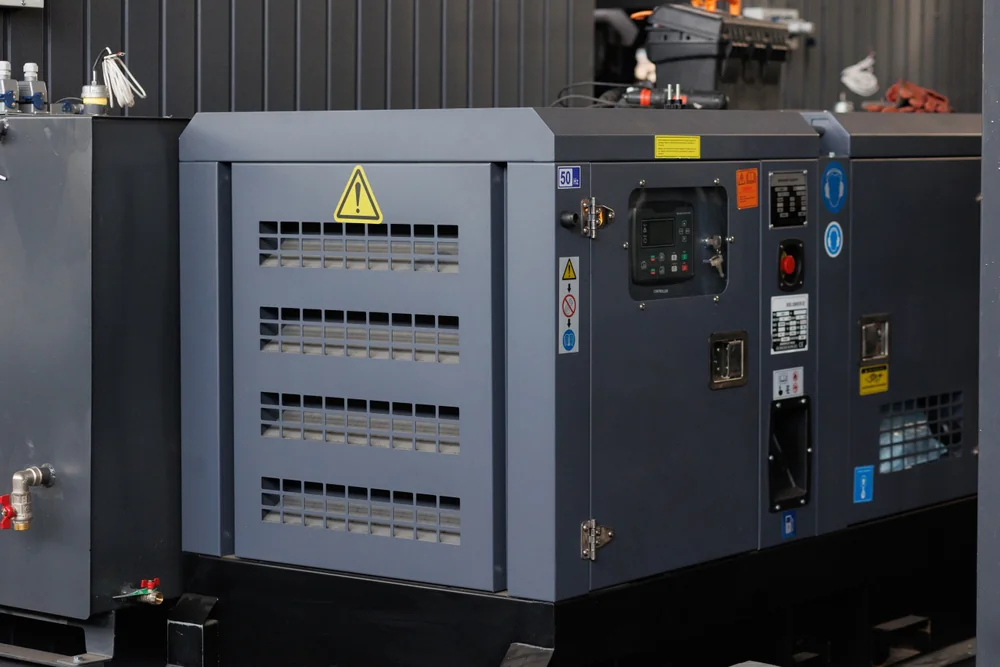
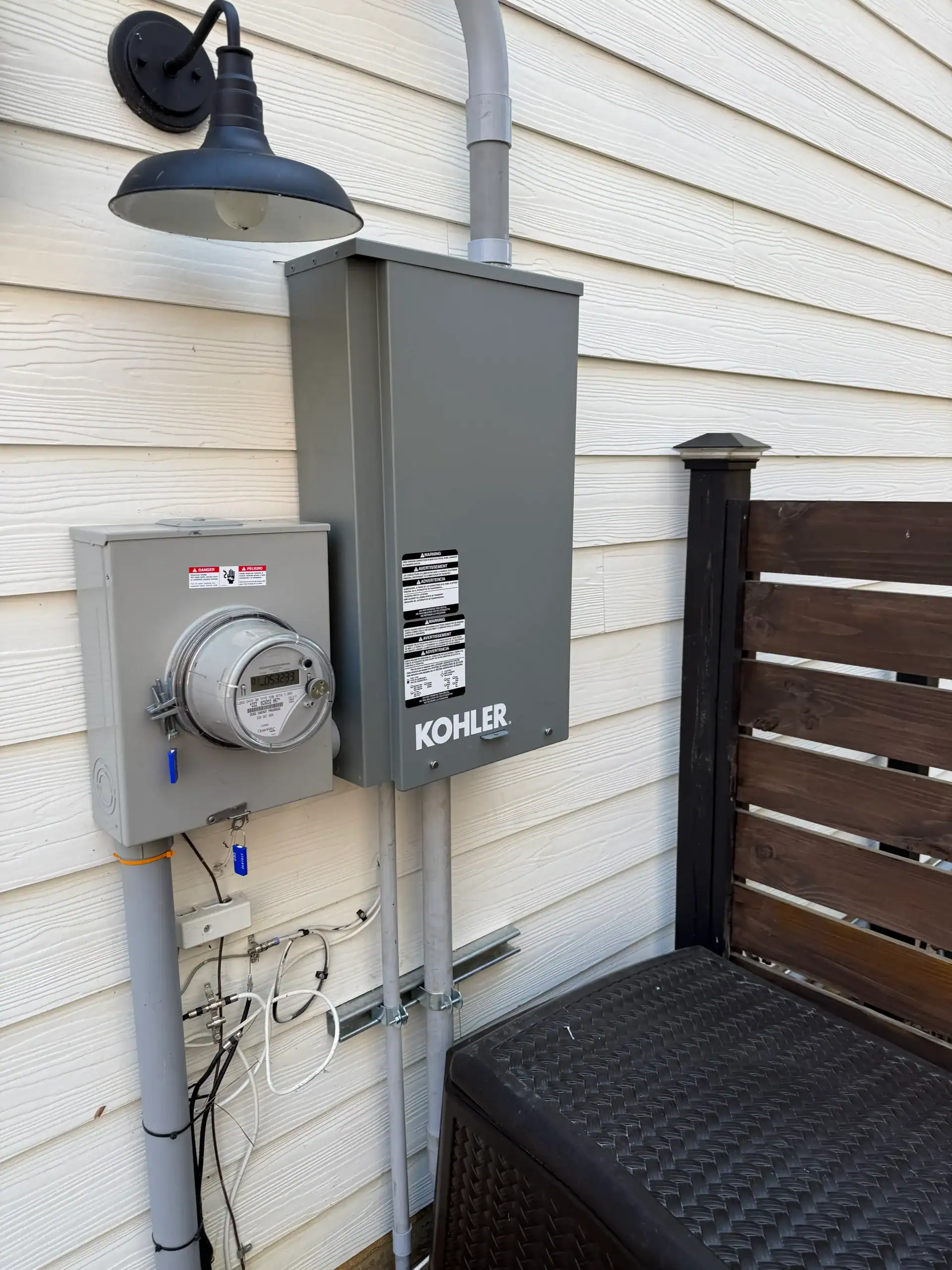
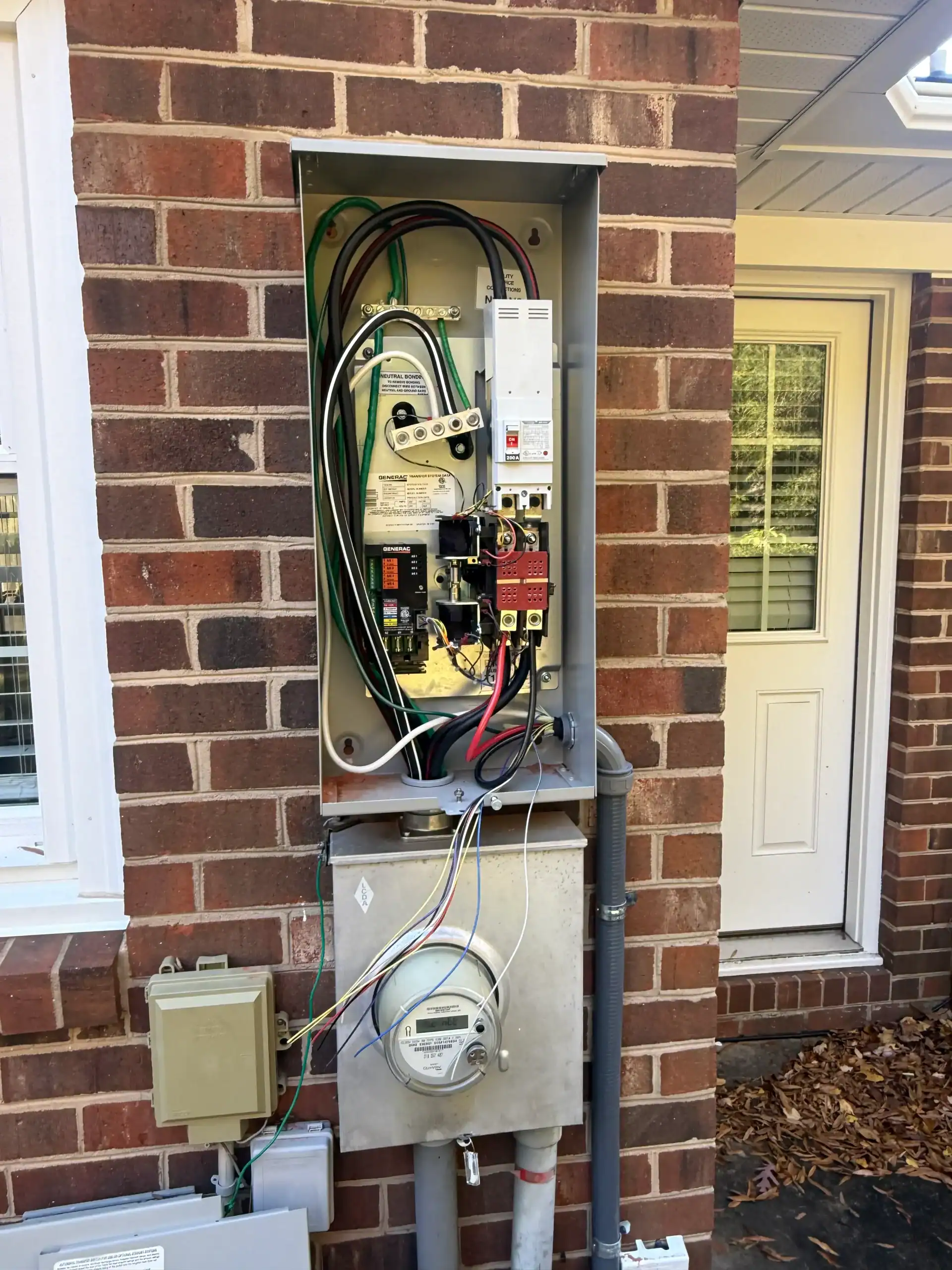
A standby generator is a permanently installed system connected to your home’s electrical panel through an automatic transfer switch. When the grid goes down — whether you’re home or not, whether it’s 2 in the afternoon or 3 in the morning — the transfer switch detects the outage and starts the generator automatically, usually within 10 to 30 seconds. Because it runs on your home’s natural gas or propane supply, there’s no fuel to store and no manual setup. The sizing for a standby system has to account for your full intended load, because the system is designed to run your home, not just a corner of it.
For most homes in Alamance County in the 2,000–3,000 square foot range with central air conditioning and a few high-draw appliances, a 20 to 22 kilowatt standby generator is a common fit. Smaller homes with gas appliances and no well pump can often get by with a 14 to 16 kilowatt unit. Larger homes, homes with electric HVAC, or properties with commercial-adjacent demand — a farm operation, a home office running server equipment, a detached workshop — typically need 25 kilowatts or more. The only way to know for certain is to look at the actual electrical panel and run through the load, which is exactly what a professional site assessment does.
Want live answers?
Connect with a Electrical Service Providers expert for fast, friendly support.
Understanding the sizing is one part of the decision. Understanding what installation actually involves is the other part — and it’s where a lot of homeowners feel uncertain. Generator installation isn’t just plugging something in. It involves permits, a transfer switch, a fuel connection, a concrete pad, and a final inspection. Done right, it’s a clean, one-day process with a system that will run reliably for 20 or 30 years. Done wrong — or done without permits — it can create problems with your homeowner’s insurance and your home’s resale value.
In North Carolina, both an electrical permit and a mechanical permit are required for standby generator installation. A licensed electrical contractor handles the panel integration and transfer switch. The gas connection requires coordination with a licensed plumber or gas fitter. All of it needs to pass inspection before the system is considered complete.

Alamance County has recorded 25 natural disasters — above the U.S. average of 19. That includes 11 hurricane-related events and 2 declared ice storm emergencies. The Piedmont’s geography puts the area in a particular bind during winter: temperatures hover in that frustrating zone where precipitation falls as freezing rain instead of snow, coating power lines and tree branches with ice until they come down. When that happens, rural parts of the county — areas around Haw River, Snow Camp, and the southern reaches of the county — can be without power for days. Duke Energy does what it can, but restoration priority runs toward population density, and properties on the outer edges of the service territory tend to wait the longest.
The 2024 hurricane season added another chapter to that story. Hurricane Helene caused widespread outages across multiple states, with some western North Carolina communities waiting two weeks or more for power to return. That’s an extreme case, but it’s the kind of event that makes people in Burlington, Mebane, and Graham pick up the phone and ask about generators — because suddenly the risk feels real and close.
The problem is that post-storm demand surges mean longer wait times for equipment and installation scheduling. Homeowners who call after a major outage are often looking at weeks before anyone can get to them. Installing before the season — before the rush — means you’re protected when the next storm rolls through, not waiting in line after it already hit.
If you have a well pump, that calculation gets even more urgent. Without power, there’s no water. That’s not a comfort issue; it’s a basic function-of-the-house issue. Standby generator sizing for a home with a well pump has to account for the pump’s surge demand, which is one of the higher draws in a typical residential load calculation.
The upfront cost of a whole-home standby generator system — including the unit and professional installation — typically runs between $7,000 and $15,000 depending on the size of the system and the complexity of the installation. That’s a real number, and it’s worth thinking through honestly.
What’s also worth thinking through is the cost of not having one. A single extended outage can mean hundreds of dollars in spoiled food, hotel stays if the house becomes unlivable in summer heat or winter cold, lost income for anyone working from home, and real risk for anyone in the household who depends on medical equipment — a CPAP machine, an oxygen concentrator, refrigerated medication. Those costs add up fast, and they repeat every time a major storm comes through.
The other thing that changes the math is how long a quality standby generator lasts. With proper annual maintenance — oil changes, filter replacements, load testing — a well-installed standby generator runs for 20 to 30 years. Spread $12,000 over 25 years and you’re looking at $480 a year for reliable whole-home backup power. That’s a different conversation than the sticker shock of the upfront number.
Financing also changes the equation for a lot of homeowners. We offer financing on generator installations precisely because the upfront cost shouldn’t be the reason someone ends up without power during a three-day outage. Getting the right system installed correctly is the goal — and there are ways to make that accessible without draining savings.
One thing worth being direct about: the sizing recommendation matters as much as the brand. A correctly sized 16 kilowatt unit from a reputable manufacturer will outperform an oversized 22 kilowatt unit that was never the right fit for the home. We’ve been doing this since 2002 and hold Level III service provider status for Generac in North Carolina — one of the first companies in the state to reach that designation. That’s not a credential we mention to impress anyone; it’s the reason our sizing recommendations hold up over time.
Getting generator sizing right comes down to one thing: knowing your actual load. Not your square footage, not your neighbor’s setup — your specific appliances, your fuel type, your circuits, and what you need running when the power goes out. Everything else follows from that.
The difference between a standby system and a portable backup isn’t just price — it’s the difference between automatic protection and manual scrambling in the middle of a storm. For most Alamance County homeowners who’ve been through a real outage, that distinction settles the question pretty quickly.
If you’re ready to stop guessing and get a clear answer about what your home actually needs, we’re here to help. We do on-site assessments, we pull the permits, and we size the system to your home — not to a general rule of thumb. Give us a call at 336-228-3300 and we’ll take it from there.
Article details:
Share:
Continue learning: